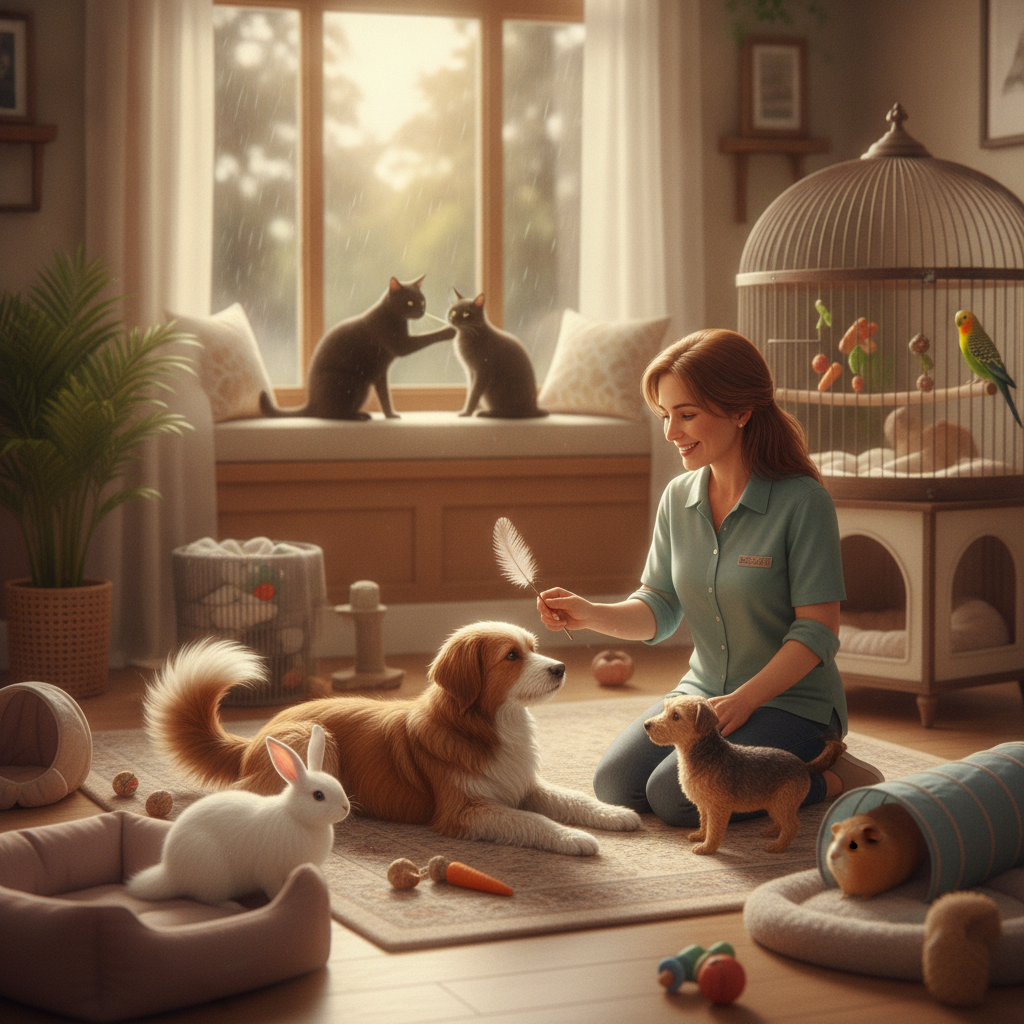
Singapore's tropical climate and compact living conditions create unique challenges for puppy socialisation at daycare. This guide covers AVS compliance, heat safety, HDB breed considerations, and how to choose a facility that meets professional standards.
Key Takeaways
- Singapore's year-round heat and humidity (often above 31 °C with 80% or higher relative humidity) make indoor, climate-controlled daycare environments essential for puppies.
- All dogs in Singapore must be microchipped and licensed with AVS (Animal and Veterinary Service) by 3 months of age, and core vaccinations against canine distemper, canine adenovirus type 1, and canine parvovirus type 2 are mandatory.
- AVS-licensed boarding and daycare facilities must meet Code of Animal Welfare standards; unlicensed operations should be avoided entirely.
- HDB-approved breeds are typically small (under 15 kg), meaning play group matching by size is especially important in Singapore where most daycare attendees fall into this category.
- A staff-to-puppy ratio of 1:4 or lower is recommended by behaviour professionals for puppies under 16 weeks.
- Overstimulation and heat stress are the most common causes of negative daycare experiences for puppies in Singapore.
Why Singapore Presents Unique Socialisation Challenges
The sensitive period for canine socialisation spans approximately 3 to 14 weeks of age, with some variation extending to around 16 weeks. During this window, puppies form lasting associations with novel stimuli: other dogs, humans, surfaces, sounds, and environments. The American Veterinary Society of Animal Behavior (AVSAB) emphasises that well-managed early socialisation generally outweighs the risks of delayed exposure.
In Singapore, several factors make structured daycare socialisation particularly valuable. Most residents live in HDB flats or condominiums with limited space for hosting puppy play sessions at home. Public areas such as parks and void decks can be unpredictably noisy, and the tropical climate (average temperatures of 27 °C to 33 °C year-round with frequent heavy rainfall) restricts safe outdoor exposure windows. A climate-controlled, professionally managed daycare fills the gap that Singapore's environment creates.
However, the word "well-managed" carries significant weight. A single overwhelming experience during this critical period can create a lasting fear association. This is why careful facility selection matters enormously in the Singapore context.
AVS Licensing and What It Means for Daycare Quality
Under Singapore's regulatory framework administered by the National Parks Board (NParks) through AVS, all pet boarding and daycare facilities must hold a valid AVS licence. Operators are required to pass facility inspections, meet the Code of Animal Welfare standards for housekeeping and animal management, and ensure staff complete mandatory training on pet welfare recognised by AVS.
Before enrolling a puppy, owners should verify that the facility holds a current AVS licence. Additionally, facilities must comply with fire safety certification (SCDF) and environmental health requirements. An unlicensed facility, regardless of how appealing it looks on social media, operates outside the regulatory framework designed to protect animals. Owners can check licensing status through the AVS portal at avs.nparks.gov.sg.
Heat and Humidity: Singapore's Biggest Daycare Variable
Tropical heat is not merely a comfort issue for puppies; it is a welfare concern. Brachycephalic breeds (Pugs, Shih Tzus, French Bulldogs, all popular in Singapore) are particularly vulnerable to heat-related distress. Even non-brachycephalic small breeds common in HDB households can overheat quickly when active in poorly ventilated spaces.
Facilities suitable for puppy socialisation in Singapore should offer:
- Full indoor air conditioning: Play areas maintained at around 23 °C to 25 °C with adequate ventilation.
- Non-slip, cool flooring: Rubber matting or textured surfaces that do not retain heat and provide physical security for unsteady puppies.
- Hydration stations: Fresh water accessible at all times, with staff actively monitoring water intake.
- Limited outdoor exposure: If any outdoor component exists, it should be shaded, used only during cooler morning hours (before 10 am), and closely supervised.
A puppy panting excessively, drooling heavily, or showing lethargy after play may be exhibiting early signs of heat stress, not simply tiredness. In any emergency situation involving heat stroke or sudden illness, contact your veterinarian immediately.
Call the Animal Recovery Centre (ARC) or your nearest 24-hour veterinary clinic.
Several clinics in Singapore offer 24-hour emergency services. The AVS (Animal & Veterinary Service) website lists all licensed clinics.
Vaccination and Licensing Before Enrolment
Singapore's mandatory vaccination requirements align closely with international standards but carry legal weight. Under AVS regulations, all dogs must receive core vaccinations against canine distemper virus, canine adenovirus type 1, and canine parvovirus type 2. Dogs and cats aged 3 months and above must be microchipped and licensed through the Pet Animal Licensing System (PALS).
What Responsible Daycares in Singapore Should Require
- At minimum, one set of core vaccinations administered at least 7 days prior to enrolment, with proof from a licensed Singapore veterinarian.
- A valid AVS licence number linked to the puppy's microchip.
- Proof of deworming and, ideally, vaccination against kennel cough (Bordetella), which is not mandatory but strongly recommended for group settings.
- A current veterinary health certificate confirming the puppy is clinically healthy.
The Singapore Vaccination Guidelines published by AVS provide veterinarians with a framework for core and non-core vaccinations. Owners should discuss timing with their vet, particularly when balancing the socialisation window (closing around 14 to 16 weeks) against the vaccination schedule (full primary series typically completed around 16 weeks).
Play Group Sizing for Singapore's Common Breeds
Because HDB regulations restrict dog ownership to breeds weighing roughly 10 kg or under at maturity, Singapore daycares tend to serve a higher proportion of small breeds: Toy Poodles, Malteses, Miniature Schnauzers, Jack Russell Terriers, Cavalier King Charles Spaniels, and mixed breeds adopted through Project ADORE. This concentration of small dogs simplifies size-matching but introduces other considerations.
Recommended Group Parameters
- Puppies 8 to 12 weeks: Groups of 2 to 3 puppies, matched by energy level. Sessions of 15 to 20 minutes, followed by equal or longer rest periods.
- Puppies 12 to 16 weeks: Groups of 3 to 5, with attention to play style. Sessions of 20 to 30 minutes with structured breaks.
- Puppies 16 to 24 weeks: Groups of up to 6, still matched by temperament. Continuous play should be interrupted with calm enrichment or crate rest.
Small breed puppies can be more prone to injury from rough play, and arousal escalation in groups of similarly sized, high-energy dogs (such as multiple Jack Russells) can happen quickly. Staff must be trained to distinguish between healthy reciprocal play and one-sided, escalating interactions.
Staff Qualifications and Ratios
Adequate, trained staffing is non-negotiable. The staff member's role extends beyond observation to actively reading body language, interrupting escalating arousal, and comforting puppies showing stress signals.
- Recommended minimum: 1 trained staff member per 4 puppies (1:4) for puppies under 16 weeks.
- Ideal for very young or fearful puppies: 1:2 or 1:3.
- Puppies 16 to 24 weeks in stable groups: 1:5 or 1:6 with experienced staff.
Ask specifically whether staff have completed recognised programmes in canine body language, Fear Free certification, or continuing education from credentialed organisations such as the International Association of Animal Behavior Consultants (IAABC) or the Certification Council for Professional Dog Trainers (CCPDT). AVS-mandated training covers welfare basics, but specialised puppy socialisation knowledge goes beyond that baseline. For guidance on evaluating professional qualifications, see Behaviourist vs Dog Trainer: How to Choose in 2026.
Warning Signs of Overstimulation
Recognising when a puppy has shifted from engaged play into distress is critical. The Fear, Anxiety, and Stress (FAS) scale provides a useful framework.
Early Warning Signs (FAS Level 1 to 2)
- Lip licking or tongue flicking when not eating
- Yawning outside of sleep contexts
- Turning head or body away from approaching dogs
- Ears pinned back or flattened
- Sudden ground-sniffing (displacement behaviour)
- Seeking proximity to staff or the exit
Escalated Stress Signs (FAS Level 3 and Above)
- Whale eye (visible sclera with tense facial expression)
- Panting when not physically hot or exerted
- Trembling, cowering, or tucked tail
- Attempts to hide under furniture
- Snapping, lunging, or air biting as a defensive response
- Loss of bladder or bowel control
In Singapore's climate, distinguishing heat-related panting from stress-related panting requires extra attention. If the facility is properly air-conditioned and the puppy is panting heavily without physical exertion, stress is the more likely cause. Any puppy at FAS Level 3 or above should be calmly removed and given quiet recovery time. For a deeper guide on reading these signals, see Canine Body Language: A Guide for Daycare Staff.
Graduated Exposure: The Right Approach
Professional best practice follows systematic desensitisation: exposing the puppy to stimuli at an intensity low enough that the puppy remains calm, curious, and able to respond to cues, then gradually increasing complexity.
A practical sequence in a Singapore daycare context might look like:
- Session 1: The puppy explores the air-conditioned daycare space with one handler. Positive associations are built through treats and calm interaction.
- Session 2: One calm, socially skilled puppy is introduced at a distance, with parallel activities rather than direct contact.
- Session 3: Brief, supervised direct interaction with one compatible puppy, with frequent breaks and water access.
- Sessions 4 onwards: Gradual increases in group size and duration, always monitoring for stress and heat tolerance.
Practical Considerations and Costs
Dog daycare in Singapore typically ranges from around $35 to $85 per day (subject to 9% GST), with pricing often tiered by dog size. Puppies under 5 kg may fall in the $35 to $45 range, while larger dogs can expect $50 to $85. Some facilities offer hourly rates of around $8 to $11 for shorter introductory visits, which is ideal for graduated exposure sessions.
Half-day sessions or 1 to 2 hour visits are strongly preferable for puppies under 6 months. Full-day sessions are excessive for young puppies who need 18 to 20 hours of sleep per day. Insist that any daycare incorporates enforced crate rest or quiet time into the schedule.
For comprehensive first-year budgeting including daycare, vaccinations, and licensing fees, see New Pet Budget Singapore: First Year Costs in SGD.
Questions to Ask Singapore Daycares
- Are you AVS-licensed, and can you provide your licence number?
- How are play groups organised: by age, size, temperament, or a combination?
- What is your staff-to-puppy ratio during play sessions?
- Is the play area fully air-conditioned, and at what temperature is it maintained?
- What vaccinations do you require, and how do you verify them?
- What is your protocol if a puppy shows signs of heat stress or illness?
- How much structured rest is built into the day?
- Do you use any aversive tools or physical corrections?
- Can I observe a session before enrolling my puppy?
Any facility that uses physical corrections, aversive tools, or cannot clearly explain its group structuring and rest protocols should be reconsidered. For owners introducing a new puppy to an existing dog at home, New Puppy Meets Senior Dog: A Two Week Integration Guide offers a structured approach.
When to Seek Professional Help
If a puppy shows persistent fear responses after 3 to 4 graduated sessions, aggression involving hard biting or sustained lunging, generalised anxiety across multiple environments, or complete social shutdown, the situation may require assessment from a veterinary behaviourist or an IAABC-certified consultant. These signs suggest needs beyond what a daycare environment can address and may warrant a formal behaviour modification plan.
A well-socialised dog is not one who has met the most dogs. It is one who has had the most positive experiences with other dogs. In Singapore's unique environment, that means prioritising cool, calm, carefully managed introductions over volume of exposure.
Frequently Asked Questions
At what age can my puppy start daycare in Singapore? ↓
How do I check if a dog daycare in Singapore is properly licensed? ↓
Is it safe for puppies to play outdoors at daycare in Singapore? ↓
How much does puppy daycare cost in Singapore? ↓
Can HDB-approved small breed puppies socialise with larger dogs at daycare? ↓

David Okafor
Certified Animal Behaviourist
Certified animal behaviourist — science-based strategies for fear, anxiety, reactivity, and behavioural challenges.
Content Disclosure
This article was created using state-of-the-art AI models with human editorial oversight. It is intended for informational and entertainment purposes only and does not constitute veterinary medical advice. Always consult a licensed veterinarian for your pet's specific health needs. Learn more about our process.