
In this article
- Key Takeaways
- Why Seasonal Grooming Matters for Long-Haired Rabbits
- Understanding Long-Haired Rabbit Coat Types
- Tools and Products Needed
- Step-by-Step Spring and Summer Grooming Routine
- Frequency Guide by Coat Type
- Warning Signs to Watch for During Grooming
- Professional Groomer vs Home Grooming: Decision Guide
- Seasonal Adjustments for Spring and Summer
- Common Mistakes to Avoid
- Building a Long-Term Grooming Schedule
Key Takeaways
- Long-haired rabbits (Angora, Lionhead, Jersey Wooly, and similar breeds) require daily brushing in spring and summer to manage shedding and prevent dangerous matting.
- Scent glands near the vent should be checked and gently cleaned every four to six weeks, or more frequently during warm months.
- Nail trimming every four to six weeks keeps nails at a safe length, reducing the risk of snagging, splaying, and postural problems.
- Routine coat inspections can reveal early signs of mites, fleas, fly eggs, and skin irritation before they become emergencies.
- Any sign of flystrike, deep matting against the skin, or open sores warrants immediate veterinary attention.
Why Seasonal Grooming Matters for Long-Haired Rabbits
Spring and summer bring a unique set of challenges for owners of long-haired rabbit breeds. Rising temperatures trigger heavy moults, and the combination of loose undercoat, increased humidity, and outdoor insects creates ideal conditions for matting, parasite infestation, and the potentially fatal condition known as flystrike. A structured grooming routine during these months is not cosmetic: it is a frontline health measure.
Rabbit skin is notably thinner and more delicate than that of dogs or cats. According to the Rabbit Welfare Association and Fund (RWAF), improper grooming techniques or neglected coats are among the top preventable causes of skin injury and fly strike referrals to veterinary surgeons during warm weather. A proactive grooming schedule allows owners to monitor the skin surface, detect parasites early, and keep the rabbit comfortable as ambient temperatures climb.
Understanding Long-Haired Rabbit Coat Types
Not all long-haired rabbit coats behave the same way. Recognising the coat type helps determine the correct tools, technique, and frequency.
Wool Coats (Angora Varieties)
English Angora, French Angora, Giant Angora, and Satin Angora rabbits produce dense wool that grows continuously. This fibre is fine, lacks the guard hairs typical of other breeds, and mats extremely quickly if not maintained. Professional grooming standards recommend daily grooming sessions of ten to fifteen minutes for wool-coated breeds during peak shedding.
Mane and Skirt Coats (Lionhead, American Fuzzy Lop)
These breeds have longer fur concentrated around the head, flanks, or hindquarters, with shorter fur elsewhere. Matting tends to concentrate behind the ears, under the chin, and around the tail area. Brushing every one to two days is typically sufficient outside of moult, increasing to daily during spring shed cycles.
Dense Double Coats (Jersey Wooly, Cashmere Lop)
A soft, dense undercoat sits beneath longer guard hairs. Spring moults can be dramatic, with large clumps of undercoat releasing over a period of two to four weeks. Without regular removal, this loose fur compacts into felt-like mats close to the skin.
Tools and Products Needed
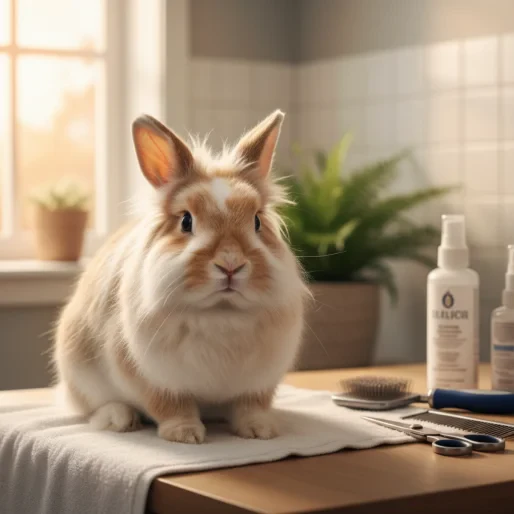
Assembling the right toolkit before starting prevents unnecessary stress for the rabbit. The following items cover the core requirements for a warm-weather grooming routine:
- Slicker brush (small, soft-pin): Designed for delicate rabbit skin. Avoid firm-pin slicker brushes intended for dogs.
- Wide-tooth metal comb: Essential for detecting and gently working through small tangles before they become mats.
- Flea comb (fine-tooth): Used during coat inspections to check for flea dirt, fly eggs, or mite debris.
- Mat splitter or seam ripper: For carefully slicing through small mats. Never pull mats away from the skin.
- Blunt-tipped grooming scissors (curved preferred): For trimming around the vent area and removing isolated mats that cannot be combed out.
- Small animal nail clippers (guillotine or scissor style): Purpose-built for rabbit nails. Human nail clippers can crush the nail.
- Styptic powder or cornstarch: To stop bleeding if a nail quick is accidentally nicked.
- Cotton buds and cotton pads: For scent gland cleaning.
- Rabbit-safe ear cleaner (optional): Only if recommended by a veterinarian for a specific concern.
- Coconut oil or veterinarian-approved lubricant: A tiny amount can help soften waxy scent gland buildup.
- Towel or grooming mat: Provides a non-slip surface and keeps the rabbit secure on a table or lap.
Step-by-Step Spring and Summer Grooming Routine
Step 1: Prepare the Environment
Choose a quiet, well-lit area away from loud noises or other animals. Place the rabbit on a towel-covered surface at a comfortable height. Grooming on the floor is also acceptable if the rabbit is calmer there. Have all tools within arm's reach to minimise handling time. Rabbits are prey animals: keeping sessions short (under fifteen minutes for daily brushing, under thirty minutes for a full routine) reduces stress and the risk of injury from sudden movements.
Step 2: Full-Body Coat Inspection
Before picking up a brush, run both hands slowly over the rabbit's entire body, feeling for lumps, tangles, crusty patches, or areas of heat. Pay particular attention to:
- Behind and beneath the ears: A common site for matting and ear mite debris.
- Under the chin and dewlap: Moisture from drinking can cause fur to clump and skin to become irritated.
- Armpits and groin: Friction zones prone to tight mats.
- Vent and tail area: Critical for detecting soiling, fly eggs (small white or yellow clusters), and early flystrike signs.
- Feet and hocks: Check for fur loss, redness, or sore hocks, especially on wire-floored enclosures.
If any white, rice-grain-sized eggs or small maggots are observed near the vent, this constitutes a veterinary emergency. Refer immediately to guidance on flystrike emergency signs and first aid.
Step 3: Brushing and Mat Removal
Begin brushing with the wide-tooth comb to identify tangles. Work in small sections, always brushing in the direction of hair growth. Support the skin with one hand while combing with the other to avoid pulling.
For detected mats:
- Small, loose tangles can typically be teased apart with fingers and then combed through.
- Tighter mats should be addressed with a mat splitter: slide the blade through the mat parallel to the skin, splitting it into smaller sections that can then be combed free.
- Mats that are tight against the skin, larger than a coin, or causing visible skin irritation should be removed by a rabbit-experienced groomer or veterinarian. Attempting to cut these at home risks lacerating the rabbit's thin skin.
After detangling, follow with the soft-pin slicker brush to remove loose undercoat. During heavy spring moults, a technique called "plucking" (gently pulling loose tufts of moulting fur by hand) is commonly used for Angora coats, as recommended by Angora breeder associations. This is only appropriate when the fur releases easily without resistance.
Step 4: Scent Gland Cleaning
Rabbits have scent glands located in two small pockets on either side of the genitals. These glands produce a dark, waxy, strong-smelling substance that can accumulate and cause discomfort or infection if not periodically cleaned. Warm weather tends to increase buildup.
To clean the scent glands:
- Gently restrain the rabbit in a secure position, either cradled on the back in a handler's lap (if the rabbit tolerates this) or with the hindquarters slightly elevated. Some rabbits tolerate this better with a second person assisting.
- Locate the two small slits flanking the genital area.
- Using a cotton bud lightly dampened with warm water or a trace of coconut oil, gently wipe away the dark waxy buildup from each pocket.
- Do not probe deeply or use force. If buildup is hardened and does not come away easily, soften it with a warm damp cotton pad held against the area for thirty seconds before reattempting.
- If the area appears red, swollen, or produces discharge with an unusual colour or odour, a veterinary examination is warranted.
Step 5: Nail Trimming
Rabbit nails grow continuously and, without regular trimming, can curl, snag on bedding or enclosure materials, and cause pain or abnormal foot posture. Professional grooming guidelines suggest trimming every four to six weeks, though the exact interval depends on the rabbit's activity level and the surfaces it walks on.
To trim nails safely:
- Hold the rabbit securely. Wrapping the rabbit in a towel ("bunny burrito" technique) can help keep the animal calm and prevent kicking.
- Identify the quick (the pink blood vessel visible inside lighter-coloured nails). On dark nails, shine a small torch behind the nail to illuminate the quick.
- Trim approximately 2mm beyond the quick using small animal nail clippers. Cut at a slight angle mirroring the nail's natural curve.
- If the quick is nicked, apply styptic powder or cornstarch with gentle pressure for thirty to sixty seconds.
- Trim all nails on all four feet, including the dewclaw on the front paws if present.
Rabbits that resist nail trimming consistently may benefit from professional grooming appointments until they become accustomed to handling.
Step 6: Parasite Check with Fine-Tooth Comb
After brushing, run a fine-tooth flea comb through the coat, particularly along the spine, behind the ears, and around the base of the tail. Tap the comb onto a white paper towel after each pass. Signs to look for include:
- Flea dirt: Small black specks that turn reddish-brown when dampened (this confirms the presence of digested blood).
- Mite debris: Fine white or grey flakes (sometimes called "walking dandruff" in cases of Cheyletiella mites).
- Fly eggs: Tiny clusters of white or yellowish eggs, especially around the vent. This requires urgent veterinary intervention.
- Lice: Small, pale, slow-moving insects attached to hair shafts.
- Patches of hair loss or scabbing: May indicate fungal infection (ringworm), mites, or bacterial dermatitis.
Any confirmed or suspected parasite finding should be followed up with a veterinarian. Rabbit-safe parasite treatments differ significantly from those used for dogs and cats, and some common dog or cat flea products are toxic to rabbits.
Frequency Guide by Coat Type
| Coat Type | Brushing | Scent Gland Check | Nail Trim | Full Parasite Check |
|---|---|---|---|---|
| Wool (Angora types) | Daily | Every 4 weeks | Every 4 to 6 weeks | Weekly (spring/summer) |
| Mane/Skirt (Lionhead) | Every 1 to 2 days | Every 4 to 6 weeks | Every 4 to 6 weeks | Weekly (spring/summer) |
| Dense Double Coat (Jersey Wooly) | Every 1 to 2 days (daily during moult) | Every 4 to 6 weeks | Every 4 to 6 weeks | Weekly (spring/summer) |
Warning Signs to Watch for During Grooming
Grooming sessions double as health checks. The following findings should prompt further action:
- Persistent scratching or head shaking: May indicate ear mites (Psoroptes cuniculi) or skin mites.
- Bald patches or thinning fur: Could be caused by barbering (self or cage-mate pulling), fungal infection, or hormonal issues.
- Redness, scabs, or crusting: Suggests dermatitis, mites, or bacterial infection.
- Wet or soiled fur around the vent: A significant flystrike risk factor. Determine the cause (diarrhoea, urinary issues, obesity preventing self-grooming) and consult a vet.
- Lumps or swellings under the skin: May be abscesses, cysts, or tumours. Veterinary assessment is essential.
- Overgrown or misaligned nails: Can alter gait and lead to sore hocks or joint strain.
- Foul odour from scent glands or ears: Often signals infection requiring veterinary treatment.
Owners who use AI pet health monitoring apps may find them helpful for tracking changes in skin and coat condition between grooming sessions, though these tools do not replace professional veterinary diagnosis.
Professional Groomer vs Home Grooming: Decision Guide
Many aspects of rabbit grooming can be safely performed at home with the right tools and knowledge. However, certain situations call for professional or veterinary intervention:
Safe for Home Grooming
- Daily brushing and loose fur removal
- Minor tangle detangling with fingers or wide-tooth comb
- Routine scent gland cleaning (when the rabbit is cooperative)
- Nail trimming (once confident with identifying the quick)
- Visual and tactile parasite checks
Seek a Professional Groomer
- Full-body clipping or shaving for Angora breeds (especially pre-summer clips)
- Large or skin-tight mats that risk cutting the skin during removal
- Rabbits that become extremely stressed, thump repeatedly, or attempt to bite during home grooming
- First-time owners who want hands-on guidance before grooming independently
Seek a Veterinarian
- Any sign of fly eggs or maggots near the vent or on the body
- Skin lesions, open sores, or areas of swelling
- Suspected mites, lice, or fungal infection
- Persistent vent soiling linked to digestive or urinary issues
- Rabbit in pain, hunched posture, or refusing to eat (these may indicate underlying illness unrelated to grooming)
It is worth noting that rabbit grooming expertise is less common among general pet groomers than dog or cat grooming. When choosing a professional, look for groomers who specifically list rabbit experience or are associated with organisations such as the National Association of Professional Creative Groomers (NAPCG) or breed-specific rabbit clubs.
Seasonal Adjustments for Spring and Summer
Beyond the core routine, a few warm-weather adjustments help keep long-haired rabbits comfortable and safe:
- Consider a hygiene clip: Trimming the fur shorter around the vent and belly (sometimes called a "sanitary trim") reduces soiling and lowers flystrike risk. This is especially recommended for rabbits that struggle to groom their own hindquarters due to age, obesity, or arthritis.
- Increase vent checks in fly season: During peak fly activity (typically late spring through early autumn), check the vent area at least twice daily, not only during formal grooming sessions.
- Monitor water intake and humidity: Damp fur from water bottles or high humidity environments creates conditions where mats form faster and skin infections develop more readily.
- Ensure adequate ventilation in the enclosure: Good airflow reduces heat buildup in dense coats and discourages flies. Owners of other small pets can find parallel advice in the spring guide for guinea pig owners, which covers environmental adjustments for warmer months.
- Stay informed on local regulations: Some regions have updated animal welfare requirements related to grooming and enclosure standards. Owners can review the latest changes in the 2026 global pet ownership laws guide.
Common Mistakes to Avoid
- Bathing a rabbit: Rabbits should rarely, if ever, be fully bathed. Water immersion causes extreme stress, hypothermia risk, and can be fatal in some cases. Spot cleaning with a damp cloth is the safer alternative for soiled areas.
- Using dog or cat flea treatments: Many topical flea products (particularly those containing fipronil in certain formulations or permethrin) can be dangerous or fatal to rabbits. Only use parasite treatments prescribed by a rabbit-knowledgeable veterinarian.
- Pulling mats out by force: This tears the delicate skin and causes pain. Always cut or split mats carefully, or seek professional help.
- Trimming nails too short: Cutting into the quick causes pain and bleeding. When in doubt, trim less and repeat more frequently.
- Skipping grooming sessions: Even a few missed days during a heavy moult can result in mats that require professional removal. Consistency is far more effective than occasional long sessions.
Building a Long-Term Grooming Schedule
Consistency is the foundation of effective rabbit grooming. A sample weekly framework for spring and summer might look like this:
- Daily: Quick five to ten minute brushing session. Visual check of vent area for soiling or fly eggs.
- Weekly: Thorough coat inspection with a flea comb. Check feet, ears, and eyes for abnormalities.
- Every four to six weeks: Nail trimming and scent gland cleaning. Full body assessment for lumps, weight changes, or skin issues.
- As needed: Sanitary trims around the vent. Mat removal for any new tangles found between sessions.
Keeping a simple grooming log (date, observations, actions taken) helps track patterns over time and provides useful information for veterinary consultations. Some owners find that digital health tracking tools, such as those reviewed in AI pet health app comparisons, simplify this process.
Frequently Asked Questions
Content Disclosure
This article was created using state-of-the-art AI models with human editorial oversight. It is intended for informational and entertainment purposes only and does not constitute veterinary medical advice. Always consult a licensed veterinarian for your pet's specific health needs. Learn more about our process.