Singapore's year-round heat and high humidity create unique challenges for freshwater aquariums. This guide covers species selection, cooling strategies, HDB considerations, and water management tailored to local conditions.
Key Takeaways
- Singapore's year-round ambient temperatures of 27 to 34 °C mean aquarium cooling is a permanent consideration, not a seasonal one.
- Persistent humidity above 80% renders clip-on fan cooling largely ineffective; chillers or air-conditioned rooms are the practical options here.
- PUB tap water is treated with chloramine, requiring a chloramine-specific dechlorinator rather than a basic chlorine neutraliser.
- HDB flat owners should verify floor load capacity before placing tanks larger than 150 litres, particularly on upper storeys.
- Selecting species native to warm Southeast Asian waters (28 to 32 °C) reduces equipment costs and stress on livestock.
- Evaporation in enclosed, air-conditioned rooms is lower than expected, but mineral creep still demands regular water changes.
Why Singapore Aquarists Face a Unique Set of Challenges
Most tropical aquarium guides worldwide assume a temperate baseline: a room that sits around 20 to 25 °C for much of the year, with a few hot months requiring extra attention. Singapore's equatorial climate eliminates that assumption entirely. Indoor temperatures in non-air-conditioned HDB flats and landed homes commonly reach 31 to 34 °C during the afternoon. Even in air-conditioned rooms, temperatures may rise to 28 to 30 °C when the unit cycles off overnight or during the day while residents are at work.
Compounding the heat, Singapore's average relative humidity hovers between 80 and 90%, which directly undermines the effectiveness of evaporative cooling methods popular in drier tropical regions. This guide addresses these realities with practical, locally relevant advice for anyone setting up a freshwater tank in Singapore.
Choosing a Location in Your HDB Flat or Home
Structural and Practical Considerations
- Floor load. A filled 200-litre tank with substrate, stand, and equipment weighs approximately 230 to 250 kg. In HDB flats, the standard floor loading capacity is typically 1.5 kN per square metre for residential units. A quality steel or solid wood stand that distributes weight across four or more contact points is advisable. For tanks exceeding 300 litres, consult a qualified contractor.
- Interior wall placement. Position the tank against an interior wall, away from windows. West-facing walls in Singapore receive intense late-afternoon sun and radiate heat well into the evening. Even indirect sunlight promotes rapid algae growth in warm water.
- Air-conditioned rooms. This is the single most effective cooling strategy in Singapore. If the room AC is set to 24 to 25 °C, many freshwater species will thrive without additional cooling equipment. Avoid placing the tank directly under the AC blower, as uneven surface cooling and accelerated localised evaporation can result.
- Power supply. Use a surge protector rated for aquarium use. Singapore's electrical supply is 230V, and most aquarium equipment sold locally is compatible. Keep all cables and power strips elevated above ground level, especially during the monsoon season when humidity peaks.
For broader guidance on reducing aquarium running costs while keeping conditions stable, see Cut Your Aquarium's Energy and Water Waste in 2026.
Species Selection for Singapore's Heat
One of the smartest decisions a Singapore-based beginner can make is to stock species that are comfortable at 28 to 32 °C. Many of these originate from Southeast Asian waters and are widely bred locally, making them affordable and readily available at aquarium shops across the island.
Species Comfortable at 28 to 30 °C
- Endler's Livebearer (Poecilia wingei): Extremely hardy, colourful, and widely bred in Singapore. Comfortable up to 30 °C with minimal fuss.
- Kuhli Loach (Pangio kuhlii): Native to Southeast Asia, including the Malay Peninsula. A peaceful bottom dweller comfortable to 30 °C.
- Cherry Barb (Puntius titteya): A peaceful schooling fish suited to 26 to 30 °C. Readily available locally.
- Bristlenose Pleco (Ancistrus sp.): Effective algae control, handles 28 to 30 °C provided dissolved oxygen is maintained.
Species Comfortable at 30 to 32 °C
- German Blue Ram (Mikrogeophagus ramirezi): One of the few cichlids that genuinely prefers warmer water (28 to 32 °C).
- Pearl Gourami (Trichopodus leerii): A labyrinth breather that takes atmospheric oxygen, reducing stress when dissolved oxygen dips at high temperatures. Native to this region.
- Cardinal Tetra (Paracheirodon axelrodi): Tolerates 30 to 31 °C if water is soft and well oxygenated.
- Wild-type Betta (Betta splendens): Native to Southeast Asia and naturally adapted to warm, shallow water. A strong choice for nano tanks in Singapore.
Species to Avoid Without a Chiller
- White Cloud Mountain Minnow (prefers 16 to 22 °C)
- Goldfish and fancy goldfish varieties (prefer 18 to 24 °C)
- Crystal Red Shrimp (stress and mortality increase sharply above 27 °C)
Cooling: Why Fans Rarely Work in Singapore
In arid hot climates, clip-on fans are a cost-effective way to reduce tank temperature by 2 to 4 °C through evaporative cooling. In Singapore, this approach is significantly less effective. Evaporative cooling depends on dry air absorbing moisture from the water surface. When ambient humidity already exceeds 80%, the air cannot absorb much additional moisture, and the cooling effect drops to 1 °C or less.
Practical Cooling Options for Singapore
- Air-conditioned room (recommended): The most energy-efficient approach if the room is already cooled for human comfort. Running the AC at 24 to 25 °C keeps most heat-tolerant species comfortable without additional equipment. The heater then serves as a thermostat, preventing dips when the AC cycles off at night.
- Aquarium chiller: Essential for keepers of temperature-sensitive species (discus, marine reef setups, or high-grade shrimp). Entry-level chillers suitable for tanks up to 200 litres typically cost SGD $300 to $800. Electricity consumption adds roughly SGD $15 to $40 per month depending on the unit and ambient conditions, based on current SP Group tariffs. The chiller's compressor generates waste heat, so it must be placed in a well-ventilated area, not inside a closed cabinet.
- Clip-on fans (limited use): May provide marginal benefit during slightly drier periods (typically February to March) or in dehumidified rooms. Priced at around SGD $20 to $50. Not recommended as a primary cooling solution in Singapore.
PUB Water and Water Management
Singapore's tap water, supplied by PUB (the national water agency), is treated with chloramine rather than free chlorine. This is an important distinction: chloramine does not dissipate by simply leaving water to stand overnight, unlike chlorine. A dechlorinator that specifically neutralises chloramine is required for every water change and top-off.
Typical PUB Tap Water Parameters
- pH: approximately 7.5 to 8.5 (slightly alkaline)
- Total hardness: moderate, generally in the range of 2 to 5 dGH
- Chloramine: present; requires chemical treatment
For species that prefer softer, more acidic water (such as Cardinal Tetras or wild-type Bettas), hobbyists often blend tap water with reverse osmosis (RO) water. RO units are widely available from aquarium retailers across Singapore.
Evaporation Management
- In an air-conditioned room, evaporation is lower than in open tropical conditions but still occurs. Expect to top off roughly 3 to 5% of tank volume per week.
- Use a tight-fitting glass or acrylic lid to reduce evaporation by approximately 50% compared to an open-top configuration.
- Top off only with dechlorinated freshwater. As pure water evaporates, dissolved minerals remain behind, gradually increasing total dissolved solids (TDS). Regular water changes (not just top-offs) are essential to reset mineral levels.
- Mark the tank glass at the normal water line with a small piece of tape. Top off when the level drops 1 to 2 cm below the mark.
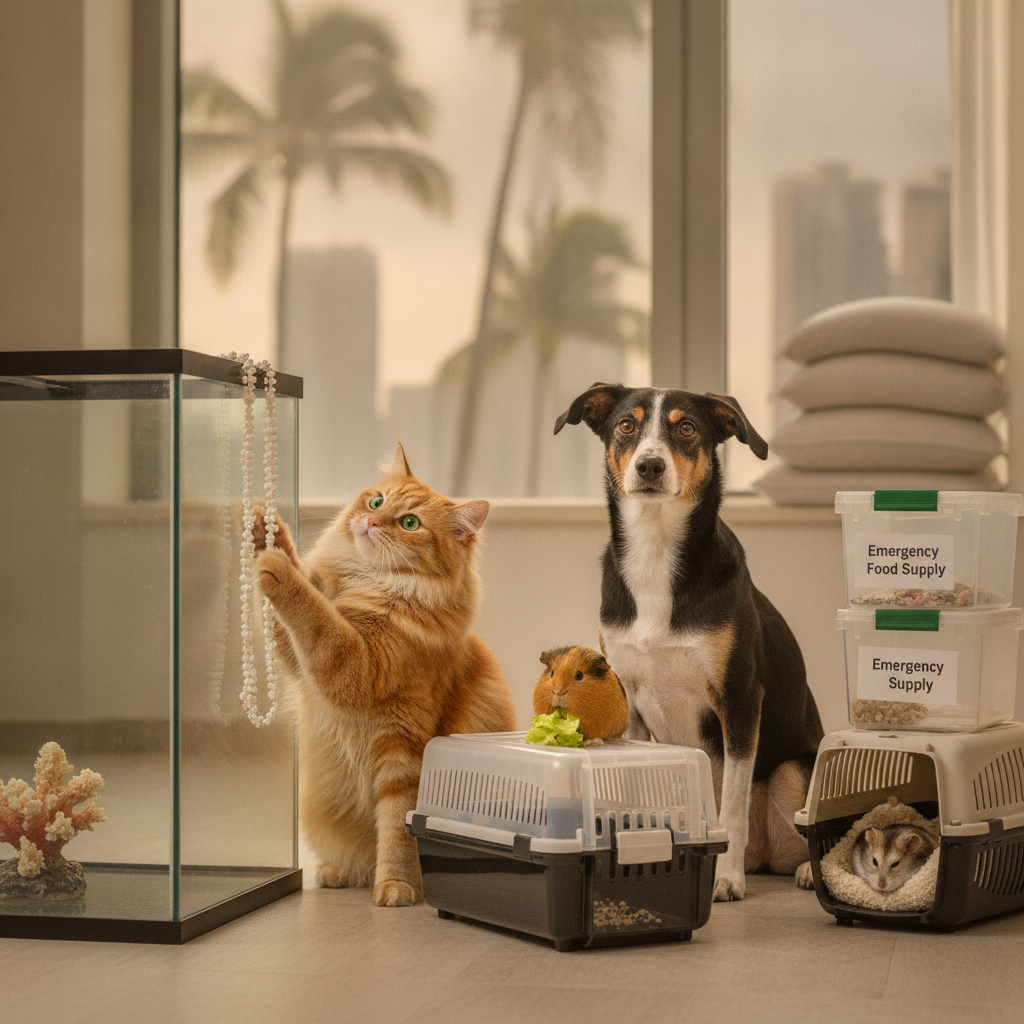
Power Outage Preparedness
While Singapore's power grid is highly reliable, brief outages do occur, and equipment failures can mimic the effects of a blackout. Preparing an outage kit is a sensible precaution, especially given the speed at which warm water loses dissolved oxygen.
Emergency Kit
- Battery-powered air pump with tubing and an airstone. This is the single most critical item. Without surface agitation, oxygen levels in 30 °C water can drop dangerously within two to three hours.
- Frozen water bottles. Keep two or three sealed bottles in the freezer. If temperature climbs above 33 °C during an extended outage, float one in the tank (wrapped in thin cloth). Monitor with a thermometer and remove once the target is reached.
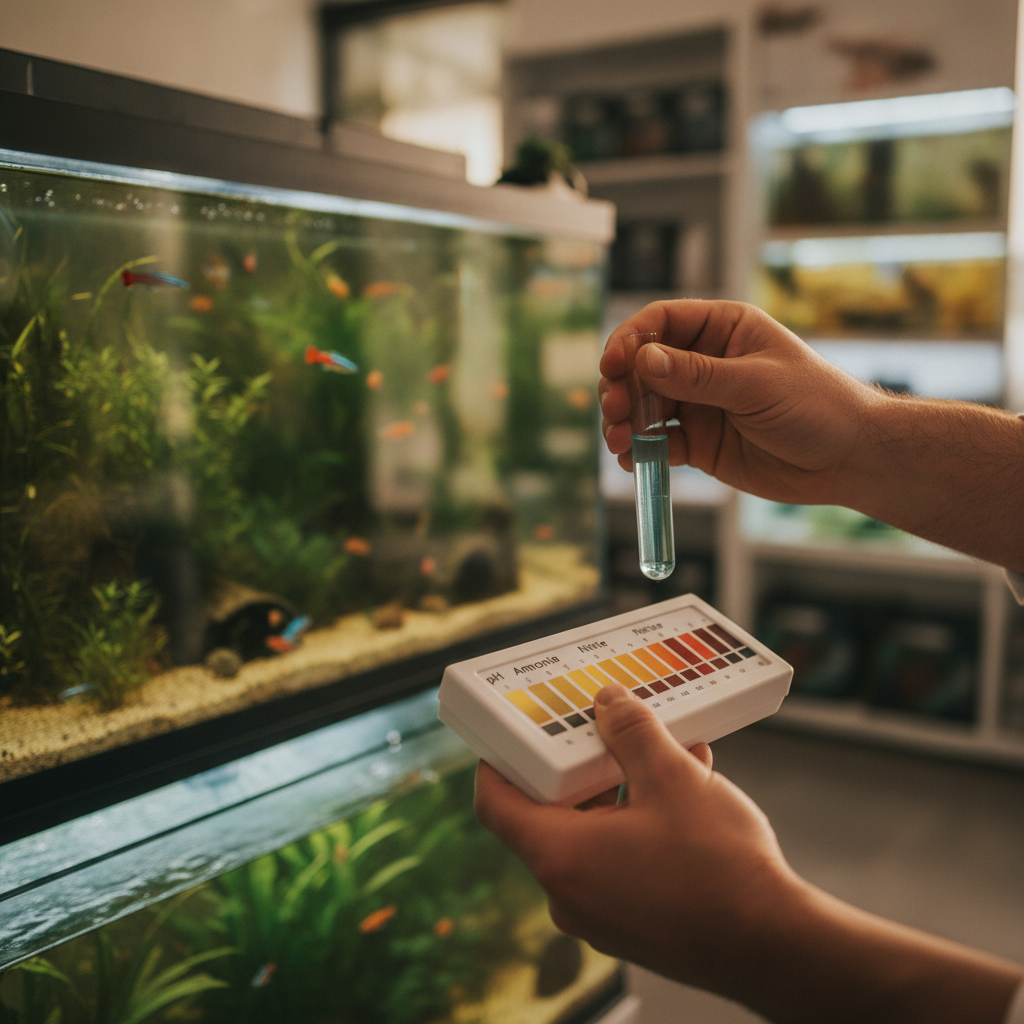
- Liquid ammonia and nitrite test kit. After a filter shutdown of more than two hours, the biological filter may partially crash. Test daily for 72 hours after power is restored.
- Chloramine-specific dechlorinator. Essential if an emergency water change is needed.
- UPS (uninterruptible power supply). A small UPS can keep a hang-on-back filter running for 30 to 60 minutes during brief outages.
Outage Response Steps
- Switch off all non-essential equipment (lights, auto feeder).
- Activate the battery air pump immediately.
- Reduce feeding to half rations once daily. Less food means less ammonia production.
- If water temperature exceeds 33 °C, float a frozen bottle wrapped in thin cloth.
- Once power returns, restart the filter first. Leave lights off for at least one hour to reduce stress on fish.
- Test water parameters daily for three days following any outage longer than one hour.
Year-Round Maintenance Calendar for Singapore
Unlike temperate regions where summer heat is a distinct season, Singapore requires consistent attention throughout the year. The calendar below is organised by quarterly focus areas rather than a narrow summer window.
January to March (Northeast Monsoon, Slightly Cooler)
- Ambient temperatures may dip to 24 to 27 °C on cooler nights. Confirm the heater thermostat is functional and set to the species' minimum comfort temperature (typically 26 °C).
- Perform a 20 to 25% water change monthly.
- Clean filter impellers; mineral buildup from top-offs can slow performance over time.
- Record baseline water parameters: ammonia, nitrite, nitrate, pH, TDS, and temperature.
April to June (Inter-monsoon, Peak Heat)
- Afternoon temperatures may reach 34 to 35 °C indoors. Verify cooling equipment is functioning correctly.
- Increase surface agitation by angling the filter outflow upward or adding a secondary airstone.
- Reduce lighting to six hours daily to limit heat from fixtures and slow algae growth.
- Perform a 20 to 25% water change every two to three weeks.
- Test the battery air pump monthly to confirm batteries are charged.
July to September (Southwest Monsoon)
- Humidity peaks. Monitor chiller performance closely; condensation on equipment can cause issues.
- Siphon substrate thoroughly, focusing on areas under decorations where detritus accumulates.
- Perform a 25 to 30% water change.
- Inspect fish for signs of heat stress: rapid gill movement, gasping at the surface, lethargy, or colour loss.
October to December (Inter-monsoon, Wet Season)
- Heavy rainfall may cause brief power fluctuations. Ensure the emergency kit is stocked and batteries are fresh.
- Algae growth often persists due to warmth and ambient light. Scrub glass panels and consider shortening the light cycle if algae blooms occur.
- Perform a 20 to 25% water change monthly.
- Review and restock dechlorinator supplies for the year ahead.
Regulations and Responsible Fishkeeping
The Animal and Veterinary Service (AVS), a cluster of the National Parks Board (NParks), oversees animal welfare in Singapore. While ornamental fishkeeping does not require licensing for common freshwater species, the import of certain species is regulated. CITES-listed species require proper documentation. Releasing aquarium fish into local waterways is illegal under the Parks and Trees Act and contributes to invasive species pressure on native ecosystems.
Responsible disposal of unwanted fish involves rehoming through local aquarium communities or returning them to a retailer. Never release fish into reservoirs, canals, or drains.
Printable Summary Checklist
- ☐ Tank placed on an interior wall, away from windows (especially west-facing walls).
- ☐ Floor and stand rated for total filled weight; HDB load limits verified for large tanks.
- ☐ Surge protector installed; cables elevated above floor level.
- ☐ Heat-tolerant species selected (comfort range 28 to 32 °C).
- ☐ Cooling solution confirmed: air-conditioned room or chiller (fans are insufficient in Singapore's humidity).
- ☐ Tight-fitting lid in place to reduce evaporation.
- ☐ Chloramine-specific dechlorinator on hand for PUB tap water.
- ☐ Emergency kit assembled: battery air pump, frozen bottles, ammonia test kit, dechlorinator.
- ☐ Heater positioned horizontally near tank bottom with a guard.
- ☐ Water change schedule set: 20 to 25% every two to four weeks, year-round.
- ☐ TDS and temperature logged weekly.
- ☐ Filter media cleaned in old tank water monthly.
Emergency Contact Information
If fish display acute distress (mass gasping, erratic swimming, or sudden deaths), take the following steps immediately:
- Perform an immediate 25% water change with temperature-matched, dechlorinated water.
- Maximise surface agitation with an airstone or by lowering the water level slightly below the filter outflow.
- Contact a local aquatics specialist for species-specific guidance. Singapore's active fishkeeping community, including established local aquarium forums and societies, can provide rapid peer advice.
Call the Animal Recovery Centre (ARC) or your nearest 24-hour veterinary clinic.
Several clinics in Singapore offer 24-hour emergency services. The AVS (Animal & Veterinary Service) website lists all licensed clinics.
For further reading on managing aquarium costs and sustainability, visit Cut Your Aquarium's Energy and Water Waste in 2026.
Frequently Asked Questions
Do clip-on fans work for aquarium cooling in Singapore? ↓
Is PUB tap water safe for aquarium fish? ↓
How much does an aquarium chiller cost to run in Singapore? ↓
Can I keep goldfish in Singapore without a chiller? ↓
Do I need a licence to keep ornamental fish in Singapore? ↓

Tom Ashford
Pet Safety & Home Consultant
Pet safety and home-proofing specialist — systematic hazard prevention and emergency preparedness for pet owners.
Content Disclosure
This article was created using state-of-the-art AI models with human editorial oversight. It is intended for informational and entertainment purposes only and does not constitute veterinary medical advice. Always consult a licensed veterinarian for your pet's specific health needs. Learn more about our process.