
In this article
- Key Takeaways
- Why Summer Heat Is an Aquarium Emergency
- Side by Side Comparison Table
- Option 1: Aquarium Cooling Fans
- Option 2: Aquarium Chillers
- Option 3: DIY and Household Methods
- Choosing by Tank Size and Setup
- Cost and Energy Comparison
- Lifestyle Match Guide: Which Fits Your Situation?
- Adoption and Sourcing Considerations
- Decision Checklist: Which Is Right for You?
- Practical Tips for All Methods
Key Takeaways
- Most tropical fish show heat stress signs when water exceeds 28 to 30 °C (82 to 86 °F), depending on species. Coldwater species like goldfish and white cloud minnows are at risk even earlier.
- Clip on cooling fans are the cheapest and easiest solution for nano and small tanks (up to roughly 100 litres or 26 gallons), but they rely on evaporation and become less effective in humid climates.
- Aquarium chillers offer precise, reliable temperature control for medium to large tanks and are essential for sensitive livestock such as reef corals, axolotls, and discus.
- DIY methods (frozen bottles, room fans, partial water changes) work as short term emergency fixes but are unreliable for sustained heatwaves.
- Running costs vary dramatically: fans add minimal electricity, while chillers can increase energy bills noticeably, especially on larger units.
Why Summer Heat Is an Aquarium Emergency
Water holds heat far longer than air. When ambient room temperature climbs above 26 °C (79 °F) for several consecutive days, most indoor aquariums will follow. Elevated water temperatures reduce dissolved oxygen, accelerate harmful bacterial growth, and trigger physiological stress in fish. Species such as crystal red shrimp, axolotls, and many coldwater fish can suffer organ damage or death within hours at temperatures that might feel only mildly warm to a human.
Planning ahead is essential. Reactive cooling during a heatwave is far less effective than having the right equipment already installed and tested. The guide below compares three main approaches so aquarium owners can make an informed choice before the mercury rises.
Side by Side Comparison Table
| Factor | Clip On / Aquarium Fans | Aquarium Chillers | DIY and Household Methods |
|---|---|---|---|
| Best tank size | Nano to small (up to roughly 100 L / 26 gal) | Medium to large (75 L / 20 gal and above) | Any size as a temporary fix |
| Typical purchase cost | Around 15 to 50 USD or equivalent | Around 150 to 800+ USD depending on capacity | Near zero to minimal |
| Cooling capacity | Can lower water 2 to 4 °C (3 to 7 °F) below ambient | Can hold a precise set point regardless of ambient temperature | Unpredictable, typically 1 to 3 °C temporarily |
| Energy use | Very low (typically 2 to 10 watts per fan) | Moderate to high (50 to 500+ watts depending on unit size) | Negligible to low |
| Noise level | Low to moderate hum | Moderate; compressor models produce noticeable vibration | Variable |
| Humidity impact | Increases room humidity through evaporation | Minimal | Variable |
| Reliability | Good, but limited by ambient humidity and temperature extremes | Excellent; thermostat controlled | Poor for sustained use |
| Maintenance | Low; top off evaporated water regularly | Moderate; clean condenser, check refrigerant lines | High; requires constant manual intervention |
Option 1: Aquarium Cooling Fans
How they work
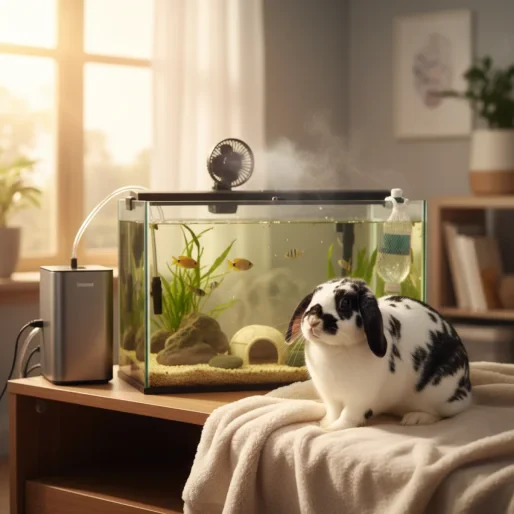
Aquarium cooling fans sit on the tank rim or clip to the back glass, blowing air across the water surface. This accelerates evaporation, and because evaporation is an endothermic process, it draws heat out of the water. Many models include a built in thermostat that activates the fan only when a set temperature is exceeded.
Strengths
- Low cost: Entry level single fan units start around 15 to 20 USD, with dual or quad fan arrays costing up to roughly 50 USD.
- Easy installation: No plumbing or sump required. Most units clip on in seconds.
- Minimal electricity: A typical two fan unit draws around 5 watts, adding only pennies per day to the electricity bill.
- Quiet operation: Most aquarium specific fans are significantly quieter than household desk fans.
Limitations
- Evaporation increases water loss: Owners should expect to top off with dechlorinated freshwater more frequently. In saltwater tanks, this is critical because evaporation raises salinity.
- Humidity dependent: In regions where summer humidity regularly exceeds 70 to 80 percent, evaporative cooling becomes substantially less effective.
- Limited cooling power: Fans typically achieve 2 to 4 °C of reduction below ambient at best. If the room reaches 35 °C, the tank may still sit at 31 °C or higher.
Best suited for
Nano tanks and freshwater aquariums up to about 100 litres in climates with moderate summer heat and low to moderate humidity. Popular among planted tank hobbyists keeping species such as neon tetras, bettas, and shrimp that benefit from a few degrees of relief.
Option 2: Aquarium Chillers
How they work
Aquarium chillers use a refrigeration compressor (similar to a small air conditioner) to actively remove heat from water pumped through the unit. An internal thermostat maintains the set temperature precisely, cycling the compressor on and off as needed. Inline chillers connect between the canister filter outlet and the return; drop in or submersible coil models sit inside a sump.
Strengths
- Precise temperature control: Most units hold the set point within 0.5 °C, regardless of room conditions.
- Scalable: Chillers are available for tanks from about 50 litres up to several thousand litres. Manufacturers publish BTU or wattage ratings matched to tank volume.
- Essential for sensitive livestock: Reef aquariums, axolotl tanks, and discus setups where even small temperature spikes can be harmful typically require a chiller in warm climates.
- Works in any humidity: Because chillers use active refrigeration rather than evaporation, humidity does not affect performance.
Limitations
- Higher purchase cost: Small units rated for 100 to 200 litres typically cost 150 to 300 USD. Larger reef grade chillers can exceed 500 to 800 USD.
- Energy consumption: A 1/10 HP chiller commonly draws around 100 to 150 watts while running. In sustained summer heat, the compressor may cycle frequently, leading to noticeable increases in electricity costs.
- Heat exhaust: Chillers expel warm air into the room, which can raise ambient temperature and create a feedback loop in small, poorly ventilated spaces.
- Noise and vibration: Compressor based chillers are louder than fans, which may be a concern in bedrooms or quiet living areas.
- Space and plumbing: Most inline chillers require a pump or canister filter with adequate flow rate. The unit itself needs clearance for ventilation.
Best suited for
Medium to large tanks (75 litres and above), saltwater and reef setups, axolotl keepers, and any situation where reliable, precise cooling is non negotiable. Aquarists in hot or humid climates, or those keeping temperature sensitive species, generally consider a chiller a worthwhile long term investment.
Option 3: DIY and Household Methods
Common approaches
- Frozen water bottles: Sealed bottles of ice are floated in the tank or placed in the sump. They provide temporary cooling but melt within a few hours and can cause rapid temperature swings if used carelessly.
- Room air conditioning: Running household AC to cool the room indirectly cools the tank. This works well but is expensive and may not be practical in all living situations.
- Partial water changes with cooler water: Replacing 10 to 15 percent of tank water with slightly cooler (not cold) dechlorinated water can provide relief. Sudden large temperature drops should be avoided as thermal shock is itself harmful.
- Removing the tank lid: An open top increases surface gas exchange and allows some evaporative cooling, but also increases the risk of fish jumping out.
- Household fans aimed at the water surface: A desk fan or clip fan can replicate the effect of an aquarium fan at lower cost, though without thermostat control or optimised airflow design.
Strengths
- No upfront cost: Most households already own the materials needed.
- Immediate availability: Useful as a first response while waiting for proper equipment to arrive.
Limitations
- Inconsistent and labour intensive: Frozen bottles need replacing every few hours. Manual water changes are time consuming.
- Risk of rapid temperature swings: Poorly managed DIY cooling can cause thermal shock, which is as dangerous as the overheating itself.
- Not sustainable: During a week long heatwave, manually managing tank temperature around the clock is impractical.
Best suited for
Emergency situations, very mild heat spikes, or as a supplementary measure alongside fans or chillers. DIY methods should not be the sole cooling strategy for tanks housing sensitive species.
Choosing by Tank Size and Setup
Nano and small tanks (under 60 L / 15 gal)
A clip on fan is usually sufficient in temperate climates. Because small water volumes heat up and cool down rapidly, even modest evaporative cooling can make a meaningful difference. Owners of nano reef tanks or shrimp tanks in hot regions may still need a small chiller, as the margin for error in tiny volumes is slim.
Medium tanks (60 to 200 L / 15 to 53 gal)
Fans may suffice if room temperature rarely exceeds 28 to 30 °C. For tanks housing corals, axolotls, or other heat sensitive animals, a 1/10 HP to 1/5 HP chiller is a common recommendation. The higher upfront cost typically pays for itself in reduced livestock losses and lower stress.
Large tanks (200 L+ / 53 gal+)
Evaporative fans alone are unlikely to provide adequate cooling for large volumes in warm conditions. A properly sized chiller, matched to the tank volume and ambient temperature differential, is the standard professional recommendation. Some hobbyists use multiple fans as a supplementary measure to reduce how hard the chiller has to work, extending compressor life and lowering energy use.
Cost and Energy Comparison
The following estimates reflect typical ranges and will vary by region, brand, and usage pattern. They are intended as general guidance rather than precise figures.
| Cost Factor | Fans | Chiller (1/10 HP example) | DIY |
|---|---|---|---|
| Purchase price | 15 to 50 USD | 150 to 300 USD | 0 to 20 USD |
| Monthly electricity (summer estimate) | Under 1 USD | 5 to 20 USD depending on cycling frequency | Negligible (unless running household AC) |
| Ongoing costs | Replacement fan units every 2 to 4 years | Occasional maintenance; compressor lifespan typically 5 to 10+ years | Ice, water treatment supplies |
| Hidden costs | Increased water top offs; salt creep in marine tanks | May need a more powerful return pump; room ventilation | Time and labour; risk of livestock loss |
Lifestyle Match Guide: Which Fits Your Situation?
- Budget conscious owner with a small freshwater tank in a temperate climate: A clip on fan paired with a digital thermometer and alert system is a practical, low cost solution.
- Reef or coral keeper in any climate: A chiller is strongly recommended. Corals can bleach at sustained temperatures just a degree or two above their comfort zone.
- Axolotl owner: Axolotls require water below roughly 20 °C (68 °F), which is difficult to achieve with fans alone in most summer conditions. A chiller is typically necessary.
- Renter with limited space or modification restrictions: Fans require no permanent installation. A portable chiller can sit beside the tank stand without drilling or plumbing changes if paired with a canister filter.
- Multi tank fishroom: Cooling the room with a household air conditioner may be more cost effective than fitting individual chillers to every tank.
Adoption and Sourcing Considerations
Before purchasing any aquatic animal, prospective owners should factor cooling costs into the total cost of care. Impulse purchases of temperature sensitive species (such as axolotls, certain shrimp species, or cold water marine fish) without a cooling plan frequently lead to preventable losses. Reputable aquatic retailers and rescue organisations typically ask about the buyer's setup, including temperature management, before rehoming sensitive species.
For those exploring other aspects of responsible pet ownership, the Spring Hazard Briefing Every Pet Sitter Needs covers seasonal risks across multiple pet types, and Why Senior Dogs and Cats Overheat Faster offers a useful parallel look at how warm weather affects companion animals more broadly.
Decision Checklist: Which Is Right for You?
Use the following checklist to narrow down the best approach:
- What is your tank volume? Under 60 litres often suits fans. Over 200 litres typically calls for a chiller.
- What species do you keep? Research the upper temperature tolerance of every species in the tank. The most heat sensitive species dictates the cooling requirement.
- What is your summer room temperature? If the room routinely exceeds 30 °C and you cannot run household AC, a chiller is likely necessary.
- What is your local humidity? High humidity reduces fan effectiveness significantly.
- What is your budget for both purchase and running costs? A chiller costs more upfront but prevents expensive livestock losses. Fans are economical but have performance limits.
- How much time can you dedicate? DIY methods require constant attention. Fans and chillers with thermostats work autonomously.
- Do you have adequate ventilation for a chiller? Compressor chillers need airflow around the unit to expel heat. A cupboard with no ventilation will reduce efficiency.
Practical Tips for All Methods
- Monitor continuously: A digital thermometer with a high temperature alarm is an inexpensive safeguard that every aquarium should have during summer.
- Reduce heat inputs: Switch to LED lighting (which runs cooler than older fluorescent or metal halide fixtures), minimise direct sunlight on the tank, and ensure powerheads or pumps are not adding unnecessary heat.
- Increase surface agitation: Higher oxygen exchange at the surface helps fish cope with warmer water. An airstone or adjusted filter outlet can assist.
- Plan for power outages: Heatwaves often coincide with grid strain and blackouts. Having battery operated air pumps and frozen water bottles on standby is a sensible precaution.
- Avoid overfeeding: Warmer water holds less oxygen and breaks down waste faster. Reducing feeding slightly during heat spikes helps maintain water quality.
Responsible summer preparation protects aquatic animals from preventable suffering. Whether the solution is a simple fan or a dedicated chiller, the key is matching the method to the tank size, species requirements, and local climate before the heat arrives.
Frequently Asked Questions
Content Disclosure
This article was created using state-of-the-art AI models with human editorial oversight. It is intended for informational and entertainment purposes only and does not constitute veterinary medical advice. Always consult a licensed veterinarian for your pet's specific health needs. Learn more about our process.