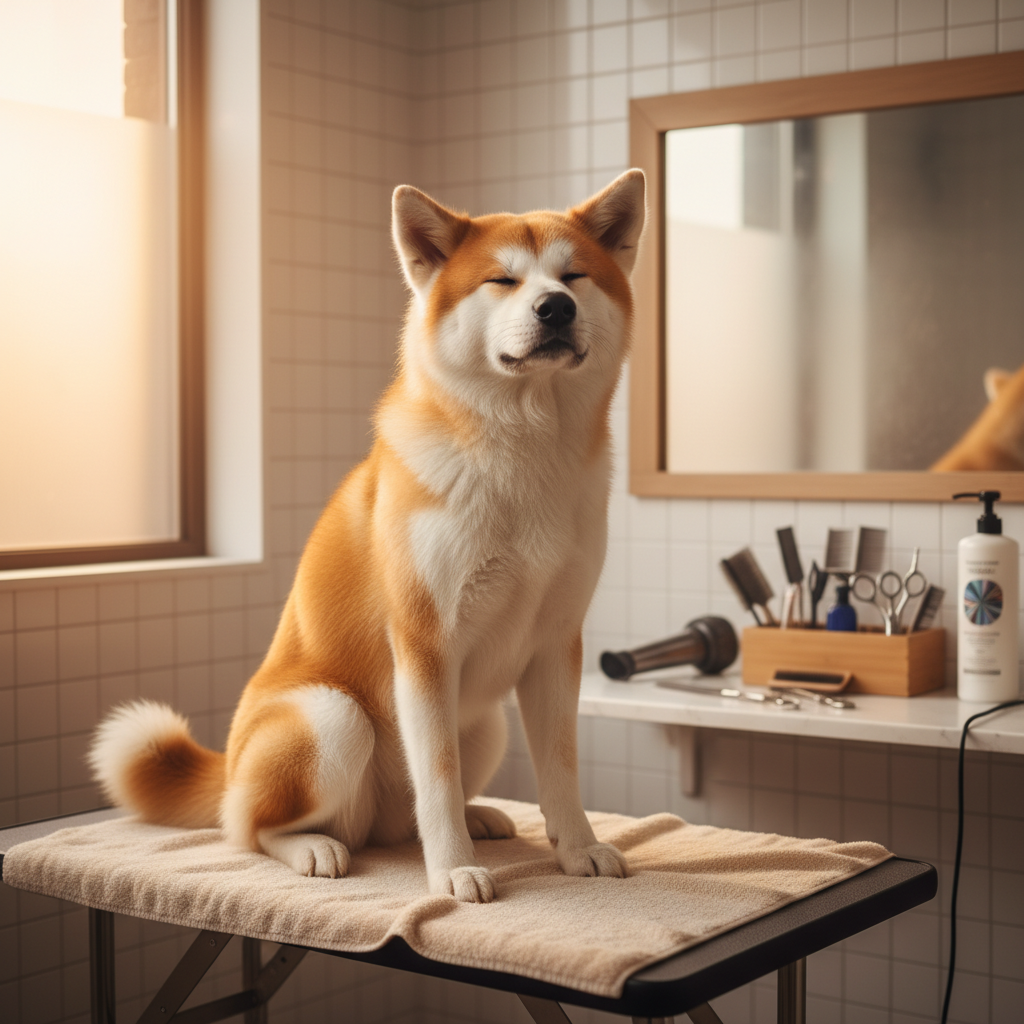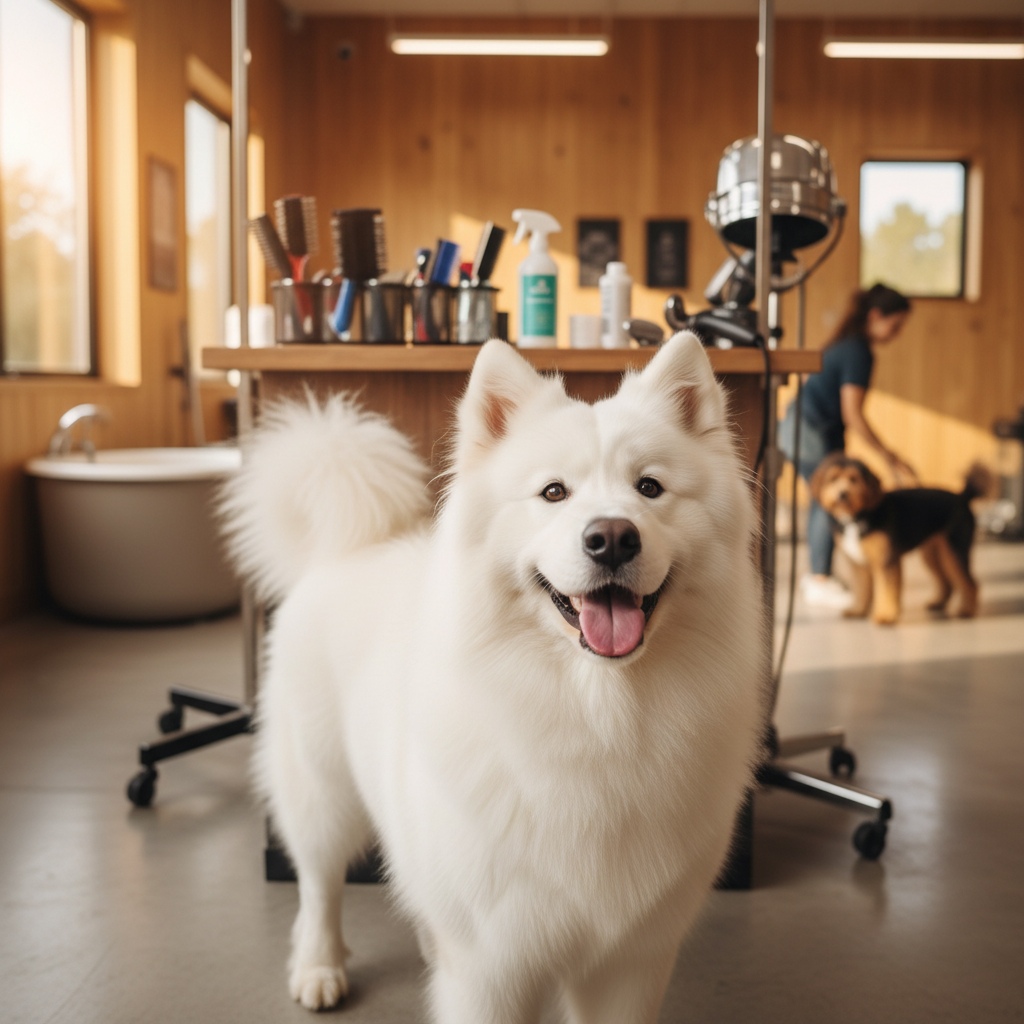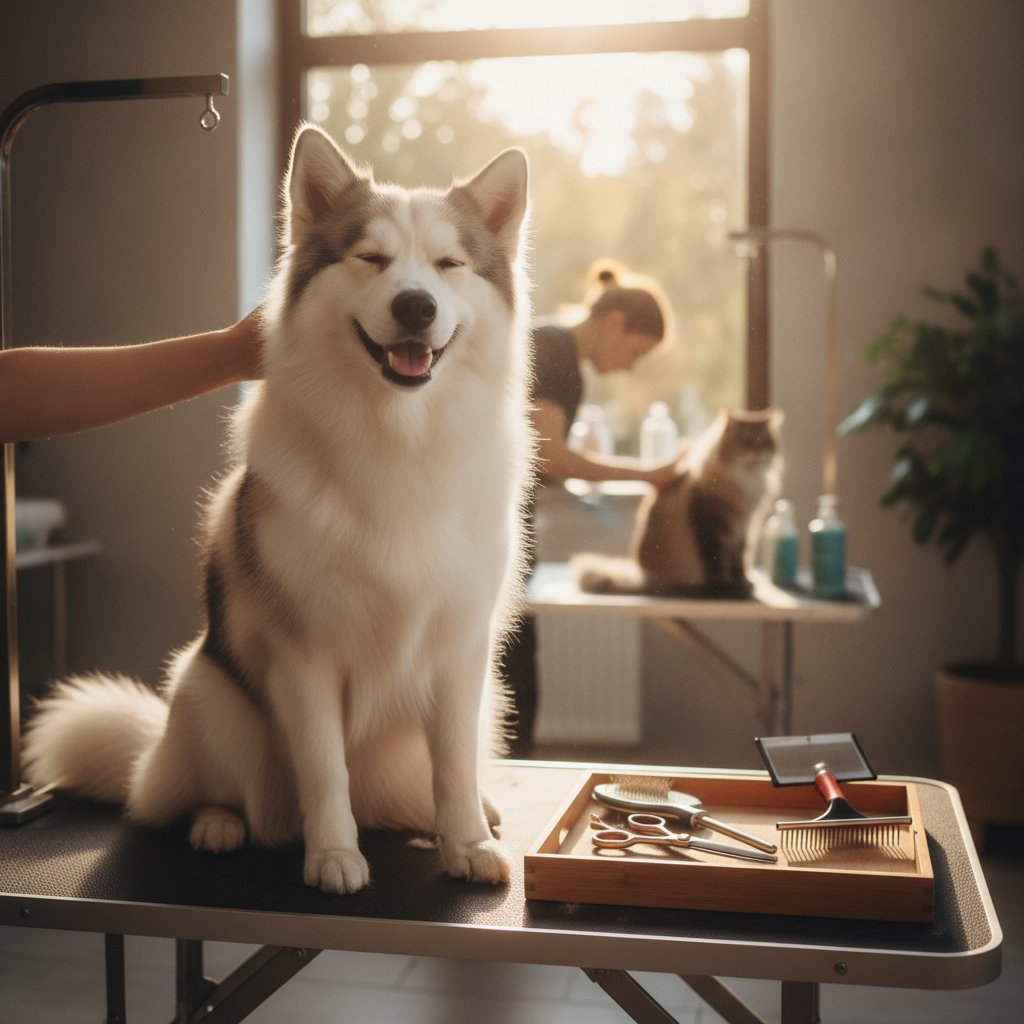
Canadian summers push double-coated dogs into heavy coat blow, and July heat plus lake swims create the perfect conditions for mats and hot spots. This guide covers de-shedding tools, safe clipping decisions, and a weekly brushing routine for July and August.
Key Takeaways
- Heat and daylight drive shedding, not temperature alone. Coat blow in double-coated dogs is triggered largely by photoperiod (day length), which peaks around the June solstice, so the heaviest undercoat release usually lands in July across most of Canada.
- The undercoat is the target, the guard coat is not. Correct de-shedding removes dead woolly undercoat while leaving the harsh outer guard hairs intact, because the guard coat provides sun protection and insulation against heat.
- Shaving a healthy double coat is rarely the answer. Professional grooming bodies including the International Professional Groomers (IPG) and the National Dog Groomers Association of America (NDGAA) generally advise against clipping healthy double coats, as regrowth can be patchy and sun protection is lost.
- Wet coat plus trapped undercoat equals hot spots. After lake swims and cottage weekends, drying to the skin within a few hours matters more than any product you apply.
- Weekly minimum in July and August: two to three full brush-outs per week for most double-coated breeds, rising to daily during peak blow.
- Refer to a veterinarian for any spreading, weeping, hot, or painful skin lesion. Hot spots (pyotraumatic dermatitis) can progress within hours.
Why Summer Coat Care Matters for Your Dog's Health
Double-coated breeds are built for Canadian winters, not Canadian Julys. Huskies, Malamutes, Golden and Labrador Retrievers, German Shepherds, Bernese Mountain Dogs, Australian Shepherds, Samoyeds, Newfoundlands, and Great Pyrenees all carry two distinct hair types: a dense, soft, woolly undercoat and a longer, coarser layer of guard hairs. The undercoat insulates. The guard coat repels water, deflects UV, and shields the skin from insects and abrasion.
When the undercoat sheds seasonally, it does not simply fall away. In many dogs, dead undercoat becomes trapped within the living coat, forming a felted layer that sits flat against the skin. Professional consensus in the grooming industry is clear about what happens next: trapped undercoat prevents air from reaching the skin, holds moisture after swimming or rain, and dramatically reduces the coat's ability to do the one job it is supposed to do in summer, which is regulate temperature through airflow.
The practical consequences show up in a predictable pattern. Owners commonly report a dog who seems fine in June, then in mid-July starts scratching behind the ears, develops a damp musty smell along the lower back, or presents with a red raw patch on the cheek or hip that appeared seemingly overnight. That patch is usually pyotraumatic dermatitis, more commonly called a hot spot, and it is one of the most frequent summer dermatology presentations in thick-coated dogs.
Why Coat Blow Accelerates in July
Shedding cycles in dogs are governed primarily by photoperiod, the number of daylight hours perceived through the eye, which influences melatonin release and in turn the hair growth cycle. Canada's extreme seasonal daylight swing (a June day in Edmonton runs well past sixteen hours) makes seasonal shedding far more dramatic than in dogs living near the equator or in climate-controlled indoor environments year-round.
The hormonal signal arrives around the solstice, but the physical release of hair follows several weeks later. That lag is why the heaviest visible shedding typically hits between late June and early August. Heat contributes as a secondary accelerator: increased skin surface circulation and higher activity levels help loosen follicles that have already entered the telogen (resting) phase. Humidity along the Great Lakes corridor and in the Maritimes adds a further complication, because damp undercoat clumps more readily than dry undercoat.
Dogs who spend most of their time indoors under artificial light often shed moderately year-round instead of in two sharp seasonal blows. Working dogs, farm dogs, and cottage dogs with high outdoor exposure tend to blow coat harder and faster.
Tools You Actually Need (and Two to Use Carefully)
Tool selection matters more for double coats than for almost any other coat type, because the wrong tool damages guard hairs that take a year or more to replace.
Core Tools
- Undercoat rake: The single most important tool for a blowing coat. Rounded, widely spaced metal pins reach through the guard coat and pull dead undercoat without cutting. Choose pin length appropriate to coat depth: shorter for a Lab, longer for a Malamute or Newfoundland.
- Slicker brush: Fine angled wire pins for surface tangles, feathering, and finishing. Use light pressure and always brush in the direction of hair growth on the body.
- Wide-tooth metal comb (greyhound comb): The verification tool. If a comb passes cleanly from skin to tip through every section, the dog is genuinely brushed out. If it snags, the brushing is not finished.
- Pin brush: Useful for longer-coated breeds such as Bernese and Great Pyrenees to lift and separate coat without stripping.
- High-velocity dryer (force dryer): Arguably the most effective de-shedding tool in professional grooming. It blasts loose undercoat out of the coat and dries to the skin after swimming. Home-scale versions exist, but they must be used outdoors and with ear protection considerations for noise-sensitive dogs.
- Detangling or de-shedding conditioner spray: Light lubrication reduces breakage during brush-outs. Never brush a dry, matted coat aggressively.
Tools to Use With Caution
- Bladed de-shedding tools: The popular hand-held tools with a fine serrated blade edge do remove undercoat quickly, but they also cut guard hairs when used with pressure or on the same area repeatedly. Overused, they leave a dull, frizzed outer coat and can cause blade burn on the skin. Use light passes, limited repetitions, and avoid bony areas entirely.
- Clippers on a healthy double coat: See the dedicated section below. This is the decision owners most often get wrong in July.
What Carding Means, and When It Applies
Carding is a professional finishing technique using a stripping knife or carding tool held nearly flat, drawn through the coat to remove soft dead undercoat and leave a smooth, tight outer coat. It is standard practice in breed-standard preparation for many sporting and working breeds. Carding is a skill-dependent technique: applied with too steep an angle or too much pressure, it removes guard hair and creates visible tram lines. Most owners are better served by an undercoat rake at home and letting a groomer card during a professional session.
The Step-by-Step Summer Brush-Out Routine
Work in a systematic pattern so nothing is missed. Professional practice is to divide the dog into sections and complete each one fully before moving on.
Step 1: Assess Before You Touch a Brush
Run your hands over the whole dog. You are checking for mats, damp patches, ticks, lumps, and any area where the dog flinches. Pay particular attention to the classic problem zones: behind and below the ears, the ruff and shoulder blade area, the armpits, the britches (rear thighs), the base of the tail, and the belly and groin. Mats near the ears are extremely common in retrievers and shepherds because the fine hair there tangles readily and the dog cannot reach it to self-groom.
Step 2: Light Lubrication
Mist the section lightly with a detangling or grooming spray. Damp is fine, soaked is not. Brushing a bone-dry double coat causes static, breakage, and discomfort.
Step 3: Line Brushing
This is the technique that separates an effective brush-out from a cosmetic one. Starting low on a limb or at the bottom of a body section, part the coat horizontally with one hand so you can see the skin. Brush only the exposed layer downward with the slicker, then release a new thin layer above it and repeat. Work upward, layer by layer, until the section is complete. Line brushing ensures you are reaching the undercoat at the skin, not just fluffing the top.
Step 4: Rake the Undercoat
Switch to the undercoat rake and work in the direction of hair growth, using slow, moderate-pressure strokes. During peak blow you should be pulling out substantial clumps. Stop when the rake stops producing hair from that section rather than continuing to work an already clear area.
Step 5: Comb Check
Pass the metal comb from skin to tip through every section. Any resistance means undercoat is still trapped. This step is non-negotiable if the dog will be swimming.
Step 6: Handle Mats Correctly
Small, loose tangles can be worked apart with fingers and a slicker, holding the hair at the base to avoid pulling the skin. Tight mats that sit flat against the skin should not be attacked with scissors. Skin lifts into the base of a mat, and lacerations from owner scissoring are a well-recognised emergency presentation. Tight or extensive matting is a professional groomer job.
Step 7: Ears, Feet, Nails
Check ear canals for odour, redness, or discharge, particularly in swimming dogs, and flag anything abnormal to your veterinarian. Trim hair between the paw pads level with the pad surface (not into the webbing) to reduce grass seed and debris trapping. Keep nails short so the foot loads correctly on hot pavement and dock boards.
Hot Spots After Lake Swims and Cottage Weekends
The Canadian cottage weekend is a specific grooming risk profile: repeated swims in lake water, long grass and bush exposure, insect activity, and often a dog who sleeps on a dock or in a screened porch while still damp.
How Hot Spots Develop
Pyotraumatic dermatitis begins with an itch trigger, then self-trauma. The dog licks, chews, or scratches a spot, damages the skin surface, and surface bacteria colonise the moist damaged area. Under a thick coat holding lake water, the lesion can expand from a coin to a palm-sized weeping patch within twelve to twenty-four hours. Common triggers include flea bites, biting insects, trapped moisture, ear infections, and allergic skin disease.
Prevention Protocol for Swim Days
- Rinse with clean fresh water after every lake or river swim to remove algae, silt, and organic debris.
- Dry to the skin, not just to the touch. Towel firmly, then use a force dryer or at minimum keep the dog in a well-ventilated dry space and rake the coat while it dries. A double coat can feel dry on the surface while remaining wet at skin level for many hours.
- Brush before swimming, not only after. A coat that is free of trapped undercoat dries far faster.
- Check high-risk zones daily: cheeks and jawline, behind the ears, neck ruff, hips, and tail base.
- Keep parasite prevention current per your veterinarian's recommendation, since flea allergy is a leading hot spot trigger.
- Avoid swimming in water with visible blue-green algae blooms, which can be seriously toxic to dogs. Provincial and municipal authorities post advisories for affected lakes.
What to Do If You Find One
Do not shave it yourself with household tools, and do not apply human topical products without veterinary direction. Keep the area dry, prevent further licking, and contact your veterinarian. Veterinary management typically involves clipping the surrounding hair to expose and dry the lesion, cleaning, and appropriate medication. Prompt treatment usually resolves these quickly; delayed treatment lets them spread. Any lesion that is hot, painful, spreading, weeping, foul-smelling, or accompanied by lethargy or fever warrants same-day veterinary attention.
The Clipping Question: Huskies, Retrievers, and Shave-Downs
This is the most contentious summer grooming decision, and the professional position is more nuanced than the internet slogan of "never shave a double coat."
Why Shaving a Healthy Double Coat Is Usually the Wrong Call
- It does not cool the dog effectively. Dogs thermoregulate primarily through panting and, to a lesser degree, through paw pad and vascular mechanisms, not through skin surface evaporation the way humans do. A properly de-shedded coat traps a layer of air that insulates against incoming heat.
- Sunburn and UV exposure risk rises, particularly in light-skinned dogs and in dogs with sparse regrowth.
- Regrowth is unpredictable. Undercoat regrows faster than guard coat, producing a woolly, dull, and sometimes permanently altered texture. In some dogs, particularly older ones and in Nordic breeds, guard coat regrowth is patchy or does not fully return. Post-clipping alopecia is a recognised phenomenon.
- Insect and abrasion protection is lost. Cottage country in July means blackflies, mosquitoes, deer flies, and horseflies.
When Clipping Is Legitimately Appropriate
Grooming professionals do clip double coats in specific circumstances, and refusing outright is not always in the dog's interest:
- Severe pelted matting where the coat cannot be safely brushed out. Humane de-matting standards prioritise the dog's welfare, and a full clip is preferable to hours of painful dematting.
- Medical necessity: surgical preparation, treatment of extensive skin disease, wound management, or veterinary instruction.
- Mobility-limited, incontinent, or geriatric dogs where hygiene management requires shorter coat, typically as a sanitary trim rather than a full body shave.
- Partial functional trims: tidying britches, sanitary areas, paw pads, and belly hair for cooling and cleanliness. This is very different from a full shave-down and is often a sensible summer compromise.
For a Husky or Malamute with a sound coat, the professional answer is a thorough de-shed and bath-and-blow-out, not a clip. For a Golden Retriever, a light tidy of feathering, britches, and feet plus aggressive undercoat removal achieves both comfort and appearance. If any groomer proposes a full shave-down on a healthy double coat as a routine summer service, ask for the reasoning.
Frequency Guide by Coat and Breed Type
Nordic and Spitz Breeds (Husky, Malamute, Samoyed, Akita, Keeshond)
Peak blow (July): daily rake-outs of ten to twenty minutes during the heaviest two to three weeks. Maintenance: two to three sessions per week. Professional de-shed bath and blow-out: recommended at the start and end of the blow period.
Retrievers and Sporting Breeds (Golden, Labrador, Flat-Coat, Nova Scotia Duck Tolling)
Two to three brush-outs per week in July and August, plus a full brush-out after every swim day. Focus on feathering, britches, ear fringes, and tail. Professional groom every six to eight weeks in summer if the dog swims regularly.
Herding Breeds (German Shepherd, Australian Shepherd, Border Collie, Shetland Sheepdog)
Two to three sessions per week, with particular attention to the ruff, pants, and behind-the-ear zones. Shelties and long-coat Shepherds mat readily behind the ears and in the armpits.
Heavy Mountain and Guardian Breeds (Bernese, Newfoundland, Great Pyrenees, Leonberger)
Three or more sessions per week in summer given sheer coat volume, plus professional grooming every four to eight weeks. Drying after water exposure is critical because of coat density.
Bathing Frequency
Roughly every four to eight weeks in summer for most double coats, or after significant lake exposure. A de-shedding bath followed by a full high-velocity dry is one of the most efficient ways to clear undercoat. Over-bathing without proper drying is counterproductive: it strips coat oils and leaves moisture at the skin.
Warning Signs to Watch For During Grooming
Grooming sessions are your best routine skin surveillance opportunity. Stop and consult your veterinarian if you find:
- Red, moist, hot, or weeping patches, especially ones that appeared rapidly or that the dog guards or licks compulsively.
- Circular areas of hair loss, scaling, or crusting.
- Black or grey greasy skin discoloration with an odour, which can indicate yeast overgrowth in skin folds and damp areas.
- Sudden increase in shedding outside the seasonal pattern, symmetrical hair loss, or thinning flanks, which may point to endocrine disease and warrants veterinary work-up.
- Lumps, firm nodules, or areas of swelling that were not present at the previous session.
- Head shaking, ear odour, or brown discharge, common in swimming dogs and a frequent hot spot trigger.
- Embedded ticks, which should be removed promptly and correctly; tick-borne disease risk has expanded across southern Ontario, Quebec, and the Maritimes.
- Pain response, flinching, or behavioural change during handling of a specific area.
Professional Groomer vs Home Grooming: A Decision Guide
Safe and Appropriate at Home
- Routine brushing, line brushing, and undercoat raking
- Loose tangle removal with fingers and slicker
- Post-swim rinsing and thorough towel drying
- Nail trimming if you are confident and the dog is cooperative
- Paw pad hair trimming with blunt-nosed safety scissors
- Regular skin checks and parasite surveillance
Book the Professional
- Tight or pelted matting, particularly anywhere near the skin, ears, or sanitary areas
- A coat that is beyond your equipment, where the comb will not pass despite repeated attempts
- Any clipping decision on a double coat, which should be discussed with a qualified groomer
- Dogs who resist handling, where restraint by an inexperienced handler creates injury risk for both parties
- Full de-shed bath and high-velocity blow-out, the single most effective annual intervention for a blowing coat
- Senior or mobility-limited dogs who need supported positioning
Choosing a Groomer in Canada
Dog grooming is not a licensed profession in most Canadian provinces, so credentials matter. Look for certification through recognised bodies such as the International Professional Groomers (IPG) or the National Dog Groomers Association of America (NDGAA), both of which run breed-standard testing and continuing education. In the UK, the British Dog Groomers Association performs a comparable role. Ask directly about the salon's policy on shaving double coats, their drying equipment, their humane de-matting policy, and whether they will contact you before making any coat-length decision. A groomer who declines to shave a healthy Husky and explains why is demonstrating professional standards, not being difficult.
Building the July and August Weekly Routine
A workable summer schedule for a typical double-coated Canadian dog looks like this:
- Twice weekly: full line brush-out and undercoat rake, twenty to forty minutes depending on breed size, done outdoors where possible.
- Daily during peak blow: a shorter ten-minute rake of the heaviest-shedding zones (ruff, hips, britches, tail base).
- After every swim: fresh water rinse, firm towel dry, forced or ventilated drying to the skin, then a quick rake once dry.
- Weekly: full-body hands-on skin and coat check, ears, paws, and nails.
- Every four to eight weeks: professional de-shed bath and blow-out, or a home bath with proper drying capacity.
Consistency beats intensity. Three moderate sessions per week will keep a double coat healthier through a Canadian July than one exhausting two-hour session per month, and it keeps grooming a low-stress, positive routine for the dog. For owners travelling with pets or leaving them in care over the summer, coat maintenance should be part of the handover instructions, similar to the planning covered in guides on finding trustworthy pet sitters and building a summer pet first aid kit. Owners of other heavy-coated species may also find parallels in guidance on grooming dense-coated rabbits in hot weather.
Final Word
Canada's peak shedding weeks are demanding, but they are also predictable. The dog who reaches September with a healthy, well-ventilated coat and intact guard hairs is almost always the dog whose owner raked out undercoat consistently, dried thoroughly after every lake swim, checked the skin weekly, and resisted the temptation to reach for the clippers in a heatwave. When in doubt about a skin lesion, a coat texture change, or a matting situation, involve your veterinarian or a certified groomer early rather than late.
This article is for educational purposes and does not replace individualised advice from a licensed veterinarian or certified professional groomer.
Frequently Asked Questions
Should I shave my Husky or Golden Retriever in a Canadian summer? ↓
Why does my dog shed so much more in July than in other months? ↓
How do I stop hot spots after my dog swims at the cottage? ↓
What is the difference between an undercoat rake and a bladed de-shedding tool? ↓
How often should I brush a double-coated dog in July and August? ↓
When should I stop grooming and call a vet? ↓

Sophie Bianchi
Certified Master Pet Groomer
Certified master pet groomer — breed-standard techniques, skin health awareness, and at-home grooming guidance.
Content Disclosure
This article was created using state-of-the-art AI models with human editorial oversight. It is intended for informational and entertainment purposes only and does not constitute veterinary medical advice. Always consult a licensed veterinarian for your pet's specific health needs. Learn more about our process.