
In this article
Key Takeaways
- Scratching is Non-Negotiable: It is a hardwired ethological need for scent marking, visual communication, and musculoskeletal health, not a sign of disobedience.
- Orientation Matters: Cats typically display a strong preference for either vertical (posts) or horizontal (mats) surfaces, often dictated by age and joint health.
- Stability is Critical: If a scratching surface wobbles, a cat will revert to stable household furniture like sofas or doorframes.
- Location is Key: Scratching posts must be placed in socially significant areas, not hidden in corners, to serve their purpose as territorial signposts.
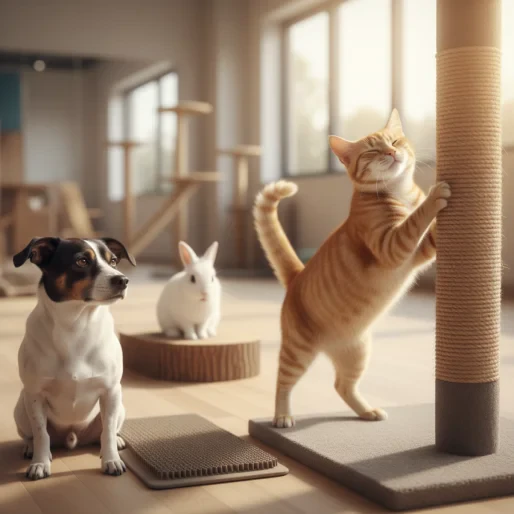
Destructive scratching is one of the most common complaints reported by cat owners, yet it is often a misunderstood behaviour. From an ethological perspective, scratching is not an act of rebellion or spite. It is a fundamental, instinctive requirement for feline physical and emotional health. Veterinary behaviourists emphasise that suppressing this behaviour is impossible; instead, the goal must be to redirect it onto appropriate targets.
Understanding whether a specific cat requires a vertical post or a horizontal mat is often the missing link in successful behaviour modification strategies. By analysing the function of scratching, owners can select the correct tools to meet their cat's environmental needs while preserving their home furnishings.
The Ethology of Scratching: Why They Do It
To effectively redirect scratching, one must first understand its function. Professional consensus identifies three primary drivers for this behaviour:
- Visual and Olfactory Communication: Cats possess interdigital semiochemical glands between their toes. When they scratch, they deposit pheromones that signal presence and territory to other animals. The visible gouges serve as a long-lasting visual marker.
- Claw Maintenance: Scratching removes the dead outer sheath (husk) of the claw, keeping the nails sharp and healthy.
- Musculoskeletal Health: The action allows for a full-body stretch, engaging the muscles of the forelimbs and spine. This is particularly important after periods of rest.
When a cat targets a sofa arm or a carpet, they are not acting out of malice. They are selecting a substrate that offers the ideal resistance, height, and stability to perform these essential functions. The challenge for owners is to provide an alternative that is more attractive than the furniture.
Vertical Scratchers: The Post
The vertical post is the most traditional solution, designed to mimic the trunk of a tree. However, many commercial posts fail to meet the behavioural requirements of the average domestic cat.
The Importance of Height
A common error in environmental enrichment is providing a post that is too short. To facilitate the necessary full-body stretch, a vertical post must be tall enough for the cat to extend their body fully while standing on their hind legs. Guidelines suggest a minimum height of 90cm (approximately 3 feet) for adult cats. If the cat has to crouch to use the post, they will likely return to the sofa, which offers unlimited vertical range.
Stability Factors
In the wild, trees do not wobble. If a scratching post tips or sways when a cat leans their weight against it, the animal may develop an aversion to the object. A wide, heavy base is non-negotiable for safety and acceptance. Wall-mounted scratchers are often recommended by behaviourists because they offer absolute stability, mimicking the rigidity of a tree trunk or a doorframe.
Horizontal Scratchers: The Mat
Not all cats are vertical scratchers. Many show a distinct preference for horizontal surfaces, mimicking the behaviour of scratching fallen logs or the ground. This preference may be innate, or it may develop due to physical limitations.
Considerations for Senior Cats
As cats age, their mobility changes. Older cats suffering from osteoarthritis may find rearing up on hind legs to use a vertical post painful or difficult. For these individuals, horizontal mats made of corrugated cardboard or tightly woven sisal can provide a pain-free outlet for their scratching needs. Owners observing changes in mobility or grooming habits should consult a veterinarian, as these can also be signs of cognitive or physical decline. For more on managing aging felines, see our guide on recognising Cognitive Dysfunction Syndrome (CDS) in senior cats.
Horizontal scratchers are also frequently preferred by cats who target carpets and rugs. Placing a high-quality scratching mat directly over the area the cat has previously damaged can be an effective redirection strategy.
Substrate Texture: The Feel of the Scratch
The material of the scratcher is as important as its orientation. Research into feline preferences highlights specific textures that encourage use.
Sisal Fabric vs. Rope
While sisal rope is common, many behaviourists recommend woven sisal fabric. Rope has a vertical grain that can interrupt the downward dragging motion of the claws. Woven fabric allows for a smoother shredding sensation that many cats find more satisfying. Furthermore, fabric is more durable and allows the cat to really sink their claws in without snagging.
Cardboard and Wood
Corrugated cardboard is an excellent, cost-effective option for horizontal scratchers. The texture is soft enough to shred easily, providing immediate visual feedback—a key component of the marking behaviour. Natural wood or bark can also be highly effective, particularly for cats with outdoor access who are accustomed to real trees.
Location Strategies: The Signpost Effect
Even the perfect post will fail if placed incorrectly. Cats scratch to mark territory; therefore, they scratch in high-traffic areas and social hubs. A scratching post hidden in a spare bedroom or basement serves no territorial purpose.
Behavioural guidelines suggest placing scratchers in these strategic locations:
- Near Sleeping Areas: Cats often scratch immediately upon waking to stretch. Placing a post near their favourite bed can capture this behaviour.
- Social Intersections: Areas where the family gathers or where pathways cross (like the entrance to the living room) are prime real estate for territorial marking.
- Near 'Illegal' Targets: If a cat is scratching the sofa, the most effective immediate intervention is to place the new post directly in front of the damaged area.
When Scratching Indicates a Problem
While maintenance scratching is normal, excessive or frantic scratching can be a sign of underlying issues. Anxiety, environmental stress, or conflict with other household pets can increase marking behaviours. Furthermore, owners should distinguish between environmental scratching and self-scratching, which may indicate dermatological issues. If a cat is scratching their own body excessively, it is a medical concern rather than a behavioural one. Refer to our guide on the science of the itch and seasonal allergies to understand the difference.
If scratching is accompanied by new hiding, appetite changes, or aggression, arrange a prompt veterinary assessment, as illness or pain may be involved. Behavioural support can follow or accompany that assessment. A cat that has not eaten properly for 24 hours needs immediate veterinary attention.
Frequently Asked Questions
Content Disclosure
This article was created using state-of-the-art AI models with human editorial oversight. It is intended for informational and entertainment purposes only and does not constitute veterinary medical advice. Always consult a licensed veterinarian for your pet's specific health needs. Learn more about our process.