
In this article
- Key Takeaways
- Why the Wet Season Changes a Parrot's Nutritional Needs
- Nutritional Needs Overview by Life Stage
- High-Water-Content Fruits and Vegetables That Aid Hydration
- Reading Pellet and Mix Labels Critically
- Portion Adjustments to Prevent Crop Issues in Humidity
- Mineral and Calcium Support During Moult
- Foods to Avoid When Tropical Storms Spike Indoor Humidity
- Foods That Are Toxic or High Risk: Safety Table
- Foraging Enrichment for Rainy, Indoor Days
- Weekly Wet-Season Feeding Chart (Sample)
- Monitoring, Records, and When to Call the Vet
Key Takeaways
- Hydration first: High-water-content produce (cucumber, melon, leafy greens) supports fluid balance when heat and humidity climb, but it never replaces fresh drinking water changed at least twice daily.
- Smaller, fresher portions: In high humidity, cut wet food into smaller servings and remove it within 2 to 3 hours to reduce crop fermentation and spoilage risk.
- Moult needs minerals: Feather regrowth raises demand for calcium, protein, and trace minerals; offer calcium sources and balanced fortified pellets under veterinary guidance.
- Storms change the menu: When tropical storms spike indoor humidity, drop the most perishable and sugary wet foods and lean on lower-moisture, shelf-stable options.
- Foraging beats boredom: Rainy-day confinement increases stress and feather-related behaviours; foraging enrichment turns feeding into mental work.
- No brand loyalty: Read the guaranteed analysis and feeding statement, not the marketing front of the bag. Therapeutic or prescription diets require a veterinarian.
This guide is educational and does not replace advice from a licensed avian veterinarian or board-certified veterinary nutritionist.
Why the Wet Season Changes a Parrot's Nutritional Needs
Mexico's summer rainy season, roughly June through October across much of the country, combines high ambient temperature with sharply elevated humidity. For companion parrots (Amazons, conures, African greys, macaws, cockatiels, budgerigars, and others), this is a meaningful physiological shift. Birds dissipate heat largely through respiration and behavioural cooling rather than sweating, so warm, moisture-laden air makes thermoregulation harder. At the same time, many psittacine species in the wild experience the rains as a season of abundance and breeding, which can shift appetite, hormones, and activity.
From a nutrition standpoint, three things matter most in this window: maintaining hydration, protecting the crop and gut from spoilage and fermentation in humid conditions, and supporting the heavy nutrient demand of moult, which frequently overlaps with the wet season. Owners are often surprised that the front of a food package tells them far less than the guaranteed analysis and the nutritional adequacy statement on the back. Building a wet-season plan starts with reading those, not the imagery.
Nutritional Needs Overview by Life Stage
Maintenance adults
A healthy adult parrot on a maintenance diet generally does well on a foundation of a formulated, fortified pellet appropriate to its species, supplemented with a varied rotation of vegetables, limited fruit, and species-appropriate seeds or nuts in controlled amounts. Professional consensus among avian veterinarians favours formulated diets over all-seed diets because seed mixes are typically high in fat and deficient in calcium, vitamin A, and several trace minerals.
Moulting birds
Feathers are roughly 85 to 90 percent protein (keratin), so feather regrowth raises protein and amino acid demand, particularly sulphur-containing amino acids such as methionine and cysteine. Calcium and trace minerals also become more important. Because much of Mexico's moult activity coincides with the rains, wet-season menus should lean slightly more nutrient-dense without becoming higher in fat.
Senior, juvenile, and breeding birds
Older birds may need easier-to-digest portions and closer weight monitoring. Hand-feeding chicks and actively breeding hens have very different requirements (notably higher calcium for laying hens) and should be managed with veterinary input rather than generic advice.
High-Water-Content Fruits and Vegetables That Aid Hydration
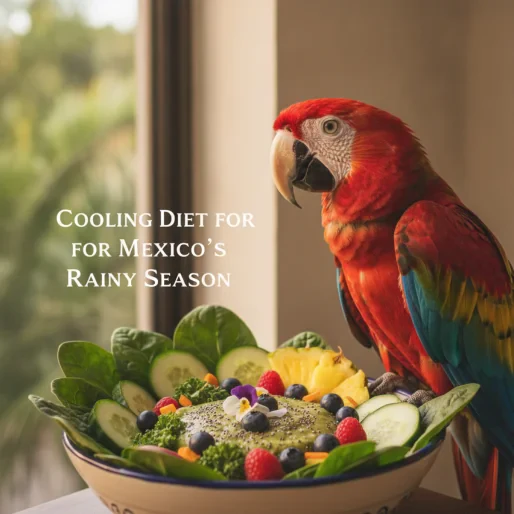
Fresh produce contributes to overall fluid intake and provides vitamins, antioxidants, and foraging interest. It supports hydration but does not substitute for clean drinking water. The hydration principles here echo those covered for other species in Cat Hydration During Gulf Summer Power Blackouts: offer multiple water points, keep them clean, and make moisture appealing.
Vegetables to prioritise (generally high moisture)
- Cucumber (very high water; mild, well accepted)
- Leafy greens such as romaine, dandelion greens, and chard in rotation
- Bell pepper (water plus vitamin A precursors; seeds are safe for parrots)
- Courgette (zucchini) and summer squash
- Celery (offer chopped; high water content)
- Steamed then cooled broccoli and green beans
Fruits to offer in moderation
- Melon and watermelon (very hydrating; remove seeds for some species and limit sugar load)
- Berries (antioxidant rich, lower sugar than tropical fruit)
- Papaya and mango (vitamin A precursors; naturally local but sugary, so keep portions small)
- Apple and pear (remove seeds and core)
Fruit is best treated as a flavour and enrichment accent rather than a dietary staple, because the sugar and water content can crowd out balanced nutrition and, in humidity, spoils quickly. A common, sensible target many avian vets suggest is keeping fruit to roughly 5 to 10 percent of the daily fresh-food portion, with vegetables forming the larger share.
Reading Pellet and Mix Labels Critically
Label literacy matters more than brand names. When comparing formulated diets, focus on these elements:
- Guaranteed analysis: Look at crude protein, crude fat, crude fibre, and moisture. For many adult parrots a moderate protein and lower-to-moderate fat profile suits maintenance; very high fat suggests a seed-heavy product.
- Ingredient list: Listed by weight. Whole grains, legumes, and identifiable vegetables near the top are preferable to vague filler and large amounts of added sugar or artificial colour.
- Added vitamins and minerals: Check for supplemental calcium, vitamin A (or carotenoid sources), and vitamin D3, which support bone and feather health.
- Nutritional adequacy: Avian diets are not regulated identically to dog and cat foods, so AAFCO-style life-stage statements may not appear. Where a manufacturer references formulation by veterinary nutritionists or feeding trials, that is a useful signal. The same critical reading taught for dog and cat labels (crude values, fillers, additives, bioavailability) applies here.
Bioavailability matters: calcium from a balanced fortified pellet or an appropriate mineral source is generally more reliable than calcium scattered unevenly through a seed mix the bird can selectively avoid.
Portion Adjustments to Prevent Crop Issues in Humidity
Warm, humid air accelerates microbial growth on moist food. Wet produce and soaked or sprouted foods left in the cage can ferment and contribute to crop and gastrointestinal problems, including sour crop and bacterial or fungal overgrowth. Practical humidity adjustments include:
- Serve smaller wet portions more often rather than one large bowl that sits all day.
- Remove fresh and cooked foods within about 2 to 3 hours in hot, humid weather, and sooner on the most humid storm days.
- Offer wet foods in the cooler morning hours and reserve drier pellet portions for later in the day.
- Wash and dry produce thoroughly and avoid serving it dripping wet.
- Watch the crop: a crop that is slow to empty, smells sour, or stays full overnight warrants prompt veterinary attention.
- Monitor droppings and weight with a gram scale; sudden changes are an early warning.
Sprouted seeds offer excellent moult nutrition but are among the highest-risk items in humidity because the same warmth that sprouts them also grows mould and bacteria. If you sprout, follow strict rinsing, short serving windows, and discard anything with off smells or sliminess.
Mineral and Calcium Support During Moult
Moult is metabolically expensive. Nutritional support during feather regrowth typically focuses on:
- Calcium: sources may include cuttlebone, a mineral block, or calcium provided through a balanced fortified diet. African greys are noted in veterinary literature as particularly prone to calcium issues, so their needs deserve extra attention.
- Vitamin D3 and natural light: vitamin D3 supports calcium use. Safe exposure to natural unfiltered light or appropriate avian lighting, plus dietary D3, helps calcium metabolism. Glass filters out the relevant wavelengths, so a sunny window is not the same as direct access.
- Quality protein and amino acids: legumes, cooked egg in small amounts, and formulated diets supply building blocks for keratin.
- Trace minerals and vitamin A precursors: orange and dark-green vegetables support skin and feather quality.
Avoid over-supplementing. Excess fat-soluble vitamins and unbalanced calcium-to-phosphorus ratios can cause harm. Any supplement plan, especially calcium or vitamin D3 dosing, should be confirmed with an avian veterinarian rather than guessed from a label.
Foods to Avoid When Tropical Storms Spike Indoor Humidity
When a tropical storm or sustained downpour pushes indoor humidity high and air movement drops, shift the menu toward lower-moisture, more stable foods and pull the most perishable items. Managing a pet's routine through prolonged wet weather is a recurring theme, much like the seasonal coat and skin care discussed in Grooming Akitas Through Japan's Tsuyu Rainy Season.
Reduce or pause on the most humid days
- Cut, juicy fruit left sitting (melon, mango, papaya) that ferments fast
- Soaked or sprouted seeds, unless served briefly and watched closely
- Cooked grain or bean mashes that sit warm in the bowl
- Anything already showing condensation, sliminess, or off odour
Lean on shelf-stable, lower-moisture options
- Measured portions of a formulated fortified pellet
- Small amounts of dry, appropriate seeds or nuts for foraging
- Firm vegetables served briefly (pepper strips, carrot)
Foods That Are Toxic or High Risk: Safety Table
Some foods are dangerous to parrots regardless of season. Keep these strictly away from your bird.
- Avocado: contains persin; considered potentially fatal to many birds. Avoid entirely.
- Chocolate and cocoa: theobromine and caffeine are toxic.
- Caffeine (coffee, tea, energy drinks): toxic to birds.
- Alcohol: never offer in any amount.
- Onion and garlic: can damage red blood cells; avoid.
- Fruit pits and apple seeds: contain cyanogenic compounds; remove cores and pits.
- Salty, fried, and heavily processed human foods: sodium and fat overload.
- Xylitol (sugar-free sweetener): avoid; treat as unsafe for pets.
- Mouldy or fermented foods: a heightened risk in the wet season; some moulds produce mycotoxins.
When in doubt, leave it out, and contact an avian veterinarian or a poison control service if accidental ingestion occurs.
Foraging Enrichment for Rainy, Indoor Days
Rainy-season confinement reduces activity and can increase stress-linked behaviours, including feather-damaging behaviour. Foraging turns feeding into mental and physical work, which is especially valuable when outdoor time and full flight are limited. Ideas include:
- Wrap or hide pellets and vegetable pieces in paper, untreated cardboard tubes, or foraging boxes.
- Skewer vegetables on a stainless steel veggie kebab so the bird works for each bite.
- Use puzzle feeders sized to the species, starting easy and increasing difficulty.
- Scatter-feed a measured portion across foraging trays rather than serving one bowl.
- Rotate novelty so foraging stays interesting across the long wet season.
Foraging also slows intake, which helps with weight control on lower-activity days. Keep all foraging materials clean and replace damp paper promptly so they do not become a mould source.
Weekly Wet-Season Feeding Chart (Sample)
This is a flexible template for a generalist medium parrot on maintenance, not a prescription. Adjust quantities to your species, body condition, and veterinary advice. Pellets remain the daily foundation; the fresh component rotates.
- Monday: Pellet base; morning cucumber and leafy greens; foraging box with a few seeds.
- Tuesday: Pellet base; bell pepper strips and broccoli (steamed, cooled); skewer foraging.
- Wednesday: Pellet base; small berry portion and courgette; cuttlebone available for moult.
- Thursday: Pellet base; dandelion greens and carrot; puzzle feeder session.
- Friday: Pellet base; small melon portion in the morning only; scatter-feed pellets.
- Saturday: Pellet base; mixed greens and green beans; tiny cooked egg portion for moult protein.
- Sunday: Pellet base; storm-day plan, mostly pellet and firm veg if humidity is high; light foraging.
On any day with a tropical storm or very high indoor humidity, shorten the wet-food window, reduce sugary fruit, and switch to the lower-moisture options described above.
Monitoring, Records, and When to Call the Vet
The most reliable wet-season tool is observation. Weigh your bird regularly on a gram scale, track appetite and droppings, and note feather progress through the moult. Seek veterinary care promptly for a slow-emptying or sour crop, sudden weight loss, fluffed and lethargic posture, laboured breathing, or any suspected toxic ingestion. Prescription and therapeutic diets, calcium or vitamin therapy, and management of breeding hens all require professional supervision rather than self-directed changes.
For broader seasonal nutrition thinking across other species, owners may also find the principles in Koi and Goldfish Summer Pond Nutrition a useful comparison, since temperature and water quality reshape feeding there too.
Built around hydration, humidity-safe portions, moult support, and enrichment, a thoughtful wet-season plan keeps your parrot comfortable, engaged, and well nourished from the first rains through the end of the season.
Frequently Asked Questions
Content Disclosure
This article was created using state-of-the-art AI models with human editorial oversight. It is intended for informational and entertainment purposes only and does not constitute veterinary medical advice. Always consult a licensed veterinarian for your pet's specific health needs. Learn more about our process.