
In this article
- Key Takeaways
- Why Spring Open Water Safety Matters for Your Dog's Long-Term Health
- Simple Daily and Weekly Habits That Make a Difference
- Assessing River Currents and Lake Conditions
- Blue-Green Algae: Identification and Lethal Toxicity
- Water Temperature Thresholds by Breed Size
- Life Jacket Fitting: A Non-Negotiable Safety Layer
- Post-Swim Ear Drying to Prevent Infections
- Nutrition and Weight Management Role
- Age-Appropriate Wellness Schedule
- Exercise, Enrichment, and Environmental Setup
- Warning Signs That Mean It Is Time for a Vet Visit
- Building a Safe Spring Swimming Routine: Putting It All Together
Key Takeaways
- Assess before entry: Check river current speed, water clarity, and shoreline conditions every single visit, even at familiar spots.
- Blue-green algae (cyanobacteria) can be lethal within hours: Learn to identify surface scums, discolouration, and musty odours before allowing any water contact.
- Water temperature thresholds vary by breed size: Small and lean breeds face hypothermia risk below roughly 15 °C (59 °F); large double-coated breeds tolerate slightly cooler water.
- A properly fitted canine life jacket is non-negotiable in open water with currents, drop-offs, or limited visibility.
- Post-swim ear drying is a simple habit that significantly reduces the incidence of otitis externa (ear infections).
Why Spring Open Water Safety Matters for Your Dog's Long-Term Health
Spring is one of the most inviting seasons for canine water activities. Snowmelt and rain replenish rivers and lakes, temperatures climb, and both dogs and owners are eager to get outdoors after winter. Yet spring waterways carry a unique set of risks that peak between March and June: faster-than-expected currents fed by meltwater, early season algal blooms fuelled by warming shallows, and water temperatures still cold enough to cause rapid heat loss in smaller or lean-bodied dogs.
Prevention is far more effective (and far less costly) than emergency treatment. A dog that swallows water contaminated with cyanotoxins, for example, may develop liver failure within hours, and the prognosis can be poor even with aggressive veterinary intervention. Similarly, a panicked dog swept into a strong current faces drowning risk that no amount of swimming ability can overcome. The habits outlined in this guide are designed to be practical, repeatable, and adaptable to any open water environment.
For owners who also enjoy spring hiking with their dogs, the principles here pair well with trail-side water encounters covered in Off Leash Spring Hiking With Your Dog: Full Guide.
Simple Daily and Weekly Habits That Make a Difference
Pre-Visit Site Check (Every Visit)
Conditions at any open water site can change dramatically between visits, especially in spring. Professional canine fitness guidance emphasises a brief, structured assessment before every swim session:
- Visual scan of water surface: Look for foam, unusual colour (green, brown, or reddish tints), floating debris, and surface scum.
- Smell test: Cyanobacterial blooms often produce a distinctive musty, earthy, or sewage-like odour.
- Current speed check: Toss a stick or leaf into the water and watch how quickly it moves downstream. If it travels faster than a brisk walk, the current is likely too strong for most dogs.
- Entry and exit points: Ensure there are gradual, non-slippery banks where a dog can climb out easily, even when fatigued.
- Local advisories: Many municipalities and environmental agencies post real-time water quality alerts online or on signage at popular spots. Checking these takes only a moment.
Weekly Gear Inspection
Canine life jackets, leashes, and long lines used near water degrade with exposure to sun, sand, and moisture. A quick weekly check of buckle function, stitching integrity, and buoyancy foam condition prevents equipment failure at the worst possible moment.
Assessing River Currents and Lake Conditions
River Hazards in Spring
Spring rivers are often deceptively dangerous. Key factors to evaluate include:
- Volume and speed: Snowmelt and rainfall can double or triple a river's normal flow within days. Water that was gentle in summer may be fast and turbulent in April or May.
- Underwater obstacles: Submerged branches, rocks, and debris accumulate over winter and create entrapment hazards. Murky spring water makes these invisible from shore.
- Hydraulics and recirculating currents: Low-head dams, weirs, and even natural rock ledges create "keeper" hydraulics that can trap and submerge even strong swimmers, canine or human.
- Bank stability: Saturated spring soil erodes quickly. A bank that looks solid may collapse under a dog's weight.
Lake Conditions
Lakes present different but equally important considerations:
- Thermoclines: In spring, surface water may feel tolerably warm while water just a metre or two deeper remains near freezing. A dog that dives or swims out to depth can experience sudden cold shock.
- Wind-driven chop: Spring wind patterns are often unpredictable. Small waves can exhaust a swimming dog quickly, especially if the dog is swimming against the wind on the return.
- Visibility: Algal growth, silt runoff, and organic matter reduce visibility, making it harder for dogs (and owners) to spot submerged hazards.
Blue-Green Algae: Identification and Lethal Toxicity
What Are Cyanobacteria?
Blue-green algae are not true algae but photosynthetic bacteria (cyanobacteria) found in freshwater lakes, ponds, slow-moving rivers, and even puddles. They thrive in warm, nutrient-rich (eutrophic) water and tend to bloom from late spring through autumn. According to guidance from the ASPCA and multiple veterinary toxicology sources, cyanobacterial toxins (cyanotoxins) are among the most rapidly lethal natural poisons a dog can encounter.
How to Identify a Potential Bloom
- Surface appearance: Blooms often look like spilled green paint, pea soup, or a thick greenish scum on the water surface. Some species produce reddish-brown or blue-tinged mats.
- Texture: Scooping a small amount of water into a clear container may reveal clumpy, granular, or stringy particles, as opposed to the smooth filaments of harmless true algae.
- Odour: A musty, swampy, or foul smell near the water's edge is a warning sign.
- Shoreline residue: Dried, crusty, or paint-like residue along the waterline indicates recent bloom activity, even if the water currently looks clear.
Toxicity: Why Minutes Matter
Cyanotoxins include hepatotoxins (e.g., microcystins, which attack the liver) and neurotoxins (e.g., anatoxin-a, which can cause respiratory paralysis). Dogs are at particularly high risk because they readily drink water while swimming and may lick contaminated fur after exiting. Clinical signs can appear within 15 to 60 minutes of exposure and may include:
- Vomiting and diarrhoea (sometimes bloody)
- Excessive drooling and disorientation
- Seizures and muscle tremors
- Difficulty breathing
- Collapse
If any of these signs appear after water exposure, this is a veterinary emergency. Do not wait for symptoms to worsen. Rinse the dog thoroughly with clean water to remove residue from the coat and transport to the nearest veterinary clinic immediately.
Owners concerned about toxic environmental exposures during spring should also review Toxic Garden Products for Dogs: A Spring Safety Audit for related hazards at home.
Water Temperature Thresholds by Breed Size
Hypothermia risk varies significantly based on a dog's size, body fat percentage, coat type, and overall health. While no universally mandated temperature chart exists, veterinary sports medicine literature and canine hydrotherapy guidelines offer useful general thresholds:
- Small breeds and lean-bodied dogs (under roughly 10 kg): Water below approximately 15 °C (59 °F) presents a meaningful hypothermia risk. Sessions should be very short or avoided.
- Medium breeds (10 to 25 kg) with moderate coat: Water between 12 and 15 °C (54 to 59 °F) may be tolerated for brief, supervised swims of around 5 to 10 minutes.
- Large and giant breeds with dense double coats (e.g., Labrador Retrievers, Newfoundlands): These dogs generally tolerate water down to roughly 10 °C (50 °F) for short sessions, though individual variation is significant.
- Senior dogs and those with arthritis or chronic conditions: Regardless of size, these dogs are more vulnerable to cold stress. Err on the side of warmer water and shorter durations. For guidance on managing arthritic dogs during spring activities, see Senior Dog Arthritis: Spring Walk Guide.
Signs of Cold Stress in Dogs
Monitor for shivering, reluctance to re-enter the water, tucked tail, stiff movement, or whining. If any of these appear, end the swim immediately, dry the dog with an absorbent towel, and move to a warm, sheltered area. A dog that becomes lethargic, uncoordinated, or unresponsive after cold water exposure needs veterinary assessment for hypothermia.
Life Jacket Fitting: A Non-Negotiable Safety Layer
Why Every Dog Needs a Life Jacket in Open Water
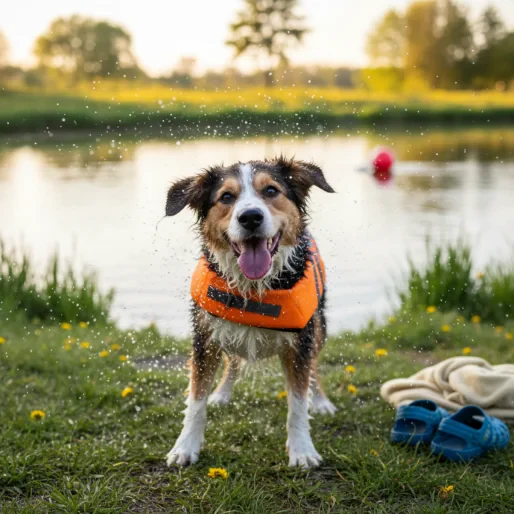
Even dogs considered "natural swimmers" can tire unexpectedly, panic in currents, or be caught by waves. A canine life jacket provides buoyancy, keeps the dog's head above water, and typically features a dorsal handle that allows an owner to assist or retrieve the dog. The AVMA and numerous canine water safety resources recommend flotation devices for all dogs in open water environments.
How to Fit a Canine Life Jacket Correctly
- Measure accurately: Use the manufacturer's sizing chart, measuring girth (widest part of the ribcage) and length (base of neck to base of tail). When in doubt between sizes, the smaller size usually offers a more secure fit, but check that it does not restrict breathing or shoulder movement.
- Secure all straps: Most quality life jackets have adjustable straps at the neck, chest, and belly. All should be snug enough that the jacket cannot slide forward over the head or rotate sideways, but loose enough to fit two fingers between strap and body.
- Test the dorsal handle: Lift the dog gently by the handle on dry land. The jacket should hold the dog evenly without riding up or compressing the throat.
- Check leg freedom: The dog should be able to walk, trot, and paddle normally. Watch for chafing behind the front legs, a common fit issue.
- Pool or shallow test first: Before any open water outing, let the dog wear the jacket in a controlled shallow setting to build comfort and verify fit under actual swimming conditions.
Post-Swim Ear Drying to Prevent Infections
Why Ears Are Vulnerable
Dogs with floppy ears (e.g., Cocker Spaniels, Basset Hounds, Golden Retrievers) or narrow ear canals are especially prone to otitis externa, an inflammation of the outer ear canal frequently triggered by trapped moisture. The warm, dark, moist environment inside a wet ear canal is ideal for bacterial and yeast overgrowth. Veterinary dermatology sources consistently identify swimming as a leading predisposing factor for recurrent ear infections in dogs.
Step-by-Step Ear Drying Protocol
- Immediately after the swim, gently lift each ear flap and use a soft, absorbent cloth or cotton ball to blot visible moisture from the inner ear flap and the entrance to the ear canal. Do not insert anything deep into the canal.
- If recommended by a veterinarian, apply a veterinary-approved ear drying solution. These typically contain a drying agent (such as isopropyl alcohol in mild concentration) and sometimes a gentle acidifier to maintain healthy ear pH. Follow the product's instructions for volume and frequency.
- Allow air circulation: After blotting, let the ear flaps remain open (if the dog allows) for a few minutes to promote evaporation. For floppy-eared breeds, gently folding the ear flap back temporarily can help.
- Monitor over the following 24 to 48 hours: Watch for head shaking, scratching at the ears, redness, odour, or discharge. Any of these signs warrant a veterinary examination.
Weekly Ear Maintenance for Regular Swimmers
Dogs that swim frequently benefit from a consistent ear care routine. Weekly examination of ear colour, odour, and wax buildup helps owners detect early changes before a full infection develops. Veterinary professionals can recommend a cleaning schedule and product appropriate for the individual dog's ear anatomy and history.
Nutrition and Weight Management Role
Swimming is an excellent low-impact exercise that supports healthy weight management, cardiovascular fitness, and joint health. However, the caloric expenditure of swimming, especially in cooler water, can be significant. Dogs that swim regularly during spring may benefit from a modest increase in caloric intake, adjusted in consultation with a veterinarian or veterinary nutritionist.
Maintaining a healthy body condition score (ideally 4 to 5 on the standard 9-point scale) is itself a safety factor: underweight dogs lose body heat faster, while overweight dogs fatigue more quickly in the water. For owners exploring supportive nutrition, Mushroom Supplements for Dogs and Cats: 2026 Guide discusses functional supplements that may support immune and joint health.
Age-Appropriate Wellness Schedule
- Puppies (under 12 months): Introduce water gradually in shallow, calm, warm settings. Avoid open water with currents. Focus on building positive water confidence, not endurance. Ensure core vaccinations, including leptospirosis (a waterborne bacterial disease), are up to date.
- Adult dogs (1 to 7 years): Most healthy adults can enjoy regular open water swimming with appropriate safety measures. Annual veterinary wellness exams should include discussion of water-related risks if swimming is a routine activity.
- Senior dogs (7+ years, earlier for giant breeds): Swimming remains an excellent low-impact exercise, but sessions should be shorter, water temperature warmer, and recovery time longer. Biannual veterinary checkups are recommended to monitor joint health, cardiac function, and any emerging conditions that could increase water safety risk.
Exercise, Enrichment, and Environmental Setup
Swimming sessions are most beneficial when integrated into a broader fitness routine. On non-swim days, proprioceptive exercises and balance work help build the core stability that supports efficient swimming form. The Dog Balance Exercises at Home: A Progressive Guide offers a progressive programme suitable for dogs at any fitness level.
Environmental setup for water outings should include:
- A long line (5 to 10 metres) for initial open water introductions, allowing the dog freedom while maintaining a safety tether
- Fresh drinking water brought from home, so the dog is less tempted to drink from the lake or river
- Absorbent towels and a windbreak (even a car with open boot serves well) for rapid drying and warming
- A basic first aid kit including antiseptic wipes, styptic powder, and a thermal blanket
Warning Signs That Mean It Is Time for a Vet Visit
Seek veterinary attention promptly if a dog displays any of the following after open water exposure:
- Vomiting, diarrhoea, or loss of appetite within hours of swimming (possible cyanotoxin exposure or waterborne infection)
- Persistent shivering, lethargy, or weakness after adequate drying and warming (possible hypothermia or cold water tail, also known as limber tail syndrome)
- Head shaking, ear scratching, redness, or foul odour from ears within 24 to 72 hours (possible otitis externa)
- Coughing, laboured breathing, or nasal discharge after swimming (possible aspiration of water)
- Skin irritation, hot spots, or rashes, especially in skin folds or undercarriage areas (possible contact dermatitis from contaminants)
- Lameness or reluctance to move after swimming (possible musculoskeletal strain or injury from underwater obstacles)
Never attempt to "wait and see" with suspected algae toxin exposure. This is always an emergency.
Building a Safe Spring Swimming Routine: Putting It All Together
The owners who see the biggest improvements in their dogs' fitness, confidence, and overall wellbeing are the ones who treat water safety as a non-negotiable part of every outing, not an afterthought. A consistent pre-swim assessment takes less than five minutes. Proper life jacket use, water temperature awareness, and a simple post-swim ear drying protocol collectively reduce the most common and most serious risks to a manageable level.
Spring swimming, approached thoughtfully, is one of the best forms of canine exercise available: low impact on joints, excellent for cardiovascular conditioning, mentally enriching, and deeply enjoyable for water-loving breeds. The goal of prevention is not to limit the fun but to make every swim session as safe as it is rewarding.
Frequently Asked Questions
Content Disclosure
This article was created using state-of-the-art AI models with human editorial oversight. It is intended for informational and entertainment purposes only and does not constitute veterinary medical advice. Always consult a licensed veterinarian for your pet's specific health needs. Learn more about our process.