
In this article
Key Takeaways for Safe Spring Startup
- The Danger Zone: Fish immune systems are suppressed until water hits 12-15°C (55-60°F), but bacteria wake up sooner. This is "Aeromonas Alley."
- Test, Don't Guess: Never feed or chemically treat the pond without knowing your Ammonia, Nitrite, pH, and KH levels first.
- Temperature Dictates Feeding: When water is consistently above 10°C, feed sparingly according to the koi’s activity and water quality. A suitable complete koi food can be used; wheatgerm is not required.
- Runoff Risk: Ensure spring rains aren't washing garden fertilizers or de-icing salts into the water.
As a veterinary nurse with over a decade of experience, I have seen more aquatic patients lost in April and May than at any other time of year. For new koi keepers, spring feels like a relief, the ice is melting, the sun is out, and the fish are moving again. But for experienced aquarists, this season is known as "Aeromonas Alley."
This is the window where the water warms enough for pathogenic bacteria (like Aeromonas and Pseudomonas) and parasites to become active, but the water is not yet warm enough for your koi's immune system to function at full capacity. Your fish are effectively defenseless against waking predators.
A successful spring startup isn't just about turning the pumps on; it's a medical triage protocol for your pond. Here is my step-by-step guide to navigating this delicate transition safely.
1. The Perimeter Inspection
Before touching the water, inspect the environment. Winter storms often shift landscape elements that can threaten water quality.
Check for Toxic Runoff
Melting snow and heavy spring rains can wash surrounding soil into your pond. If you have treated your driveway or patio, those chemicals are lethal to fish. As noted in our guide on winter paw protection and road salts, chlorides and anti-caking agents found in ice melts can cause osmotic shock in freshwater fish if runoff enters the pond.
Plant Management
Remove decaying plant matter immediately. Rotting leaves release ammonia. Furthermore, check what is blooming around the water's edge. Many common garden plants are toxic if ingested or if their sap enters the filtration system. Refer to our spring bulb toxicity guide to identify high-risk plants like daffodils or tulips that might have been planted too close to the water line.
2. Water Chemistry: The Baseline
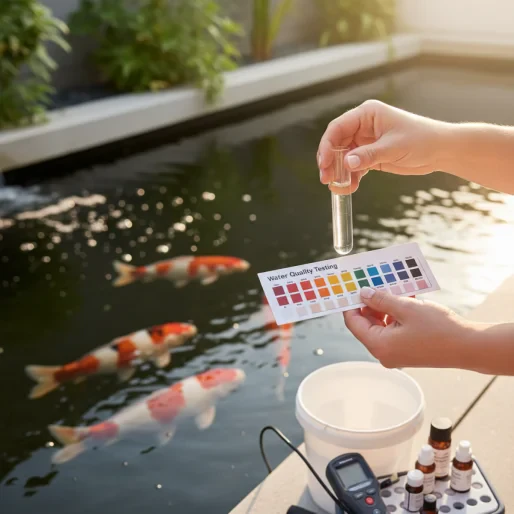
You cannot manage what you do not measure. In my practice, 90% of "sick fish" calls in spring are actually water quality issues. Before you turn on UV lights or feed the fish, you need a full liquid drop-test panel (avoid strip tests, as they are notoriously inaccurate).
- Ammonia (NH3): Must be 0 ppm. Even a trace is toxic.
- Nitrite (NO2): Must be 0 ppm. Nitrite binds to hemoglobin, causing "Brown Blood Disease" (suffocation).
- pH: Stability is key. A crash in pH is common in spring due to acidic rain and depleted carbonates.
- KH (Carbonate Hardness): This buffers your pH. If your KH is below 4-6 dKH, your pH is at risk of crashing.
3. The Filtration Reboot
If you shut down your biological filter for winter, its biological capacity may be reduced, especially if the media dried out. Restart it before feeding and monitor ammonia and nitrite while it recovers.
The Protocol:
- Clean Mechanical Media: Rinse sponges and mats in buckets of pond water, not tap water. Chlorine kills beneficial bacteria instantly.
- Bacteria Booster: Add a high-quality cold-water bacterial starter designed to work below 10°C (50°F).
- UV Clarifiers: Replace the bulb now, but wait to turn it on until your bacterial supplement has had 3-5 days to colonize the filter media, or you will simply zap the good bacteria you just added.
4. Feeding: The Temperature Rule
The biggest mistake I see is owners feeding their fish because they "look hungry" on the first sunny day. Fish are poikilothermic (cold-blooded); their metabolism, and ability to digest food, is dictated entirely by water temperature.
Below 10°C, koi eat much less. Reduce or stop feeding, and remove uneaten food so it does not degrade the pond’s water quality.
- Below 9°C (48°F): DO NOT FEED.
- 10°C - 15°C (50°F - 59°F): Feed a suitable complete koi food sparingly according to the fish’s activity and water quality; wheatgerm is not required. Monitor ammonia daily.
- Above 15°C (60°F): You can gradually switch to higher protein summer staples as the immune system activates.
5. Health Monitoring: What to Watch For
Because the immune system is lagging, this is when parasites like Costia, Trichodina, and Flukes strike. Watch your fish for 15 minutes daily without distraction.
Red Flags (Veterinary Triage)
- Isolation: A fish hanging alone near the surface or the water inlet.
- Clamped Fins: Holding fins tight against the body rather than fanning them out.
- Flashing: Rubbing their sides against the bottom or sides of the pond (a sign of itchy parasites).
- Ulcers: Red sores or raised scales (dropsy).
If you notice ulcers or dropsy (pine-coning scales), this is a veterinary emergency. Do not just dump "broad spectrum" treatments into the pond, as these often crash your filter and deplete oxygen. Contact a specialized aquatic vet or a certified fish health professional.
Summary
Spring requires patience. Your goal is to keep the environment stable while the biology of both the filter and the fish catches up to the temperature. By monitoring your water parameters and withholding food until the temperature is right, you can navigate Aeromonas Alley safely.
Frequently Asked Questions
Content Disclosure
This article was created using state-of-the-art AI models with human editorial oversight. It is intended for informational and entertainment purposes only and does not constitute veterinary medical advice. Always consult a licensed veterinarian for your pet's specific health needs. Learn more about our process.