
In this article
- Key Takeaways
- Understanding the Behaviour: Why Cats Hesitate Around Catios
- Training Prerequisites: Equipment, Environment, and Timing
- Positive Reinforcement Step by Step Technique
- Enrichment Elements to Include
- Common Fear Reactions and How to Address Them
- Common Mistakes Owners Make
- Troubleshooting Slow Progress
- When to Bring in a Professional
- Building Confidence: A Two Week Overview
Key Takeaways
- Cats benefit from gradual, positive reinforcement based introductions to a catio rather than being placed directly into the enclosure.
- Spring is an ideal season for catio introductions due to moderate temperatures and increased natural stimuli.
- Enrichment elements such as elevated perches, hiding spots, and safe plants reduce stress and encourage exploration.
- Common fear reactions include freezing, hiding, and vocalising; each requires a calm, pressure free response from the owner.
- Most cats show measurable confidence gains within two weeks when sessions are structured and consistent.
Understanding the Behaviour: Why Cats Hesitate Around Catios
Cats are territorial animals that rely on familiar scent profiles, predictable sightlines, and established escape routes to feel safe. A catio introduces an unfamiliar space that blends indoor security with outdoor unpredictability: new sounds, wind movement, passing wildlife, and shifting light patterns. According to the International Association of Animal Behavior Consultants (IAABC), novel environments can trigger a range of stress responses in cats, from mild hesitation to full avoidance behaviour.
From a behavioural science perspective, cats use a "safe base" model similar to the one described in attachment research. They explore outward from a secure point and retreat when stimuli become overwhelming. A successful catio introduction respects this pattern rather than forcing exposure. The Least Intrusive, Minimally Aversive (LIMA) hierarchy, endorsed by the IAABC and widely adopted by certified behaviour consultants, should guide every step of the process.
Spring adds specific variables worth noting. Birdsong, insect activity, and pollen carried on breezes provide novel sensory input that can be both enriching and initially overwhelming. Temperatures in many regions are moderate enough that cats are not contending with heat stress or cold aversion, making it an ideal season for outdoor introductions. For owners also preparing their outdoor cats for the season, our Spring Grooming Schedule for Outdoor Cats offers useful complementary guidance.
Training Prerequisites: Equipment, Environment, and Timing
Catio Setup Essentials
Before beginning any training sessions, the catio itself must meet baseline safety and comfort standards:
- Structural security: All mesh or wire panels should be fastened tightly with no gaps larger than approximately 2.5 cm (1 inch). Cats can squeeze through surprisingly small openings.
- Shade and shelter: At least one third of the catio floor area should be shaded or covered to provide relief from direct sun and light rain.
- Stable footing: Surfaces should be non slip. Bare wire flooring can cause discomfort; covering it with outdoor carpet, rubber matting, or wooden platforms helps.
- Escape route back indoors: The cat must always have a clear, unobstructed path back inside the home. Feeling trapped is one of the fastest ways to create a negative association.
Supplies for Training Sessions
- High value treats the cat reliably responds to (small, soft, strong smelling options tend to work best for cats)
- A familiar blanket or bed carrying the cat's scent
- An interactive toy such as a feather wand
- A portable hiding box or covered bed
- A pheromone spray designed for feline calming (applied to the catio 15 to 20 minutes before sessions)
Timing Considerations
Sessions should be scheduled during the cat's naturally active periods, typically early morning or late afternoon. Avoid introducing the catio during peak midday heat, during storms, or when loud external events (lawn mowing, construction) are occurring. Initial sessions should last no more than 5 to 10 minutes and be extended gradually based on the cat's comfort signals.
Positive Reinforcement Step by Step Technique
Phase 1: Scent Familiarisation (Days 1 to 3)
Before the cat ever sets foot in the catio, scent swapping helps reduce novelty stress:
- Place the cat's used bedding or a rubbed towel inside the catio overnight so the space absorbs familiar scent.
- Bring items from the catio (a small piece of outdoor fabric, a leaf, a twig) inside the home and place them near the cat's feeding area.
- Leave the door or cat flap to the catio open so the cat can investigate the threshold on its own terms. Do not lure or push.
This phase relies on the principle of desensitisation: reducing the emotional response to a stimulus through gradual, non threatening exposure.
Phase 2: Threshold Exploration (Days 3 to 5)
Once the cat voluntarily approaches and sniffs the catio entrance:
- Scatter a few high value treats just inside the threshold. Allow the cat to reach in and eat without fully entering.
- If the cat steps partially in, mark the moment with a calm verbal marker (such as "yes") and deliver an additional treat.
- Never close the door behind the cat during this phase. The goal is to build a positive association with the space while preserving the cat's sense of control.
This technique uses shaping, reinforcing successive approximations toward the desired behaviour. Each small step closer to full entry earns reinforcement.
Phase 3: Short Supervised Visits (Days 5 to 9)
When the cat enters the catio voluntarily and appears relaxed (ears forward, body posture loose, willingness to sniff surroundings):
- Sit quietly in or near the catio with the cat. Owner presence often provides a social safety cue.
- Introduce a familiar interactive toy to encourage play behaviour, which is incompatible with a fear state.
- Keep sessions to 10 to 15 minutes initially. End each session before the cat shows any stress signals, ensuring the experience closes on a positive note.
- Gradually increase session length by 5 minute increments as the cat's confidence grows.
Phase 4: Independent Exploration (Days 9 to 14)
As the cat demonstrates consistent comfort (eating, playing, grooming, or resting in the catio):
- Begin stepping away briefly while the cat is in the catio, returning before any signs of distress appear.
- Extend the periods of independent access, always ensuring the indoor access route remains open.
- By the end of two weeks, many cats will enter and exit the catio on their own schedule with minimal prompting.
Professional behaviour consultants note that cats who are allowed to set their own pace during this phase typically develop stronger, more lasting positive associations with the catio than cats whose owners attempt to accelerate the timeline.
Enrichment Elements to Include
A catio that offers only empty floor space provides little motivation for a cat to explore or return. Thoughtful enrichment transforms the space into a desirable destination.
Vertical Space and Perches
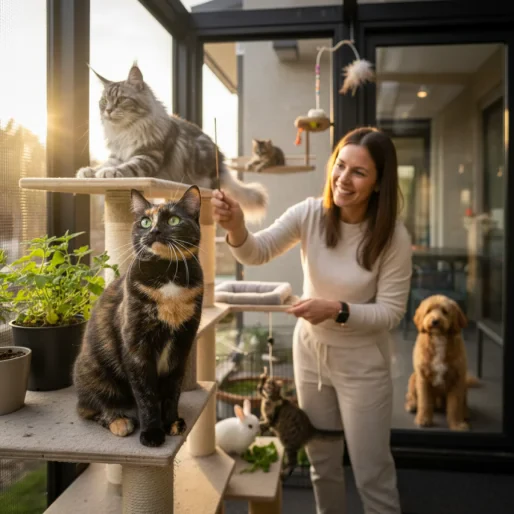
Cats feel more secure when they can observe their environment from an elevated vantage point. Shelves, platforms, or a sturdy cat tree placed inside the catio allow vertical movement and satisfy the cat's instinct to climb and survey.
Hiding Spots
At least one enclosed hiding spot (a covered bed, a cardboard box, or a small wooden shelter) gives the cat a retreat option within the catio itself. This is particularly important during the early introduction phases when the cat may feel uncertain.
Safe Plants and Sensory Stimulation
Cat safe plants such as catnip, cat grass (wheatgrass), valerian, and silver vine provide olfactory enrichment. Always verify plant safety through a reliable resource such as the ASPCA's Toxic and Non Toxic Plants database. Spring is also a time to be aware of toxic plants; owners should review our Lily Poisoning in Cats: A Spring Emergency Guide to understand serious plant hazards.
Interactive and Puzzle Elements
Puzzle feeders, treat dispensing toys, and rotating novel objects (pine cones, crinkle balls, feather toys) maintain the cat's interest over time. Rotating items every few days prevents habituation and keeps the catio stimulating.
Visual Stimulation
Positioning the catio where the cat can watch bird feeders, garden wildlife, or passing foot traffic provides ongoing mental engagement. A bird feeder placed at a safe distance outside the catio mesh can provide hours of "cat television."
Common Fear Reactions and How to Address Them
Freezing or Crouching
A cat that freezes in place with dilated pupils and a low body posture is experiencing acute stress. The appropriate response is to remain calm, avoid sudden movements, and allow the cat to retreat indoors on its own. Do not pick the cat up unless there is a safety concern, as handling during a freeze response can escalate fear.
Bolting Back Inside
Sudden flight back to the indoor environment is common during early sessions, often triggered by unexpected sounds (a car horn, a bird landing nearby). This is a normal response and should not be punished or discouraged. Simply allow the cat to decompress indoors and try another brief session later or the following day.
Vocalising (Meowing, Growling, Hissing)
Vocalisation typically indicates discomfort or a request for reassurance. Respond with calm verbal acknowledgement but avoid excessive coddling, which some behaviour professionals suggest can inadvertently reinforce anxious behaviour. Instead, redirect with a treat or toy if the cat is responsive, or calmly end the session.
Refusal to Exit the Home
Some cats will not approach the catio entrance at all during initial attempts. This calls for an extended Phase 1 approach: more scent swapping, feeding meals progressively closer to the catio entrance, and patience. Forcing or carrying the cat into the catio is counterproductive and violates LIMA principles.
Overstimulation and Redirected Behaviour
Occasionally, the flood of outdoor stimuli can cause overstimulation, which may manifest as tail lashing, skin rippling, or swatting. If these signs appear, calmly guide the cat back inside by tossing a treat toward the door or gently encouraging retreat. Reduce the intensity of the next session by partially covering the catio mesh to limit visual input.
Common Mistakes Owners Make
- Moving too fast: Skipping the scent familiarisation phase or extending sessions beyond the cat's comfort level is the most frequent error. Behaviour science consistently shows that gradual exposure produces more durable results than flooding.
- Closing the door too soon: Trapping a cat in the catio before it is fully comfortable creates a negative conditioned emotional response that can be difficult to reverse.
- Using punishment or force: Squirting water, shouting, or physically placing a reluctant cat in the catio erodes trust and is incompatible with positive reinforcement based training.
- Neglecting enrichment: An empty catio offers little incentive for a cat to return. Without enrichment, initial curiosity fades quickly.
- Inconsistent scheduling: Irregular, infrequent sessions slow the learning process. Daily brief sessions are more effective than occasional long ones.
- Ignoring seasonal hazards: Spring brings specific risks including toxic plants, increased flea and tick activity, and allergens. Ensuring the catio is free from hazards is a prerequisite, not an afterthought. Owners with dogs may also want to review Flea and Tick Prevention for Dogs Compared (2026) for household wide parasite management strategies.
Troubleshooting Slow Progress
Not every cat follows the two week timeline. Cats with limited prior outdoor exposure, rescue cats with unknown trauma histories, or naturally cautious breeds may require three to six weeks or longer. The following adjustments can help:
- Reduce session ambitions: If the cat is stalling at Phase 2, go back to Phase 1 for several more days. Regression is not failure; it is information about the cat's comfort threshold.
- Change the reward: If treats are not motivating, try a favourite toy or brief play session as the reinforcer. Some cats respond better to social interaction or brushing than food.
- Modify the environment: Adding more hiding spots, reducing visual exposure with partial mesh covers, or playing calming music near the catio can lower the stress baseline.
- Check for medical factors: A cat that suddenly becomes reluctant after initial progress may be experiencing pain, illness, or sensory discomfort. A veterinary check is advisable. For guidance on managing veterinary costs, see our article on Vet Visit Costs: Budget Alternatives Pet Owners Need.
- Account for multi cat dynamics: In multi cat households, one cat may guard the catio entrance. Staggered access times or multiple entry points can resolve resource competition.
When to Bring in a Professional
Owner led training is appropriate for the majority of catio introductions. However, professional help from a certified animal behaviour consultant (look for credentials such as IAABC CABC or ACVB board certification) is recommended in the following situations:
- The cat shows persistent panic responses (prolonged hiding, loss of appetite, litter box avoidance) after two or more weeks of gradual introduction attempts.
- The cat displays aggression toward household members or other pets that appears linked to the catio introduction process.
- The cat has a known history of trauma or severe anxiety that predates the catio project.
- The owner is unsure whether observed behaviour reflects normal caution or a clinical anxiety disorder.
A qualified professional can conduct a full behavioural assessment, design a customised desensitisation and counterconditioning protocol, and determine whether adjunctive interventions (such as veterinary prescribed anxiolytic support) are warranted.
Building Confidence: A Two Week Overview
| Timeframe | Focus | Signs of Progress |
|---|---|---|
| Days 1 to 3 | Scent familiarisation | Cat sniffs catio items indoors; approaches threshold voluntarily |
| Days 3 to 5 | Threshold exploration | Cat reaches into catio for treats; partial entry with relaxed posture |
| Days 5 to 9 | Short supervised visits | Cat enters fully; engages with toys or treats; stays 10 to 15 minutes |
| Days 9 to 14 | Independent exploration | Cat enters voluntarily; grooms, rests, or plays in catio; exits calmly |
Owners preparing their cat for additional spring activities, including travel, may find our Prepare Your Pet for Late Spring Holiday Travel guide helpful for extending these confidence building principles to carriers and car rides.
Frequently Asked Questions
Content Disclosure
This article was created using state-of-the-art AI models with human editorial oversight. It is intended for informational and entertainment purposes only and does not constitute veterinary medical advice. Always consult a licensed veterinarian for your pet's specific health needs. Learn more about our process.