When the air conditioning fails during a UAE summer power cut, indoor cats face a serious hydration risk in 45 to 50 degree heat. This guide explains how diet, food moisture, and safe supplementation protect Gulf cats until cooling returns.
Key Takeaways
- Cats are naturally weak drinkers. Descended from desert wildcats, they draw most of their water from food, so UAE summer heat plus a power cut is a double hydration threat.
- Moisture in food matters more than the bowl. Wet food is roughly 70 to 80 percent water, while dry kibble is often only 6 to 10 percent.
- Coastal humidity in Dubai, Abu Dhabi, and Sharjah makes cooling harder, reducing a cat's ability to shed heat once the AC stops.
- Electrolyte products must be feline specific. Many human or canine rehydration solutions are unsafe for cats and should only be used under veterinary guidance.
- Catch dehydration early with gum, skin, and behaviour checks, and contact a licensed UAE veterinarian if signs progress.
From June to September, daytime temperatures across the Emirates routinely climb past 45 degrees Celsius, and split unit or central air conditioning is not a luxury but a survival tool for indoor cats. When a power cut hits, whether from peak summer demand on the grid, a building maintenance fault, a tripped distribution board, or a slow generator changeover in an apartment tower, indoor temperatures can rise alarmingly within minutes. This guide approaches feline hydration from a nutrition angle for UAE homes. It is educational only and does not replace tailored advice from a licensed veterinarian.
Why Indoor Cats Dehydrate Faster in the Gulf
Cats evolved from arid-region wildcats and have a famously low thirst drive. In the wild they obtained most of their water from prey, which is around 70 percent moisture. Many domestic cats on dry diets live in a state of mild, chronic underhydration that goes unnoticed in a cool, climate-controlled flat in Dubai Marina or Khalifa City. Remove the cooling during a blackout and that thin margin disappears fast.
Cats cool themselves poorly. They have functional sweat glands only on the paw pads and rely mainly on grooming, seeking cool tiled surfaces, and, as a late-stage emergency response, panting. The coastal humidity of Dubai, Abu Dhabi, and Sharjah compounds the problem: high moisture in the air slows the evaporative cooling cats depend on when grooming, so they overheat sooner than they would in dry inland conditions. Older cats, kittens, overweight cats, and flat-faced breeds such as Persians and Himalayans, which are extremely popular across the Emirates, are far more vulnerable. So is any cat with kidney or thyroid disease.
A Note on Local Breeds
The Arabian Mau, a naturally desert-adapted breed native to the Arabian Peninsula, generally tolerates heat better than a long-coated Persian, but tolerance is not immunity. Even a heat-adapted shorthair can decline quickly once indoor temperatures spike and water intake drops. No breed should be left to ride out a summer blackout without intervention.
The Blackout Multiplier
A UAE summer power cut does several harmful things at once: indoor temperature and humidity climb, electric water fountains stop circulating, opened wet food can no longer be refrigerated safely, and fans or cooling mats lose power. Each factor independently lowers fluid intake or raises fluid loss. Owners often report that the first warning is a cat retreating to the coolest bathroom tiles and refusing food, which itself deepens dehydration because food is a major water source.
Water as a Nutrient
Water is the most important nutrient of all, and daily need is closely tied to diet and energy intake. As a general rule, cats require roughly 50 to 60 millilitres of water per kilogram of body weight per day from all sources combined, food and drink together. A 4 kg cat therefore needs in the region of 200 to 240 millilitres daily, and noticeably more during a Gulf heatwave.
On a wet-food diet, much of that need is met at mealtimes. On a dry-food diet, the cat must make up a large deficit by drinking, and most cats simply do not drink enough to compensate. The single most powerful nutrition lever during a heatwave is therefore to shift moisture into the food.
Wet Food, Broth, and Fountains: A Layered Strategy
No single tool is enough. The strongest approach layers several methods so that if one fails during a blackout, others continue working.
Wet Food: The Foundation
Canned or pouched wet food is the most reliable way to raise total water intake, because the cat consumes the moisture passively while eating. Choose a complete and balanced diet that meets AAFCO nutritional adequacy statements or FEDIAF guidelines for the correct life stage. Both standards appear on products widely sold in UAE pet retailers and clinics. The adequacy statement tells you more about whether a food is nutritionally complete than the ingredient list alone.
During a blackout, food safety becomes a genuine constraint in Gulf heat. Opened wet food spoils rapidly once it is above refrigeration temperature. Practical measures include serving smaller portions more often, discarding anything left out beyond an hour in extreme heat, and keeping unopened pouches (which need no refrigeration until opened, typically priced around 4 to 10 AED each) as a shelf-stable reserve.
Broth and Water Toppers
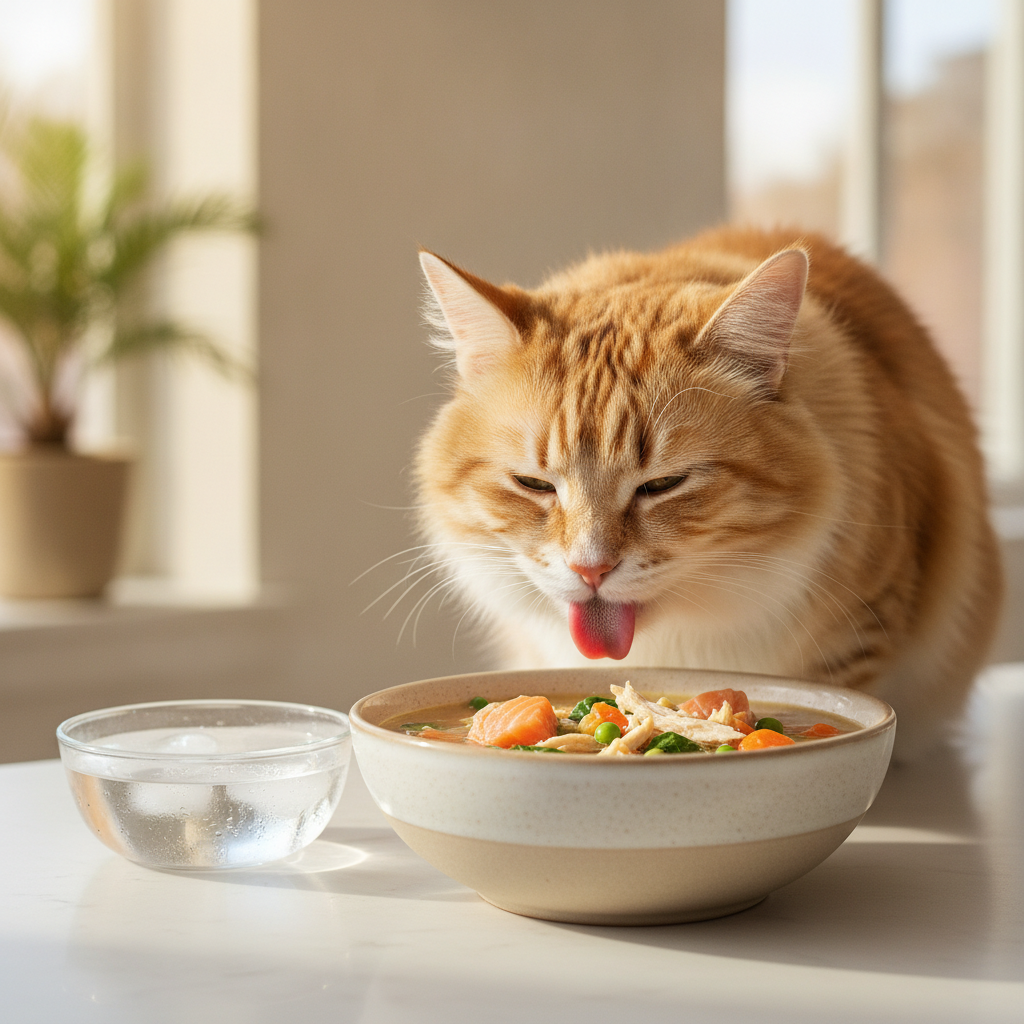
Adding cool water to wet food, or offering a plain broth, can meaningfully lift intake in fussy drinkers. Safe homemade broth means plain, unsalted, and entirely free of onion, garlic, leeks, and chives, all of which are toxic to cats. It must contain no added salt, stock cubes, or seasoning. Cooled, fat-skimmed water from boiling unseasoned chicken is a common option. Commercial cat-specific broths and lickable hydration treats are stocked by most major UAE pet stores and online retailers, but read labels for sodium and additives.
Broth is a hydration aid, not a meal. It does not provide complete and balanced nutrition, so it should sit alongside a proper diet rather than replace it. A useful trick is to dilute a spoonful of wet food into water to create a flavoured drink the cat will lap voluntarily.
Water Fountains and Backup Power
Many cats prefer moving water and drink more from a fountain than a still bowl. The flaw in a blackout is obvious: most fountains are mains powered and stop circulating, and stagnant fountain water warms and harbours bacteria quickly in Gulf heat. Mitigation includes choosing a model with USB or battery backup (commonly sold in the UAE for around 80 to 200 AED), and keeping several wide, shallow ceramic or stainless bowls distributed around the home as a low-tech fallback.
Multiple Water Stations
Whether or not you use a fountain, distribute water in several locations. Cats drink more when fresh water is easy to find. Use wide bowls that do not press on their whiskers, add a few ice cubes while power allows, and place bowls in the coolest, most shaded, tiled rooms away from the litter box and food. For senior cats with low kidney reserve, this redundancy is especially valuable.
Reading Labels for Hydration and Electrolytes
Label literacy protects your cat from products marketed as hydration aids that are poorly suited to felines.
- Moisture content: On wet food this is usually listed near 78 to 82 percent. To compare protein between wet and dry foods fairly, think on a dry matter basis, because crude protein on a can looks low simply because of the water content.
- Crude protein and quality: A named animal protein as the first ingredient is preferable. Cats are obligate carnivores and require high-quality animal protein and the amino acid taurine.
- Sodium and additives: On toppers and treats, scan for added salt, flavour enhancers, onion or garlic powder, and artificial colours. Avoid any allium ingredient entirely.
- The AAFCO or FEDIAF statement: Confirms whether a product is complete and balanced, or is labelled for intermittent or supplemental feeding only.
Safe Electrolyte Supplements for Cats
Electrolytes, mainly sodium, potassium, and chloride, govern fluid balance, nerve function, and muscle activity, and heat stress can disrupt them. This is the area where well-meaning owners most often cause harm.
Do not give human sports drinks or generic oral rehydration salts to a cat without veterinary direction. Many are too high in sugar and sodium for feline physiology, and some sugar-free versions contain ingredients unsuitable for cats. Products formulated for dogs are not automatically safe for cats either, given different size and metabolism.
Veterinary guidance is essential because the right product and dose depend on the individual cat. Safer, vet-recommended options can include feline-specific oral rehydration solutions and palatability or hydration supplements designed for cats. For any cat showing more than mild dehydration, the correct treatment is veterinary subcutaneous or intravenous fluids, not a home electrolyte drink. Professional consensus is clear: home electrolyte supplementation is a supportive measure for mild cases under guidance, never a substitute for veterinary fluid therapy in a genuinely dehydrated or unwell cat.
When Electrolytes Are Not Enough
If a cat is vomiting, has diarrhoea, refuses food, or appears lethargic in the heat, fluid and electrolyte loss can outpace anything you can safely offer by mouth. These cats need a veterinarian promptly. Many UAE clinics in Dubai, Abu Dhabi, and Sharjah offer extended or 24-hour emergency services during the summer. Keep your nearest one saved before a crisis:
Dubai Municipality Veterinary Services
Contact Dubai Municipality Veterinary Services or your nearest 24-hour emergency vet clinic.
In Abu Dhabi, contact ADAFSA. Several private clinics across the UAE offer 24-hour emergency services.
Recognising Early Dehydration
Early detection is the heart of safe summer care. Learn these checks before an emergency so you can act fast during a blackout.
The Skin Tent Test
Gently lift the skin at the scruff or between the shoulder blades and release it. In a well-hydrated cat it snaps back immediately. If it returns slowly or stays tented, the cat is likely dehydrated. This test is less reliable in very thin, very old, or overweight cats, so combine it with other signs.
Gum Check
Healthy gums are moist and slick. Tacky or dry gums suggest dehydration. Pressing a fingertip on the gum should produce a pale spot that returns to pink within about two seconds; slower refill is a warning sign.
Behaviour and Body Signs
- Lethargy, hiding in cool spots, or reluctance to move.
- Sunken or dull eyes.
- Reduced appetite, which compounds water loss.
- Concentrated, strong-smelling urine, or fewer clumps in the litter tray.
- Panting or open-mouth breathing, which in cats is a serious late sign needing immediate veterinary attention.
Portioning and Feeding During a Blackout
Heat suppresses appetite, and a cat that stops eating also stops getting food moisture. Adjust the schedule rather than the total nutrition.
- Feed during the coolest hours, typically before sunrise and late evening, when the cat is more willing to eat.
- Offer small, frequent portions of wet food to limit spoilage and tempt a heat-dulled appetite.
- Add water to each serving to lift moisture without changing the diet's balance.
- Keep total daily calories stable; do not let summer fussiness become prolonged anorexia, which is dangerous in cats and can trigger liver problems within days.
- Warm food only slightly to release aroma if a cat is reluctant, but never serve it hot in already high ambient temperatures.
Vulnerable Cats and Therapeutic Diets
Kittens dehydrate fastest because of their size and high metabolic rate; they need close monitoring and frequent small wet meals. Senior cats and those with chronic kidney disease often already run on tight fluid margins, and many benefit from a vet-prescribed therapeutic renal diet that should never be changed without veterinary supervision. Diabetic, hyperthyroid, and recovering cats also have altered fluid and electrolyte needs.
Prescription and therapeutic diets require veterinary oversight. Do not switch a medically managed cat to a different food or add supplements during a heatwave without consulting the prescribing vet. The goal is consistency in the therapeutic diet plus extra free water, not a diet overhaul.
Foods and Substances to Avoid
- Onion, garlic, leeks, chives (allium family): Damage red blood cells; toxic even in stock or powder form.
- Salt and salty broths or stock cubes: Excess sodium worsens dehydration and can cause salt toxicity.
- Cow's milk: Most adult cats are lactose intolerant; it causes diarrhoea and further fluid loss.
- Caffeinated drinks and alcohol: Toxic; never offer.
- Human sports and rehydration drinks: Inappropriate sugar and electrolyte levels; use only feline products under vet guidance.
- Grapes and raisins: Associated with toxicity; keep out of any treat or topper.
- Xylitol and artificial sweeteners: Found in some flavoured waters; avoid entirely.
A Simple Summer Hydration Tracker
Tracking turns guesswork into early warning. During the Emirates summer, and especially around any building power interruption, keep a daily log noting: water offered and refreshed across all stations; wet food eaten plus added water; litter tray output as a proxy for hydration; daily skin tent and gum checks; behaviour such as energy, hiding, breathing, and appetite; and indoor temperature during and after any blackout. Reviewing the log over several days reveals trends a single glance would miss, and gives your veterinarian objective data quickly.
Local Responsibilities and Preparation
Responsible cat ownership in the UAE includes mandatory microchipping and rabies vaccination, in line with the Ministry of Climate Change and Environment (MOCCAE) and municipal requirements. Keeping your cat's records and microchip details current matters most in an emergency, when a stressed animal may bolt through a door opened for ventilation during a long cut. Practical blackout preparation also means storing a few shelf-stable pouches, a battery or USB fountain or backup power bank, bottled water, and the contact details of your nearest emergency clinic before summer peaks.
Bringing It Together
The safest summer hydration plan for an indoor UAE cat is layered and proactive. Build the diet around moisture-rich, complete and balanced wet food, supplement with safe plain broths and varied fresh water stations, prepare for blackouts with shelf-stable food and battery backup, and reserve electrolyte products for vet-guided use only. Above all, learn the early dehydration checks and track them daily, because in feline heat stress the difference between a manageable situation and an emergency is often measured in hours. When in doubt, contact a licensed UAE veterinarian without delay.
Frequently Asked Questions
How much water does my cat need each day during a UAE summer? ↓
Can I give my cat a human rehydration drink during a power cut? ↓
Which UAE cat breeds are most at risk in a blackout? ↓
How do I keep wet food safe when the fridge is off in Gulf heat? ↓
What are the earliest signs of dehydration I can check at home? ↓

Sarah Mitchell
Canine Nutrition Consultant
Canine nutrition consultant — evidence-based feeding guidance, label literacy, and diet planning without brand bias.
Content Disclosure
This article was created using state-of-the-art AI models with human editorial oversight. It is intended for informational and entertainment purposes only and does not constitute veterinary medical advice. Always consult a licensed veterinarian for your pet's specific health needs. Learn more about our process.