A step by step backyard fitness plan for Australian dogs built around our brutal summer heat, tick country, and snake aware yards. Learn how to set up cavaletti poles, wobble cushions, and cone weaves safely between Daylight Saving dusk and dark.
Key Takeaways
- Time sessions for dusk in summer. In most of Australia, ground temperatures can sit above 50 C well into the early evening, even when air temps have dropped.
- Cavaletti pole height and spacing are matched to your dog's height at the withers and stride length, not breed name alone.
- Wobble cushions build core strength in stages, starting with two paws on a lightly inflated disc before progressing to all four.
- Cone weaves develop lateral flexibility and proprioception, with spacing that allows a comfortable bend rather than a sharp twist.
- Session length for healthy adult dogs is typically 10 to 20 minutes, two to three times per week, with at least 48 hours between strength sessions.
- Always check the yard for snakes, paralysis ticks, bindii burrs, and cane toads before laying out equipment.
Why Australian Yards Are Made for This
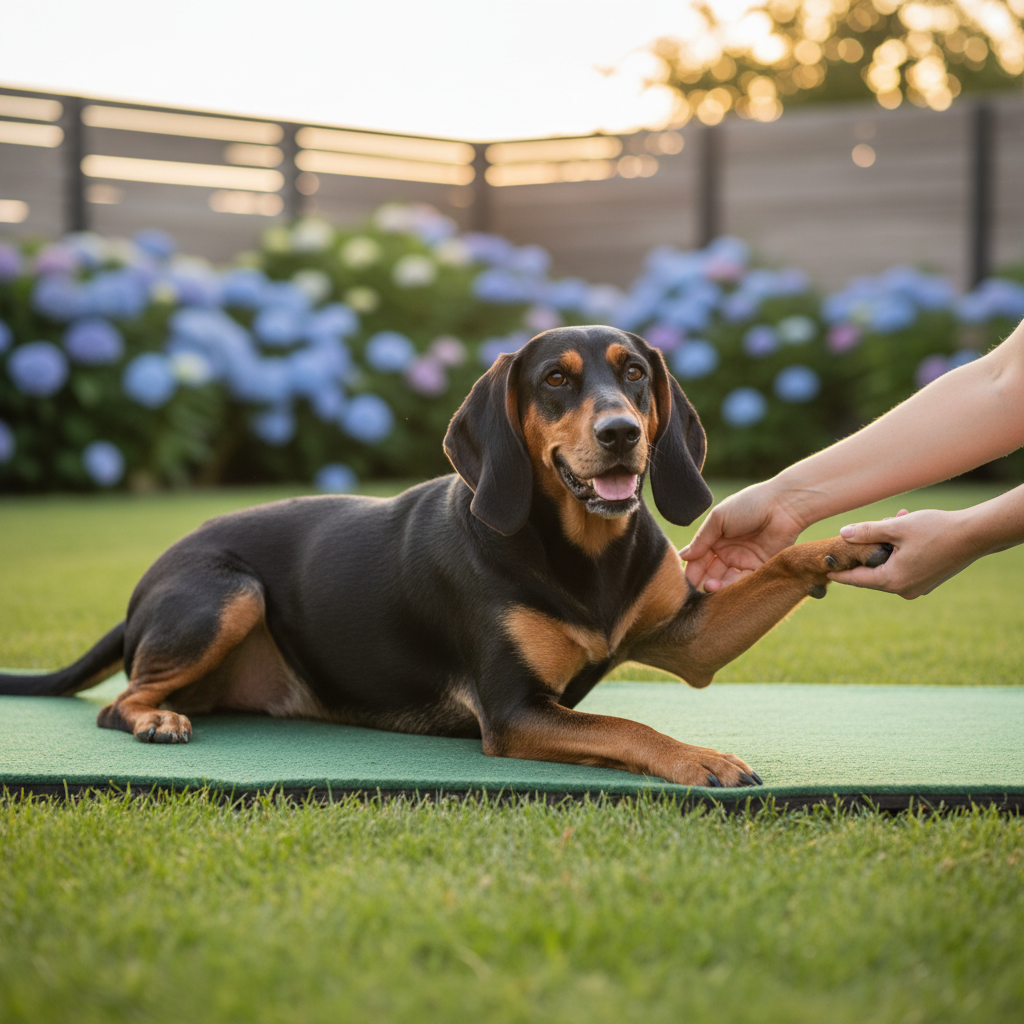
From late spring through autumn, Australian dog owners face a familiar dilemma: the dog has energy to burn, but the midday UV index is extreme and the footpath is hot enough to blister paws. A backyard conditioning circuit turns the long, golden hour between sunset and full dark into productive, low impact training time. Veterinary physiotherapy guidance, including positions held by the Australian Veterinary Association (AVA) and accredited canine rehabilitation providers, consistently supports controlled, repetitive movement for joint health, balanced musculature, and proprioception (the body's sense of where its limbs are in space).
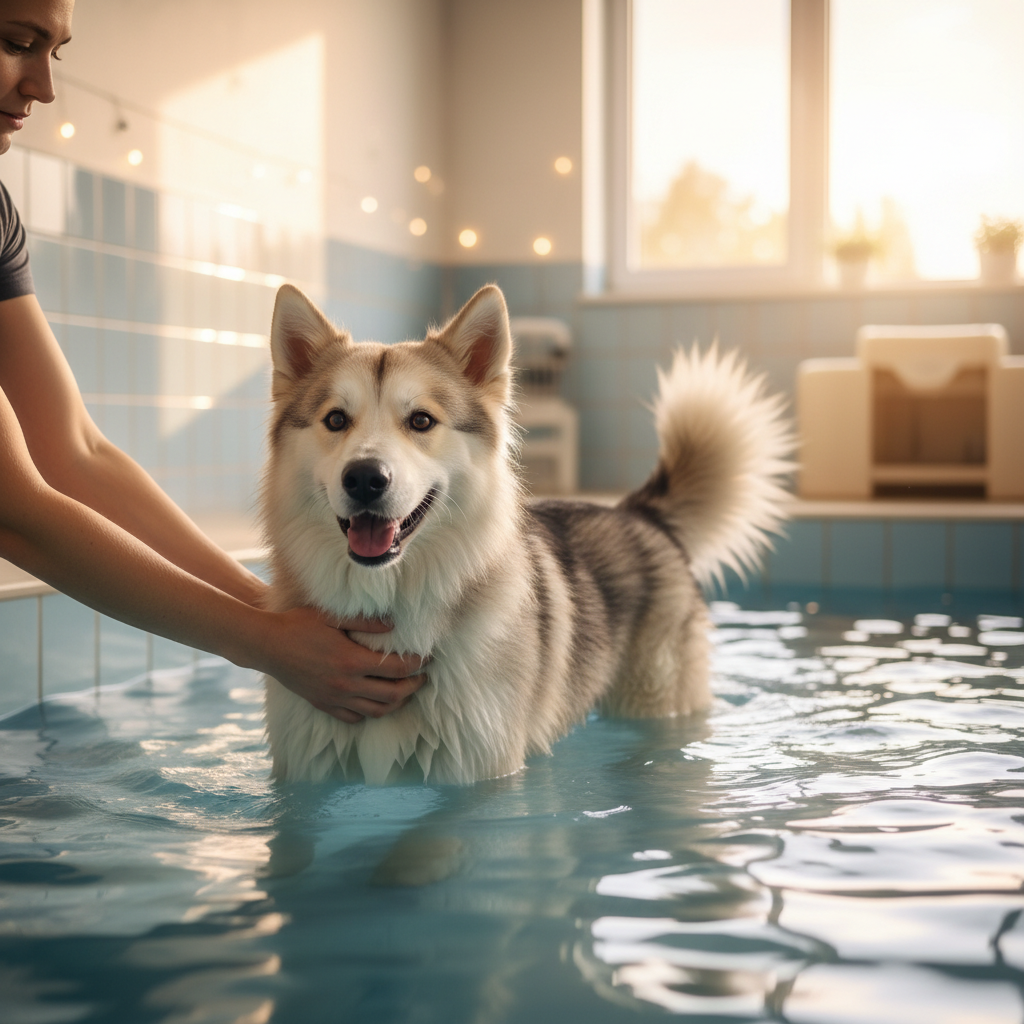
This guide is written for healthy adult dogs cleared by a vet for structured exercise. Puppies under growth plate closure, senior dogs with osteoarthritis, and any dog recovering from injury should follow a programme designed by a qualified canine rehabilitation therapist. For arthritic, overweight, or post surgical dogs, hydrotherapy is often a better starting point. Many Australian capital cities now have accredited canine hydro pools, with sessions typically costing around $60 to $120 AUD depending on location and whether a vet referral is involved.
Preparation: What You Need
Equipment Checklist
- 4 to 6 cavaletti poles. Lightweight PVC from any large hardware retailer works well, with adjustable height supports.
- 1 wobble cushion or balance disc rated for your dog's weight in kg, plus a non slip rubber mat underneath.
- 6 to 8 cones (witches hats or weave cones), tall enough that your dog must move around them rather than over them.
- A non slip surface. Short, dry buffalo or couch lawn is ideal. Avoid hot pavers, wet decking, and slick tiles on alfresco areas.
- High value treats cut into pea sized pieces, plus a full bowl of cool water in deep shade.
- A well fitted flat collar or Y shaped harness and a 1.5 to 2 metre lead for guidance.
- A tick check towel for east coast yards where paralysis ticks are active, especially from August through February.
Environmental Setup for Australian Conditions
Plan sessions for after the Bureau of Meteorology's daily peak has passed, ideally when ambient temperatures drop below 24 C. Use the seven second back of the hand test on whatever surface your dog will be moving on. If you cannot hold your hand there comfortably for seven seconds, the surface is too hot for paws. In the tropical north (Darwin, Cairns, Broome), the wet season layers extreme humidity on top of heat, which dramatically reduces a dog's ability to cool through panting. Shorten sessions and increase rest intervals accordingly.
Before laying out equipment, walk the circuit area carefully. Brown snakes, eastern browns, and red bellied black snakes often move through suburban yards at dusk in summer. Lift any equipment that has been stored on the ground and check for ticks, redback spiders, and cane toads, particularly in Queensland and the Northern Territory. Clear bindii patches, irrigation heads, and dropped fruit. Keep stations at least two metres apart so your dog can transition without rushing.
If your region is under a bushfire smoke advisory and the AirRater or EPA reading is poor, skip the session. Smoke aggravates brachycephalic breeds and any dog with airway sensitivity. For emergency advice on heat stress or suspected envenomation, contact your nearest 24 hour clinic via
Animal Emergency Service (AES)
Call the Animal Emergency Service or find your nearest 24-hour emergency vet clinic.
AES operates in QLD, NSW, and VIC. For other states, search for your nearest after-hours veterinary hospital.
Cavaletti Spacing by Size
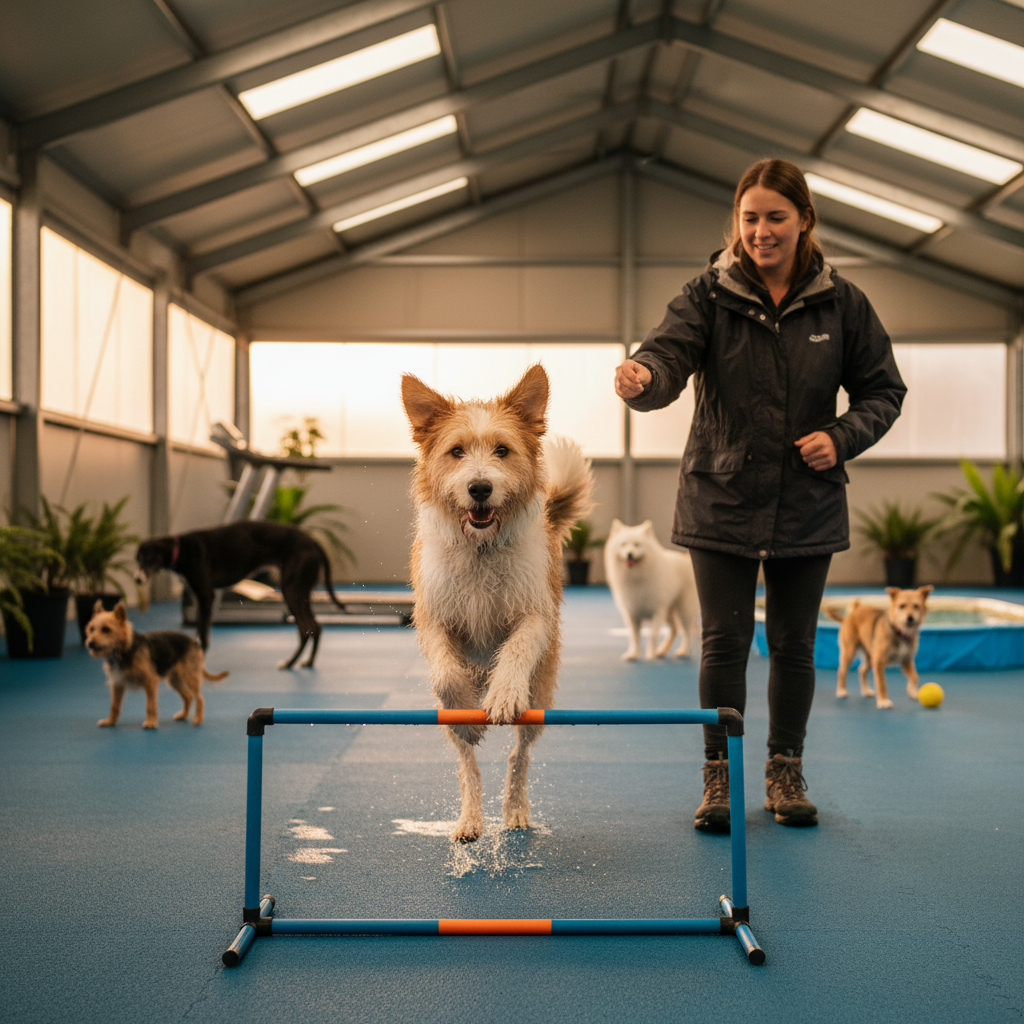
Cavaletti work (walking or trotting over a series of low poles) is one of the most evidence supported tools in canine conditioning. It encourages active joint flexion, even weight distribution, and engagement of the deep core. The single biggest mistake is setting poles too close together, which forces the dog to hop rather than stride.
General Rules
- Pole height for foundation work: roughly the height of your dog's carpus (wrist) for small to medium dogs, and the height of the hock for larger dogs.
- Pole spacing: about the same as the dog's height at the withers for walking, and slightly longer for a slow trot.
Suggested Starting Points for Common Australian Breeds
- Small breeds (Cavoodle, Mini Foxie, Maltese cross): poles 5 to 10 cm high, spaced 20 to 30 cm apart.
- Medium breeds (Kelpie, Border Collie, Staffy, Cocker Spaniel): poles 10 to 15 cm high, spaced 40 to 50 cm apart.
- Working and large breeds (Australian Cattle Dog, Labrador, Golden Retriever, German Shepherd): poles 15 to 20 cm high, spaced 55 to 70 cm apart.
- Giant breeds (Great Dane, Bullmastiff): poles 20 to 25 cm high, spaced 75 to 90 cm apart.
Watch your dog's natural stride and adjust. If poles are clipped, lengthen the spacing. If your dog hops multiple poles in one bound, shorten it. With high drive working breeds like Kelpies and Cattle Dogs, the temptation is to go fast. Resist it. The goal is calm, deliberate footfall.
Wobble Cushion Progressions
Stage 1: Familiarisation (Week 1)
Place the cushion lightly inflated on a non slip mat. Lure your dog to step two front paws on, hold for three to five seconds, then step off. Repeat 5 to 8 times per session.
Stage 2: Rear Paw Awareness (Week 2)
Reverse the position so two back paws are on the cushion. This is genuinely harder and often produces the classic puzzled head tilt. Reward steady weight distribution rather than duration.
Stage 3: All Four Paws (Weeks 3 to 4)
Use a slightly larger disc or two cushions side by side. Lure the dog into a square stand with all four paws on. Aim for 10 to 15 seconds of calm balance.
Stage 4: Dynamic Work (Weeks 5 to 6)
Introduce gentle weight shifts with a nose touch to the left, then right. Never push, pull, or rock the cushion forcefully.
Cone Weave Drills
Arrange 6 cones in a straight line, spaced roughly 1.5 times your dog's body length apart. Lead the dog at a walk in a serpentine pattern, focusing on smooth motion and equal bending in both directions. Most dogs are noticeably stiffer on one side, often the left for right pawed dogs. That side needs extra repetitions, not fewer.
Begin with three passes in each direction, adding one pass per week up to a maximum of six. Slow and deliberate beats fast and sloppy every time.
Session Length, Heat, and Recovery
Conditioning is not cardio. The aim is quality of movement, not exhaustion. In Australian summer conditions, the standard guidelines need a heat adjusted overlay:
- Total session length: 10 to 20 minutes for healthy adult dogs, including warm up and cool down. Cut to 8 to 12 minutes in humid tropical conditions.
- Frequency: two to three sessions per week, with at least 48 hours between strength focused days.
- Warm up: 5 minutes of loose lead walking and a few play bows or sit to stand transitions.
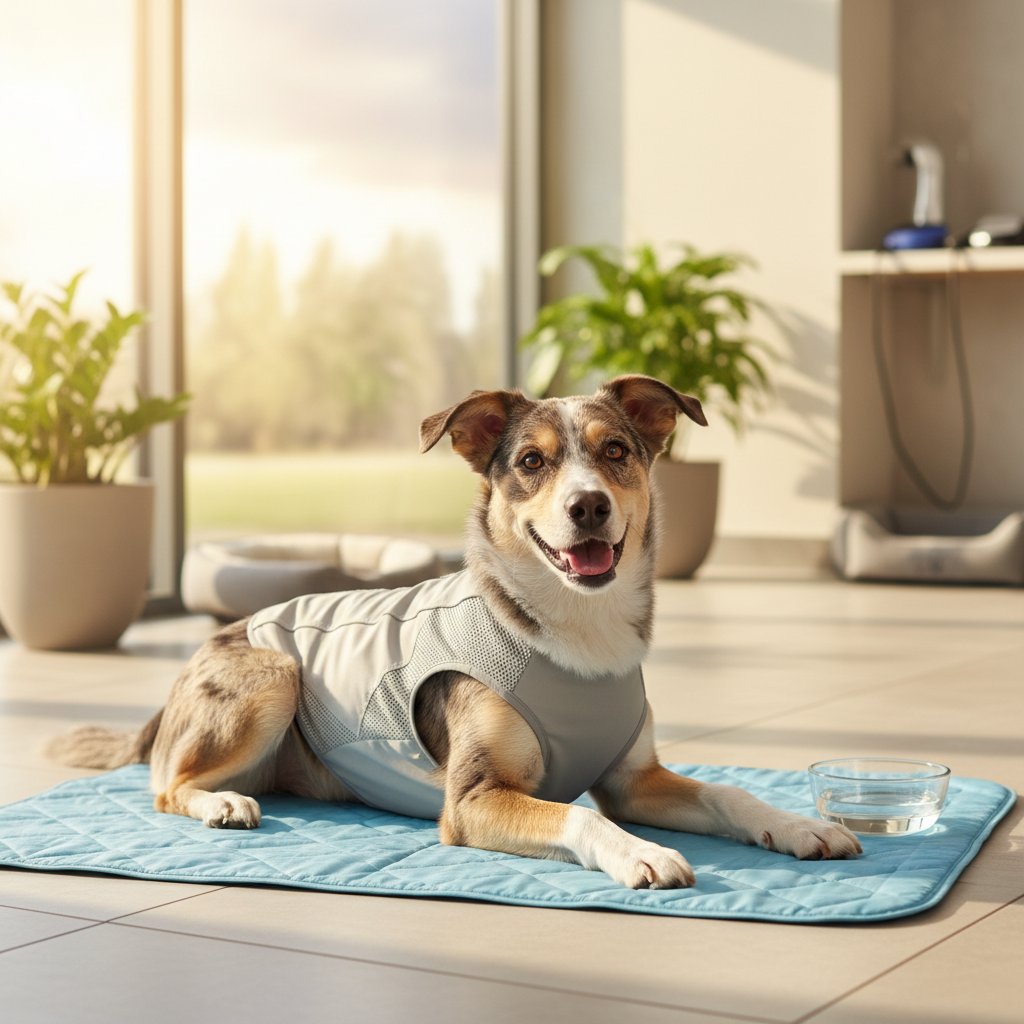
- Cool down: 5 minutes of slow walking. Offer cool, not icy, water. A damp towel on the belly and inner thighs helps shed heat after the session.
Brachycephalic breeds (Pugs, French Bulldogs, British Bulldogs) struggle to thermoregulate and should do half length sessions in the coolest part of the evening only. Double coated breeds (Samoyeds, Huskies, Border Collies) should never be shaved to cope with our summers. The undercoat is part of their insulation against heat as well as cold.
Six Week Plan
Week 1: Foundation
- Session A: Cavaletti walk over 4 poles, 3 passes. Wobble cushion Stage 1.
- Session B: Cone weave at walk, 3 passes each direction.
Week 2: Adding Repetitions
- Session A: Cavaletti 5 poles, 4 passes. Wobble cushion Stage 2.
- Session B: Cone weave 4 passes each direction. Sit to stand x 5.
Week 3: Combining Stations
- Session A: Cavaletti 6 poles, 4 passes. Wobble cushion Stage 3.
- Session B: Cone weave 5 passes each direction. Add a figure of eight around two widely spaced cones.
Week 4: Building Endurance
- Session A: Cavaletti at slow trot if your dog is balanced, 5 passes. Wobble cushion Stage 3 with nose touches.
- Session B: Cone weave 6 passes. Sit to stand x 8.
Week 5: Dynamic Balance
- Session A: Cavaletti combined with a wobble cushion stand at the end of the lane.
- Session B: Cone weave plus down to stand x 5.
Week 6: Integration and Assessment
- Session A: Full circuit, two rounds with rest between.
- Session B: Reassess pole spacing and balance duration. Note any side preference and adjust the next cycle.
Warning Signs: Heat, Ticks, and Envenomation
Australia adds risks that most global conditioning guides ignore. Stop the session and call
Animal Emergency Service (AES)
Call the Animal Emergency Service or find your nearest 24-hour emergency vet clinic.
AES operates in QLD, NSW, and VIC. For other states, search for your nearest after-hours veterinary hospital.
- Heat stress signs: rapid distressed panting that does not settle with shade and water, brick red gums, drooling ropey saliva, wobbliness, or collapse.
- Sudden hindlimb weakness or a changed bark, which can be early signs of paralysis tick toxicity. Check the entire dog, including between toes, inside ears, and under the collar.
- Suspected snake bite: sudden collapse, dilated pupils, vomiting, or weakness after a yelp or quick movement in the yard. Keep the dog still and transport immediately. Do not apply ice or a tourniquet.
- Cane toad contact: profuse drooling, bright red gums, head shaking. Rinse the mouth forwards with a damp cloth (never a hose pointed down the throat) and seek emergency care.
- Any sudden lameness or non weight bearing on a limb during or after a session.
Local Rules, Microchips, and Insurance
Every Australian state and territory requires dogs to be microchipped, and most require council registration by three or four months of age. Conditioning at home does not change any of that, but if your circuit is in an unfenced front yard, check your council's rules on dogs being off lead on private property visible from a public road. Some councils consider this off lead in a public place.
Pet insurance policies in Australia commonly cover conditioning related soft tissue injuries when treatment is provided by a registered vet, with annual premiums typically ranging from around $400 to $1,500 AUD depending on breed, age, and excess. Check whether your policy excludes pre existing orthopaedic conditions like cruciate disease, which is particularly common in Staffies, Labradors, and Rottweilers.
Final Thoughts
A backyard conditioning circuit is one of the most rewarding ways to spend a long Australian summer evening with a dog. The goal is not to manufacture a canine athlete in six weeks, but to build steady physical literacy: balanced movement, calm focus, and resilient joints that hold up to a lifetime of beach days, bush walks, and backyard play. Progress slowly, prioritise form over repetitions, and treat every session as a chance to learn how your dog moves in our uniquely demanding climate.
Frequently Asked Questions
What time of evening is safest for backyard dog conditioning in Australian summer? ↓
Are these exercises safe for Australian Cattle Dogs and Kelpies? ↓
How do I check for paralysis ticks before and after a session? ↓
What does a basic backyard conditioning setup cost in AUD? ↓
My dog is registered with the council and microchipped. Do I need anything else to train at home? ↓

Emma Lawson
Practical Pet Care Educator
Practical pet home care specialist — clear, step-by-step guidance grounded in veterinary nursing standards.
Content Disclosure
This article was created using state-of-the-art AI models with human editorial oversight. It is intended for informational and entertainment purposes only and does not constitute veterinary medical advice. Always consult a licensed veterinarian for your pet's specific health needs. Learn more about our process.