Australian summers push arthritic and overweight dogs to their limit, with pavement temperatures and humidity making land exercise risky. Hydrotherapy offers a controlled, low impact alternative that keeps senior pets moving safely from Cairns to Hobart.
Key Takeaways
- Hydrotherapy reduces joint load by roughly 60 to 90 percent depending on water depth, which matters in Australian summers when pavements above 50°C and ambient temperatures over 40°C make land walks unsafe for arthritic or overweight dogs.
- Underwater treadmills suit controlled gait retraining and weight loss programmes, while pool sessions suit non weight bearing endurance work and severe joint disease.
- Veterinary clearance is essential before any session. Hydrotherapy is contraindicated with open wounds, ear infections, uncontrolled cardiac disease, paralysis tick recovery, and certain skin conditions.
- Look for centres with veterinary oversight or therapists registered with the Animal Rehabilitation group of the Australian Physiotherapy Association (APA), or with veterinarians credentialed through the International Association of Veterinary Rehabilitation and Physical Therapy (IAVRPT).
- An eight week structured plan with weekly tracking helps owners and the primary vet measure real change in mobility, body condition, and stamina.
Why Hydrotherapy Suits the Australian Climate
Australian summers are unforgiving for senior dogs. In southern capitals such as Melbourne and Adelaide, heatwaves can push consecutive days above 40°C, while Sydney and Brisbane combine high heat with energy sapping humidity. Across the Top End and Far North Queensland, the wet season brings sustained warm nights that never let arthritic joints fully decompress. Add bushfire smoke that drifts hundreds of kilometres from active fire grounds, and the safe window for outdoor walks shrinks dramatically.
The Bureau of Meteorology routinely reports surface asphalt temperatures well above 50°C when ambient air sits at 35°C, which is enough to burn paw pads in seconds. Owners of Kelpies, Staffies, Cavoodles, Labradors, and Golden Retrievers often respond by skipping walks entirely, which sets up the familiar downward spiral of weight gain, muscle loss, and worsening stiffness. Hydrotherapy interrupts that cycle. Buoyancy offloads the joints, warm water relaxes tight muscle, and the indoor, climate controlled environment removes the risks of heat, UV exposure, and smoke inhalation in a single step.
Preparation: What You Need Before Booking
Veterinary Clearance
Reputable Australian hydrotherapy providers require a written referral from the dog's primary veterinarian. The referral should cover current diagnoses, medications, recent imaging or surgical reports, and any movement restrictions. Conditions that may delay or rule out hydrotherapy include uncontrolled cardiac disease, active skin infections, otitis externa (very common in humid coastal regions), recent surgery with sutures still in place, gastrointestinal illness, and any dog still recovering from a paralysis tick (Ixodes holocyclus) envenomation, where stress and exertion can be dangerous for weeks afterward.
Practical Items to Bring
- Two large absorbent towels (microfibre dries quickly in humid Queensland and Northern Territory conditions)
- A non slip mat for the boot or back seat, plus a sunshade for the car park
- The dog's regular flat collar and lead (centres typically supply the buoyancy harness)
- A small high value treat that will not crumble underwater, for use outside the water only
- Any prescribed joint supplements or analgesia, given at the usual time
- A copy of the veterinary referral, vaccination certificate, and current council registration tag
At Home Preparation
Feed a small meal at least two to three hours before the appointment to reduce regurgitation risk, particularly important for deep chested breeds such as Great Danes and Boxers. Allow a full toilet break before leaving home, brush the coat to reduce shedding into pool filters, and travel in an air conditioned vehicle. Never leave a dog in a parked car in Australia, even with windows cracked. Interior temperatures can reach lethal levels within minutes, and several states impose significant fines for doing so.
Underwater Treadmill vs Pool Sessions
Underwater Treadmill
The dog walks on a belt inside a sealed chamber that fills with warm water (usually between 28 and 32°C) to a chosen depth, anywhere from carpus to shoulder height. Water level controls how much body weight passes through the joints. Speed and incline are adjusted in small increments.
Best for: weight loss in overweight Labradors, Staffies, and Cavoodles; post operative rehabilitation after cruciate or hip surgery; mild to moderate osteoarthritis; hip and elbow dysplasia (well documented in many Australian working and pastoral breeds); and water shy dogs who prefer a solid surface underfoot.
Pool Sessions
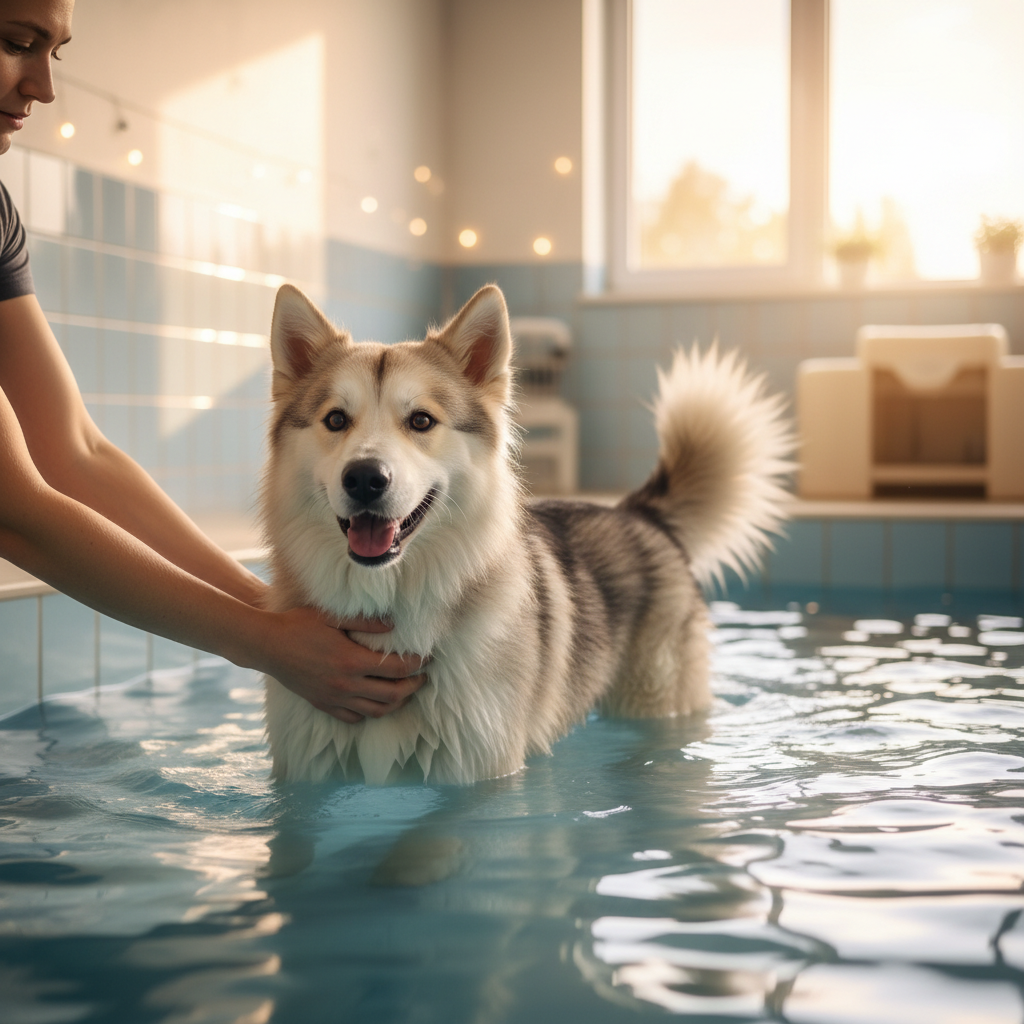
The dog swims in a temperature controlled pool wearing a fitted buoyancy harness, supported by a qualified hydrotherapist. Sessions often combine straight laps with turns, figure of eights, and gentle stretches.
Best for: severe osteoarthritis where even partial weight bearing causes pain; cardiovascular conditioning; working Kelpies, Border Collies, and Australian Cattle Dogs needing low impact endurance; and rehabilitation from spinal disease where non weight bearing movement is prescribed.
Which Format Should You Choose?
For most overweight, arthritic family dogs, an underwater treadmill is the more controlled starting point. The hydrotherapist can measure stride length, observe gait, and increase workload in objective increments. Pool work is often introduced later for variety or when greater joint offloading is required. The referring vet will usually nominate a preference, and the hydrotherapist will fine tune the plan from there.
Finding a Qualified Hydrotherapy Provider in Australia
Unlike the United Kingdom, Australia does not yet have a single nationally recognised canine hydrotherapy register. Standards therefore vary, and some pools operate with little oversight. Owners should look for one of the following arrangements.
Credentials Worth Looking For
- A registered veterinarian on site or as clinical director, ideally a member of the Australian Veterinary Association (AVA)
- A physiotherapist registered with the Animal Rehabilitation group of the Australian Physiotherapy Association (APA), which requires postgraduate training in animal rehabilitation
- A veterinarian or therapist credentialed through the International Association of Veterinary Rehabilitation and Physical Therapy (IAVRPT)
- A practitioner who has completed recognised canine hydrotherapy training, with documented continuing professional development
Many quality providers operate within or alongside veterinary referral hospitals in the major capitals, and some mixed practices in regional centres now offer underwater treadmills as part of their rehabilitation services.
Questions to Ask Before Booking
- Is a veterinary referral required for every dog?
- What qualifications does the hydrotherapist hold, and which professional body are they registered with?
- How often is the water tested, and what disinfection system is used?
- What is the water temperature range, and is it adjusted for senior or arthritic patients?
- Is a first aid trained person always present?
- How long is a session, and does the fee include drying facilities? Typical Australian pricing ranges from around $60 to $120 AUD per session depending on city and clinic.
Pressure to prepay multi session packages before any assessment has occurred is a red flag. Reputable centres will always assess first.
What to Expect at a First Session
The first appointment is rarely a full workout. Expect a longer initial consultation, usually 45 to 60 minutes, with only a short time spent in the water.
1. Health Check and History
The hydrotherapist reviews the referral, weighs the dog in kg, scores body condition on a 1 to 9 scale, palpates joints and muscles, and discusses goals. Owners are asked about stairs, slipping on tiled floors (very common in Australian homes), jumping into utes or SUVs, and walk tolerance before tiring.
2. Introduction to the Equipment
The dog is shown the treadmill or pool with the equipment off and rewarded for calm behaviour. For nervous dogs this may take ten minutes or more.
3. Fitting the Buoyancy Harness
For pool work, a fitted harness with handles is essential. Straps are adjusted to support the chest without restricting breathing or shoulder movement.
4. Short Water Introduction
First time exposure is brief, typically two to five minutes, often broken into intervals. The aim is positive association, not exercise. Many dogs need two or three sessions before meaningful work begins.
5. Drying and Debrief
The dog is rinsed with fresh water, towel dried, and sometimes blow dried on a low heat setting (critical in humid northern climates where damp coats can quickly develop hot spots). The hydrotherapist explains observations and the plan for next time.
Home Water Exercises Between Visits
Between professional sessions, gentle home based water work can maintain progress, especially through the hottest weeks when land walks are limited. Anything beyond paddling should be cleared with the veterinary team first.
Shallow Paddling Pool Work
A child's hard sided clam shell pool filled to carpus height gives a safe space for standing and gentle weight shifting. Encourage the dog to step in and out slowly, and to turn tight circles using a treat held at nose height. Five minutes is usually enough.
Cool Hose Down Stretches
On warm days, a gentle cool (not cold) hose over the legs can ease joint stiffness before a short lead walk. Avoid spraying the head or directly into the ears, particularly for floppy eared breeds prone to otitis.
Garden Sprinkler Games
For confident dogs, a low set sprinkler can encourage gentle trotting through fine spray. Keep sessions under ten minutes. Be aware of water restrictions in your local council area, and use a timer so the sprinkler does not run unattended.
What to Avoid in the Australian Environment
- Unsupervised swimming in farm dams, irrigation channels, or stagnant water, which can carry leptospirosis, blue green algae, or attract snakes
- Beach swimming during stinger season in northern waters (typically October to May), where box jellyfish and Irukandji are a risk to dogs as well as people
- Cold ocean swimming in southern states without acclimatisation
- Repeated jumping in and out of backyard pools, which loads the same joints hydrotherapy is trying to protect
- Any water play if the dog has an ear infection, skin lesion, or recent wound
Tracking Progress Over Eight Weeks
Eight weeks is a realistic timeframe to see measurable change. A simple notebook or phone note works well.
Weekly Metrics to Record
- Body weight in kg, on the same scales, same day of the week
- Body condition score from 1 to 9, ideally assessed by the same person
- Treadmill or pool duration achieved that week
- Land walk duration in minutes or distance in km, on cool morning or evening surfaces
- Morning stiffness score on a 1 to 10 scale
- Willingness to climb stairs, jump into the car, or get onto the lounge
A Sample Eight Week Framework
Weeks 1 to 2: Two sessions per week focused on water confidence and short treadmill walks of three to five minutes. Consistency over duration.
Weeks 3 to 4: Build treadmill time toward eight to twelve minutes per session at a comfortable pace. Add small incline changes if approved. Land walks remain short and on soft surfaces such as grassed parks or sand at low tide.
Weeks 5 to 6: Introduce pool work for variety, or extend treadmill sessions with structured intervals. Many owners notice the dog rising more easily from rest by this point.
Weeks 7 to 8: Review with the veterinary team. Decide whether to maintain twice weekly sessions, taper to weekly maintenance, or progress workload. Reassess body weight and condition score against baseline.
If progress stalls, the issue is rarely the dog. It is usually session frequency, calorie intake (Australian summer barbecues are notorious for off plan scraps), or an unrelated pain source that needs reassessment.
What to Watch For During and After Sessions
During the Session
- Heavy panting that does not settle within a minute of rest
- Reluctance to weight bear, or sudden lameness
- Coughing, gagging, or swallowing pool water
- Glassy eyes, stumbling, or disorientation
In the 24 to 48 Hours After
- Mild tiredness and longer naps are normal
- Slight stiffness for a few hours can occur, similar to delayed onset muscle soreness in humans
- Appetite and toileting should remain normal
When to Call Your Vet Immediately
Contact your primary veterinary practice without delay, or use
Animal Emergency Service (AES)
Call the Animal Emergency Service or find your nearest 24-hour emergency vet clinic.
AES operates in QLD, NSW, and VIC. For other states, search for your nearest after-hours veterinary hospital.
- Persistent coughing, laboured breathing, or blue tinged gums (possible water aspiration)
- Vomiting or diarrhoea lasting more than a few hours
- Sudden non weight bearing lameness
- Head shaking, ear pain, or discharge
- Collapse, severe lethargy, or refusal to eat for more than 24 hours
- Signs of heatstroke (excessive panting, drooling, bright red gums, weakness), which can develop on the journey home as well as during the session
Final Thoughts
For Australian dogs facing 40°C summers, bushfire smoke days, and humid tropical nights, hydrotherapy is one of the most effective tools for maintaining mobility without overheating or overloading sore joints. Success depends on three things: an accurate veterinary diagnosis, a properly credentialed centre, and consistent owner follow through. Eight weeks of structured sessions, paired with sensible home care and honest progress tracking, can meaningfully improve quality of life for dogs who would otherwise spend the hottest months immobile and uncomfortable.
Frequently Asked Questions
Is canine hydrotherapy regulated in Australia? ↓
How much does a hydrotherapy session cost in Australia? ↓
Can my dog do hydrotherapy after a paralysis tick? ↓
Is backyard pool swimming a substitute for professional hydrotherapy? ↓
Should I stop hydrotherapy during bushfire smoke events? ↓

Emma Lawson
Practical Pet Care Educator
Practical pet home care specialist — clear, step-by-step guidance grounded in veterinary nursing standards.
Content Disclosure
This article was created using state-of-the-art AI models with human editorial oversight. It is intended for informational and entertainment purposes only and does not constitute veterinary medical advice. Always consult a licensed veterinarian for your pet's specific health needs. Learn more about our process.