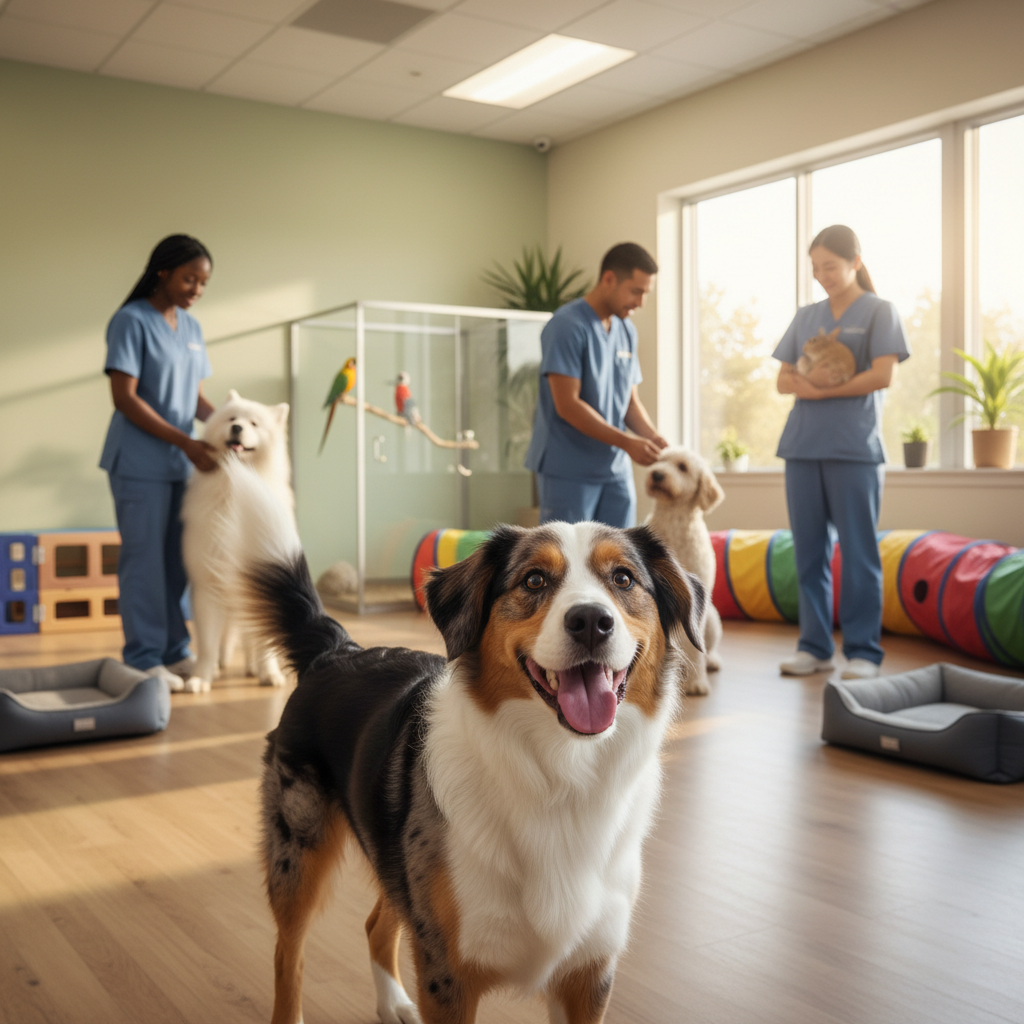
Australian dog daycare facilities must meet specific training benchmarks to ensure safety in our unique climate and environment. Here is what pet owners should expect from qualified staff in 2026.
Key Takeaways
- Australian daycare staff should hold current certifications in pet first aid, CPR, and canine behaviour assessment from recognised providers.
- Heat management training is critical in Australia, where summer temperatures regularly exceed 40°C in many regions.
- The Australian Veterinary Association (AVA) and state based animal welfare legislation set the framework for professional care standards.
- Staff must be trained to recognise native wildlife hazards including snake encounters and paralysis tick symptoms.
- Owners should verify vaccination requirements align with current Australian schedules, including C5 vaccination as a minimum for group settings.
Why Training Standards Matter for Australian Dog Daycares
Australia's dog daycare sector has expanded significantly, driven by high pet ownership rates and a culture that values active, outdoor lifestyles for dogs. However, the Australian environment presents unique challenges that generic international training programmes do not adequately address. From extreme heat events and bushfire smoke exposure to encounters with venomous snakes and paralysis ticks, staff working in Australian facilities need specialised knowledge beyond standard canine care competencies.
The Australian Veterinary Association (AVA) provides guidance on animal welfare in commercial settings, while state and territory governments regulate animal boarding and daycare through legislation such as the Prevention of Cruelty to Animals Act (NSW), the Domestic Animals Act 1994 (Victoria), and equivalent legislation in other jurisdictions. Professional bodies such as the Pet Industry Association of Australia (PIAA) also offer accreditation pathways for facilities that commit to higher standards.
Canine Body Language: The Core Competency
Reading canine body language remains the single most important skill for preventing incidents in group play. Australian daycare staff should be trained to identify:
- Stress signals: lip licking, yawning out of context, whale eye, panting when not heat related, tucked tail, and avoidance behaviours.
- Arousal signals: stiff posture, forward lean, piloerection (raised hackles), intense staring, and high rigid tail wagging.
- Calming signals: slow blinking, play bows, curved approaches, ground sniffing, and soft loose body movement.
- The escalation ladder: displacement behaviours progressing through freeze responses, hard stares, growling, snapping, and biting.
In Australian conditions, staff must also differentiate between heat related panting and stress panting, as dogs outdoors in summer may display signs that overlap with distress signals. This distinction requires specific training in thermoregulation awareness.
Heat Management Training: An Australian Priority
With summer temperatures regularly exceeding 40°C across much of the country, heat management is not optional training; it is essential. Staff should be competent in:
- Recognising early signs of heat stress (excessive drooling, bright red gums, staggering, vomiting)
- Understanding breed specific heat vulnerability, particularly for brachycephalic breeds such as Bulldogs, Pugs, and French Bulldogs, which are extremely popular in Australia
- Implementing cooling protocols including access to shade, cool (not ice cold) water, wet towels on paw pads and groin, and moving dogs indoors to air conditioned rest areas
- Monitoring the ambient temperature and adjusting outdoor play schedules accordingly, with most professional facilities restricting outdoor activity when temperatures exceed 32°C
- Managing bushfire smoke days when air quality deteriorates, requiring indoor only operations with adequate ventilation and filtration
The Bureau of Meteorology (BOM) provides real time temperature and air quality data that responsible facilities should monitor throughout the day during high risk periods.
First Aid and CPR Certification in Australia
Recognised Training Providers
In Australia, pet first aid and CPR courses are offered by several providers. Staff should hold current certification that covers:
- Canine CPR techniques adjusted for dog size (from Chihuahuas at around 2 kg to Great Danes exceeding 60 kg)
- Choking response and airway obstruction management
- Wound care including bite wounds, lacerations, and punctures
- Heat stroke emergency response
- Seizure management and safe restraint techniques
- Snake bite first response (pressure immobilisation technique, keeping the dog still, and urgent veterinary transport)
- Paralysis tick identification and immediate response protocols
- Basic stabilisation for transport to the nearest veterinary emergency centre
Snake Bite Awareness
Australia is home to many of the world's most venomous snakes, including Eastern Brown Snakes, Tiger Snakes, and Red Bellied Black Snakes. Daycare staff, particularly in semi rural or bushland adjacent facilities, must know how to respond if a dog is bitten. Key training points include recognising sudden collapse, dilated pupils, vomiting, and hind leg weakness as potential envenomation signs. The priority is immobilisation and immediate veterinary transport, as antivenom administration is time critical.
Paralysis Tick Protocols
Along the eastern seaboard from North Queensland to northern Victoria, the paralysis tick (Ixodes holocyclus) poses a serious seasonal threat from spring through autumn. Staff should be trained to perform daily tick checks on all dogs, recognise early symptoms (change in bark, hind leg wobbling, gagging or regurgitation), and understand that tick paralysis can be fatal without prompt veterinary intervention.
Animal Emergency Service (AES)
Call the Animal Emergency Service or find your nearest 24-hour emergency vet clinic.
AES operates in QLD, NSW, and VIC. For other states, search for your nearest after-hours veterinary hospital.
Behaviour Assessment and Intake Standards
Professional Australian daycares should conduct structured assessments before accepting any dog into group play. This process typically includes:
- Owner questionnaire: covering socialisation history, known triggers, resource guarding tendencies, prior bite incidents, and any behavioural diagnoses from a veterinary behaviourist.
- Controlled introduction: a neutral area meeting with a calm ambassador dog to assess social responses.
- Graduated group exposure: phased integration over one or more trial sessions.
- Breed specific considerations: awareness of breed specific legislation (BSL) that varies by state. In some jurisdictions, restricted breeds require specific containment and handling protocols that staff must understand and comply with.
Ongoing behavioural monitoring with daily documentation is considered best practice. Dogs that show emerging stress patterns or behavioural changes should be flagged for owner discussion and potential veterinary referral.
Staff to Dog Ratios for Australian Facilities
| Facility Type | Recommended Ratio | Australian Considerations |
|---|---|---|
| Small group, indoor only | 1:6 to 1:8 | Essential during heat days when all dogs move indoors. |
| Mixed indoor/outdoor | 1:8 to 1:10 | Staff must cover both zones; shade provision is mandatory for outdoor areas. |
| Large outdoor play yard | 1:10 to 1:15 | Only appropriate in cooler months or well shaded spaces. Snake awareness required in bushland areas. |
| Puppy or small dog groups | 1:6 to 1:8 | Puppies are more vulnerable to heat stress and require closer monitoring. |
| Special needs or senior dogs | 1:4 to 1:6 | Dogs with arthritis or medical conditions need individualised climate management. |
During extreme heat events or poor air quality days, ratios should tighten as all dogs are confined to indoor spaces, increasing density and arousal potential.
Vaccination and Health Requirements
Australian daycare facilities should require, at minimum:
- C5 vaccination: covering distemper, hepatitis, parvovirus, parainfluenza, and Bordetella bronchiseptica (kennel cough). The C5 is considered standard for any dog entering group care in Australia.
- Current intestinal worming: typically every three months for adult dogs.
- Flea and tick prevention: particularly important in tick paralysis zones along the eastern coast.
- Council registration: dogs should be registered with their local council as required by state legislation, and microchipped.
Some facilities may also require titre testing as an alternative to annual boosters, following AVA guidance on vaccination intervals.
What Australian Owners Should Ask
Before enrolling a dog in daycare, owners should ask:
- What formal qualifications do your staff hold in animal care or canine behaviour?
- Are staff trained in snake bite and tick paralysis first response?
- What is your heat policy? At what temperature do you cancel outdoor play?
- What is your bushfire smoke or poor air quality protocol?
- What is your staff to dog ratio during peak periods?
- Do you have a relationship with a nearby veterinary emergency centre?
- How do you group dogs (size, temperament, energy)?
- Can owners visit the facility during operating hours?
Facility Design for Australian Conditions
Physical infrastructure should reflect Australian climate realities:
- Shade structures: permanent shade over at least 60% of outdoor play areas, not just trees which may be inadequate.
- Cooling systems: misting stations, splash pools, or cooling mats in outdoor zones.
- Air conditioning: indoor areas must be climate controlled to manage both heat and smoke events.
- Secure fencing: appropriate height for the breeds accommodated, with consideration for snake exclusion in relevant areas.
- Double gated entries: preventing escape during drop off and pick up.
- Non slip, UV resistant flooring: surfaces that do not become dangerously hot in direct sunlight.
- Multiple water stations: fresh cool water accessible throughout the facility.
When to Seek Professional Help
If a dog returns from daycare showing persistent stress signs (excessive panting unrelated to heat, appetite loss, new fearfulness, or unexplained injuries), owners should consult their veterinarian. Behavioural changes may warrant referral to a veterinary behaviourist. In Australia, look for specialists registered with the Australian and New Zealand College of Veterinary Scientists (ANZCVS) in the Veterinary Behaviour chapter, or practitioners holding IAABC certification.
Daycare is not suitable for every dog. Dogs with severe anxiety, aggression history, or complex medical conditions may benefit more from individualised pet sitting or structured one on one enrichment. A responsible facility will be transparent about whether their environment suits a particular dog.
Frequently Asked Questions
What certifications should Australian dog daycare staff hold? ↓
What vaccination does my dog need for daycare in Australia? ↓
What staff to dog ratio should I expect at an Australian daycare? ↓
How do Australian daycares manage extreme heat? ↓
Should daycare staff be trained in snake bite response? ↓

TrustMyPets Editorial Team
Global Pet Care Experts
Multi-disciplinary editorial team — evidence-based pet care guidance across health, behaviour, and welfare.
Content Disclosure
This article was created using state-of-the-art AI models with human editorial oversight. It is intended for informational and entertainment purposes only and does not constitute veterinary medical advice. Always consult a licensed veterinarian for your pet's specific health needs. Learn more about our process.