
In this article
- Key Takeaways
- Hip Dysplasia in Australian Dogs: Scope of the Problem
- How Underwater Treadmill Therapy Works
- What Hydrotherapy Costs in Australia
- Australian Pet Insurance and Hydrotherapy Coverage
- Climate Considerations for Australian Dog Owners
- Session Frequency: Recommended Phased Approach
- What the Evidence Shows
- Questions to Ask Your Australian Provider
- When Hydrotherapy May Not Be Appropriate
- Budgeting Realistically
Key Takeaways
- A single underwater treadmill session in Australia typically costs between $60 and $120 AUD, depending on location, facility type, and session length.
- Initial rehabilitation assessments generally range from $120 to $300 AUD, often including a trial treadmill introduction.
- A standard 6 to 12 week programme (one to three sessions per week) may total $700 to $3,500 AUD before any insurance reimbursement.
- Several Australian pet insurers, including Pet Insurance Australia and RSPCA Pet Insurance, offer coverage for hydrotherapy as a specialised therapy, subject to policy terms.
- Summer heat across much of Australia makes climate awareness important when scheduling sessions and managing post-session recovery.
Hip Dysplasia in Australian Dogs: Scope of the Problem
Hip dysplasia is among the most frequently diagnosed orthopaedic conditions in Australian dogs, particularly in popular breeds such as Labrador Retrievers, Golden Retrievers, German Shepherds, Rottweilers, and Australian Shepherds. The condition involves abnormal hip joint development that leads to instability, cartilage wear, inflammation, and progressive osteoarthritis. While surgical options such as total hip replacement or femoral head ostectomy are sometimes required, many dogs are managed conservatively through a combination of pain control, weight management, and structured physical rehabilitation.
The Australian Veterinary Association (AVA) recognises the growing role of veterinary rehabilitation in managing chronic musculoskeletal conditions. Hydrotherapy, specifically underwater treadmill therapy, has become a central component of canine rehabilitation programmes offered by specialist centres in Sydney, Melbourne, Brisbane, Perth, Adelaide, and increasingly in regional areas.
How Underwater Treadmill Therapy Works
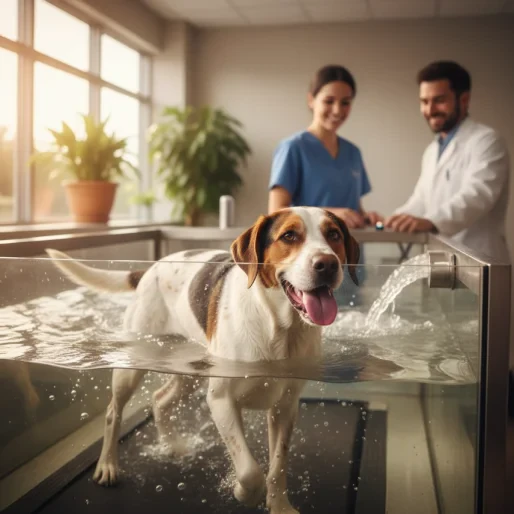
An underwater treadmill unit consists of an enclosed chamber with a motorised belt at the base. The chamber fills with temperature-controlled water, typically warmed to 26 to 30°C, to a depth set by the therapist. Key variables include:
- Water depth: Higher water levels reduce joint loading through buoyancy (typically reducing weight bearing by 40% to 60%); lower levels increase the challenge.
- Treadmill speed: Usually set between 0.5 and 3.0 km/h, matched to the dog's comfort and gait pattern.
- Session duration: Initial sessions may involve only 5 to 10 minutes of active walking, gradually building to 20 to 30 minutes.
- Water jets: Some units include adjustable jets that add resistance, further engaging core and limb muscles.
Sessions are supervised by a qualified canine rehabilitation therapist or veterinary physiotherapist. In Australia, the Australian Physiotherapy Association (APA) maintains an Animal Physiotherapy national group, and practitioners may hold credentials such as a Certified Canine Rehabilitation Therapist (CCRT) or Certified Canine Rehabilitation Practitioner (CCRP) qualification. Gait quality, compensatory movements, fatigue, and pain indicators are monitored throughout each session.
Underwater Treadmill vs. Swimming Pool Therapy
Some Australian facilities offer pool-based hydrotherapy as an alternative or complement to treadmill sessions. Key differences include:
- Gait retraining: Underwater treadmills encourage a normal walking or trotting gait, which is particularly valuable for hip dysplasia. Swimming involves paddling, which does not target hip extension as effectively.
- Therapist control: Treadmill speed, water depth, and duration are precisely adjustable, whereas pool sessions are harder to standardise.
- Cost: Pool swim sessions are sometimes more affordable (from around $25 to $50 AUD), but they serve a different therapeutic purpose and may not substitute for treadmill-based rehabilitation.
What Hydrotherapy Costs in Australia
Geographic Variation
As with most veterinary services in Australia, location significantly affects pricing. Sessions at specialist centres in Sydney, Melbourne, or Brisbane typically sit at the higher end ($80 to $120 AUD per session), while facilities in smaller cities, regional centres, or outer suburbs may charge $60 to $85 AUD. Some independent hydrotherapy centres offer lower entry prices than veterinary hospital-based programmes, though the level of veterinary oversight may differ.
Facility Type and Credentials
Pricing also reflects who is delivering the therapy:
- Specialist veterinary rehabilitation hospitals: Centres such as university veterinary teaching hospitals (e.g. the University of Melbourne Veterinary Hospital, University of Sydney Veterinary Teaching Hospital) and large referral practices may charge $100 to $150 AUD per session, with integrated specialist oversight.
- Veterinary practices with rehabilitation services: Typically $70 to $120 AUD per session, supervised by a veterinarian or qualified rehabilitation therapist.
- Independent hydrotherapy centres: Often the most affordable option at $50 to $85 AUD per session, though veterinary involvement may be limited to the referring vet.
Breed, Size, and Complexity
Larger dogs require more water, longer warm-up periods, and occasionally additional handling assistance. Some facilities apply a surcharge of $10 to $30 AUD for giant breeds such as Great Danes, Saint Bernards, or Mastiffs. Dogs with concurrent conditions (obesity, cruciate ligament disease, spinal issues) may need longer or more complex sessions, with add-on therapies like laser therapy or manual joint mobilisation increasing per-visit costs by $20 to $60 AUD.
Typical Cost Breakdown (AUD)
| Item | Typical Cost Range (AUD) |
|---|---|
| Initial rehabilitation assessment | $120 to $300 |
| Single underwater treadmill session (20 to 30 min) | $60 to $120 |
| Package of 5 to 10 sessions | $250 to $900 |
| Maintenance phase (1 to 2 sessions per month) | $60 to $240 per month |
| Total for 6 to 12 week initial programme | $700 to $3,500+ |
Many Australian clinics offer package discounts of 10% to 20% when sessions are purchased in blocks. For example, some providers advertise packages of five follow-up sessions at a reduced rate. It is always worth asking about bundled pricing at the initial consultation.
Australian Pet Insurance and Hydrotherapy Coverage
Pet insurance is one of the most effective ways to manage rehabilitation costs, and several Australian insurers now include hydrotherapy as a covered benefit under comprehensive or add-on policies:
- Pet Insurance Australia: Offers coverage for specialised therapies including hydrotherapy through their optional Booster Care add-on, with annual sub-limits that may reach $2,500 AUD for complementary therapies.
- RSPCA Pet Insurance: Provides access to therapies such as hydrotherapy, acupuncture, and therapeutic massage for covered conditions.
- Other providers: Several other Australian insurers, including Petsy and Bow Wow Meow, list rehabilitation therapies under comprehensive plans, often subject to sub-limits and veterinary referral requirements.
Critical considerations for Australian pet owners:
- Pre-existing condition exclusions: If hip dysplasia was diagnosed before the policy commenced, or during the waiting period, hydrotherapy costs are almost universally excluded.
- Waiting periods: Most Australian policies impose waiting periods of around 30 days for illness-related claims, and some apply longer waiting periods (up to 6 months) for orthopaedic or hereditary conditions.
- Veterinary referral: Insurers typically require that hydrotherapy be prescribed by a registered veterinarian and performed at an approved or qualified facility.
- Annual limits and co-pays: Standard policy structures apply, with annual benefit limits and reimbursement rates typically between 70% and 80% after excess.
Insuring puppies of predisposed breeds early, ideally before any clinical signs develop, gives the best chance of coverage if hip dysplasia is later diagnosed.
Financial Assistance Beyond Insurance
For owners without adequate coverage:
- Veterinary payment plans: Many Australian practices offer in-house payment arrangements or partner with third-party providers such as VetPay or Zip to spread costs over several months.
- Veterinary teaching hospitals: University-affiliated clinics sometimes offer rehabilitation services at reduced rates, providing supervised care delivered by residents and students under specialist guidance.
- Breed-specific rescue organisations: Some breed rescue groups in Australia offer financial assistance or subsidised rehabilitation for dogs with hereditary conditions.
Climate Considerations for Australian Dog Owners
Australia's climate introduces practical considerations that are less relevant in cooler regions:
- Summer heat management: In much of Australia, summer temperatures regularly exceed 35°C and can surpass 40°C in inland and northern areas. Scheduling hydrotherapy sessions during cooler parts of the day (early morning or late afternoon) is advisable to avoid heat stress during transport. Dogs with hip dysplasia are often less mobile and may overheat more easily.
- Post-session recovery: After a hydrotherapy session, dogs should be dried thoroughly and kept in a cool, shaded environment. Avoid leaving dogs in parked vehicles, even briefly, as interior temperatures can become lethal within minutes in Australian conditions.
- Bushfire smoke: During bushfire season, air quality can deteriorate significantly. Dogs with respiratory sensitivities or those recovering from orthopaedic procedures should avoid outdoor exercise on high-smoke days. Hydrotherapy in an indoor, climate-controlled facility can serve as a valuable alternative to outdoor exercise during these periods.
- Hydration: Ensure dogs are well hydrated before and after sessions, particularly in warmer months. Carry fresh water for the journey to and from the facility.
Animal Emergency Service (AES)
Call the Animal Emergency Service or find your nearest 24-hour emergency vet clinic.
AES operates in QLD, NSW, and VIC. For other states, search for your nearest after-hours veterinary hospital.
Session Frequency: Recommended Phased Approach
Rehabilitation professionals generally follow a phased protocol:
Acute or Post-Surgical Phase (Weeks 1 to 4)
Two to three sessions per week with short active intervals (5 to 15 minutes of treadmill walking). The focus is on pain reduction, gentle reintroduction of weight bearing, and early muscle activation.
Strengthening Phase (Weeks 5 to 12)
One to two sessions per week with longer intervals (15 to 25 minutes) and increased treadmill speed or reduced water depth. Therapists typically reassess gait and range of motion every two to four weeks.
Maintenance Phase (Ongoing)
One to two sessions per month. Many owners find that ongoing maintenance hydrotherapy, combined with weight management and joint supplements, helps delay or reduce escalating pain medication requirements. Nutritional strategies also play a supportive role; the guide to Raw vs Cooked vs Freeze-Dried Dog Food: AU Guide explores dietary options relevant to joint health.
What the Evidence Shows
Veterinary rehabilitation is a growing specialty, and published studies (primarily small clinical trials and case series) consistently report the following outcomes in dogs completing structured underwater treadmill programmes:
- Improved hip joint range of motion, measured with goniometry
- Reduced lameness scores on both subjective and objective gait assessments
- Increased thigh muscle circumference, typically by 1 to 3 cm over a rehabilitation course
- Improved owner-reported quality of life on validated tools such as the Canine Brief Pain Inventory and Helsinki Chronic Pain Index
- Potential reduction in reliance on non-steroidal anti-inflammatory medication, always managed under veterinary supervision
Professional consensus, including guidelines from the International Association of Veterinary Rehabilitation and Physical Therapy (IAVRPT), supports hydrotherapy as a valuable component of multimodal hip dysplasia management.
Questions to Ask Your Australian Provider
Before committing to a programme, clarify the following:
- What qualifications does the therapist hold (CCRT, CCRP, veterinary physiotherapy degree, APA Animal group membership)?
- Is a registered veterinarian on site or available for consultation?
- What does the initial assessment include, and is it billed separately from the first session?
- Are package discounts available, and what is the cancellation policy?
- Will the facility provide documentation suitable for insurance reimbursement claims?
- How will progress be measured, and how frequently will formal reassessments occur?
When Hydrotherapy May Not Be Appropriate
Hydrotherapy is not suitable for every dog. Contraindications may include open wounds or skin infections, uncontrolled cardiac or respiratory disease, severe water anxiety, certain infectious conditions, and orthopaedic instability requiring surgical correction before rehabilitation can safely begin. A thorough veterinary assessment should always precede the first session. For understanding how technology can assist with monitoring symptoms between appointments, see How AI Pet Health Apps Analyse Your Pet's Symptoms.
Budgeting Realistically
The cost that often catches owners off guard is not the individual session fee, which is comparable to a standard veterinary consultation, but the cumulative total across weeks and months of consistent treatment. Budgeting $1,200 to $2,500 AUD for an initial programme is a reasonable starting estimate for most Australian owners, with ongoing maintenance adding $60 to $240 AUD per month.
Hydrotherapy represents an investment in long-term comfort and mobility. When combined with appropriate medical management, weight control, and home exercise prescribed by a rehabilitation therapist, it offers one of the most effective non-surgical strategies available for managing canine hip dysplasia. Owners are encouraged to explore insurance coverage early, ask about package pricing, and maintain open communication with their rehabilitation team about goals, timelines, and financial constraints. For creative ways to keep dogs mentally and physically active between sessions, see the guide on DIY Dog Enrichment Rotation From Recycled Materials.
Frequently Asked Questions
Content Disclosure
This article was created using state-of-the-art AI models with human editorial oversight. It is intended for informational and entertainment purposes only and does not constitute veterinary medical advice. Always consult a licensed veterinarian for your pet's specific health needs. Learn more about our process.