As water temperatures rise each spring, pond fish display a cascade of behaviours that range from entirely normal to genuinely urgent. Learning to distinguish thermoregulatory surface positioning from hypoxic distress, reproductive chasing from harmful aggression, and incidental flicking from a parasite crisis is the foundation of proactive spring pond management.
Key Takeaways
- Surface activity in spring can reflect normal thermoregulatory behaviour or a critical indicator of dissolved oxygen depletion: the difference lies in opercular rate, posture, and the number of fish affected.
- Spawning chases are species-typical reproductive behaviour in koi and goldfish, but a skewed male-to-female ratio or confined space can turn normal pursuit into a welfare concern with real injury risk.
- Flashing (rubbing or scraping against surfaces) is almost never benign: it signals external irritation from ectoparasites, water chemistry imbalance, or gill disease.
- Spring is the highest-risk window for ammonia and nitrite spikes in established ponds, because biological filtration reactivates more slowly than fish metabolism.
- Any concurrent presentation of two or more of these behaviours warrants immediate water testing before any other intervention is considered.
Why Spring Is the Most Behaviourally Complex Season for Pond Fish
As water temperatures climb from the low single digits toward the range of 10 to 15 degrees Celsius, pond fish emerge from the semi-torpor of winter and begin exhibiting a cascade of behaviours that can appear alarming to even experienced keepers. Goldfish, koi, and other common pond species are ectotherms: their metabolic rate is directly governed by ambient water temperature. This physiological reality means that the shift from winter to spring is not a gradual awakening but a rapid ramp-up of biological activity that places significant demands on both the fish and the ecosystem supporting them.
Professional consensus among aquatic veterinarians and fish health specialists holds that the spring transition period is the season during which most husbandry problems first become behaviourally visible. Biological filtration colonies, primarily nitrifying bacteria responsible for processing toxic ammonia into less harmful compounds, are temperature-sensitive organisms that reactivate more slowly than fish metabolism. This lag creates a predictable window of elevated ammonia and nitrite even in well-maintained ponds, and it is during this window that fish behaviour becomes the owner's most immediate diagnostic tool. For a comprehensive overview of preparing your pond system after winter, the guide on spring pond startup for koi keepers provides an essential companion reference.
Increased Surface Activity: Normal Thermoregulation or Hypoxic Distress?
One of the first behaviours owners notice as spring arrives is fish spending more time near the water surface. This observation encompasses two entirely different phenomena that require careful distinction before any management response is made.
Normal Surface Positioning in Early Spring
In early spring, surface water warms faster than deeper layers, and fish will naturally congregate in the warmer upper stratum. This is straightforward thermoregulatory behaviour: ectotherms seek the thermal conditions that best support their current metabolic state. Fish positioned near the surface in morning sunlight, moving slowly and without apparent urgency, displaying normal body posture and gently operating gill covers, are typically exhibiting normal behavioural thermoregulation. Feeding activity also resumes near the surface as temperatures climb, and fish actively investigating the water surface at feeding time are demonstrating entirely expected behaviour for the season.
Recognising Hypoxic Distress at the Surface
The picture changes significantly when surface activity is accompanied by laboured or rapid opercular movement, the mouth breaking the surface repeatedly in a gasping pattern (sometimes called piping), or when large numbers of fish congregate at the surface simultaneously, particularly near areas of existing surface agitation such as waterfalls or aerators. These presentations are strongly suggestive of dissolved oxygen depletion and represent an urgent welfare concern.
Warm water holds less dissolved oxygen than cold water, and as spring temperatures rise, the oxygen-carrying capacity of the pond decreases at a rate that biological oxygen demand from fish, bacteria, and decomposing organic matter may outpace. An additional compounding factor is thermal stratification, in which warmer, lower-oxygen surface layers become temporarily separated from cooler, better-oxygenated deeper water. If aeration systems were reduced or switched off during winter, their absence now creates significant risk. Aquatic veterinary guidance consistently frames gasping at the surface, particularly when multiple fish are affected simultaneously, as an emergency situation until proven otherwise. Increasing surface agitation immediately by repositioning an existing air pump, adding a fountain, or installing a venturi is appropriate first aid while water testing is arranged. The article on how rising spring temperatures affect freshwater aquarium chemistry provides a thorough technical breakdown of the dissolved oxygen and pH dynamics involved.
Spawning Chases: Reading Reproductive Behaviour and Its Hidden Risks
Spawning behaviour is perhaps the most dramatic spring event in a garden pond. Owners who have never witnessed it can be genuinely alarmed by what appears to be aggressive pursuit or coordinated harassment. Understanding what is happening behaviourally, and crucially the welfare implications that accompany it, is essential for appropriate management.
The Ethology of Spawning Chases
In goldfish and koi, spawning is typically initiated when water temperatures consistently reach the range of 16 to 20 degrees Celsius, though this varies by species, individual condition, and photoperiod. Males develop small, white, raised tubercles (breeding stars) on their pectoral fins and gill plates in the period preceding spawning. When a female becomes gravid (ripe with eggs), males pursue her persistently, pressing against her flanks and abdomen in an effort to stimulate egg release. This pursuit can be vigorous, sustained over many hours, and can involve multiple males chasing a single female simultaneously.
This is entirely normal species-typical reproductive behaviour. The distinction between normal spawning pursuit and a harmful situation lies in the physical outcome for the female: in normal spawning, the female, though visibly active in response to male attention, retains body posture, normal fin carriage, and is able to move freely when not being pressed against by males. She is often observed leading males toward shallow, plant-rich areas of the pond, which is a functional component of natural spawning site selection.
When Spawning Chases Become a Welfare Concern
Problems arise when the sex ratio in the pond is heavily skewed toward males, when pond space is insufficient to allow the female to retreat and rest, or when the female is not yet ready to spawn and pursuit continues without respite across multiple days. In these situations, females can sustain scale loss, fin damage, and significant physiological stress. The immunosuppressive effect of sustained social stress in teleost fish is well documented in aquatic science: cortisol elevation following prolonged pursuit suppresses immune function and materially increases susceptibility to bacterial and parasitic infection in the weeks following spawning.
Owners should monitor for the following post-chase indicators:
- Visible wounds, missing scales, or torn fins on the female fish
- A female that is unable to rest or retreat from pursuit for extended periods over consecutive days
- Post-spawning lethargy or sustained loss of appetite lasting more than several days
- Any fish failing to return to normal behavioural baseline within approximately one week of spawning completion
If injuries are sustained, affected fish should be isolated in a clean, temperature-matched holding container and an aquatic veterinarian or fish health specialist consulted promptly. Open wounds in pond fish are direct entry points for opportunistic bacterial infections, particularly Aeromonas and Pseudomonas species, which are ubiquitous in pond environments and highly active at spring water temperatures. Guidance on temperature monitoring and adjusted feeding schedules around the spawning period is available in the article on opening the koi pond: water temperature and feeding schedules.
Flashing and Flicking: The Behaviour That Should Never Be Dismissed
Flashing, also referred to as flicking, describes the behaviour in which a fish rapidly rolls onto its side and rubs or scrapes its body against a solid surface, such as the pond floor, a rock, a plant stem, or the pond wall, before returning to normal swimming orientation. It may appear briefly and sporadically in a single fish, or it may be frequent, compulsive, and present across several fish simultaneously.
The Behavioural Root Cause of Flashing
Flashing is an irritation-relief behaviour. Fish lack the limb anatomy to scratch themselves, so they use available surfaces in their environment. The trigger is almost always external: something is irritating the skin surface, gill lamellae, or mucus layer of the fish. The primary causes fall into three categories:
- Ectoparasite burden: The most common triggers are external parasites. Anchor worm (Lernaea species), fish lice (Argulus species), and skin and gill flukes (Gyrodactylus and Dactylogyrus species) are prevalent in pond environments and reproduce rapidly in spring, often increasing in number before fish immune systems are fully reactivated from their winter suppression. Ichthyophthirius multifiliis (white spot), while classically associated with aquarium fish, can also present in ponds during spring temperature transitions.
- Water chemistry irritants: Elevated ammonia, elevated nitrite, or a destabilised pH can directly irritate gill and skin tissue, producing flashing behaviour in the complete absence of any parasite load. This is a critical diagnostic point: flashing does not automatically mean parasites, and applying treatment products empirically without first confirming that water quality is within acceptable parameters is a common and potentially harmful error that can damage biological filtration and worsen the underlying condition.
- Gill damage and secondary infection: Bacterial gill disease or fungal gill colonisation produces flashing as fish respond to compromised respiratory tissue. These conditions often arise secondary to the water quality or parasite problems described above.
Distinguishing Occasional from Pathological Flashing
A single fish observed flashing once or twice over a period of watchful observation, while otherwise eating normally, displaying normal colouration, and holding fins erect, is a lower-priority concern than multiple fish flashing repeatedly throughout the day. The latter presentation, particularly when combined with clamped fins, a dull or cloudy skin appearance indicating increased mucus production, or reduced activity, suggests a pond-wide problem rather than an isolated individual anomaly and requires prompt systematic investigation.
The correct diagnostic sequence is: test water chemistry first; if parameters are acceptable, inspect fish closely for visible ectoparasites, particularly along the pectoral fins and around the gill margins; and consult an aquatic veterinarian or fish health specialist before selecting any treatment product. The management of nitrate accumulation, which contributes to chronic low-level immune suppression and tissue irritation, is addressed in depth in the guide on managing nitrate spikes during spring warm-ups.
The Water Quality Connection: What Spring Behaviour Reveals About Pond Chemistry
The three behaviours discussed above do not exist in isolation. Fish health specialists commonly observe that multiple behavioural changes occurring simultaneously create a compounded welfare problem through a process that behavioural science frameworks describe as trigger stacking: the accumulation of multiple stressors that, together, push an animal beyond its physiological capacity to cope. A fish already stressed by elevated ammonia is less resilient to the immunosuppressive effects of spawning; a fish weakened by spawning is more susceptible to the parasite loads it might otherwise tolerate without clinical signs.
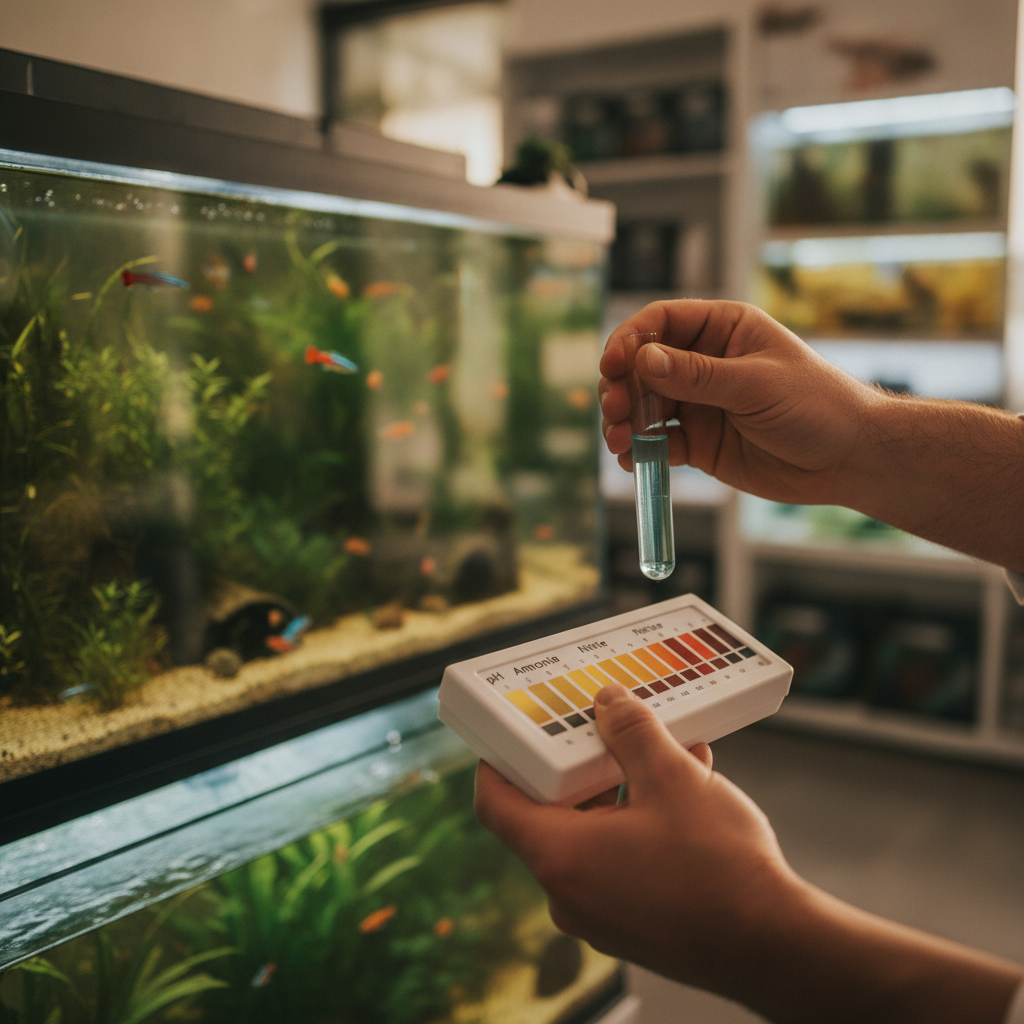
The key water quality parameters that should be tested at the first sign of unusual spring behaviour are:
- Ammonia (NH3/NH4+): Should be at or as close to zero ppm as possible. Any detectable ammonia in a pond where fish are actively feeding is a concern, particularly because the proportion of the more toxic un-ionised ammonia (NH3) increases as pH rises, which commonly occurs during algal photosynthesis in spring daylight hours.
- Nitrite (NO2-): Should be at zero ppm. Elevated nitrite, which occurs when nitrifying bacteria colonies are not yet fully re-established, impairs haemoglobin oxygen transport and compounds any existing hypoxia from warming water.
- Nitrate (NO3-): While less acutely toxic, chronically elevated nitrate suppresses immune function; management through partial water changes is generally recommended to keep levels below approximately 40 ppm in pond systems.
- pH: Stability is as important as absolute value. The daily pH swing driven by algal photosynthesis in spring ponds, which can shift pH by one or more units between dawn and midday, is a significant and often underappreciated cause of gill irritation and flashing.
- Dissolved oxygen: Should ideally remain above 7 mg/L for optimal fish health. Practical management levers are surface agitation, correctly positioned aeration, and management of organic load.
Environmental and Social Triggers Compounding Spring Stress
Beyond chemistry, environmental conditions unique to spring create additional behavioural pressures on pond fish that owners should account for during their monitoring:
- Algal blooms: The green water surges and blanketweed proliferation characteristic of spring can drive significant pH fluctuation and, in severe cases, overnight oxygen depletion as algae shift from photosynthesis to respiration after dark. Fish behaviour can change markedly during a blanketweed bloom even when daytime ammonia and nitrite readings appear acceptable.
- Predator disturbance: Herons and other predators are highly active in spring. Fish that have survived a predator encounter may display prolonged avoidance responses, remaining hidden in deep areas of the pond, refusing food for extended periods, or startling excessively at movement near the water surface. These are fear-based behavioural responses and should not be misinterpreted as illness.
- Stocking density changes: Ponds that were adequately stocked the previous year may have become effectively overstocked as fish have grown. The spring behaviour review is a practical time to reassess stocking density relative to pond volume and filtration capacity, as overcrowding amplifies both social stress during spawning and the biological oxygen demand that drives hypoxic surface activity.
- New fish introductions: Introducing new fish in spring without appropriate quarantine protocols is a significant risk factor for introducing disease into a pond already managing filter re-establishment and spawning stress. Aquatic veterinary guidance consistently recommends a minimum dedicated quarantine period for any new pond fish before introduction.
Management Strategies for Spring Behavioural Changes
For Surface Activity and Oxygen Concerns
- Ensure all aeration equipment is fully operational and correctly positioned before water temperatures begin rising consistently above 10 degrees Celsius
- Avoid feeding heavily until water temperature is consistently above 10 degrees Celsius and biological filtration shows evidence of function through stable, low ammonia and nitrite readings
- Perform partial water changes carefully, typically in increments of 10 to 20 percent at a time, ensuring replacement water is closely matched in temperature to the existing pond water to avoid thermal shock, which is itself a significant stressor in spring
- Reduce organic load by removing winter debris, decaying leaves, and settled sludge before the main spring warm-up, as decomposition of this material places heavy biological oxygen demand on the system
For Spawning Chase Management
- Provide adequate structural complexity through floating plants, submerged vegetation, and shelter areas that allow females to break line of sight from pursuing males and rest periodically
- If the male-to-female ratio is severely skewed and females sustain injuries across multiple spawning seasons, consider separating fish prior to the peak spawning window until conditions can be addressed
- Increase observation frequency in the two to three weeks following spawning completion, as this is the period of greatest immunosuppression and highest risk for opportunistic bacterial infections presenting as ulcers or haemorrhagic lesions
For Flashing
- Always test water chemistry before considering any treatment product
- If ectoparasites are confirmed through careful visual inspection or through microscopic examination of a mucus scrape performed by a fish health professional, seek treatment guidance appropriate to the specific organism identified
- Avoid broad-spectrum treatment without an accurate diagnosis: many pond treatment products carry risks to biological filtration, invertebrates, and plant life, and misidentified treatments can worsen underlying conditions rather than resolve them
When to Seek Specialist Assessment
Owners are encouraged to seek advice from an aquatic veterinarian or a qualified fish health specialist when:
- Multiple fish are presenting any of the above behaviours simultaneously rather than as isolated incidents
- Flashing is persistent and water quality tests reveal no abnormalities across repeated testing
- Any fish sustain physical injury, scale loss, or fin damage during spawning chases
- Fish deaths occur, even if apparently isolated to a single individual
- Fish behaviour does not return to a normal baseline within one to two weeks of spring conditions establishing
- Any visible lesions, ulcers, areas of unusual colouration, abnormal body posture, or loss of equilibrium are observed alongside the behaviours described
The World Aquatic Veterinary Medical Association (WAVMA) and the British Veterinary Association (BVA) both recognise fish as sentient animals whose welfare merits the same structured, evidence-based assessment applied to any companion species. Early specialist involvement when behaviour raises concern consistently leads to better outcomes than delayed intervention after disease has progressed. For further context on managing the chemistry challenges that underpin many of the behavioural changes described in this guide, the article on spring temperature swings and tropical aquariums provides additional applicable guidance for any keeper navigating spring water quality transitions.
Frequently Asked Questions
Is it normal for koi and goldfish to chase each other in spring? ↓
Why are my pond fish gulping at the water surface in spring? ↓
What does flashing or flicking behaviour mean in pond fish? ↓
How soon in spring should I start feeding my pond fish again? ↓
How often should I test my pond water during spring? ↓

David Okafor
Certified Animal Behaviourist
Certified animal behaviourist — science-based strategies for fear, anxiety, reactivity, and behavioural challenges.
Content Disclosure
This article was created using state-of-the-art AI models with human editorial oversight. It is intended for informational and entertainment purposes only and does not constitute veterinary medical advice. Always consult a licensed veterinarian for your pet's specific health needs. Learn more about our process.