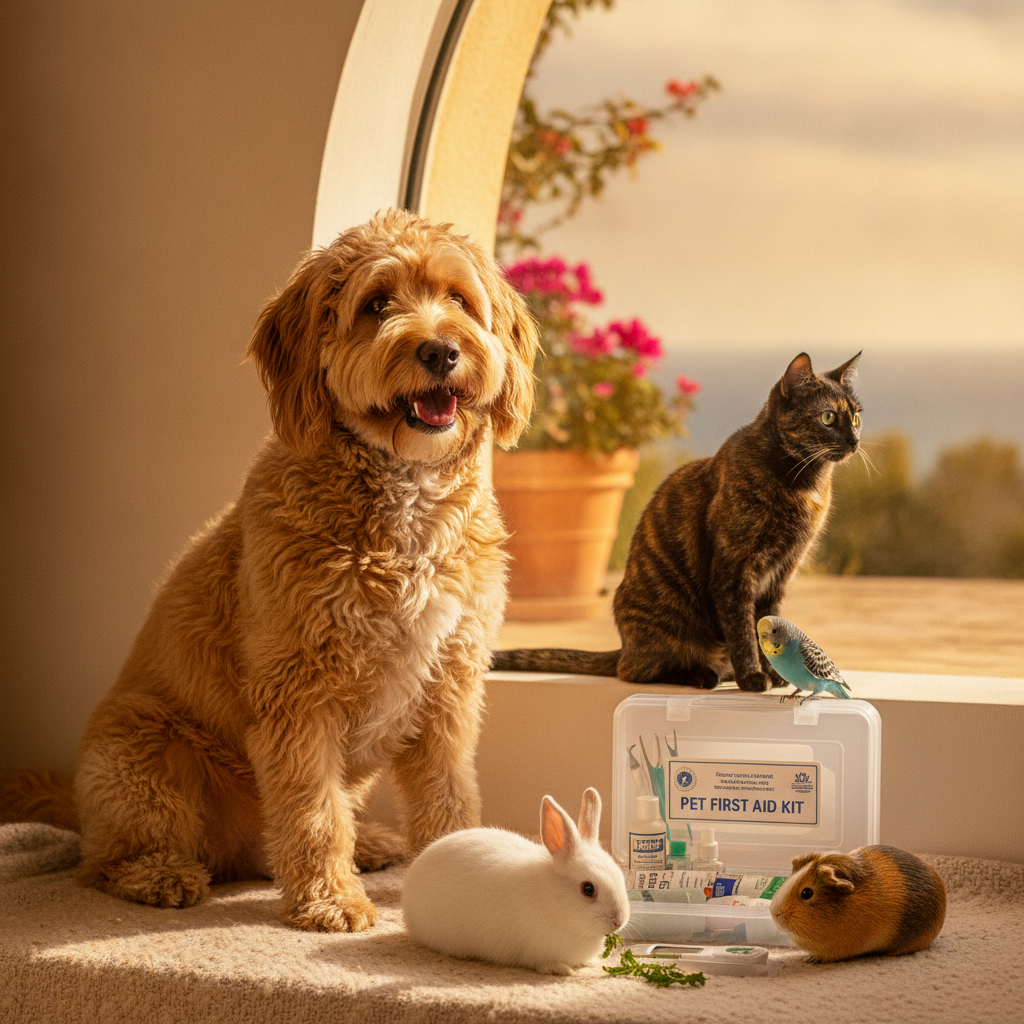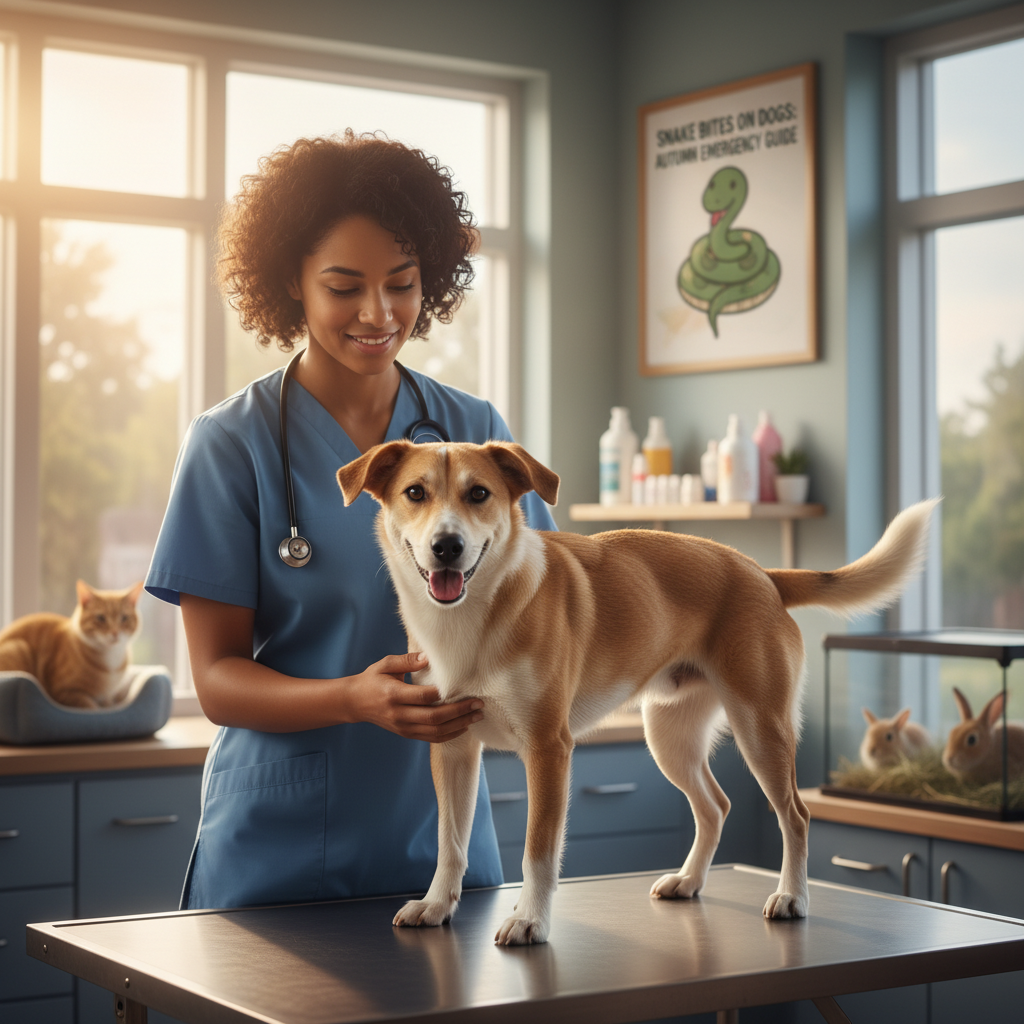
Autumn snake bites on Australian dogs remain a real risk well into May, especially during warm afternoons. This guide covers species-specific signs, pressure immobilisation, and what every owner needs to know before transporting a bitten dog to a stocked clinic.
Key Takeaways
- Autumn bites are frequently missed across NSW, VIC, SA and southern WA because owners assume snake season ends with summer. Veterinary emergency centres continue to log envenomations through April, May and even early June in warmer years.
- Eastern browns, tigers, and red-bellied blacks dominate canine envenomations on the eastern and southern seaboards, while mulga (king brown) and death adder bites are more relevant in the Top End and arid interior.
- Pressure immobilisation (firm crepe bandage plus rigid splint) is endorsed by the Australian Resuscitation Council and Australian Veterinary Association (AVA) for elapid bites on limbs.
- Antivenom is the only definitive treatment. Phone ahead so the clinic can prepare a snake venom detection kit (SVDK) and confirm stock.
- Keep the dog still. Lymphatic flow is muscle-driven, so carry, do not walk, the patient.
- Never cut, suck, apply ice, use a tourniquet, or try to catch the snake.
Why May Snake Bites Still Hit Australian Dogs Hard
Australian snake activity peaks from September through March, but the season tapers rather than stops. With autumn 2026 delivering warmer-than-average afternoons across much of southeastern Australia, elapid sightings continue well into May. Cooler overnight temperatures push snakes to bask on warm concrete, garden pavers, sheet metal, and bushland tracks during the day, exactly where Kelpies, Cattle Dogs, Staffies, Border Collies and curious Labradors tend to investigate.
Three elapid species are responsible for most canine envenomations along the populated east and south coasts: the eastern brown snake (Pseudonaja textilis), the tiger snake (Notechis scutatus), and the red-bellied black snake (Pseudechis porphyriacus). In the Northern Territory and northern WA, the mulga (Pseudechis australis) and several death adder species (Acanthophis spp.) become more clinically relevant. Tasmania has its own distinct mix dominated by tiger snakes and lowland copperheads. Every state and territory considers snake bite a true Category 1 emergency.
Recognising a Snake Bite as a Genuine Emergency
Puncture wounds are rarely visible through a dog's coat, particularly on thick-coated breeds like Australian Shepherds or Golden Retrievers. Many owners describe a sudden yelp in the backyard, followed by fifteen to sixty minutes of apparent normality before the dog collapses or vomits. This deceptive lucid interval is one of the most dangerous features of elapid envenomation and the reason the AVA and the Australian and New Zealand College of Veterinary Scientists (ANZCVS) advise treating any suspected bite as a hospital emergency.
Red Flag Signs Across All Three Major Species
- Sudden collapse followed by apparent recovery (classic pre-paralytic sign).
- Vomiting, drooling, or hypersalivation within 30 minutes of suspected exposure.
- Dilated pupils with sluggish response to light.
- Hind limb weakness, ataxia, or dragging progressing forward.
- Pale or muddy gums with capillary refill time greater than two seconds.
- Rapid or shallow breathing, sometimes progressing to agonal patterns.
- Tea-coloured or red-tinged urine, indicating haemoglobinuria or myoglobinuria.
- Bleeding that will not stop from gums or puncture sites.
Brown Snake Bite Signs (Pseudonaja species)
Eastern brown venom is dominated by potent procoagulants and presynaptic neurotoxins. Dogs commonly present with sudden collapse, vomiting, and rapidly developing venom-induced consumptive coagulopathy (VICC). Persistent bleeding from the gums or bite site is highly suggestive. Flaccid paralysis can follow within hours. Brown snake envenomation carries the highest reported canine mortality of any Australian elapid, particularly in farm and acreage settings across regional NSW, southern QLD and northern VIC.
Tiger Snake Bite Signs (Notechis species)
Tiger snake venom combines neurotoxins, myotoxins, procoagulants and haemolysins. Affected dogs frequently show profound muscle weakness, coffee-coloured urine from rhabdomyolysis, and progressive paralysis. Tiger snakes are particularly common around wetlands, dams and waterway edges in Victoria, Tasmania, and the wetter parts of southern WA and SA. Pre-paralytic collapse is typical, and untreated mortality is high.
Red-Bellied Black Snake Bite Signs
Red-bellied black venom is largely myotoxic and haemolytic with milder neurotoxic effects. Dogs often present with a painful, swollen bite site, lethargy, pink to red-brown urine, vomiting and weakness. Fatalities are less common than with brown or tiger bites, but severe haemolytic anaemia and acute kidney injury remain genuine risks, and every case warrants emergency assessment.
Immediate First Aid: The Critical First Ten Minutes
The single most important principle endorsed by the Australian Resuscitation Council is keep the dog still. Elapid venoms travel predominantly through the lymphatic system, and lymph flow depends on muscle movement. Every step a bitten dog takes accelerates venom uptake.
Step One: Restrain and Reassure
Gently restrain the dog where it stands. Speak calmly. Smaller breeds such as Mini Foxies, Jack Russells or Cavoodles can be lifted into your arms or onto a board, blanket, beach towel or pet stretcher. For larger working dogs, ideally two adults carry the patient on a rigid surface. Do not let the dog walk to the ute or car.
Step Two: Apply Pressure Immobilisation (When Appropriate)
The pressure immobilisation technique (PIT) is the standard endorsed by Australian envenomation guidelines for elapid bites on a limb. The aim is to compress superficial lymphatics without occluding arterial flow, then splint the limb so the muscle pump is silenced.
- Use a broad elastic or crepe bandage, typically 10 to 15 cm wide. Snake bite first aid kits sold through Australian veterinary suppliers usually contain two compliant bandages and cost around $25 to $45 AUD.
- Start at the bite site and bandage upward toward the body, then back down to the toes, at the firmness used for a sprained ankle.
- Apply a rigid splint (a stick, rolled newspaper, piece of dowel or timber) and secure with a second bandage.
- Mark the suspected bite location on the outside of the bandage with a pen if possible.
- Do not apply pressure immobilisation to bites on the head, neck or trunk. Transport instead.
If you cannot apply a proper bandage quickly, prioritise getting to the clinic. An imperfect bandage is acceptable; delayed transport is not.
Step Three: Call the Emergency Vet
Phone ahead while another adult drives. Report: suspected snake bite, species (if known), time of bite, clinical signs, and estimated arrival time. This allows the team to draw up IV fluids, prepare an SVDK and confirm antivenom stock.
Animal Emergency Service (AES)
Call the Animal Emergency Service or find your nearest 24-hour emergency vet clinic.
AES operates in QLD, NSW, and VIC. For other states, search for your nearest after-hours veterinary hospital.
What NOT to Do: Common Dangerous Mistakes
- Do not apply a tourniquet. Arterial occlusion causes tissue death and does not prevent venom spread.
- Do not cut or suck the wound. This is ineffective and introduces infection.
- Do not apply ice or heat. Ice causes additional tissue injury and does not slow venom.
- Do not wash the bite site. Residual venom on the coat can be swabbed for SVDK testing, which guides antivenom selection.
- Do not try to catch or kill the snake. All Australian native snakes are protected under state wildlife legislation, and most human bites occur during attempted capture. A photo from a safe distance is acceptable.
- Do not give food, water or oral medication. A vomiting or paralysing dog is at high aspiration risk.
- Do not wait and see. The lucid interval between bite and collapse can be deceptively long.
Getting to the Emergency Vet Safely
Transport protocol matters as much as first aid. Australian emergency clinicians recommend the following approach.
- One person drives, one person monitors the dog. Track breathing rate, gum colour and consciousness.
- Keep the dog flat and still on the back seat or footwell, ideally on a firm surface.
- Position the head slightly lower than the body if vomiting, to reduce aspiration.
- Keep the cabin cool but not cold. Hyperthermia worsens rhabdomyolysis.
- Drive carefully, not recklessly. A crash en route helps no one.
Antivenom Availability by Region
Antivenom distribution in Australia varies substantially by location, and stock fluctuates even at well-resourced hospitals.
- Metropolitan 24-hour emergency hospitals in Sydney, Melbourne, Brisbane, Adelaide, Perth, Hobart, Canberra and Darwin typically carry brown, tiger and polyvalent antivenom.
- Regional and rural clinics usually carry tiger or brown antivenom matched to local snake populations.
- Remote areas, particularly in the NT, far north QLD and outback WA, may have limited stock, with the nearest equipped hospital one to three hours away.
- Expect cost. A single vial of monovalent antivenom plus 24 to 48 hours of intensive care typically ranges from $3,000 to $8,000 AUD, with severe multi-vial cases sometimes exceeding $10,000 AUD. Pet insurance policies that cover snake bite (most reputable Australian providers do) are well worth checking before peak season.
Save the after-hours number of your nearest 24-hour emergency centre in your phone now, before the next warm day arrives.
What to Tell the Vet on Arrival
A focused handover saves precious minutes during triage. Be ready to report:
- Time of suspected bite or last seen normal.
- Location of the bite on the body, if known.
- Snake description: colour, approximate length, head shape, behaviour, and any safely captured phone photo.
- Geographic context: bushland, dam edge, woodpile, garden bed, paddock.
- Clinical signs and timing, including any collapse, vomiting, weakness or urine colour change.
- First aid applied, including bandage placement and time.
- Dog's weight in kg, breed, age and current medications.
- Pre-existing conditions, especially clotting disorders, kidney disease or recent surgery.
The veterinary team will perform rapid triage, place IV access, run baseline bloods (clotting times, PCV, biochemistry, creatine kinase), swab the bite site for SVDK testing, and discuss antivenom administration and projected costs.
Recovery and Follow-Up at Home
Dogs that receive timely antivenom and supportive care have a substantially better prognosis. Hospital stays of one to several days are typical, depending on species and severity.
What to Expect After Discharge
- Strict rest for one to two weeks. No off-lead beach runs, stairs or rough play.
- Monitor urine colour. Persistent dark or red urine suggests ongoing muscle or red cell damage.
- Watch for delayed serum reactions. A small subset develop serum sickness (lethargy, fever, joint pain, urticaria) 7 to 14 days after antivenom.
- Attend recheck bloodwork, particularly clotting profiles and renal values.
- Report any new lameness, breathing changes, lethargy or appetite loss immediately.
If your dog struggled with weakness after the bite, a structured reassessment can help track progress. Our guide on how to perform a basic mobility assessment on your dog offers a simple framework for monitoring recovery at home.
Prevention: Reducing Risk During the Autumn Taper
- Keep grass below 10 cm and clear woodpiles, sheet metal, corrugated iron and garden debris where snakes shelter.
- Block gaps under sheds, decking and water tanks.
- Walk dogs on lead in bushland, around dams or along waterways, particularly on warm autumn afternoons above 22 to 24 °C.
- Avoid letting dogs nose into rustling vegetation, hollow logs or rock crevices.
- Move water bowls away from fence lines and garden edges, as snakes are drawn to water sources during dry spells.
- Train a reliable recall and a solid leave it cue.
- Consider a licensed snake avoidance training session, available through accredited handlers in most states, before the next spring peak.
For households juggling other autumn pet management questions, related reading includes our overviews on senior dog seasonal nutrition and whether daycare suits your dog during transition seasons.
Final Word from the Emergency Floor
Australian veterinary triage data consistently shows owners wait too long because the dog looks okay in the first hour. Pale gums, sudden weakness, or unexplained vomiting after garden time in autumn should always be treated as an emergency until proven otherwise. The combination of pressure immobilisation, calm transport, and a phone call to a stocked hospital aligns with AVA emergency guidance and RECOVER resuscitation principles. When in doubt, go. An unnecessary vet visit is far cheaper than a missed envenomation.
Frequently Asked Questions
Are snake bites really still a risk for my dog in May in Australia? ↓
Should I try to identify or photograph the snake before going to the vet? ↓
How much does snake bite treatment cost in Australia? ↓
Can I do pressure immobilisation on any part of my dog's body? ↓
What if I live remotely and the nearest emergency clinic is hours away? ↓

Dr. Ana Reyes
Emergency & Critical Care Veterinarian
Emergency and critical care veterinarian — life-saving first-aid guidance and emergency recognition for pet owners.
Content Disclosure
This article was created using state-of-the-art AI models with human editorial oversight. It is intended for informational and entertainment purposes only and does not constitute veterinary medical advice. Always consult a licensed veterinarian for your pet's specific health needs. Learn more about our process.