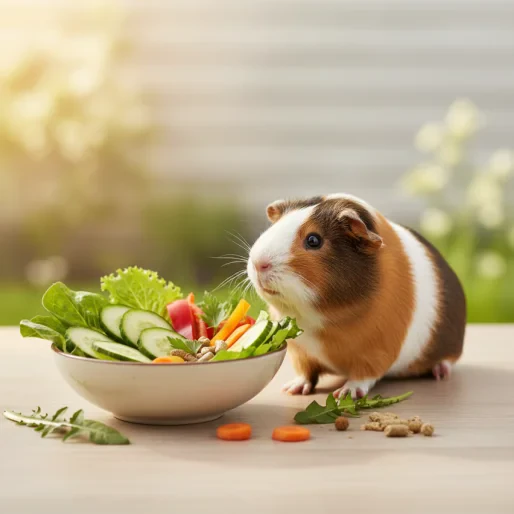
Australian spring brings warm days and fresh produce ideal for guinea pig feeding. This guide covers hay, vitamin C, safe seasonal veggies, and heat awareness for Aussie guinea pig owners.
Key Takeaways for Australian Owners
- Hay remains the foundation: roughly 80% of a guinea pig's daily intake should be unlimited grass hay, with timothy hay the standard for adults.
- Vitamin C is essential: guinea pigs cannot produce their own vitamin C and require approximately 10 to 30 mg per day depending on age, health, and breeding status.
- Australian spring (September to November) offers excellent fresh produce: seasonal greens from local markets and home gardens support both nutrition and enrichment.
- Heat planning starts in spring: rising temperatures across most of Australia mean food spoilage and heat stress risks must be managed early.
- Confirm plant safety before feeding: several common Australian garden plants are toxic to guinea pigs.
Why Nutrition Matters for Australian Guinea Pigs
Guinea pigs (Cavia porcellus) are strict herbivores whose digestive systems depend on constant fibre intake. Their gastrointestinal tract needs a steady supply of long strand fibre to maintain motility and prevent GI stasis, a condition that can become life threatening within hours. Like humans, guinea pigs lack the enzyme L gulonolactone oxidase and cannot synthesise their own vitamin C. This single vulnerability shapes every feeding decision.
In Australia, spring runs from September through November, and it is the ideal window for new owners to build strong feeding routines. Fresh produce becomes widely available at farmers' markets and greengrocers, daytime temperatures are generally mild (though variable), and guinea pigs tend to be more active as daylight hours increase. However, Australian spring also brings warming days that can spike into the high 20s or above 30°C in many regions, making food freshness and spoilage awareness more important than in cooler climates.
Hay: The Non Negotiable 80%
Why Hay Is the Priority
Both the RSPCA Australia and the Australian Veterinary Association (AVA) emphasise that grass hay should be available to guinea pigs in unlimited quantities at all times. Hay provides long strand fibre critical for gut health and also wears down continuously growing teeth, reducing the risk of dental malocclusion, a common and painful condition.
Choosing Hay in Australia
- Timothy hay: the standard recommendation for adult guinea pigs. Available from pet retailers, produce stores, and online suppliers across Australia. Prices typically range from $15 to $35 AUD per kg depending on brand and source.
- Oaten hay: widely grown in Australia and often more affordable and locally available than imported timothy. It provides good fibre content and many guinea pigs accept it readily. It can be used as a complement to timothy or as the primary hay if timothy is difficult to source in regional areas.
- Orchard grass: a suitable alternative or mix in option, nutritionally similar to timothy.
- Meadow hay: a mixed grass option that adds variety. Quality varies between suppliers, so check for dust, mould, and excessive seed heads before feeding.
- Lucerne (alfalfa) hay: higher in calcium and protein, making it suitable for young guinea pigs (under approximately six months), pregnant, or nursing sows. Not recommended as the primary hay for healthy adults due to the risk of excess calcium contributing to urinary stones.
Spring Hay Storage in Australian Conditions
Australian spring can bring unpredictable humidity, particularly in coastal and northern regions. Store hay in a cool, dry location away from direct sunlight. A breathable container or cotton bag in a well ventilated shed or laundry works well. Avoid airtight plastic bins in warm areas, as trapped moisture encourages mould. Check hay before each feed for any musty smell or discolouration, both signs of mould contamination.
Vitamin C: Daily Requirements and Australian Sources
How Much Vitamin C?
Veterinary guidelines suggest the following daily ranges:
- Healthy adults: approximately 10 to 25 mg per day.
- Pregnant, nursing, young, or unwell guinea pigs: approximately 30 to 50 mg per day, with veterinary guidance directing the upper end.
Deficiency causes scurvy, which may present as lethargy, swollen joints, rough coat, reluctance to move, and in severe cases, internal haemorrhage. Early signs are subtle, making consistent dietary vitamin C far more reliable than reactive supplementation.
Best Australian Spring Sources
Australian spring brings excellent local produce for vitamin C delivery:
- Capsicum (all colours): among the richest vitamin C sources suitable for guinea pigs. Red and yellow capsicum are particularly high. Available year round at most Australian supermarkets but often cheaper and fresher in spring and summer. Remove seeds and stem, then offer a slice or two per pig daily.
- Coriander: widely available at greengrocers and easy to grow in Australian spring gardens. Well tolerated by most guinea pigs. Offer a small handful several times per week.
- Parsley (flat leaf and curly): very high in vitamin C but also high in calcium and oxalates. Limit to a few sprigs, two to three times per week.
- Cos lettuce (romaine): hydrating, low calcium, and suitable for daily feeding. Readily available across Australia.
- Asian greens (bok choy, pak choi): commonly stocked at Australian markets and generally safe in moderate amounts. A good option for variety.
A Note on Supplements
Fortified pellets contain added vitamin C, but the vitamin degrades rapidly after manufacture, especially in warm Australian storage conditions. Pellets alone should not be relied upon as the sole source. Liquid or tablet vitamin C supplements designed for guinea pigs can help in clinical situations, but avoid adding vitamin C to water bottles as it degrades in water, alters the taste, and may discourage drinking.
Safe Spring Vegetables and Herbs for Australian Gardens
The following are generally considered safe and are commonly available during Australian spring. Introduce any new food gradually over several days, watching for soft stools or digestive upset.
- Capsicum (all colours): daily staple for vitamin C.
- Cos lettuce: suitable for daily feeding.
- Coriander and parsley: excellent herbs; rotate parsley due to calcium content.
- Dandelion leaves: common in Australian lawns and gardens. Safe and enjoyed by many guinea pigs, but moderately high in calcium. Limit to a few leaves several times per week. Only harvest from areas free of pesticides, herbicides, and snail bait (metaldehyde based baits are highly toxic).
- Endive and chicory: good variety options available at many Australian greengrocers.
- Cucumber: low in nutrients but helpful for hydration, particularly as temperatures rise.
- Fresh grass: natural and enjoyable. Only offer grass from untreated areas. Never feed lawn mower clippings, which ferment rapidly and cause dangerous bloat. Also avoid grass from areas where 1080 baits or other pest control chemicals may have been used.
- Radish tops: the leafy greens are safe in small quantities.
Vegetables to Limit or Rotate
- Kale, spinach, and silverbeet (Swiss chard): nutrient dense but high in oxalates or calcium. Rotate rather than offering daily.
- Broccoli and cauliflower: may cause gas. Offer small florets occasionally.
- Carrots: relatively high in sugar. A thin slice a few times per week is plenty.
Toxic and Dangerous Foods
| Food | Risk Level | Notes |
|---|---|---|
| Potato (including leaves, stems, eyes) | Toxic | Contains solanine. Never feed any part of the potato plant. |
| Tomato leaves and stems | Toxic | Fruit flesh in small amounts is generally safe, but leaves and stems are toxic. |
| Rhubarb (especially leaves) | Toxic | Very high in oxalic acid. All parts should be avoided. |
| Onion, garlic, leeks, chives | Toxic | Allium family plants damage red blood cells. |
| Avocado | Toxic | Contains persin, harmful to guinea pigs. |
| Oleander | Toxic | Common in Australian gardens. Extremely toxic; all parts are dangerous. |
| Lantana | Toxic | Widespread across eastern Australia. All parts are poisonous. |
| Wandering dew (Tradescantia) | Irritant | Common ground cover in many Aussie yards. Can cause skin and mouth irritation. |
| Lawn mower clippings | Dangerous | Ferment rapidly, causing potentially fatal bloat. |
| Seeds, nuts, chocolate, caffeine, dairy | Toxic or unsuitable | Never feed to guinea pigs. |
If a guinea pig ingests a suspected toxic plant, contact an exotics capable veterinarian immediately.
Call the Animal Emergency Service or find your nearest 24-hour emergency vet clinic.
AES operates in QLD, NSW, and VIC. For other states, search for your nearest after-hours veterinary hospital.
Pellet Selection for Australian Owners
Pellets supplement hay and fresh vegetables; they do not replace them. For adults, approximately one eighth of a cup (roughly one to two tablespoons) per pig per day is the professional consensus.
When evaluating pellets available from Australian pet retailers:
- Primary ingredient: timothy hay or timothy grass meal should be listed first for adult formulas. Lucerne based pellets suit only young or breeding guinea pigs.
- Vitamin C fortification: look for stabilised vitamin C (often listed as L ascorbyl 2 monophosphate). Check use by dates carefully, as warm warehouse and retail conditions in Australia can accelerate vitamin degradation.
- Plain pellets over muesli mixes: the AVA and RSPCA Australia both advise against muesli style mixes containing dried fruit, seeds, or coloured pieces. These encourage selective feeding and nutritional imbalance.
- Fibre content: minimum crude fibre of around 15% or higher is preferable.
- Protein content: approximately 14 to 16% crude protein is typical for adult formulas.
- Storage: in Australian conditions, store opened pellets in an airtight container in a cool, dark cupboard. Use within 30 to 60 days of opening, and buy smaller bags rather than bulk to preserve vitamin C potency.
Daily Feeding Schedule
- Hay: unlimited, available at all times. Replenish at least twice daily.
- Fresh vegetables: approximately one cup of mixed vegetables per pig per day, emphasising leafy greens and a vitamin C rich item such as capsicum.
- Pellets: approximately one eighth of a cup per day.
- Fresh water: clean water at all times via bottle or bowl. In spring and summer, check water levels more frequently as consumption increases with rising temperatures. Change water daily at minimum.
Spring and Heat: Planning Ahead
Australian spring is a transitional season, and in many parts of the country temperatures can jump from 18°C to above 30°C within a single week. Guinea pigs are highly susceptible to heat stress, and nutritional management plays a role in preparation:
- Offer hydrating vegetables such as cucumber and cos lettuce on warmer days to support fluid intake.
- Remove uneaten fresh food within two to three hours, as bacterial growth accelerates in warm conditions. This is especially important in Queensland, the Northern Territory, and inland regions where spring days can be hot.
- Avoid feeding during peak heat. Offer fresh vegetables in the cooler morning or evening hours.
- Outdoor grazing caution: if guinea pigs graze outdoors, provide shade at all times and limit sessions to cooler parts of the day. Be aware of potential encounters with snakes, which become more active in Australian spring. Supervised grazing only.
Special Life Stage Considerations
- Young guinea pigs (under six months): benefit from lucerne hay and lucerne based pellets for the higher protein and calcium needed during growth. Transition to timothy hay and adult pellets gradually around five to six months.
- Pregnant and nursing sows: have significantly increased vitamin C and caloric needs. Pregnancy toxaemia is a serious risk in guinea pigs. Veterinary supervision during pregnancy is strongly recommended.
- Senior guinea pigs (roughly five years and above): may develop dental issues affecting hay consumption. Changes in eating patterns warrant a dental examination by a veterinarian experienced with exotic species.
- Guinea pigs with urinary issues: may need a lower calcium diet. This typically means avoiding lucerne hay, limiting high calcium greens, and choosing adult formulated pellets. Veterinary guidance should direct these changes.
When to See a Vet
A guinea pig that stops eating, shows signs of lethargy, has swollen joints, or displays any sudden behavioural change requires prompt veterinary attention. Guinea pigs are classified as exotic or small mammal patients, and not all general practice veterinarians have experience with their specific needs. The AVA website can assist in locating practitioners with relevant expertise. For after hours emergencies involving suspected poisoning or acute illness, contact your nearest emergency veterinary hospital.
Animal Emergency Service (AES)
Call the Animal Emergency Service or find your nearest 24-hour emergency vet clinic.
AES operates in QLD, NSW, and VIC. For other states, search for your nearest after-hours veterinary hospital.
Frequently Asked Questions
What hay is best for guinea pigs in Australia? ↓
When is spring in Australia for guinea pig seasonal feeding? ↓
Which common Australian garden plants are toxic to guinea pigs? ↓
How do I keep guinea pig food safe in warm Australian weather? ↓
How much vitamin C does an Australian guinea pig need daily? ↓

Sarah Mitchell
Canine Nutrition Consultant
Canine nutrition consultant — evidence-based feeding guidance, label literacy, and diet planning without brand bias.
Content Disclosure
This article was created using state-of-the-art AI models with human editorial oversight. It is intended for informational and entertainment purposes only and does not constitute veterinary medical advice. Always consult a licensed veterinarian for your pet's specific health needs. Learn more about our process.