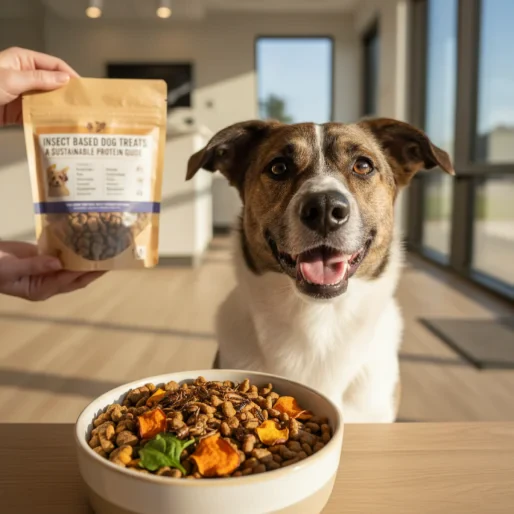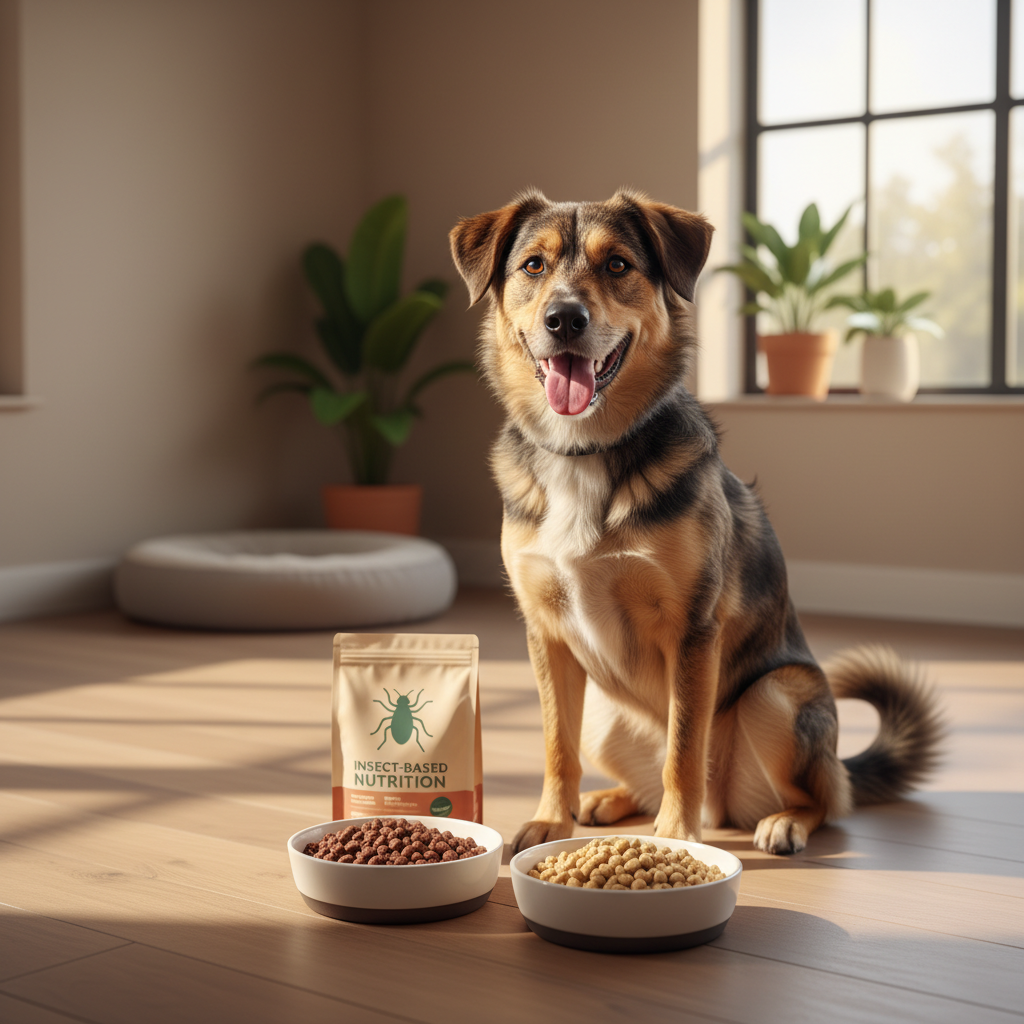
Canadian dog owners now have access to insect protein kibble meeting CFIA standards. This guide compares digestibility, cost in CAD, and environmental impact for the Canadian market.
Key Takeaways for Canadian Dog Owners
- Black soldier fly larvae (BSFL) and cricket based kibble deliver protein digestibility of roughly 82 to 92 percent, comparable to poultry meal options available in Canada.
- Insect protein contains all essential amino acids for dogs, though methionine and cysteine tend to be the first limiting amino acids.
- Insect farming uses significantly less land, water, and feed than conventional livestock, a relevant factor given Canada's climate commitments.
- Palatability trials show acceptance rates above 90 percent in dogs for BSFL based formulas.
- Insect kibble in Canada is priced as a premium product, typically $2.00 to $4.00 CAD per day for a medium sized dog versus $0.70 to $2.75 CAD for mid range traditional kibble.
- The Canadian Veterinary Medical Association (CVMA) recommends veterinary guidance before switching any dog with existing health conditions to a novel protein diet.
The Canadian Market for Insect Protein Dog Food
Canada's pet food industry has seen a growing number of insect protein products entering the market since 2024. The Canadian Food Inspection Agency (CFIA) regulates pet food under the federal Feeds Act and Regulations, and insect derived ingredients must meet safety and labelling requirements before being sold. As of early 2026, several brands distributing insect based kibble in Canada have obtained the necessary compliance, making these products legally available through specialty retailers and online platforms shipping within Canadian provinces.
Canadian insect farming itself is a growing sector, with facilities operating in Ontario, Quebec, and British Columbia. These indoor vertical farming operations are well suited to Canadian conditions because they are climate controlled, meaning harsh winter temperatures (which can reach below minus 30°C in the Prairies and northern regions) do not affect production output. This gives Canadian insect protein a potential advantage in supply chain reliability compared to imported alternatives.
Digestibility: How Well Do Dogs Process Insect Protein?
Digestibility remains the most important nutritional benchmark. Published research indicates that BSFL based diets achieve apparent protein digestibility of around 82 to 85 percent, on par with or slightly above poultry meal (approximately 80 to 82 percent). Some studies report higher figures, in the range of 85 to 92 percent, depending on processing methods such as defatting and enzymatic hydrolysis.
Cricket protein shows similarly strong results, with crude protein content generally higher than BSFL on a dry matter basis. Fat digestibility for insect based formulas has been measured at approximately 94 to 95 percent, slightly exceeding poultry meal benchmarks.
One consideration relevant to Canadian owners: the chitin content in insect exoskeletons can affect fibre readings. Leading manufacturers address this through defatting and fine milling, which improves both nutrient availability and stool quality. This matters particularly during Canadian winters when reduced outdoor activity can already affect digestive regularity in some dogs.
Novel Protein Benefits for Allergy Prone Dogs
Insect protein qualifies as a novel protein for most dogs, making it useful in limited ingredient or elimination diets. Dogs with confirmed sensitivities to chicken, beef, or lamb (common proteins in Canadian retail kibble) may benefit from a supervised trial. However, veterinary professionals note potential cross reactivity in dogs with shellfish or dust mite allergies due to shared tropomyosin proteins. Dogs should be monitored closely during any dietary transition.
Amino Acid Profile: Meeting Canine Requirements
Dogs require ten essential amino acids. Published analyses confirm BSFL protein contains all ten, making it a complete protein source for canine nutrition. Cricket protein similarly meets this threshold. However, methionine and cysteine (sulphur containing amino acids) are consistently the first limiting amino acids across most insect substrates.
Quality insect based kibble brands available in Canada address this through supplementation or by blending insect protein with complementary plant based ingredients. When evaluating products, Canadian owners should look for a nutritional adequacy statement on the label confirming the formula meets AAFCO nutrient profiles for the relevant life stage, as CFIA labelling guidelines require.
Environmental Context: Why It Matters in Canada
Canada committed to net zero emissions by 2050 under the Canadian Net Zero Emissions Accountability Act. While pet food is a small portion of overall agricultural emissions, the environmental case for insect protein is meaningful for households seeking to reduce their carbon footprint.
Carbon Emissions Comparison
Optimised insect production systems generate approximately 1 to 7 kg CO2 equivalent per kilogram of protein. Canadian beef production, a significant domestic industry, generates substantially higher emissions per kg of protein. Life cycle assessments suggest that replacing conventional animal meal with insect meal in pet food can reduce global warming potential considerably in optimised systems.
Land and Water Use
Insect farms operate as vertical indoor facilities using a fraction of the land required for livestock. BSFL can be raised on pre consumer food waste, adding a circular economy benefit relevant to Canada's food waste reduction goals. Water requirements are also substantially lower, a consideration that resonates in prairie regions where agricultural water use is a growing concern.
Canadian Production Advantage
Domestically produced insect protein reduces transportation emissions compared to imported alternatives. Canadian facilities benefit from relatively clean electricity grids in provinces like Quebec, British Columbia, and Manitoba (primarily hydroelectric), which can further lower the carbon footprint of climate controlled rearing operations.
Cost Comparison in Canadian Dollars
Insect protein dog food is positioned in the premium segment in Canada. Based on current retail pricing available to Canadian consumers:
Insect Protein Kibble (CAD)
- Premium direct to consumer brands: approximately $7.50 to $11.00 CAD per kilogram
- Value positioned insect kibble: approximately $4.00 to $6.00 CAD per kilogram
- Insect based wet food: approximately $11.00 to $16.50 CAD per kilogram
Traditional Meat Kibble (CAD)
- Mid range traditional kibble: approximately $3.50 to $7.00 CAD per kilogram
- Premium traditional kibble: approximately $7.00 to $11.00 CAD per kilogram
- Budget traditional kibble: approximately $1.50 to $3.50 CAD per kilogram
For a medium sized dog (around 15 kg), daily feeding costs for insect kibble typically range from $2.00 to $4.00 CAD, compared to $0.70 to $2.75 CAD for traditional options. The price gap narrows when comparing insect kibble to other premium or sustainably sourced foods already popular with Canadian pet owners. Prices may also vary by province due to shipping costs, particularly in remote or northern communities.
Canadian Regulatory Framework
Pet food in Canada falls under federal jurisdiction through the CFIA. Key points for Canadian consumers:
- All pet foods sold in Canada must be safe, properly labelled, and free from harmful contaminants under the Feeds Act.
- Novel ingredients, including insect derived proteins, must meet CFIA safety standards before commercial sale.
- Nutritional adequacy claims must align with AAFCO nutrient profiles, which is the standard referenced in Canadian pet food labelling.
- The CVMA provides guidance on pet nutrition and recommends that owners consult veterinarians before making significant dietary changes, particularly for puppies, senior dogs, or those with chronic conditions.
Provincial regulations may add further requirements. For example, some provinces have specific consumer protection rules around pet product marketing claims. Owners should purchase from established retailers and verify products display proper labelling including guaranteed analysis, ingredient list, and feeding directions.
Seasonal Feeding Considerations for Canadian Dogs
Canada's climate extremes create unique feeding considerations:
- Winter (November to March): Dogs with higher caloric needs in cold weather may require adjusted portions. Insect kibble's fat digestibility (approximately 94 to 95 percent) can support energy needs, but owners should confirm caloric density meets winter requirements, particularly for dogs spending extended time outdoors in temperatures below minus 10°C.
- Summer heat: During humid Ontario or Quebec summers, proper kibble storage is essential. Insect based kibble should be stored in airtight containers away from heat, as the higher fat content can accelerate rancidity in warm conditions.
- Transition timing: Veterinary professionals suggest avoiding major diet changes during periods of stress, such as extreme cold snaps or heat waves, when dogs may already have reduced appetite.
Lifestyle Match Guide for Canadian Households
Insect Protein Kibble May Suit Your Dog If:
- Your dog has confirmed or suspected allergies to common proteins (chicken, beef, lamb)
- Your household prioritises reducing its environmental footprint
- Your dog is on a veterinary supervised elimination diet requiring novel protein
- You are comfortable with premium pricing (approximately $2.00 to $4.00 CAD per day for a medium dog)
- You have reliable access to specialty pet retailers or online delivery
Traditional Meat Kibble May Be a Better Fit If:
- Your dog thrives on its current diet with no digestive or skin issues
- Budget is a primary concern, especially for large breeds common in Canada such as Labrador Retrievers, Golden Retrievers, or Bernese Mountain Dogs
- You prefer a food with decades of feeding trial data
- Your dog is a working or sporting breed with very high caloric demands (sled dogs, hunting dogs)
- You live in a remote community where specialty products are difficult to source
Consider a Hybrid Approach If:
- You want to reduce environmental impact without a full switch
- Your dog is moderately selective and benefits from gradual introduction
- Rotating proteins is part of your current feeding strategy
Transitioning Your Dog: Practical Steps
Professional consensus recommends a gradual transition over 7 to 10 days. Start by mixing roughly 25 percent insect kibble with the existing food and increase the proportion every two to three days. Monitor stool consistency during transition, as the different fibre profile (including chitin) may cause temporary digestive adjustment.
If your dog shows persistent digestive upset, skin reactions, or refusal to eat beyond the initial transition period, consult your veterinarian promptly.
ASPCA Animal Poison Control / Local Emergency Vet
Call the ASPCA Poison Control hotline (also serves Canada) or contact your nearest emergency veterinary hospital.
The ASPCA hotline charges a consultation fee. For non-poison emergencies, search for a 24-hour veterinary hospital in your city.
Decision Checklist
Use this checklist before switching:
- Does your dog have known protein allergies? If yes, insect protein offers a novel alternative worth discussing with your vet.
- Is the product CFIA compliant and properly labelled? Verify nutritional adequacy statements, guaranteed analysis, and ingredient lists.
- Does the brand employ a veterinary nutritionist? This aligns with WSAVA recommendations for selecting pet food.
- What is your monthly food budget in CAD? Insect kibble costs roughly 20 to 40 percent more than comparable mid range options.
- Have you planned a 7 to 10 day transition period? Avoid abrupt changes, especially during extreme weather.
- Are you monitoring stool quality and coat condition? These are the most practical home indicators of diet suitability.
- Have you consulted your veterinarian? Especially important for puppies, senior dogs, pregnant or nursing dogs, and dogs with chronic health conditions.
Looking Ahead: Insect Protein's Future in Canada
Canada's insect farming sector continues to expand, supported by federal investment in sustainable agriculture and protein diversification. As domestic production capacity grows and more manufacturers enter the Canadian market, prices are expected to decrease over time. Research at Canadian universities into optimised processing methods is also contributing to improved digestibility and palatability outcomes.
For Canadian dog owners already making environmentally conscious choices, insect protein kibble represents a credible, nutritionally sound alternative to conventional meat protein, provided the product meets regulatory standards and the dog tolerates it well under veterinary guidance.
Frequently Asked Questions
Is insect protein dog food legal in Canada? ↓
How much does insect protein kibble cost in Canada? ↓
Can insect protein help dogs with food allergies? ↓
Are there insect protein dog food brands produced in Canada? ↓
How should I store insect protein kibble in Canadian summers? ↓

Priya Nair
Dog Breed Advisor & Adoption Counsellor
Dog breed advisor and adoption counsellor — honest breed comparisons and lifestyle matching for prospective owners.
Content Disclosure
This article was created using state-of-the-art AI models with human editorial oversight. It is intended for informational and entertainment purposes only and does not constitute veterinary medical advice. Always consult a licensed veterinarian for your pet's specific health needs. Learn more about our process.