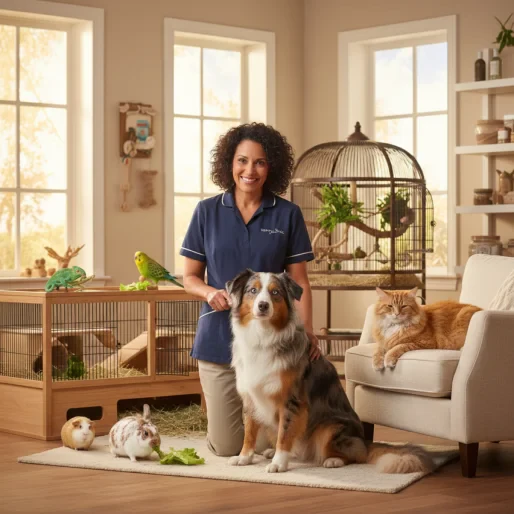
Canadian pet sitters need province-specific insurance, bonding, and CCC coverage to operate professionally. This guide covers what Canadian pet owners should verify before booking a sitter in 2026.
Key Takeaways for Canadian Pet Owners
- General liability insurance is the baseline coverage every professional pet sitter in Canada should carry, typically with limits of at least $2,000,000 per occurrence (the Canadian industry standard).
- Bonding (a surety or dishonesty bond) protects clients against theft or dishonest acts and is especially important given that sitters often have unsupervised home access.
- Ask for a Certificate of Insurance (COI) before booking; reputable sitters will provide one promptly.
- Care, custody, and control (CCC) coverage is separate from general liability and essential for covering injuries to your pet while in the sitter's charge.
- Always confirm whether the policy covers veterinary expenses, as Canadian vet emergency costs can easily exceed $3,000 to $5,000 CAD for urgent procedures.
- Have a written emergency contact protocol that includes your preferred emergency veterinary clinic.
ASPCA Animal Poison Control / Local Emergency Vet
Call the ASPCA Poison Control hotline (also serves Canada) or contact your nearest emergency veterinary hospital.
The ASPCA hotline charges a consultation fee. For non-poison emergencies, search for a 24-hour veterinary hospital in your city.
Why Insurance Matters More in Canada's Climate
Canada's extreme weather patterns create unique risks for pet sitting engagements. Winter temperatures can plunge below -30°C in provinces like Alberta, Saskatchewan, and Manitoba, introducing hazards such as frostbite on paw pads and ears, salt and de-icer toxicity, and hypothermia during outdoor walks. In summer, central and eastern provinces regularly see temperatures above 30°C with high humidity, raising the risk of heatstroke, particularly in brachycephalic breeds like French Bulldogs, Pugs, and English Bulldogs, all of which are popular across Canadian households.
A sitter who lacks adequate insurance leaves both the pet and the owner financially exposed if a weather-related emergency occurs. Veterinary emergency visits in Canadian cities typically cost between $1,500 and $8,000 CAD depending on severity, and after-hours emergency clinics often charge a premium. Without CCC coverage, the pet owner bears the full cost.
Coverage Types Canadian Pet Owners Should Know
1. General Liability Insurance
General liability covers third-party bodily injury and property damage claims. In Canada, the standard commercial general liability (CGL) policy for small businesses, including pet sitters, typically carries a $2,000,000 per occurrence limit, which is higher than the $1,000,000 baseline common in some other markets. This reflects Canadian insurance industry norms and the expectations of commercial landlords and clients alike.
For example, if a dog in the sitter's care escapes a fenced yard and injures a passerby, general liability would respond to the resulting claim.
2. Care, Custody, and Control (CCC) Coverage
Standard CGL policies in Canada routinely exclude property (including animals) in the insured's care, custody, or control. CCC coverage fills this critical gap. It insures the sitter against claims arising from injury to or death of a pet while the animal is in the sitter's charge.
Canadian pet owners should treat CCC coverage as non-negotiable. Without it, a sitter's insurer may deny a claim if a client's Labrador Retriever (Canada's most popular breed) is injured during an off-leash hike or a cat ingests something toxic in the sitter's home. CCC sub-limits in Canadian pet sitting policies typically range from $10,000 to $25,000 CAD per animal.
3. Surety Bond (Dishonesty or Fidelity Bond)
A surety bond protects the client financially if the sitter or an employee commits theft or a dishonest act. Bond amounts in the Canadian pet sitting industry typically range from $10,000 to $50,000 CAD. The bonding company pays the client first, then seeks reimbursement from the sitter. This is distinct from insurance.
4. Commercial Auto Insurance
Sitters who transport pets to veterinary clinics, grooming appointments, or off-leash parks need commercial auto coverage. Provincial auto insurance regulators across Canada (such as ICBC in British Columbia, SGI in Saskatchewan, and MPI in Manitoba) generally require that vehicles used for business purposes carry commercial endorsements. A personal auto policy will typically exclude claims arising from business use.
5. Workers' Compensation
In Canada, workers' compensation is governed provincially. In most provinces, businesses with employees are legally required to register with the provincial workers' compensation board (such as WSIB in Ontario, WorkSafeBC in British Columbia, or CNESST in Quebec). Pet sitting businesses that employ staff must comply with these requirements. Even sole proprietors can often opt into voluntary coverage for personal protection.
Provincial Considerations
Canada's regulatory landscape for pet care businesses varies by province and municipality. Key considerations include:
- Ontario: Some municipalities require business licences for pet care services. The Ontario SPCA and Humane Society enforces the Provincial Animal Welfare Services Act (PAWS Act), which sets standards for animal care. Sitters must be aware of their duty to report animal distress.
- British Columbia: The BC SPCA operates under the Prevention of Cruelty to Animals Act. Municipal business licensing requirements apply in Vancouver, Victoria, and other cities.
- Alberta: The Animal Protection Act is enforced by Alberta SPCA peace officers. Calgary and Edmonton have specific bylaws around animal care businesses.
- Quebec: The Animal Welfare and Safety Act (known colloquially as "Nora's Law") imposes strict obligations on anyone who has custody of an animal, including pet sitters. Certain breed-specific regulations were previously in place in some municipalities; sitters should verify current local bylaws.
The Canadian Veterinary Medical Association (CVMA) publishes position statements on animal welfare that serve as a useful reference for professional standards in pet care. Sitters who align their practices with CVMA guidelines demonstrate a higher level of professionalism.
Minimum Liability Limits to Expect in 2026
Based on Canadian insurance industry standards and professional pet sitting association recommendations, the following minimums are appropriate for a professional pet sitter in Canada in 2026:
- General Liability: $2,000,000 CAD per occurrence, $5,000,000 aggregate
- Care, Custody, and Control: $10,000 to $25,000 CAD per animal
- Surety Bond: $10,000 CAD minimum; $25,000 CAD or higher is preferable
- Commercial Auto: $2,000,000 CAD combined single limit if transport is offered
Owners of high-value breeds, exotic animals, or medically complex pets (such as senior dogs requiring arthritis-sensitive walk protocols) should confirm that CCC sub-limits are adequate for potential emergency costs.
What Happens if Your Pet Is Injured
Understanding the claims process before an incident occurs is essential. The typical sequence in Canada:
- Immediate veterinary care: A responsible sitter seeks emergency veterinary treatment without delay. CVMA guidelines and Fear Free Pets certification standards both emphasise that animal welfare must come first.
- Incident documentation: The sitter records what happened, including photographs, timestamps, and witness information.
- Client notification: The sitter contacts the pet owner or the designated emergency contact as soon as the animal is stabilised.
- Insurance claim filing: The sitter notifies their insurer. If CCC coverage is in place, the insurer evaluates whether the injury falls within policy terms.
- Reimbursement or direct payment: Depending on the policy, the insurer may reimburse the pet owner for veterinary bills or pay the clinic directly, up to the CCC sub-limit.
If the sitter does not carry CCC coverage, the pet owner may need to pursue a negligence claim through the provincial courts, which can be time-consuming and costly. In Canada, small claims court limits vary by province (for example, $35,000 in Ontario, $5,000 in Nova Scotia), which may affect the appropriate legal avenue.
How to Vet a Trustworthy Pet Sitter in Canada
- Request a Certificate of Insurance (COI): This one-page document confirms active coverage, policy limits, and effective dates. Any sitter who refuses to provide one should be considered a red flag.
- Verify professional association membership: Pet Sitters International (PSI) has a significant Canadian membership base. The Canadian Kennel Club (CKC) can also be a useful resource for verifying breed-specific knowledge.
- Check for pet first aid certification: The Canadian Red Cross, St. John Ambulance Canada, and Walks 'N' Wags Pet First Aid all offer recognised pet first aid and CPR courses in Canada.
- Read reviews and request references: Speak directly with past clients to get details that star ratings cannot capture.
- Conduct an in-home interview: A meet-and-greet allows the sitter to observe your pet's environment and temperament.
What to Prepare Before Leaving Your Pet
Even with a fully insured sitter, preparation reduces risk. Provide the following in writing:
- Regular veterinary clinic name, address, phone number, and after-hours emergency number
- Nearest emergency veterinary hospital (many Canadian cities have 24-hour facilities)
- Detailed medication schedule with dosages in metric units (mg per kg of body weight)
- Feeding routine with portion sizes in grams or cups as appropriate
- Behavioural notes: triggers, comfort items, and signs of stress
- A signed veterinary release form authorising the sitter to seek emergency treatment
- Copies of vaccination records (including rabies, which is mandatory across all Canadian provinces)
- Municipal licence or tag information, as many Canadian cities require dog licensing
Emergency Contact Protocol
A clear emergency protocol should be agreed upon in writing before the engagement begins:
- Primary and secondary contact phone numbers for the owner
- Name and number of a trusted local person authorised to make decisions if the owner is unreachable
- Pre-authorised spending limit for emergency veterinary care in CAD (for example, authorise treatment up to $3,000 CAD without prior approval)
- Preferred emergency veterinary clinic and backup facility
- Clear instructions on what constitutes an emergency versus a non-urgent concern
ASPCA Animal Poison Control / Local Emergency Vet
Call the ASPCA Poison Control hotline (also serves Canada) or contact your nearest emergency veterinary hospital.
The ASPCA hotline charges a consultation fee. For non-poison emergencies, search for a 24-hour veterinary hospital in your city.
Professional consensus suggests that delays in veterinary treatment, even by a few hours, can significantly worsen outcomes for conditions such as gastric dilatation-volvulus (bloat), toxin ingestion, or heatstroke. Canadian winters add frostbite and antifreeze poisoning to the list of time-sensitive emergencies.
Canadian Winter and Summer Sitter Checklists
Because Canada's climate creates season-specific risks, a qualified sitter should demonstrate awareness of the following:
Winter (November to March)
- Limiting outdoor time when temperatures drop below -15°C, especially for small breeds and short-coated dogs
- Checking paw pads for ice buildup, cracking, and salt irritation after every walk
- Recognising signs of hypothermia: shivering, lethargy, and slow movements
- Keeping pets away from antifreeze (ethylene glycol), which is extremely toxic and has a sweet taste attractive to animals
- Ensuring fresh, unfrozen water is always available
Summer (June to August)
- Avoiding midday walks when pavement temperatures can cause paw pad burns
- Recognising heatstroke signs: excessive panting, drooling, bright red gums, and collapse
- Never leaving a pet in a parked vehicle (many Canadian provinces have enacted laws permitting emergency vehicle entry to rescue distressed animals)
- Awareness of tick-borne diseases such as Lyme disease, which is an increasing concern in Ontario, Quebec, Manitoba, and the Maritime provinces
Questions to Ask Before You Book
- Do you carry general liability insurance? What are your per occurrence and aggregate limits in CAD?
- Does your policy include CCC coverage? What is the per-animal sub-limit?
- Are you bonded? What is the bond amount?
- Can you provide a current Certificate of Insurance?
- Do you carry commercial auto insurance if transporting my pet?
- What is your emergency veterinary protocol?
- Are you pet first aid certified? Through which Canadian organisation?
- Are you a member of PSI, NAPPS, or another professional association?
- Do you have a written service contract?
- How do you handle extreme winter or summer weather during walks?
- Are you familiar with my municipality's pet licensing and leash bylaws?
- How many pets do you care for at one time?
- Will you personally provide care, or might a substitute sitter be involved?
- What daily updates will I receive?
- What are your cancellation and refund policies?
Final Thoughts
Insurance and bonding are professional standards that separate qualified pet sitters from casual hobbyists. In Canada, where extreme weather, provincial regulatory variation, and high emergency veterinary costs all factor into the equation, verifying coverage before booking is especially important. Combined with thorough preparation, a clear emergency protocol, and honest communication, proper insurance coverage creates the foundation for a safe, stress-free sitting experience for Canadian pets and their owners.
Frequently Asked Questions
What insurance should a Canadian pet sitter carry in 2026? ↓
Is pet sitter licensing required in Canada? ↓
What is care, custody, and control (CCC) coverage and why is it important? ↓
How can I verify a Canadian pet sitter's insurance? ↓
What pet first aid certifications are recognised in Canada? ↓
Are there seasonal risks Canadian pet sitters should address? ↓

Laura Chen
Pet Sitter & Travel Specialist
Pet sitter and travel specialist — practical logistics, sitter vetting, and anxiety management for travelling pet owners.
Content Disclosure
This article was created using state-of-the-art AI models with human editorial oversight. It is intended for informational and entertainment purposes only and does not constitute veterinary medical advice. Always consult a licensed veterinarian for your pet's specific health needs. Learn more about our process.