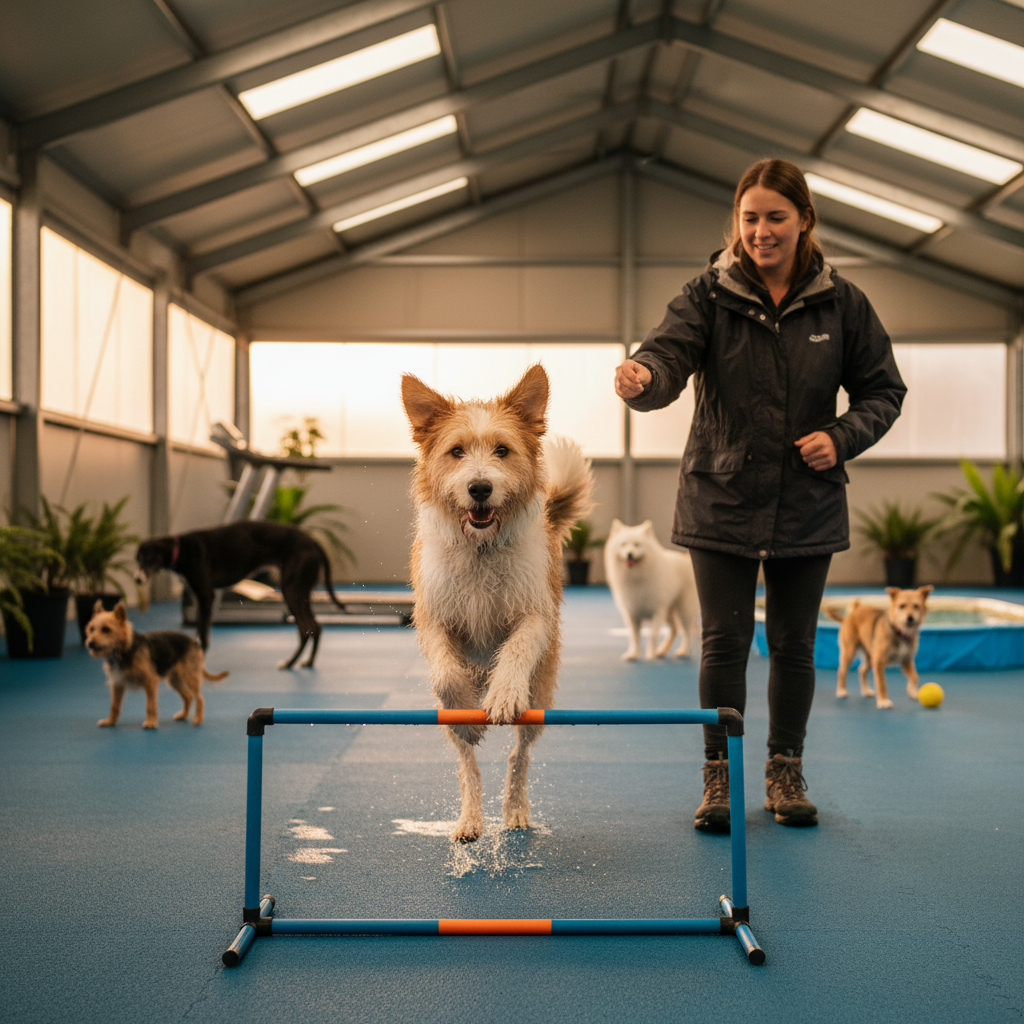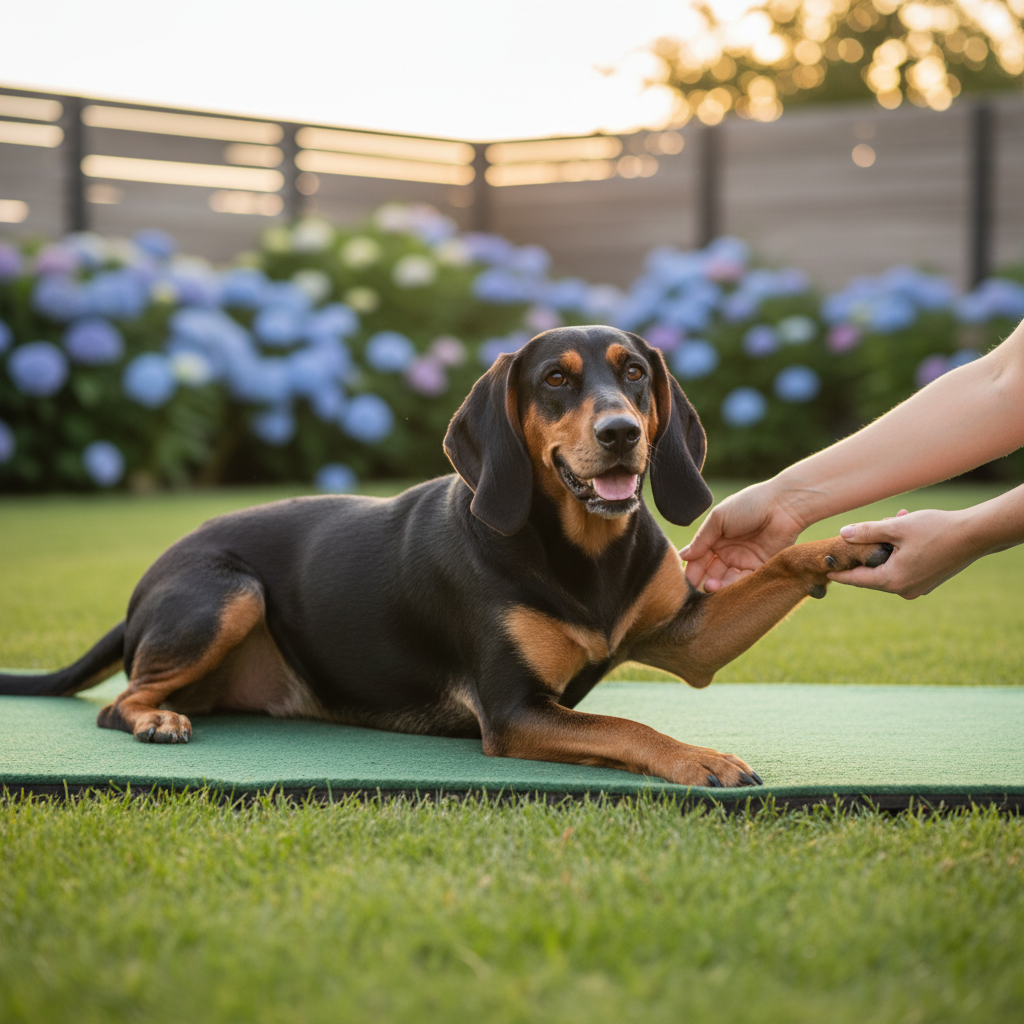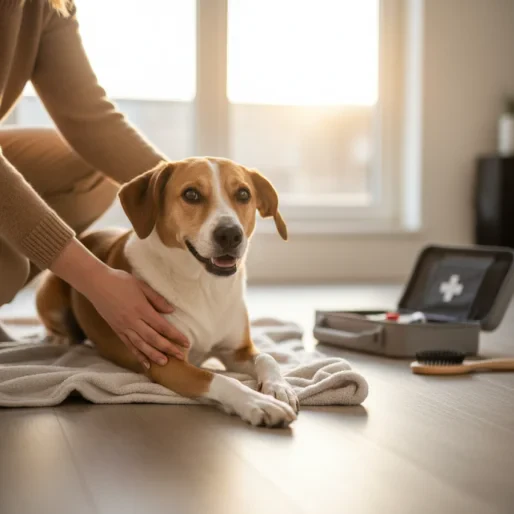
A structured, week by week fitness plan to bring your dog back to full stamina after a quiet winter. Includes warm ups, walk progressions, core exercises, and signs of overexertion every owner should recognise.
Key Takeaways
- Dogs lose cardiovascular and muscular fitness during inactive winter months, just as humans do. Jumping straight into long spring hikes risks soft tissue injuries, joint flare ups, and heat related stress.
- A safe rebuild takes roughly four to six weeks of gradual progression in walk duration, pace, and terrain difficulty.
- Every session should begin with a structured warm up and end with a cool down period.
- Core strengthening exercises performed two to three times per week support joint stability and reduce injury risk.
- Recognising early signs of overexertion (excessive panting, reluctance to move, limping) is the single most important skill for preventing serious harm.
- Dogs with pre existing conditions, seniors, and brachycephalic breeds should have a veterinary check before starting any new fitness routine.
Why a Structured Spring Fitness Plan Matters
After months of shorter walks, reduced playtime, and cooler temperatures that discourage outdoor activity, most dogs enter spring with noticeably less endurance than they had the previous autumn. Muscles have weakened, cardiovascular efficiency has dipped, and connective tissues such as tendons and ligaments have become less resilient to sudden load.
Veterinary physiotherapy guidelines consistently emphasise that a progressive return to activity is essential. The principle is the same one used in human sports medicine: tissue adaptation requires incremental loading over time. Skipping this process is one of the most common reasons dogs present with soft tissue strains, cruciate ligament injuries, or exertional collapse in spring and early summer.
This guide provides a week by week framework suitable for the average healthy adult dog. Owners of senior dogs, puppies under 12 months, brachycephalic breeds (such as Bulldogs, Pugs, or French Bulldogs), or dogs with known orthopaedic or cardiac conditions should consult a veterinary professional before beginning.
Preparation: What You Need Before You Start
Equipment
- A well fitted harness: Harnesses distribute force across the chest rather than concentrating it on the neck. This is especially important during fitness work where a dog may pull or lunge unexpectedly.
- A standard lead (1.5 to 2 metres): Retractable leads offer less control and can cause rope burn injuries. A fixed length lead is preferable for structured walking sessions.
- Fresh water and a portable bowl: Even in mild spring temperatures, working muscles generate heat. Hydration should be available at every rest stop.
- A non slip mat or carpet square: Used for indoor core strengthening exercises to provide traction and prevent slipping.
- High value, small training treats: For rewarding engagement with exercises and maintaining motivation.
- A fitness journal or smartphone app: Tracking walk duration, distance, pace, and any observations about your dog's energy or gait is invaluable. Some owners find AI pet health tracking apps helpful for this purpose.
Pre Programme Health Check
Before starting, run through this quick assessment at home:
- Watch your dog walk and trot in a straight line on a flat surface. Any consistent head bobbing, hip hiking, or shortened stride suggests discomfort that should be evaluated by a vet.
- Gently flex and extend each limb through its range of motion. Flinching, pulling away, or vocalising warrants professional assessment.
- Check paw pads for cracks, overgrown nails, or foreign bodies. Winter inactivity often means nails have grown longer than ideal.
- Assess body condition. If your dog has gained noticeable weight over winter, the programme should start at the lower end of all intensity recommendations.
If anything seems off, schedule a veterinary appointment before proceeding. Starting a fitness programme on top of an undiagnosed issue nearly always makes it worse.
Step by Step: The Warm Up Routine (Every Session)
Warming up is not optional. Cold muscles are significantly more prone to strain. A good warm up takes only five to eight minutes and should precede every walk or exercise session.
Phase 1: Gentle Lead Walking (2 to 3 Minutes)
Start with a slow, relaxed pace on flat ground. The goal is simply to increase blood flow to the muscles and raise core body temperature slightly. This is not the walk itself; it is preparation for the walk.
Phase 2: Dynamic Range of Motion (2 to 3 Minutes)
Use a treat to lure your dog through gentle movements:
- Nose to hip turns: Hold a treat at the dog's hip level on each side, encouraging a slow lateral bend of the spine. Hold for two to three seconds, repeat three times per side.
- Nose to chest tuck: Lure the chin down toward the chest to gently flex the neck and upper spine. Hold briefly, release.
- Gentle weight shifts: With the dog standing squarely, apply very light pressure to the shoulder or hip to encourage a subtle shift of weight from one side to the other. This activates stabiliser muscles.
Phase 3: Controlled Trot (1 to 2 Minutes)
Increase pace to a brisk walk or slow trot for a short distance. The dog should move freely and willingly. If there is any stiffness or reluctance, drop back to Phase 1 pace and extend the warm up period.
Step by Step: The Four Week Walk Progression
This framework assumes a starting point of a dog that has been walking roughly 15 to 20 minutes per outing during winter. Adjust the starting point to reflect your dog's actual current baseline.
Week 1: Establish the Baseline
- Duration: 15 to 20 minutes per walk
- Frequency: Once or twice daily
- Terrain: Flat, even surfaces only (pavement, mown grass)
- Pace: Moderate; the dog should be able to walk without pulling or panting heavily
- Focus: Observation. Note how your dog moves at the start versus the end. Does energy drop off? Does gait change? Record these details.
Week 2: Increase Duration
- Duration: 25 to 30 minutes per walk
- Frequency: Once or twice daily
- Terrain: Predominantly flat; introduce one short gentle slope per walk if available
- Pace: Include a 3 to 5 minute brisker interval mid walk, then return to moderate pace
- Focus: Monitor recovery. After returning home, the dog should settle within 10 to 15 minutes. If panting or restlessness continues beyond 20 minutes, the session was too intense.
Week 3: Add Terrain Variety
- Duration: 30 to 40 minutes per walk
- Frequency: Once or twice daily, with one longer walk and one shorter recovery walk
- Terrain: Introduce grass, packed earth trails, gentle hills, and uneven ground. These surfaces engage stabiliser muscles and improve proprioception (the body's sense of where its limbs are in space).
- Pace: Two intervals of 3 to 5 minutes at a trot, separated by moderate walking
- Focus: Watch for any limping, bunny hopping (using both hind legs together), or excessive slowing on hills. These are signs the programme is moving too fast.
Week 4: Build Toward Target Fitness
- Duration: 40 to 50 minutes per walk
- Frequency: Once or twice daily
- Terrain: Mixed surfaces including moderate hills and, if appropriate, shallow water wading (excellent low impact exercise)
- Pace: Sustained moderate pace with natural variation; allow the dog to set a comfortable rhythm
- Focus: By end of week 4, most healthy adult dogs should be comfortably managing 40 to 50 minute walks without signs of fatigue. If not, repeat week 3 before advancing.
After completing this four week block, owners planning longer hikes, trail running, or other high intensity activities should continue adding 10 to 15 percent more duration or intensity per week, never more. This aligns with widely accepted exercise science principles for progressive overload.
If spring adventures include car travel, the dog friendly road trip checklist covers travel preparation that pairs well with this fitness plan.
Core Strengthening Exercises (Two to Three Sessions per Week)
Core strength protects the spine and major joints. These exercises can be done indoors on a non slip surface and take roughly 10 to 15 minutes per session. They complement the walking programme but should not be done immediately before or after a long walk.
Exercise 1: Sit to Stand Repetitions
Ask your dog to sit, then immediately cue a stand. The dog should rise straight up without shuffling the front feet forward. This engages the quadriceps, hamstrings, and gluteal muscles.
- Start with 5 repetitions, rest 30 seconds, repeat for 2 to 3 sets.
- Progress to 8 to 10 repetitions per set by week 3.
- If the dog consistently shifts sideways or rocks forward to stand, reduce repetitions and focus on form.
Exercise 2: Controlled Down to Stand
From a down (lying) position, cue a stand. This requires more effort than sit to stand as the dog must lift its full body weight. Use a treat lure held just in front of and slightly above the nose to encourage a clean upward movement.
- Start with 3 to 5 repetitions, 2 sets.
- Watch for dogs that cheat by moving into a sit first. Gently reset and try again.
Exercise 3: Weight Shifting on a Cushion
Place the dog's front paws on a firm cushion or folded towel (approximately 5 to 10 cm height) while rear paws remain on the floor. The slight elevation forces the core muscles to stabilise the spine.
- Hold for 10 to 15 seconds initially. Build toward 30 seconds.
- 3 to 5 repetitions per session.
- Keep the surface stable at first. Wobble cushions and balance discs are advanced tools best introduced after a foundation of stability is established.
Exercise 4: Slow Controlled Circles
Using a treat lure, guide your dog in a tight circle (roughly the diameter of the dog's body length). The inside legs step under the body while the outside legs step wide, challenging balance and engaging the oblique muscles along the trunk.
- 3 circles in each direction, performed slowly.
- The slower the circle, the greater the core engagement. Rushing defeats the purpose.
Exercise 5: Cavaletti Walking
Set up 4 to 6 low poles (broom handles resting on books or low supports work well) at a spacing roughly equal to your dog's stride length. Walk the dog slowly over the poles. This encourages deliberate limb placement, improves proprioception, and strengthens hip flexors.
- 3 to 5 passes per session.
- Adjust pole height and spacing as the dog becomes more confident. Poles should never be higher than the dog's hock (ankle) joint for basic fitness work.
What to Watch for During and After Exercise
The ability to read a dog's physical signals is arguably more important than the exercise plan itself. Dogs are instinctively inclined to keep moving even when discomfort is building, so owners must be proactive observers.
During the Session
- Panting pattern: Moderate, rhythmic panting during exercise is normal. Rapid, shallow, or excessively loud panting suggests the dog is working too hard.
- Gait changes: Any limping, shortened stride, stiffness, or reluctance to bear weight on a limb is a signal to stop immediately.
- Lagging behind: A dog that normally walks beside or ahead of the owner but begins consistently falling behind is fatiguing.
- Seeking shade or lying down: These are clear signals the dog wants to stop. Respect them.
- Excessive drooling or foaming: Can indicate overheating or nausea from exertion.
After the Session
- Recovery time: Breathing should return to normal within 5 to 10 minutes of stopping. Heart rate should settle quickly. If the dog is still panting heavily after 15 to 20 minutes in a cool environment, the session was too much.
- Next day stiffness: Some owners notice their dog is slow to rise or reluctant to jump the morning after a harder session. Occasional mild stiffness can occur, but if it persists beyond 24 hours or worsens, scale back the programme.
- Appetite and behaviour: A dog that skips a meal or seems unusually subdued after exercise may have been pushed too hard.
As the weather warms, heat becomes an additional factor. Exercising during cooler morning or evening hours is strongly recommended. For dogs attending daycare or group play, evaluating outdoor areas for heat safety is an important complementary consideration.
When to Call Your Vet Immediately
Stop exercise and contact a veterinary professional urgently if any of the following occur:
- Sudden, non weight bearing lameness: The dog holds a limb completely off the ground. This may indicate a fracture, ligament rupture, or severe muscle tear.
- Collapse or inability to stand: Exertional collapse can be caused by a range of conditions including cardiac problems, metabolic disorders, or heat stroke.
- Excessive panting with brick red or blue tinged gums: This suggests a serious oxygenation problem or heat stroke. Cool the dog gradually (room temperature water, not ice) while seeking emergency care.
- Vomiting or diarrhoea during or immediately after exercise: May indicate heat stress, gastric distress, or in rare cases gastric dilatation volvulus (bloat), which is a life threatening emergency in deep chested breeds.
- Persistent crying, whimpering, or guarding a body part: Indicates significant pain.
- Swelling in any limb or joint that appears within hours of exercise: Suggests an acute inflammatory response to injury.
Professional veterinary assessment in these situations is not optional. Early intervention almost always leads to better outcomes and faster recovery.
The Cool Down: Finishing Every Session Well
A proper cool down helps prevent blood pooling in the extremities and gives the cardiovascular system time to return to resting levels.
- Reduce pace gradually over the final 3 to 5 minutes of any walk. Transition from the working pace to a slow, relaxed amble.
- Offer water in small amounts. Allowing a hot dog to gulp large volumes can contribute to bloat risk in susceptible breeds.
- Once home, allow the dog to rest on a cool surface. A damp towel placed under the belly can help with heat dissipation.
- Gentle stroking along the major muscle groups (shoulders, thighs, along the spine) can help relaxation, though this is not a substitute for professional massage or physiotherapy.
Adapting the Programme for Different Dogs
Senior Dogs (Typically 7 Years and Older, Breed Dependent)
Older dogs benefit enormously from structured exercise but need longer warm ups, shorter sessions, and more recovery time between outings. Halve the duration increases in the weekly progression and add an extra rest day between harder sessions.
Brachycephalic Breeds
Flat faced breeds are at significantly higher risk of respiratory distress and overheating. Keep sessions shorter, avoid exercise in temperatures above roughly 20 degrees Celsius, and never push pace beyond what allows comfortable, quiet breathing.
Large and Giant Breeds
Breeds such as Great Danes, Saint Bernards, and Mastiffs carry substantial body weight on joints that are often predisposed to conditions like hip dysplasia. Low impact exercise (walking, swimming) is preferred over high impact activities (jumping, sharp turns, sprinting) during the rebuilding phase.
Recently Adopted Dogs
Dogs adopted in spring may arrive with unknown fitness histories and possible underlying conditions. Understanding what to expect when adopting a dog in late spring can help owners set realistic fitness expectations while the dog settles in.
Tracking Progress and Knowing When to Advance
A dog is ready to move to the next level of the programme when:
- It completes the current week's sessions without gait changes, excessive panting, or next day stiffness.
- It shows enthusiasm at the start of each session (tail carriage, pulling gently toward the door, engaged body language).
- Recovery time after sessions is consistently under 10 minutes.
- Appetite and sleep patterns remain normal.
If any of these markers are not met, repeat the current week. There is no penalty for progressing slowly. Rushing is where injuries happen.
For owners who walk in unfamiliar areas or allow off lead exercise during the rebuilding phase, using a GPS pet tracker provides peace of mind and useful distance data for the fitness journal.
Final Thoughts
Rebuilding a dog's fitness after a sedentary winter is one of the most rewarding investments an owner can make. The process strengthens the bond between dog and owner, reduces injury risk for the active months ahead, and contributes meaningfully to long term joint health and cardiovascular wellbeing. The key principles are simple: start slow, progress gradually, warm up every time, watch for warning signs, and never hesitate to ask a veterinary professional for guidance when something does not look right.
Frequently Asked Questions
How long does it take to rebuild a dog's fitness after a sedentary winter? ↓
What are the first signs that a dog is being overexerted during exercise? ↓
Should a dog warm up before walks and exercise? ↓
Can core strengthening exercises replace walks for dogs? ↓
When should an owner see a vet before starting a dog fitness programme? ↓

Emma Lawson
Practical Pet Care Educator
Practical pet home care specialist — clear, step-by-step guidance grounded in veterinary nursing standards.
Content Disclosure
This article was created using state-of-the-art AI models with human editorial oversight. It is intended for informational and entertainment purposes only and does not constitute veterinary medical advice. Always consult a licensed veterinarian for your pet's specific health needs. Learn more about our process.