A professional guide to safely building canine endurance and strength for the trail. Learn the physiological principles of gradual conditioning to prevent injury and maximise performance.
- The 10 Percent Rule: Never increase distance or intensity by more than 10 percent per week to prevent soft tissue injury.
- Proprioception is Vital: traversing uneven terrain requires balance training, not just cardiovascular endurance.
- Pad Conditioning: Winter paws are often soft; sudden exposure to rocky trails can cause abrasion.
- Warm-Up Protocols: Dynamic movement before hiking reduces the risk of muscle strains.
As the snow melts and trails open, many pet owners are eager to resume long-distance hiking. However, a common phenomenon observed in veterinary clinics during early spring is 'Weekend Warrior Syndrome', where dogs maintained on restricted winter exercise are suddenly exposed to rigorous activity. This rapid increase in workload frequently leads to acute soft tissue injuries, pad abrasions, and exhaustion.
A physiotherapy-led approach to hiking conditioning focuses on the systematic development of cardiovascular fitness, muscular strength, and proprioceptive awareness. By treating the return to the trails as an athletic training camp rather than a casual walk, owners can safeguard their dog's long-term mobility.
The Physiology of Deconditioning
During winter months, even active dogs often experience a reduction in muscle mass and cardiovascular efficiency. Physiologically, tendons and ligaments lose some tensile strength when not subjected to regular load. Consequently, a dog that was capable of a 10-kilometre hike in October is rarely physically prepared for the same distance in March.
Veterinary consensus suggests that conditioning takes approximately 6 to 8 weeks to rebuild safely. Attempting to bypass this biological process places excessive strain on joints, particularly the stifle (knee) and hips.
Phase 1: Foundation and Assessment
Before beginning a conditioning programme, an assessment of the dog's current baseline is required. Dogs with a history of orthopaedic issues should be cleared by a veterinarian. Weight management is also critical; carrying excess weight on steep gradients significantly increases joint impact force.
The Walk-to-Hike Transition
The initial phase involves transforming the daily neighbourhood walk into a purposeful training session. This is not merely about distance but about surface variation. Pavement walking does not activate the stabilising muscles required for uneven trails.
- Surface Variability: Introduce walking on grass, sand, or gravel to engage micro-stabilisers in the feet and legs.
- Pacing: Alternating between a fast trot and a slow walk (interval training) improves cardiovascular recovery rates.
Phase 2: Proprioception and Strength Training
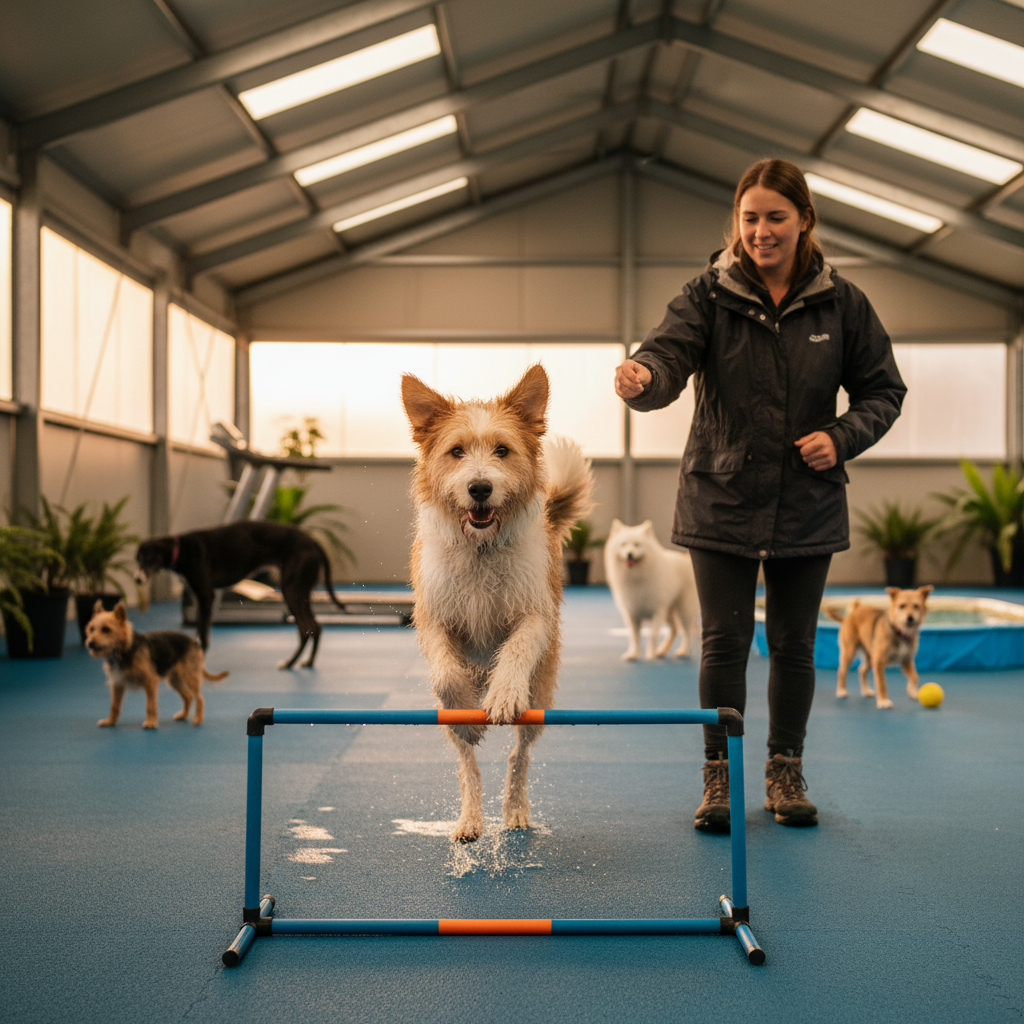
Hiking requires a dog to navigate roots, rocks, and shifting scree. This demands high-level proprioception (awareness of body position). Professional trainers often utilise specific exercises to enhance this skill before hitting the trail.
Cavaletti and Obstacles
Walking over low obstacles (such as broomsticks laid on the ground or fallen logs) encourages the dog to lift their limbs and articulate joints through their full range of motion. This active flexion helps prevent tripping and stumbling on technical trails.
Hill Work and Core Strength
Controlled hill walking is a superior method for building hindquarter strength. Walking up a gentle slope engages the gluteals and hamstrings, while walking down slowly (without pulling) requires significant eccentric muscle control from the quadriceps and core. For owners interested in low-impact strength building, reading about hydrotherapy principles can offer insight into how resistance training benefits joint health.
Phase 3: The Trail Introduction
Once the foundation is laid, trail exposure should begin. The '10 Percent Rule' is a standard metric in sports medicine: increase the total weekly mileage by no more than 10 percent.
Paw Pad Durability
Winter paws are often soft from protection or lack of friction. Sudden exposure to granite or shale can slice pads. Owners should inspect pads daily. For those transitioning from snowy conditions, the advice found in Winter Paw Protection remains relevant regarding barrier waxes and hygiene.
The Warm-Up Protocol
Human athletes rarely sprint without warming up, yet dogs are often released from a car directly onto a trail. A cold muscle is a brittle muscle. A proper warm-up increases blood flow and synovial fluid production in the joints.
- 5 Minutes of Leash Walking: Start with a brisk walk to elevate heart rate.
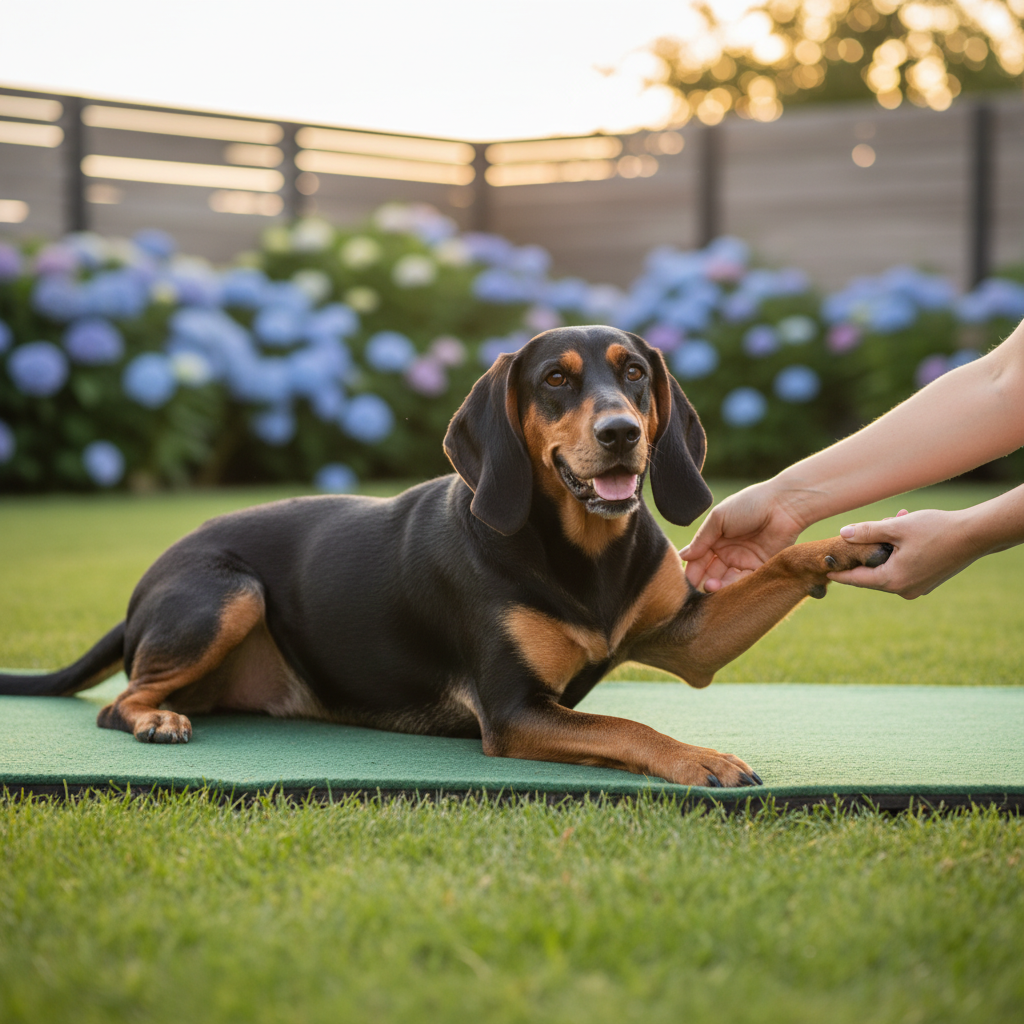
- Dynamic Stretching: Encourage the dog to perform 'spin' or 'twirl' tricks in both directions, and 'bow' stretches (if trained) to elongate the spine.
- Recall Drills: Short restraint recalls activate the fast-twitch muscle fibres in a controlled manner.
Safety Considerations on the Trail
Conditioning extends to safety equipment and environmental awareness. As the weather warms, parasites become a primary concern. Implementing proactive tick strategies is non-negotiable for hikers. Additionally, carrying a first aid kit and knowing the nearest emergency vet is standard practice.
Hydration and Thermoregulation
Dogs do not cool as efficiently as humans. On the trail, offer small amounts of water frequently rather than a large volume at once, which can be a risk factor for bloat (GDV). Owners should also be vigilant about rising temperatures; heatstroke prevention principles apply equally to warm spring days.
When to Seek Professional Help
If a dog shows reluctance to jump into the car, lags behind on the trail, or exhibits stiffness after rest, these are clinical signs of pain, not laziness. A consultation with a canine rehabilitation therapist or a veterinarian is warranted. Pushing a dog through discomfort can lead to chronic pathologies such as osteoarthritis.
For owners exploring technology to keep their dogs safe off-leash during these training hikes, understanding the difference between GPS collars and Bluetooth tags is a prudent step in modern trail preparation.
Frequently Asked Questions
How long does it take to condition a dog for hiking? ↓
What is the 10 percent rule for dog walking? ↓
Do dogs need to warm up before a hike? ↓
How can I toughen my dog's pads for hiking? ↓

Mark Sullivan
Certified Professional Dog Trainer
Certified professional dog trainer — positive-reinforcement methods for every breed and behavioural challenge.
Content Disclosure
This article was created using state-of-the-art AI models with human editorial oversight. It is intended for informational and entertainment purposes only and does not constitute veterinary medical advice. Always consult a licensed veterinarian for your pet's specific health needs. Learn more about our process.