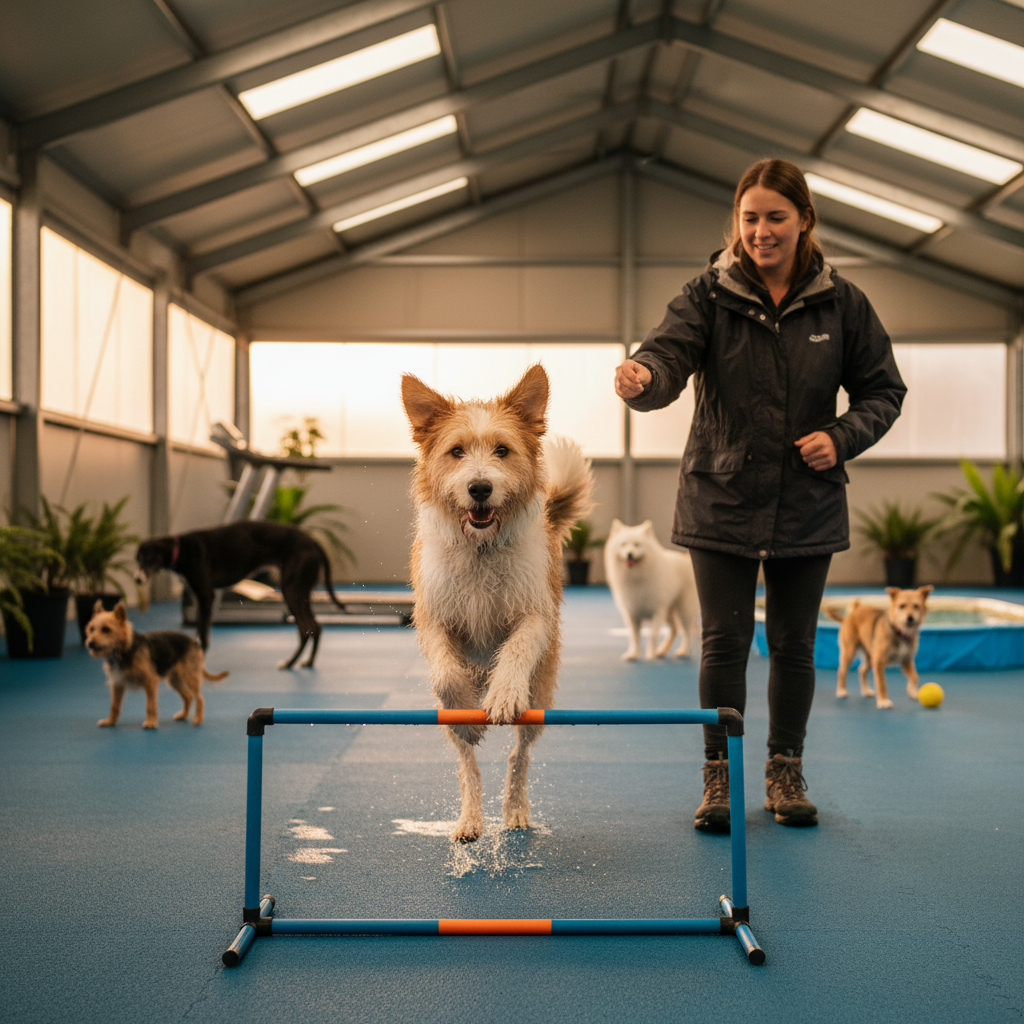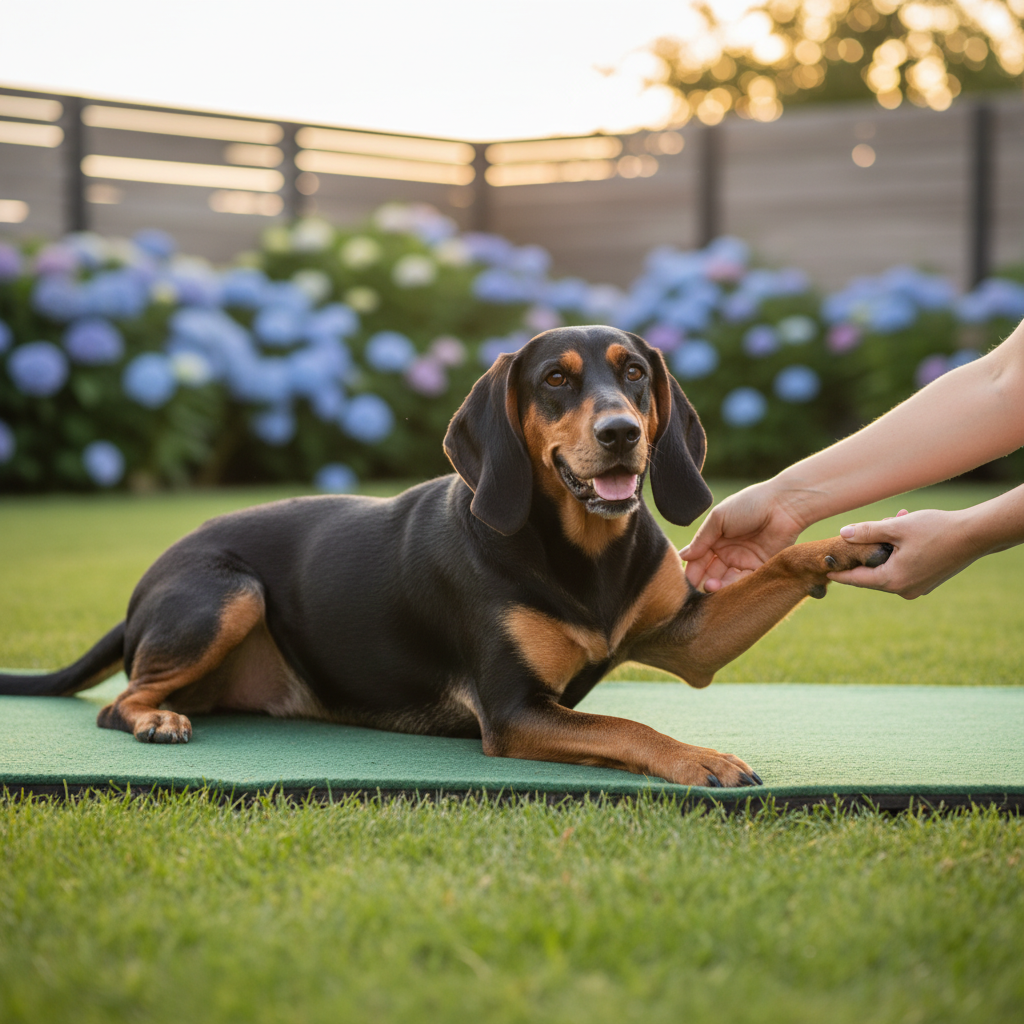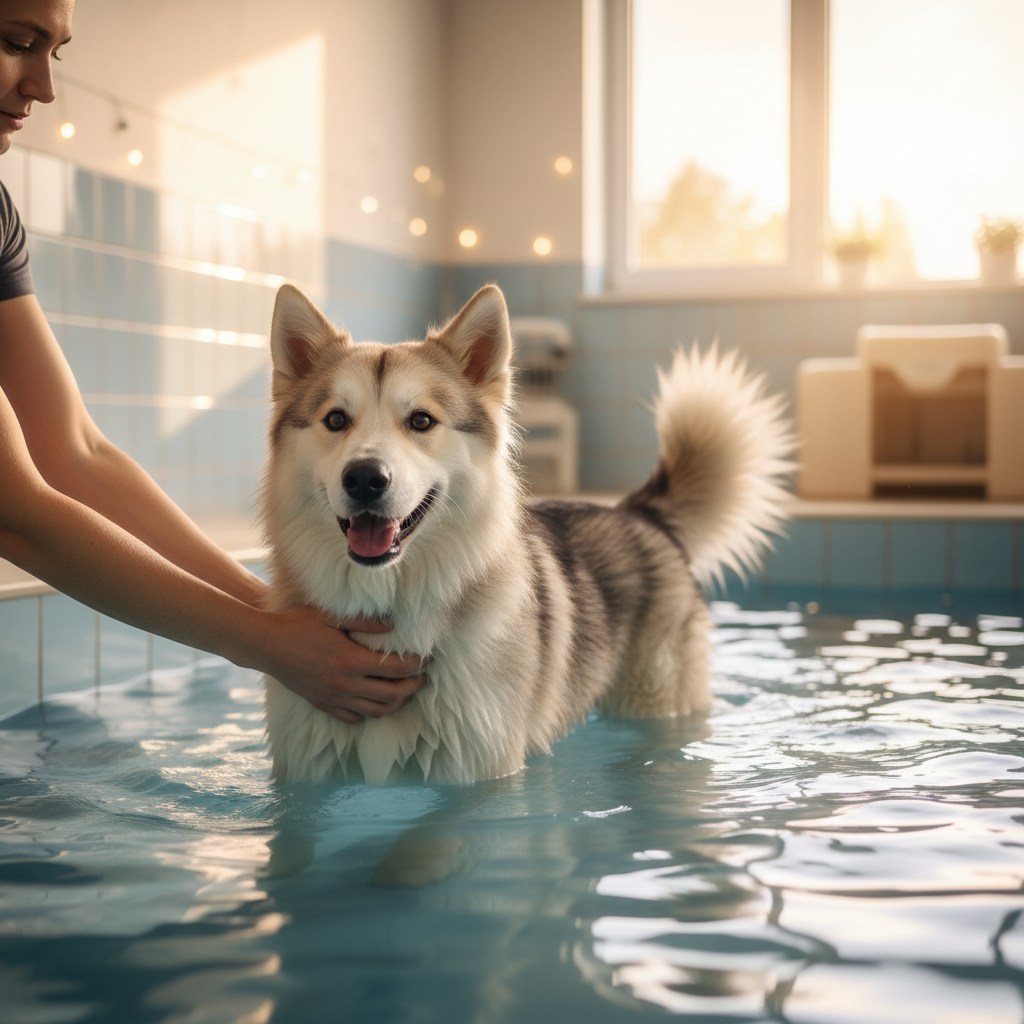
British summers are warming up, and humid, muggy spells can leave arthritic or overweight dogs stuck indoors for weeks. Hydrotherapy at a CHA or NARCH accredited centre offers a low impact way to keep them moving through the season.
Key Takeaways
- Hydrotherapy reduces joint load by around 60 to 90 percent depending on water depth, which suits arthritic or overweight dogs struggling with British summer humidity and pavement heat.
- Underwater treadmills are typically preferred for weight loss and gait retraining, while pool sessions are usually selected for severe joint disease or non weight bearing endurance work.
- A written veterinary referral is mandatory at any reputable UK centre. Conditions such as open wounds, otitis externa, uncontrolled cardiac disease, and certain skin disorders are common contraindications.
- Only book centres registered with the Canine Hydrotherapy Association (CHA) or the National Association of Registered Canine Hydrotherapists (NARCH). Both bodies set training, water quality, and insurance standards.
- An eight week plan with weekly tracking of weight in kg, stiffness, and walking distance in miles gives owners and the referring vet measurable progress.
Why Hydrotherapy Matters in a British Summer
The UK climate is no longer the predictable mild summer it once was. Recent years have brought 30°C heatwaves, prolonged humid spells, and tarmac that becomes uncomfortable underfoot well before midday. For overweight or arthritic dogs, particularly older Labradors, Cocker Spaniels, Staffordshire Bull Terriers, Golden Retrievers, and German Shepherds, this means daily walks shrink to early morning and late evening, and sometimes disappear altogether during a heatwave warning.
The knock on effect is familiar to anyone working in small animal practice: reduced activity leads to weight gain, weaker supporting musculature, stiffer joints, and worsening osteoarthritis. Hydrotherapy interrupts this cycle. Buoyancy reduces the percentage of body weight pressing through painful joints, while the resistance of water builds muscle without the concussive forces of pavement walking. In a typical British summer, where conditions swing from drizzly 18°C mornings to muggy 28°C afternoons, a temperature controlled hydrotherapy pool or treadmill provides a consistent environment regardless of the weather outside.
Veterinary Clearance and UK Referrals
Under Royal College of Veterinary Surgeons (RCVS) guidance, hydrotherapy is recognised as a form of physiotherapy that requires veterinary referral. Any CHA or NARCH registered centre will refuse a dog without a written referral signed by the primary veterinary surgeon. The form should include current diagnoses, medications, recent imaging or surgical notes, weight in kg, and any movement restrictions.
Common contraindications include uncontrolled cardiac disease, recent surgery before suture removal, active gastrointestinal illness, ear infections, open wounds, and infectious skin conditions. Dogs covered by the Dangerous Dogs Act, including those on the XL Bully exemption register following the 2024 legislative changes, must be muzzled in public under the conditions of their Certificate of Exemption. Owners should discuss arrangements with the centre in advance, as some require additional handling protocols and proof of third party liability insurance under the exemption.
Practical Items to Pack
- Two large absorbent towels (microfibre dries faster in damp British weather)
- A non slip mat for the boot, since wet dogs and car upholstery rarely end well
- The dog's regular flat collar and lead (most centres provide a fitted buoyancy harness)
- A small high value treat that does not crumble, used outside the water only
- Prescribed joint supplements or analgesia given at the usual time
- The veterinary referral and up to date vaccination card
Most UK centres require current vaccination against distemper, hepatitis, parvovirus, and leptospirosis. Kennel cough cover is often requested but not always mandatory. Worming and flea treatment should be up to date.
Underwater Treadmill or Pool: Which Format Suits Your Dog?
Both formats are widely available across the UK, from purpose built rehabilitation centres attached to first opinion practices to standalone hydrotherapy facilities in converted barns and industrial units. The right choice depends on the diagnosis, body condition, and the dog's confidence in water.
Underwater Treadmill
The dog walks on a belt inside a sealed chamber filled with warm water, typically between 28°C and 30°C, to a depth set by the hydrotherapist. Speed, depth, and incline are adjusted in small increments.
Best for: structured weight loss, post operative gait retraining (for example following TPLO or cruciate repair), mild to moderate osteoarthritis, hip and elbow dysplasia, and dogs who lack confidence swimming. The enclosed environment reassures many anxious dogs because there is a solid surface underfoot.
Pool Sessions
The dog swims in a temperature controlled pool, usually wearing a fitted buoyancy harness, with a hydrotherapist supporting them from the poolside or in the water. Sessions often combine swimming lengths with stretching, turns, and figure of eight patterns.
Best for: severe osteoarthritis where any weight bearing is painful, cardiovascular conditioning, working dogs (gundogs, sheepdogs) needing endurance, and rehabilitation from spinal conditions such as intervertebral disc disease where controlled non weight bearing exercise has been prescribed.
For most overweight, arthritic family dogs in the UK, the underwater treadmill is the more controlled starting point. Pool work is often introduced later for variety or when greater joint offloading is needed. The veterinary referral will usually indicate a preference, and the hydrotherapist will tailor the plan from there.
Finding an Accredited UK Centre
The UK has two principal professional bodies whose membership owners should verify directly on each organisation's online register before booking.
- Canine Hydrotherapy Association (CHA): requires documented training, regular water quality testing, public liability insurance, and adherence to a published code of practice.
- National Association of Registered Canine Hydrotherapists (NARCH): also requires qualifications, water testing protocols, and insurance, with an emphasis on continuing professional development.
Many practitioners also hold qualifications from the Canine and Hydrotherapy and Rehabilitation Centre training providers, or are veterinary physiotherapists registered with the Register of Animal Musculoskeletal Practitioners (RAMP). Veterinary surgeons themselves may be members of the British Veterinary Rehabilitation and Sports Medicine Association (BVRSMA), which is affiliated with the British Veterinary Association (BVA).
Questions to Ask Before Booking
- Do you require a veterinary referral for every dog, and how is it processed?
- What qualifications does the hydrotherapist hold, and which body (CHA, NARCH, RAMP) are they registered with?
- How often is the water tested, and what disinfection system is used?
- Is water temperature adjusted for senior or arthritic dogs (often 28°C to 30°C)?
- Is a first aid trained member of staff always present during sessions?
- How long is a session, and does the price include drying facilities?
Typical UK pricing sits in the region of £30 to £55 per session, with initial assessments often £40 to £70. Some pet insurance policies covering physiotherapy will reimburse hydrotherapy when carried out on veterinary referral. Owners should check policy wording carefully, as cover varies between providers.
What to Expect at a First Session
The first appointment at a CHA or NARCH centre is rarely a full workout. The initial consultation typically runs 45 to 60 minutes, with only a short period in the water.
Health Check and History
The hydrotherapist reviews the referral, weighs the dog in kg, records body condition score (BCS 1 to 9), palpates joints and muscles, and discusses goals. Owners are asked about mobility on stairs, slipping on laminate or tile flooring, willingness to jump into the car, and how far the dog can walk in miles before tiring.
Equipment Introduction
The dog is shown the treadmill or pool with the equipment switched off, allowed to investigate, and rewarded for calm behaviour. For nervous dogs this may take ten minutes or more.
Short Water Introduction
Initial water exposure is brief, typically two to five minutes broken into short intervals. The aim is positive association, not exercise. Many dogs need two or three sessions before meaningful work begins.
Drying and Debrief
The dog is rinsed in fresh water, towel dried, and often blow dried on a low heat setting. The hydrotherapist explains observations, the plan for the next session, and any movements to avoid at home. Most dogs sleep deeply that evening, which is entirely normal.
Home Water Exercises Between Visits
Between professional sessions, gentle home based water play can help maintain progress during warm spells. Any activity beyond paddling should be discussed with the referring vet.
Shallow Paddling Pool Work
A child's hard sided paddling pool filled to carpus (wrist) height gives a safe space for standing and weight shifting. Encourage the dog to step in and out slowly and turn in tight circles using a treat at nose height. Five minutes is usually enough for a beginner.
Cool Hose Down
On warm days, a gentle cool (not cold) hose over the legs can ease joint stiffness before a short lead walk. Avoid spraying the head or directly into the ears, as British weather already creates plenty of opportunities for otitis externa.
What to Avoid
- Throwing balls or toys into deep water for an unsupervised, unfit dog
- Cold sea swimming off UK coasts without acclimatisation, particularly in spring when sea temperatures may sit below 12°C
- Repeated jumping in and out of garden pools, which loads the same joints hydrotherapy is trying to protect
- Stagnant pond or canal water during summer, where blue green algae blooms can be fatal (the Animal and Plant Health Agency and local authorities post warnings each year)
Tracking Progress Over Eight Weeks
Eight weeks is a realistic window to see measurable change for most dogs. A simple notebook or phone note works well.
Weekly Metrics
- Body weight in kg, same scales, same day of week
- Body condition score from 1 to 9, ideally by the same person
- Treadmill or pool duration achieved that week
- Land walk distance in miles between sessions
- Morning stiffness score on a 1 to 10 scale
- Willingness to climb stairs, jump on the sofa, or enter the car
A Sample Eight Week Framework
Weeks 1 to 2: Two sessions per week focused on water confidence and short, slow treadmill walks of three to five minutes. Focus on consistency.
Weeks 3 to 4: Build treadmill time toward eight to twelve minutes per session at a comfortable walking pace. Land walks remain short, ideally on soft surfaces such as grass or woodland paths.
Weeks 5 to 6: Introduce pool work for variety where appropriate, or extend treadmill sessions with structured intervals. Many owners notice the dog rising more easily from rest by this point.
Weeks 7 to 8: Review progress with the referring vet. Decide whether to maintain twice weekly sessions, taper to weekly maintenance, or progress to a higher workload.
Warning Signs During and After Sessions
During the Session
- Heavy panting that does not settle within a minute of rest
- Reluctance to weight bear, or sudden lameness
- Coughing, gagging, or swallowing pool water
- Glassy eyes, stumbling, or disorientation
In the 24 to 48 Hours After
- Mild tiredness and longer naps are normal
- Slight stiffness for a few hours can occur
- Appetite and toileting should remain normal
When to Call the Vet Immediately
Contact the primary practice without delay if any of the following occur. Out of hours, most UK areas are covered by services such as Vets Now or in house emergency rotas at first opinion practices:
Contact your registered vet's out-of-hours service or find your nearest Vets Now emergency clinic.
All UK vet practices must provide 24/7 emergency cover. Your vet's answerphone will direct you to the on-call service.
- Persistent coughing, laboured breathing, or blue tinged gums (possible water aspiration)
- Vomiting or diarrhoea lasting more than a few hours
- Sudden non weight bearing lameness on any limb
- Head shaking, ear pain, or discharge (possible otitis externa)
- Collapse, severe lethargy, or refusal to eat for more than 24 hours
- Signs of heatstroke: excessive panting, drooling, bright red gums, weakness, vomiting
Heatstroke is now a recognised summer emergency across the UK, with the BVA repeatedly reminding owners that dogs die in hot cars and on hot walks every year. Aspiration of pool water, although uncommon at well run centres, is a medical emergency. Do not wait to see if it resolves.
Final Thoughts
Hydrotherapy is one of the most useful tools British owners have for keeping overweight and arthritic dogs moving through increasingly warm and humid summers. Success depends on three things: an accurate veterinary diagnosis, a properly accredited CHA or NARCH centre, and consistent owner follow through between visits. Eight weeks of structured sessions, paired with sensible home care and honest progress tracking against weight in kg and walking distance in miles, can meaningfully improve quality of life for dogs who would otherwise spend the warmest weeks immobile and uncomfortable.
Microchipping is mandatory for dogs and cats across England, Scotland, and Wales, and centres will routinely check microchip details on arrival. Owners should also ensure compliance with the Animal Welfare Act 2006 duty of care, which includes providing for a dog's need to exhibit normal behaviour patterns, something a well structured hydrotherapy plan supports directly during the months when land exercise is restricted by heat.
Frequently Asked Questions
Do I need a vet referral for canine hydrotherapy in the UK? ↓
How much does a hydrotherapy session typically cost in the UK? ↓
Can XL Bully dogs on the exemption register use hydrotherapy? ↓
How warm is the water in a UK hydrotherapy pool? ↓
How quickly will I see results from hydrotherapy? ↓

Emma Lawson
Practical Pet Care Educator
Practical pet home care specialist — clear, step-by-step guidance grounded in veterinary nursing standards.
Content Disclosure
This article was created using state-of-the-art AI models with human editorial oversight. It is intended for informational and entertainment purposes only and does not constitute veterinary medical advice. Always consult a licensed veterinarian for your pet's specific health needs. Learn more about our process.