
In this article
- Key Takeaways
- Why Spring Matters for Freshwater Aquariums
- How Rising Room Temperatures Affect Your Tank
- Preparation: What You Need
- Step by Step Spring Deep Clean
- Seasonal Maintenance Checklist (Print and Pin)
- What to Watch for During and After the Clean
- When to Contact an Aquatic Veterinarian Immediately
- Ongoing Spring Habits to Adopt
- Frequently Asked Questions
Key Takeaways
- A room temperature increase of just 2 to 4 degrees Celsius can raise aquarium water temperature enough to accelerate ammonia toxicity, promote algae growth, and reduce dissolved oxygen.
- Spring is the ideal time to deep clean filter media, test water parameters more frequently, and adjust lighting schedules.
- Never replace all filter media at once: stagger replacements to preserve beneficial bacteria colonies.
- Recognising the early signs of temperature related stress (gasping at the surface, rapid gill movement, lethargy) can prevent fish losses.
- If multiple fish show signs of distress after a deep clean, contact an aquatic veterinarian promptly.
Why Spring Matters for Freshwater Aquariums
As outdoor temperatures climb between March and May, indoor room temperatures often follow, particularly in homes without climate control. For freshwater aquariums, this seemingly minor environmental shift can set off a chain reaction. Warmer water holds less dissolved oxygen, speeds up the metabolism of fish and bacteria alike, and creates ideal conditions for opportunistic algae. Professional aquarist guidelines consistently recommend a seasonal maintenance routine in spring to counteract these changes before they become emergencies.
Most owners notice the effects only after algae has visibly coated the glass or a fish starts behaving oddly. By then, the underlying water chemistry may have been off balance for days or even weeks. A proactive spring deep clean addresses root causes rather than symptoms.
How Rising Room Temperatures Affect Your Tank
Water Chemistry Shifts
Freshwater tropical fish are typically kept in water between 24 and 27 degrees Celsius (roughly 75 to 80 degrees Fahrenheit). When ambient room temperature rises, the aquarium heater may cycle less frequently, but the water temperature can still creep upward, especially in tanks near windows or in south facing rooms.
The critical issue is ammonia. At higher temperatures and higher pH levels, a greater proportion of total ammonia nitrogen exists as free ammonia (NH3), which is the toxic form. A tank that tested "safe" at 24 degrees Celsius in winter may show harmful ammonia levels at 28 degrees Celsius, even if the actual ammonia concentration has not changed. This is one of the most commonly misunderstood aspects of freshwater chemistry, and owners who rely on a single winter baseline reading are particularly vulnerable.
Nitrite processing by beneficial bacteria (Nitrosomonas and Nitrobacter species) also increases with temperature, but the relationship is not perfectly linear. Rapid temperature swings can temporarily disrupt the nitrogen cycle, causing brief ammonia or nitrite spikes that stress fish before the bacterial colony catches up.
Algae Blooms
Algae thrive when three conditions overlap: excess light, available nutrients (particularly nitrates and phosphates), and warm water. Spring delivers all three. Days get longer, sunlight streams through windows at new angles, and rising water temperatures accelerate algae cell division. Green water (free floating algae), hair algae, and brown diatom blooms are all commonly reported by owners during April and May.
It is worth noting that a thin film of algae is normal and even beneficial in most tanks. The concern arises when growth becomes rapid enough to compete with plants for nutrients, clog filter intakes, or deplete oxygen overnight as algae respire in the dark.
Filter Efficiency
Biological filtration relies on colonies of nitrifying bacteria living on filter media. These bacteria are more active in warmer water, which sounds positive but comes with a catch: they also consume more oxygen. In a warm, densely stocked tank, the filter's biological media can become an oxygen competitor rather than a net benefit. Mechanical filtration (sponges, floss, pads) also tends to clog faster in spring because algae particles and organic debris increase. A filter running at reduced flow may look operational but fail to turn over enough water volume to keep parameters stable.
Preparation: What You Need
Gather everything before you start. Interrupting a deep clean to hunt for supplies increases the time fish spend in disturbed water.
- Liquid water test kit (ammonia, nitrite, nitrate, pH, and ideally a KH/GH test). Liquid reagent kits are generally more accurate than paper strips.
- Aquarium safe bucket or tub (never used with soap or household chemicals), at least 10 litres capacity.
- Gravel vacuum or siphon appropriate for your substrate type.
- Algae scraper or magnetic cleaner suitable for your tank material (acrylic tanks scratch easily with metal blades).
- Replacement filter media if any pads or cartridges are more than 4 to 6 weeks old, though you will stagger replacements as described below.
- Dechlorinated water at the correct temperature, pre mixed and ready. A thermometer is essential here.
- Clean towels and a timer (a phone timer works fine).
- Optional but helpful: a spare air stone or battery powered air pump, especially if your tank is heavily stocked.
Step by Step Spring Deep Clean
Step 1: Test Water Parameters Before You Touch Anything
Record your baseline ammonia, nitrite, nitrate, pH, KH, and temperature. Write these numbers down or photograph them. This pre clean snapshot is invaluable if something goes wrong later, because it tells you (or your vet) whether the problem existed before or after the clean.
Step 2: Unplug the Heater and Assess Temperature
Check whether your heater's thermostat still matches actual water temperature. Over time, heater calibration can drift. If room temperature is now keeping the tank at or above your target range, you may need to lower the heater setting or temporarily switch it off. For tanks consistently above 28 degrees Celsius, consider whether a clip on fan, increased surface agitation, or repositioning the tank away from direct sunlight is needed.
Step 3: Clean the Glass
Use an algae scraper or magnetic cleaner to remove algae from all interior glass surfaces. Work from top to bottom so debris falls to the substrate for later removal. For stubborn green spot algae, a razor blade (glass tanks only) held at a 45 degree angle is effective. Avoid pressing hard on silicone seams.
Step 4: Trim and Tidy Live Plants
Remove dead or yellowing leaves, which contribute to nutrient load as they decompose. Trim overgrown stems that block light from reaching lower plants. If you use liquid fertilisers, spring is a good time to reassess dosing: faster plant growth in warmer water may justify a slight increase, but overdosing feeds algae.
Step 5: Vacuum the Substrate
Using a gravel vacuum, work methodically across the tank floor. In gravel substrates, push the tube into the gravel to lift trapped detritus. In sand substrates, hover just above the surface to avoid pulling sand into the siphon. Aim to vacuum roughly 50 to 70 percent of the substrate area during a deep clean, leaving some undisturbed zones where beneficial bacteria reside.
Remove no more than 25 to 30 percent of the total water volume during this process. Larger water changes are sometimes necessary but carry a higher risk of shocking sensitive species.
Step 6: Service the Filter (the Most Important Step)
Turn off the filter and remove the media trays or baskets. Here is the golden rule: never rinse filter media under tap water. Chlorine and chloramine in municipal water will kill nitrifying bacteria almost instantly. Instead, rinse sponges and bio media gently in a bucket of old tank water (the water you just siphoned out).
If your filter uses multiple media types (sponge, ceramic rings, carbon, floss), replace or deep clean only one type at a time. Wait at least two weeks before servicing the next. This staggered approach preserves enough bacterial colony to maintain the nitrogen cycle.
Check the impeller housing for debris and ensure the flow rate returns to normal when you restart the filter. A noticeably weak flow after cleaning suggests impeller damage or a blockage deeper in the unit.
Step 7: Refill With Temperature Matched, Dechlorinated Water
Slowly add prepared water. Pouring too quickly disturbs substrate, stresses fish, and can cause temperature micro shocks. Pouring over a plate or into a bag placed on the surface helps diffuse the flow. Match the new water's temperature to within 1 to 2 degrees of the tank water.
Step 8: Restart Equipment and Observe
Plug the heater back in (if needed), restart the filter, and check that all equipment is functioning. Then watch the tank for at least 15 to 20 minutes. Look for normal swimming behaviour, steady gill movement, and fish returning to their usual territories. Slight cloudiness after a deep clean is normal and typically clears within 24 to 48 hours.
Step 9: Test Water Parameters Again After 24 Hours
Retest ammonia, nitrite, nitrate, and pH the following day. Compare to your pre clean readings. A small ammonia or nitrite bump (under 0.25 ppm) that resolves within 48 hours is not unusual after filter servicing. Persistent readings above this level indicate a disrupted cycle and require daily partial water changes until values normalise.
Step 10: Adjust Your Lighting Schedule
Spring's longer daylight hours may mean your tank receives more ambient light than in winter, even before the artificial lights switch on. Reduce your timer by 30 to 60 minutes if you notice increased algae growth. Most freshwater community tanks do well with 8 to 10 hours of artificial light per day. Tanks near windows may need even less.
Seasonal Maintenance Checklist (Print and Pin)
- ☐ Test all water parameters and record results
- ☐ Check heater calibration against a separate thermometer
- ☐ Clean interior glass of algae
- ☐ Trim live plants and remove dead foliage
- ☐ Vacuum 50 to 70 percent of substrate
- ☐ Perform a 25 to 30 percent water change with temperature matched, dechlorinated water
- ☐ Service one type of filter media (rinse in old tank water only)
- ☐ Inspect impeller and filter housing
- ☐ Check airline tubing, air stones, and CO2 systems if applicable
- ☐ Wipe down the exterior, light fixture, and lid to maximise light penetration
- ☐ Review lighting timer: reduce if ambient daylight has increased
- ☐ Inspect all seals, tubing, and electrical connections for wear
- ☐ Retest water parameters 24 hours after the clean
- ☐ Schedule a follow up filter media change in 2 to 3 weeks
What to Watch for During and After the Clean
During the clean: fish hiding is normal, but gasping at the surface, darting erratically, or lying on their sides is not. If these behaviours appear, stop, return any removed water slowly, and ensure oxygenation is adequate (add an air stone if available).
In the first 48 hours after: watch for cloudy water that does not clear (bacterial bloom), fish clamping their fins close to their bodies (stress or irritation), white spots appearing on skin or fins (possible ich outbreak triggered by temperature change), or a sudden spike in ammonia or nitrite readings.
In the first two weeks after: monitor for gradual algae return, which may indicate that the root cause (excess light, overfeeding, insufficient plant mass) has not been addressed. Algae problems are rarely solved by cleaning alone; they require identifying and correcting the imbalance.
When to Contact an Aquatic Veterinarian Immediately
Not every post clean issue is a DIY fix. Seek professional veterinary advice promptly if:
- Multiple fish show signs of distress (gasping, lethargy, erratic swimming) that persist for more than an hour after the clean, despite adequate oxygenation.
- Ammonia or nitrite levels exceed 0.5 ppm and do not respond to repeated partial water changes over 48 hours.
- You notice lesions, ulcers, or rapid onset of white spots across several fish simultaneously, as this may indicate a disease outbreak requiring medication that should be dosed under professional guidance.
- Any fish appear bloated, have protruding scales ("pineconing"), or show haemorrhaging (red streaks on fins or body), which can indicate systemic infection.
Finding an aquatic vet can be challenging. The How to Become a Certified Professional Pet Sitter guide includes tips on building professional networks that may help locate specialist referrals.
Ongoing Spring Habits to Adopt
A single deep clean is a great start, but maintaining stability through spring requires a few adjusted routines:
- Test weekly instead of fortnightly until temperatures stabilise, typically by late May or early June in temperate climates.
- Feed slightly less. Fish metabolism increases with temperature, but overfeeding in warm water leads to faster nutrient buildup. Offer what fish consume in 2 to 3 minutes, twice daily, and remove uneaten food.
- Increase surface agitation if dissolved oxygen is a concern. Adjusting the filter outflow to break the surface or adding an air stone improves gas exchange.
- Keep a logbook. Even a simple notebook tracking temperature, test results, and observations makes patterns visible over months and seasons. Professional fishkeeping communities consistently cite record keeping as one of the most underused tools available to hobbyists.
Seasonal care applies to every pet in the household. If you also have dogs, the Train Your Dog to Stay Calm Around Spring Wildlife guide addresses another common spring challenge. And for bird owners adjusting to seasonal changes, What First Time Budgie Owners Get Wrong covers environment and routine mistakes that peak during transitional seasons.
Frequently Asked Questions
Can a spring deep clean crash my nitrogen cycle?
It can, if too much is done at once. The most common cause is replacing all filter media simultaneously or rinsing media in chlorinated tap water. By staggering media changes and always using old tank water for rinsing, the risk drops significantly. Testing daily for a week after the clean provides an early warning if the cycle is struggling.
Should I remove fish during the deep clean?
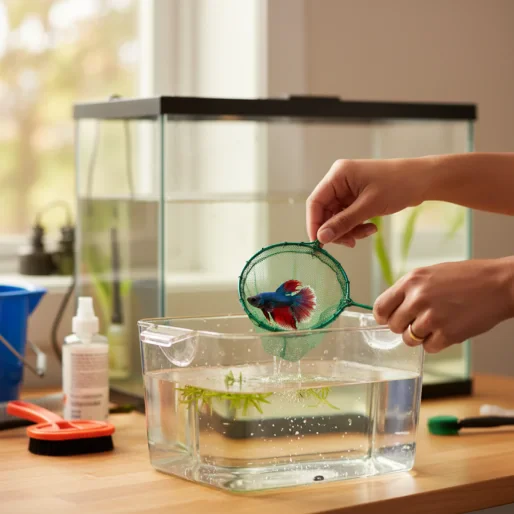
For most routine spring cleans, no. Netting and moving fish causes significant stress, and the temporary container introduces its own temperature and oxygen risks. Only remove fish if the tank needs to be drained below 50 percent or if structural repairs are required.
My tank is near a window. Is that a problem in spring?
Direct sunlight is one of the strongest drivers of algae blooms. Even 1 to 2 hours of direct sun can trigger significant growth. If relocating the tank is not practical, applying a UV filtering film to the window or using a blackout curtain during peak sun hours can help considerably.
Frequently Asked Questions
Content Disclosure
This article was created using state-of-the-art AI models with human editorial oversight. It is intended for informational and entertainment purposes only and does not constitute veterinary medical advice. Always consult a licensed veterinarian for your pet's specific health needs. Learn more about our process.