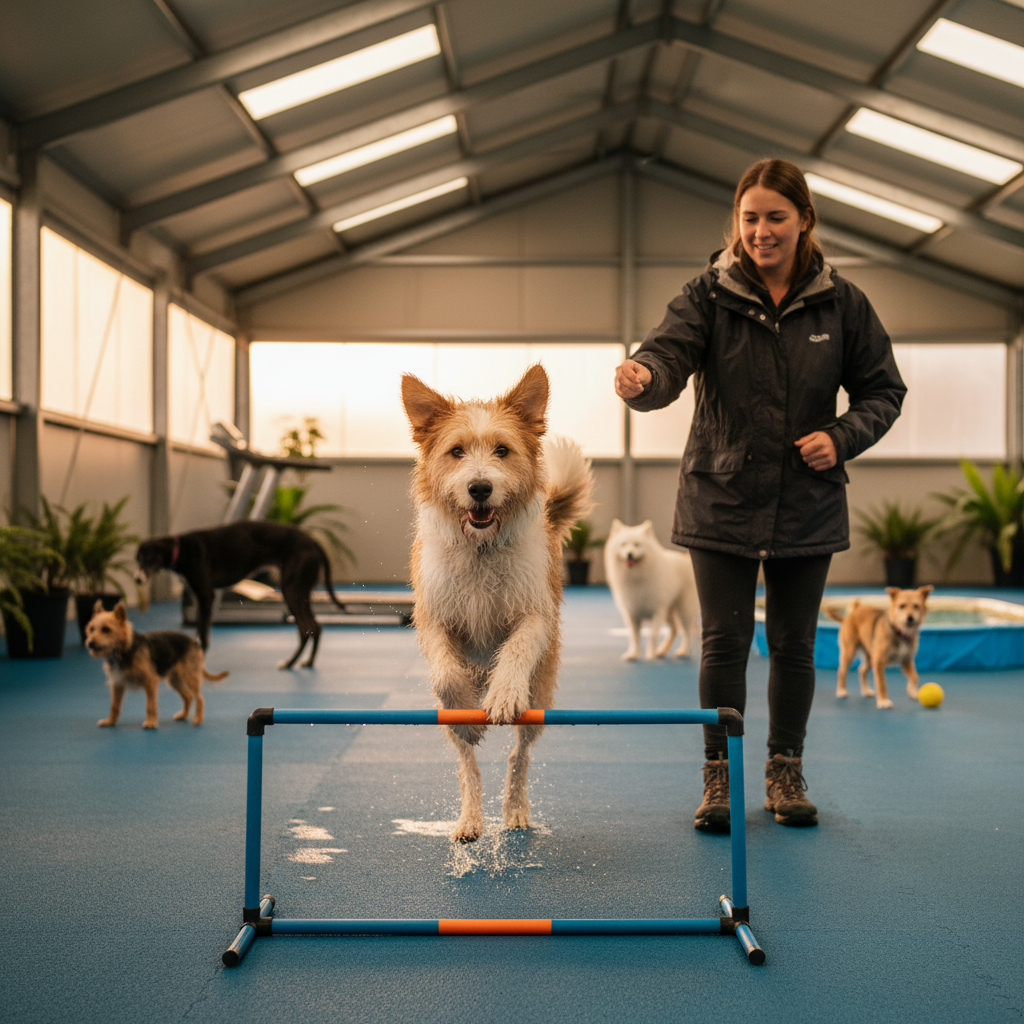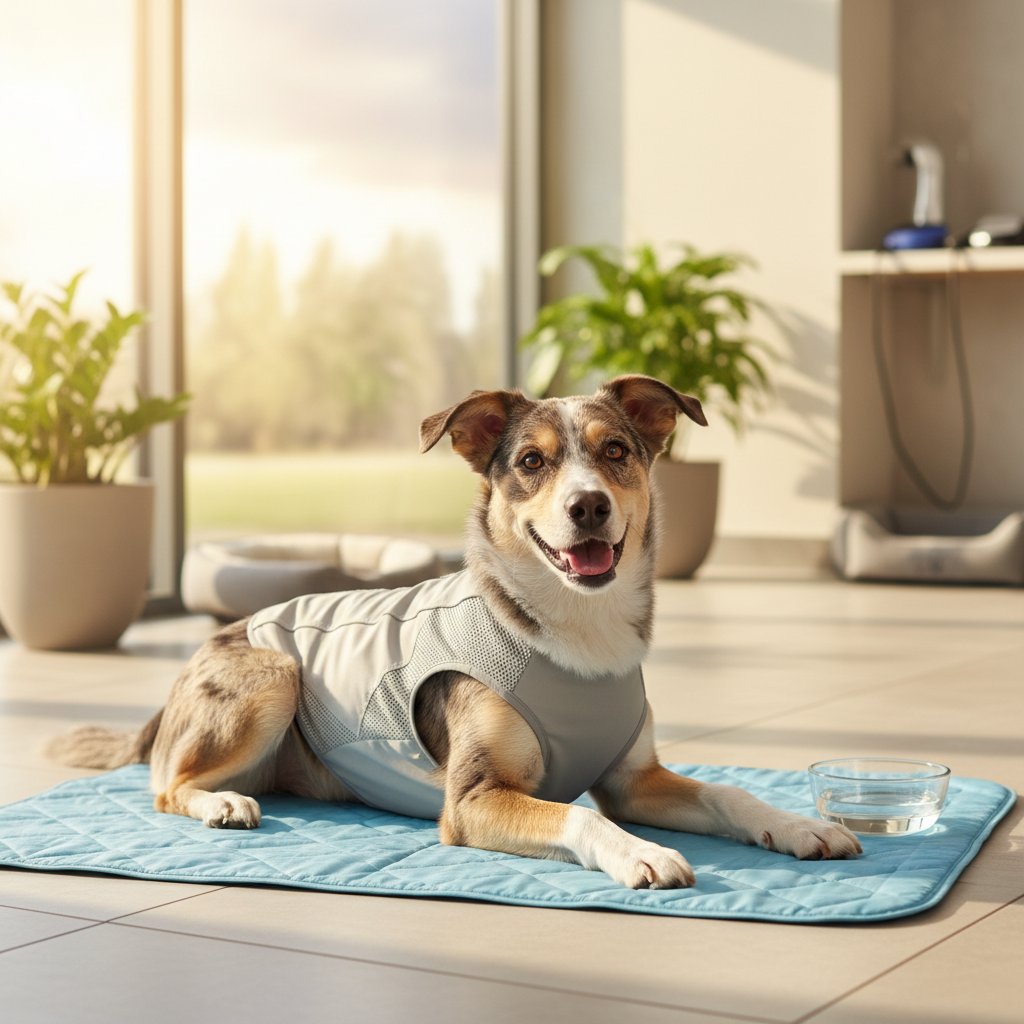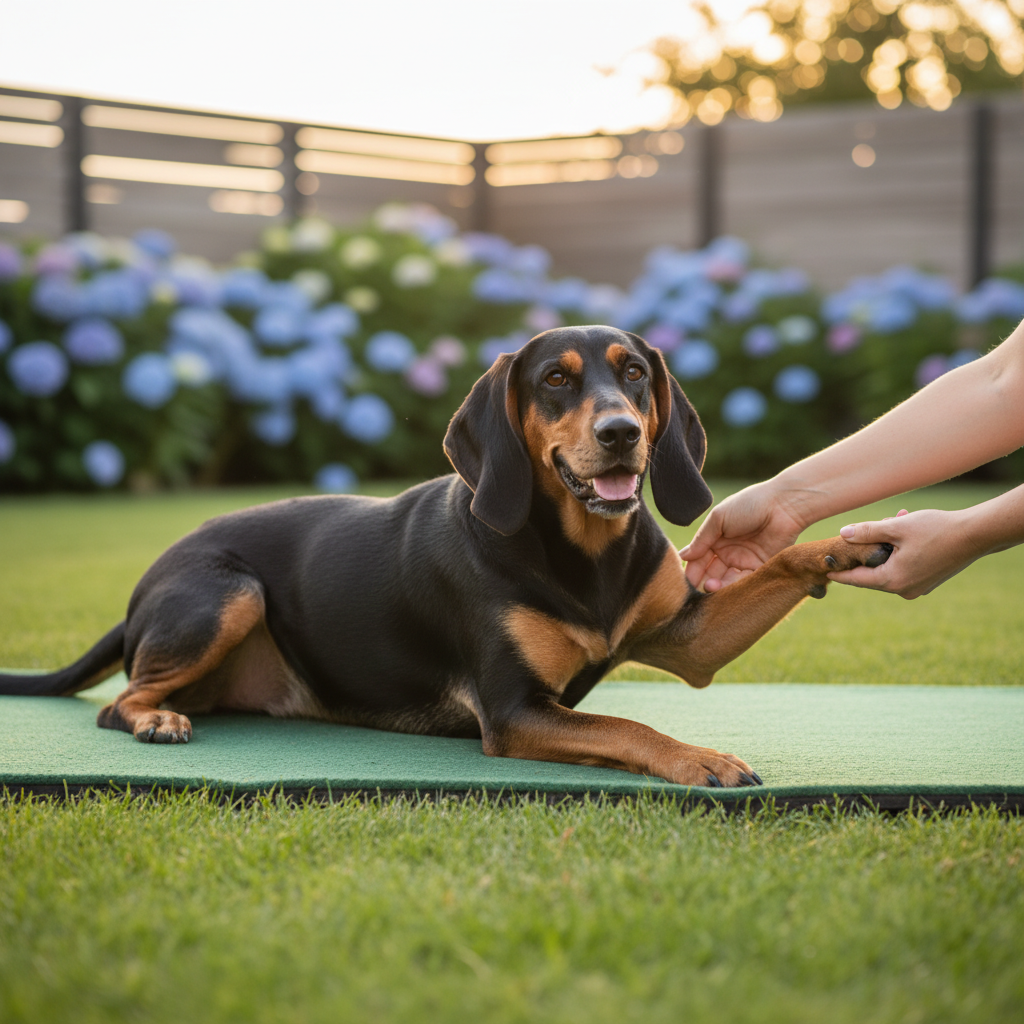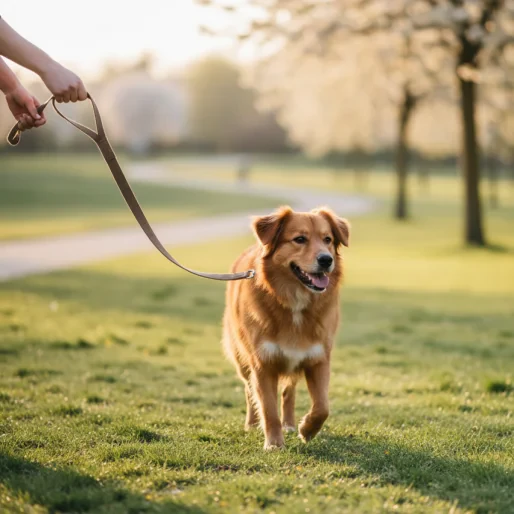
A structured six week programme to help dogs shed winter weight safely. Covers body condition scoring, calorie adjustments, exercise progression, and joint friendly terrain choices.
Key Takeaways
- Assess your dog's Body Condition Score (BCS) at home before starting any fitness plan.
- Increase exercise gradually over six weeks to avoid soft tissue injuries.
- Recalculate daily calorie needs using your dog's current weight and target weight.
- Choose surfaces carefully: grass and packed earth protect joints far better than concrete.
- Consult a veterinarian before beginning if your dog is senior, brachycephalic, or has any orthopaedic history.
Why Winter Weight Gain Matters
Shorter daylight hours, colder temperatures, and reduced outdoor activity often lead to gradual weight gain in dogs between late autumn and early spring. Even a modest increase of five to ten percent of body weight can place additional stress on joints, reduce cardiovascular efficiency, and worsen conditions such as osteoarthritis. Addressing this early in spring, before summer heat adds another exercise barrier, gives owners the best window for safe, sustainable progress.
Dogs recovering from a sedentary winter period are at higher risk of cruciate ligament strains, muscle soreness, and pad injuries if exercise ramps up too quickly. The plan below follows a progressive overload approach, a principle widely endorsed in canine rehabilitation guidelines, to minimise those risks.
What You Will Need
- A kitchen scale accurate to one gram (for food portioning)
- A flexible fabric tape measure
- A well fitted harness (preferable to a collar for overweight dogs)
- A standard lead (approximately 1.5 to 1.8 metres)
- A notebook or phone app to log daily walks and food intake
- Access to a flat, grassy area for initial sessions
- Fresh water and a collapsible bowl for longer outings
Step 1: Assess Body Condition Score at Home
What Is a Body Condition Score?
A Body Condition Score (BCS) is a hands on assessment that rates a dog's fat coverage on a numerical scale. The most widely used system, recommended by the World Small Animal Veterinary Association (WSAVA), runs from 1 to 9, where 1 is emaciated, 4 to 5 is ideal, and 9 is obese. Some veterinary practices use a simpler 1 to 5 scale.
How to Score Your Dog
- Rib check: Place both hands flat on your dog's ribcage with thumbs along the spine. At an ideal score (4 to 5 out of 9) the ribs should be easily felt under a thin fat layer, similar to running your fingers across the back of your hand. If ribs feel like they are under a thick blanket, the dog is likely a 7 or above.
- Waist view from above: Stand directly above your dog and look down. An ideal dog shows a visible waist (an inward curve) behind the ribs. If the body is oval or barrel shaped with no waist, the score is likely 7 to 9.
- Abdominal tuck (side view): From the side, the belly should tuck upward from the chest toward the hind legs. A sagging or straight belly line suggests excess fat.
Record the score and the date. Reassess every two weeks throughout the programme. Most owners find the rib check straightforward but underestimate fat over the waist area, so take your time with step two.
The WSAVA offers free downloadable BCS charts for both dogs and cats, which can serve as a helpful visual reference during your assessment.
Measuring for Tracking
In addition to BCS, measure your dog's chest girth (the widest point around the ribcage) and waist girth (just in front of the hind legs) with a fabric tape measure. These two numbers, tracked fortnightly, provide objective evidence of progress even when body weight fluctuates due to muscle gain.
Step 2: Recalculate Daily Calories
Why Current Weight Matters
Many owners feed according to the guidelines printed on their food bag, but those figures are typically designed for dogs at an ideal weight with moderate activity levels. An overweight, currently sedentary dog needs fewer calories to begin losing fat safely.
How to Calculate
- Determine Resting Energy Requirement (RER): RER in kilocalories per day equals 70 multiplied by (body weight in kilograms raised to the power of 0.75). For a 30 kg dog, that is approximately 674 kcal per day.
- Apply an activity and weight loss factor: For safe weight loss, many veterinary nutrition references suggest feeding at roughly 80 percent of RER for the target weight, not the current weight. For the same 30 kg dog whose ideal weight is 25 kg, target RER would be approximately 586 kcal, and 80 percent of that is around 469 kcal per day.
- Account for treats: Treats should make up no more than ten percent of total daily calories. Deduct treat calories from the meal portion.
Important: These formulas give starting estimates. Every dog's metabolism differs. If there is no measurable change in BCS or girth after two weeks, a veterinary nutritionist or your regular vet can fine tune the plan.
Weigh Food, Do Not Guess
Scooping kibble by eye commonly leads to overfeeding by 20 percent or more. Weigh every meal on a kitchen scale. This single habit is one of the most impactful changes an owner can make.
Step 3: The Six Week Exercise Progression
This plan assumes a dog that has been relatively inactive for two to four months. Dogs with orthopaedic conditions, heart disease, or brachycephalic breeds (such as Bulldogs, Pugs, or French Bulldogs) should have a veterinary check before starting.
Weeks 1 and 2: Foundation
- Duration: Two walks per day, 10 to 15 minutes each.
- Pace: Slow, steady walking. Let the dog set the pace initially.
- Surface: Flat grass or packed earth paths.
- Goal: Rebuild basic cardiovascular tolerance and re-condition paw pads.
- Watch for: Excessive panting that does not resolve within five minutes of rest, limping, or reluctance to continue.
Weeks 3 and 4: Building Stamina
- Duration: Two walks per day, 20 to 25 minutes each.
- Pace: Moderate, purposeful walking. Include brief (30 second) intervals of brisk walking every few minutes if the dog is comfortable.
- Surface: Introduce gentle inclines (grass hills or shallow trails). Continue to avoid concrete for the majority of the session.
- Goal: Increase aerobic demand and begin gentle strengthening of hind limb muscles.
- New addition: Add one or two short play sessions per week (five minutes of fetch on grass) for dogs that enjoy retrieval games.
For owners planning to extend walks into off lead areas, the guide on Off Leash Spring Hiking With Your Dog covers recall reliability and trail safety in detail.
Weeks 5 and 6: Consolidation
- Duration: Two walks per day, 25 to 35 minutes each, or one longer walk of 40 to 50 minutes plus a shorter 15 minute session.
- Pace: Varied. Mix moderate walking with brisk one to two minute intervals. If the dog is coping well, introduce very gentle off lead trotting on enclosed, even ground.
- Surface: Moderate trails, damp sand (excellent low impact surface), or shallow water wading for dogs that are confident swimmers. For dogs ready to try swimming, review Spring Open Water Swimming Safety for Dogs before the first session.
- Goal: The dog should now be comfortable with 30 plus minutes of continuous moderate exercise and showing visible improvements in energy and mobility.
After Week 6
Reassess BCS, girth measurements, and body weight. If the dog is still above ideal condition, continue at the Week 5 to 6 level while maintaining the adjusted calorie intake. Sustainable fat loss in dogs is typically around one to two percent of body weight per week. Faster loss may indicate muscle wasting rather than fat reduction.
Step 4: Surface and Terrain Selection to Protect Joints
Joint health is a critical consideration, especially for overweight dogs whose cartilage is already bearing extra load.
Best Surfaces
- Short grass: Provides natural cushioning and good traction. Ideal for the entire programme.
- Packed earth or woodland trails: Slightly firmer but still forgiving. Watch for hidden roots or rabbit holes.
- Damp sand (firm, not dry and loose): Offers excellent resistance training with low joint impact. Avoid soft, deep sand, which forces excessive muscle effort and can strain tendons.
- Shallow water: Wading (belly depth) builds muscle with minimal joint stress. Ensure the water is clean and the current is negligible.
Surfaces to Limit or Avoid
- Concrete and asphalt: High impact, especially hard on elbows and hips. Limit to short connecting stretches between grassy areas.
- Gravel: Can bruise pads and cause dogs to alter their gait, stressing other joints.
- Steep inclines (up or down): Place significant load on the stifle (knee) joint. Introduce only after Week 4 and only on soft ground.
Senior dogs or breeds predisposed to hip dysplasia or intervertebral disc disease benefit from even more conservative terrain choices. The Senior Dog Arthritis: Spring Walk Guide provides breed specific surface recommendations and warm up routines.
Also be mindful of seasonal hazards on the ground. Lawns and garden borders may harbour pesticides, herbicides, or toxic mulch. A quick audit using the Toxic Garden Products for Dogs: A Spring Safety Audit checklist is a worthwhile precaution before starting outdoor sessions.
Step 5: What to Watch for During and After Exercise
Normal Responses
- Mild panting that resolves within a few minutes of rest.
- Slightly slower pace toward the end of a walk in the first two weeks.
- Increased water intake on exercise days.
- Sleeping a little more than usual during the first week.
Warning Signs (Pause and Monitor)
- Limping or favouring one leg during or after a walk.
- Stiffness lasting more than 30 minutes after returning home.
- Reluctance to go on the next scheduled walk.
- Swollen joints, especially wrists (carpi) or hocks.
If any of these occur, drop back to the previous week's level and allow two to three rest days. If symptoms persist, seek veterinary assessment.
Emergency Signs (Stop Immediately and Contact Your Vet)
- Sudden collapse or inability to stand.
- Laboured breathing that does not improve with rest.
- Blue or grey tongue or gums (a sign of oxygen deprivation).
- Non weight bearing lameness (holding a leg completely off the ground).
- Vomiting or disorientation during exercise, which may indicate heat related illness.
When to Involve Your Veterinarian
While many healthy adult dogs can follow this plan safely at home, veterinary involvement is strongly recommended in the following situations:
- Before starting: Any dog scoring 8 or 9 on the BCS scale (severely obese), any brachycephalic breed, any dog over eight years of age, and any dog with a history of orthopaedic surgery, heart murmur, or respiratory disease.
- During the plan: If the dog shows persistent lameness, has not lost any measurable condition after three weeks of consistent effort, or develops exercise intolerance (tiring much faster than expected).
- For calorie guidance: A veterinary nutritionist can provide a precise calorie target based on metabolic testing, which is more accurate than formula based estimates, especially for dogs on prescription diets or those with endocrine conditions such as hypothyroidism.
- At the end: A post programme veterinary weigh in and BCS assessment helps confirm progress and set a maintenance plan. Some clinics offer free or low cost nurse led weight clinics for ongoing support.
Owners sometimes worry about "bothering" the vet with weight concerns, but obesity is now recognised by major veterinary bodies, including the WSAVA and the Association for Pet Obesity Prevention, as a disease state. Veterinary teams welcome proactive weight management conversations.
Bonus Tips for Long Term Success
- Use a slow feeder bowl: Slowing eating pace can improve satiety and reduce begging behaviour.
- Swap high calorie treats for vegetables: Small pieces of carrot, cucumber, or cooked green beans are low calorie alternatives many dogs enjoy. Always confirm a food is safe for dogs before offering it.
- Involve the whole household: Weight loss plans fail when one family member is secretly giving extra treats. Agree on a daily treat allowance and stick to it.
- Log everything: A simple notebook entry each day (walk duration, food weight, treats given, energy level) reveals patterns that pure memory cannot.
For dogs that are newly adopted and may also be adjusting to a new home alongside a fitness programme, the 3-3-3 Rule for Adopting a Shelter Dog in Spring offers a helpful framework for managing stress during the transition period.
Supplements are sometimes discussed in the context of joint support during weight loss programmes. Owners interested in this area can review the Mushroom Supplements for Dogs and Cats: 2026 Guide for current evidence based information, but any supplement should be discussed with a veterinarian before use.
Final Thoughts
A spring fitness ramp up does not need to be complicated. The formula is straightforward: assess honestly, feed accurately, increase activity gradually, choose kind surfaces, and know when to ask for professional help. Dogs that carry extra weight into spring benefit enormously from even modest improvements in condition, showing better mobility, more enthusiasm for play, and, over time, a reduced risk of chronic disease. Start with Week 1 today, and give your dog the active, comfortable season they deserve.
Frequently Asked Questions
How do I know if my dog is overweight or just fluffy? ↓
How quickly should an overweight dog lose weight? ↓
Can I just increase exercise without changing my dog's diet? ↓
What surfaces are safest for an overweight dog's joints? ↓

Emma Lawson
Practical Pet Care Educator
Practical pet home care specialist — clear, step-by-step guidance grounded in veterinary nursing standards.
Content Disclosure
This article was created using state-of-the-art AI models with human editorial oversight. It is intended for informational and entertainment purposes only and does not constitute veterinary medical advice. Always consult a licensed veterinarian for your pet's specific health needs. Learn more about our process.