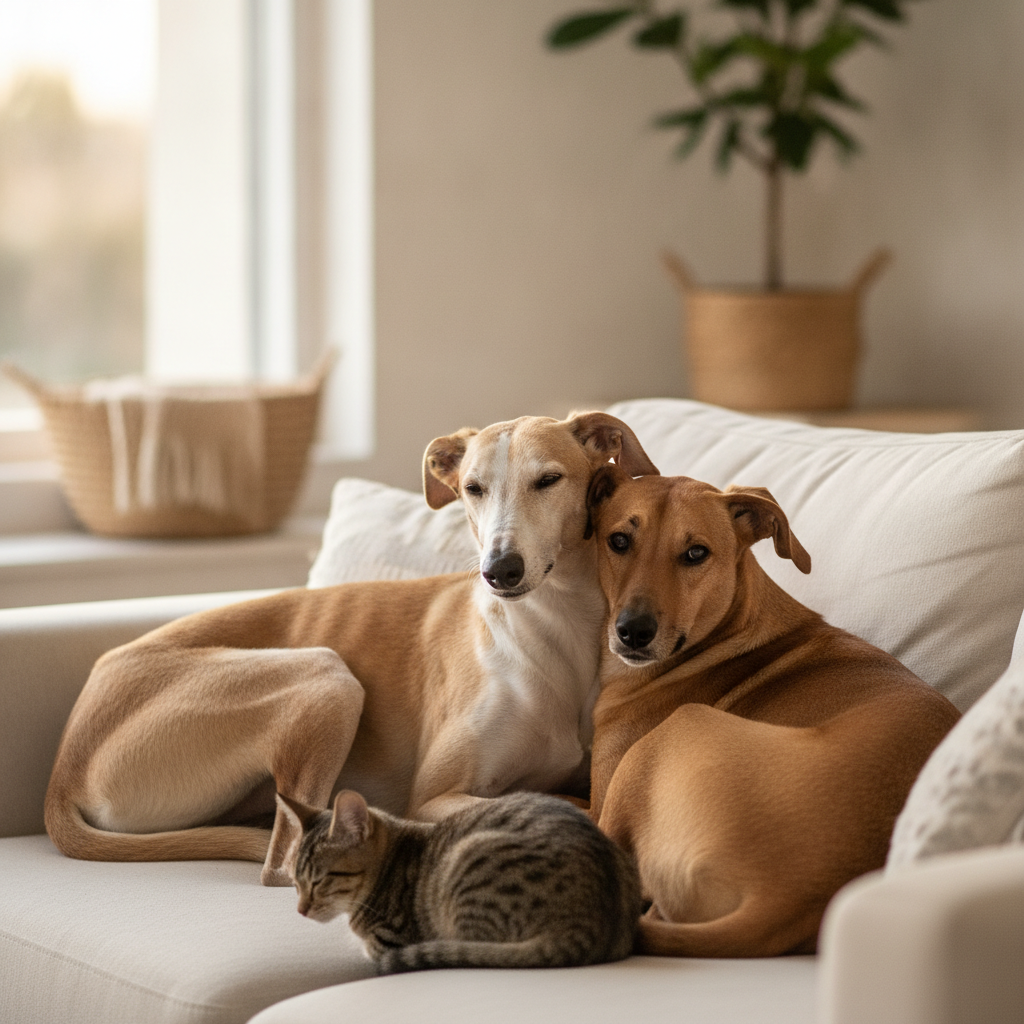
Breed-specific rescues across Ireland offer deep expertise in temperament, health, and rehoming, particularly for retired greyhounds and restricted breeds. This guide covers the Irish adoption process, legal requirements, costs in euro, and how to navigate wait times.
Key Takeaways
- Ireland has a strong network of breed-specific rescues, with greyhound rehoming organisations being the most prominent due to the country's racing industry.
- The Control of Dogs Act and the 2024 XL Bully ban create specific legal obligations for adopters of restricted breeds, including mandatory muzzling and short leads in public.
- Adoption fees from Irish breed-specific rescues typically range from €150 to €350, covering neutering, vaccinations, and microchipping.
- All dogs in Ireland must be microchipped by 12 weeks of age and registered on an authorised database, and every dog requires an annual licence (€20) or a lifetime licence (€140).
- Ireland's wet, temperate climate and mix of rural and urban living environments make breed-appropriate matching especially important.
Breed-Specific Rescue in Ireland: A Distinct Landscape
Ireland's relationship with breed-specific rescue is shaped by factors not found in many other countries. The greyhound racing industry means thousands of retired racing dogs need homes each year, giving rise to dedicated organisations such as the Irish Retired Greyhound Trust (IRGT), Homes for Unwanted Greyhounds (HUG), and the Rehoming Irish Greyhounds Team (RIGHT). Beyond greyhounds, individual breed clubs affiliated with the Irish Kennel Club (IKC) often coordinate rehoming for their specific breeds, and general rescues like Dogs Trust Ireland, the ISPCA, and MADRA in Galway frequently work alongside breed-focused groups.
Unlike general shelters, which accept every animal that arrives, breed-specific rescues pull dogs from pounds, owner surrenders, and welfare seizures with a focus on one breed or breed type. Each dog typically enters a foster home rather than a kennel, allowing volunteers to observe behaviour in a real household: interactions with children, cats, other dogs, and everyday triggers such as doorbells, hoovers, and the postman.
Irish Legal Requirements Every Adopter Must Know
Restricted Breeds Under the Control of Dogs Act
Ireland's Control of Dogs Regulations list 11 restricted breed types: American Pit Bull Terrier, Bull Mastiff, Doberman Pinscher, English Bull Terrier, German Shepherd (Alsatian), Japanese Akita, Japanese Tosa, Rhodesian Ridgeback, Rottweiler, Staffordshire Bull Terrier, and the Bandog, along with every strain or cross of these breeds. If you adopt a dog from a breed-specific rescue that falls into any of these categories, the law requires that the dog be:
- Muzzled in any public place
- Kept on a short, strong lead by a person over 16 years of age who is capable of controlling the dog
- Wearing a collar bearing the owner's name and address at all times
A reputable breed-specific rescue working with any of these breeds will explain these requirements during the screening process. Failure to comply can result in fines and, in serious cases, the dog being seized by the local dog warden.
The XL Bully Ban
Since 1 October 2024, it is illegal to import, breed, rehome, or sell an XL Bully dog in Ireland unless the owner holds a Certificate of Exemption. Owners who had an XL Bully before the ban must apply for this certificate and comply with strict conditions. This is the only outright breed ban currently in effect in Ireland, and legitimate rescues will not rehome XL Bully dogs without the proper exemption documentation.
Microchipping and Licensing
All dogs must be microchipped by 12 weeks of age using a chip compliant with ISO Standard 11784 (15-digit format), registered on an authorised database. When you adopt, the rescue will typically handle the change-of-ownership registration, which costs approximately €20. You will also need a dog licence from your local authority or An Post, priced at €20 per year or €140 for a lifetime licence.
How the Irish Screening Process Works
The adoption process at a breed-specific rescue in Ireland mirrors international best practice but has some local characteristics worth noting.
Application and References
Expect a written application covering your living situation, garden or yard setup, work schedule, experience with the breed, and existing pets. Most rescues request at least two personal references and will contact your current or most recent veterinary practice. For restricted breeds, the application typically includes questions about your understanding of muzzling requirements and public control obligations.
Home Check
A volunteer visits your home to assess fencing (particularly important in rural Ireland where livestock may be nearby), check for hazards, and confirm the environment matches your application. If you are renting, proof of landlord approval for pet keeping is required. Some rescues now accept video walkthroughs, but an in-person visit remains the standard for most Irish organisations.
Meet and Greet
Once approved, you meet available dogs, usually at the foster home. The foster carer provides a detailed account of the dog's behaviour, exercise needs, and any quirks observed over weeks or months. If you have existing dogs, a supervised introduction on neutral ground is arranged. For households with cats, a careful introduction protocol is essential, as outlined in the guide on how to introduce a new dog to your cats safely.
Trial Period
Many Irish rescues use a two-week foster-to-adopt period. During this time, the rescue remains available for advice and the adoption is not yet finalised. If the match is unsuitable, the dog returns to foster care without penalty. Reputable breed-specific rescues also include a lifetime return clause: if you can never keep the dog, the rescue takes the dog back rather than having it surrendered to a pound.
Adoption Fees and What They Cover
Adoption fees from breed-specific rescues in Ireland typically range from €150 to €350, depending on the organisation and the veterinary work performed. This fee generally includes:
- Spay or neuter surgery
- Core vaccinations (distemper, parvovirus, leptospirosis, parainfluenza, and canine adenovirus)
- Microchipping and database registration
- Worming and flea/tick treatment
- Any breed-specific health screenings completed during foster care
Note that rabies vaccination is not part of the standard Irish vaccination schedule, as Ireland has been rabies-free for decades. However, if you plan to travel with your dog to mainland Europe or the UK, a rabies vaccination and pet passport will be needed. Breed-specific rescues for breeds prone to hereditary conditions may also include additional diagnostics: cardiac screening for Cavalier King Charles Spaniels, hip scoring for Labrador Retrievers, or eye testing for Collies. These screenings alone can cost €200 to €400 privately, making the adoption fee excellent value.
Why Wait Times Are Common
Breed-specific rescues in Ireland are almost exclusively volunteer-run. A rescue may take in only a few dozen dogs per year, and popular breeds such as Golden Retrievers, Cocker Spaniels, and Border Collies can attract dozens of applicants for a single dog. Several factors extend wait times:
- Limited intake: Unlike large organisations such as Dogs Trust Ireland or the ISPCA, breed-specific groups operate with small volunteer teams and rely on a network of foster homes.
- Medical rehabilitation: Dogs may need dental work, orthopaedic surgery, or weeks of treatment before they are ready for adoption.
- Behavioural assessment: Foster carers document behaviour over weeks, providing far richer information than a kennel-based temperament test. Research published in the Journal of Veterinary Behavior has highlighted the unreliability of standardised tests conducted in stressful shelter environments.
- Geographic logistics: Some dogs are transported from rural pounds to foster homes across the country, adding logistical time.
Applicants can improve their chances by staying flexible on age and sex, responding promptly to communications, and applying to more than one rescue within the same breed network.
Greyhound Adoption: Ireland's Largest Breed-Specific Rescue Sector
Greyhound rehoming deserves special mention in the Irish context. The Irish Retired Greyhound Trust, funded in part by Rásaíocht Con Éireann (Greyhound Racing Ireland), ensures every greyhound available for adoption is neutered, fully vaccinated, and microchipped. The IRGT also provides post-adoption support during the settling-in period.
Retired greyhounds adapt remarkably well to domestic life despite their racing background. They are typically calm indoors, require moderate exercise (two 20 to 30 minute walks per day suits most), and are well-socialised with people. However, prey drive can be high, and careful assessment of small-animal compatibility is essential. Ireland's countryside, with hares and rabbits common in many areas, makes recall training and secure fencing particularly important for greyhound adopters. Practical desensitisation approaches are covered in the article on Train Your Dog to Stay Calm Around Irish Spring Wildlife.
Settling In: The First Weeks at Home
Professional behaviourists often reference an informal guideline known as the "3-3-3 rule": three days to decompress, three weeks to learn routines, and three months to feel truly settled. During this transition:
- Keep the home environment calm and predictable.
- Maintain the feeding schedule and diet used by the foster carer, transitioning gradually if a change is needed.
- Introduce household members and other pets slowly.
- Avoid overwhelming the dog with visitors, long outings, or intensive training in the first week.
- Schedule a veterinary wellness check within the first 10 to 14 days.
Ireland's climate brings additional considerations. Wet, windy walks are a fact of life for much of the year, and short-coated breeds (including greyhounds and whippets) may need a waterproof coat during autumn and winter outings. Muddy paws and damp fur require regular cleaning to prevent skin irritation, particularly between the toes. For senior dogs or breeds prone to joint issues, cold and damp conditions can exacerbate stiffness; dietary support including joint supplements or appropriate renal care may be relevant, as discussed in the guide on Renal Diets for Senior Dogs: An Irish Owner's Guide.
Spring in Ireland can trigger increased barking and reactivity as wildlife becomes more active. Owners noticing heightened vocalisation may find practical strategies in the article on why your dog barks more in spring.
Red Flags When Evaluating a Rescue
Not every organisation presenting itself as a rescue operates to proper standards. Be cautious if a group:
- Has no registered charity number (Irish charities should be registered with the Charities Regulator and hold a CHY or RCN number)
- Does not require any application, home check, or screening
- Refuses to provide veterinary records for the dog
- Pressures you to decide immediately or charges fees far above the norm without documentation of veterinary care
- Keeps dogs exclusively in kennels with no foster programme or behavioural information
The Irish Kennel Club maintains a list of affiliated breed clubs, many of which coordinate rescue for their breeds. This is a reliable starting point for finding legitimate breed-specific rescue contacts.
UCD Veterinary Hospital / Local Emergency Vet
Call your vet's emergency out-of-hours number or contact the UCD Veterinary Hospital in Dublin.
Irish vet practices provide out-of-hours emergency contact details on their answerphone message.
When to Seek Professional Help
Veterinary consultation is recommended immediately if a newly adopted dog shows signs of illness: lethargy, vomiting, diarrhoea, coughing, or loss of appetite. Behavioural concerns such as severe anxiety, aggression, or destructive behaviour that persists beyond the initial adjustment period warrant referral to a qualified animal behaviourist. In Ireland and the UK, the CCAB (Certified Clinical Animal Behaviourist) credential, accredited by the Association for the Study of Animal Behaviour (ASAB), is a recognised professional standard. Breed-specific rescues can often recommend behaviourists experienced with that particular breed's tendencies. For dogs showing separation anxiety, strategies used by professional pet sitters can also be valuable, as discussed in how pet sitters handle dog separation anxiety.
Final Thoughts
Adopting from a breed-specific rescue in Ireland requires patience, paperwork, and a genuine understanding of the breed's needs and any legal requirements that apply. The process is designed to protect both the dog and the adopter, and the depth of information provided by foster-based rescues is difficult to match elsewhere. For those willing to invest the time, the result is a carefully considered placement built on thorough assessment, honest communication, and a shared commitment to the dog's welfare.
Frequently Asked Questions
What breeds are restricted under Irish law? ↓
How much does it cost to adopt from a breed-specific rescue in Ireland? ↓
Do I need a dog licence after adopting in Ireland? ↓
How long is the wait to adopt from a breed-specific rescue? ↓
Are greyhounds good family pets? ↓
What should I look for to verify a rescue is legitimate in Ireland? ↓

TrustMyPets Editorial Team
Global Pet Care Experts
Multi-disciplinary editorial team — evidence-based pet care guidance across health, behaviour, and welfare.
Content Disclosure
This article was created using state-of-the-art AI models with human editorial oversight. It is intended for informational and entertainment purposes only and does not constitute veterinary medical advice. Always consult a licensed veterinarian for your pet's specific health needs. Learn more about our process.