Adopting an ex-racer in Ireland requires navigating specific challenges, from our wet climate to livestock safety laws. Discover how to help your retired greyhound transition from the kennel to a cosy Irish home.
- Climate Sensitivity: With Ireland's damp climate and average temperatures often below 10°C, a waterproof coat is a medical necessity for greyhounds, not a fashion choice.
- Livestock Safety: The predatory drive that made them racers poses a significant risk near farmland; strict lead control is vital to comply with the Control of Dogs Act.
- Domestic Culture Shock: Many Irish ex-racers have never entered a house; stairs, glass doors, and home heating systems are entirely new concepts.
- Sleep Startle: Reflexive aggression when woken is common due to kennel rearing and requires specific management in the home.
- Isolation Distress: Used to the pack environment of racing kennels, these dogs often struggle with the solitude of a quiet house.
The Psychology of the Irish Ex-Racer
Ireland is a global hub for greyhound racing, meaning the dogs available for adoption here are often fresh from the track. Unlike a surrender that might have lived in a family home in Cork or a flat in Dublin, the average retired greyhound has lived a strictly regimented life in an industrial kennel environment. From puppyhood, their existence is defined by routine, high-protein diets, and the constant company of other dogs.
When these dogs enter a domestic home, they experience profound 'culture shock'. A standard semi-detached house is a landscape of alien concepts: vacuum cleaners, televisions, slippery timber floors, and the reflection of glass patio doors. What a new owner might perceive as stubbornness is frequently a 'freeze' response triggered by sensory overload. Understanding this lack of exposure is critical. These dogs are not being difficult; they are processing a world they were never socialised to understand.
The Decompression Timeline
Veterinary behaviourists in Ireland advocate for the 'Rule of Three' framework, though local rescue organisations like the Irish Retired Greyhound Trust often suggest extending this timeline for particularly nervous dogs.
- 3 Days: Cortisol levels peak. The dog may refuse fresh meat or kibble, sleep excessively, or pace around the kitchen.
- 3 Weeks: The dog begins to anticipate the routine of the household but may start testing boundaries. This is often when separation anxiety peaks.
- 3 Months: The true personality emerges. Bonds form, and the dog feels secure enough to relax fully on the sofa.
Managing Behavioural Quirks in the Home
Sleep Startle (Sleep Aggression)
Sleep startle is a pervasive issue in ex-racers. In racing kennels, dogs have their own personal runs and are rarely touched while resting. Consequently, if a family member touches a sleeping greyhound, the dog may snap or growl reflexively before fully waking. This is not dominance; it is a survival reflex.
Management Strategy:
- Call Before Touching: Always verbally rouse the dog from a distance before approaching their bed.
- Designated Zones: Ensure the dog has a safe sleeping area away from high-traffic zones like the hallway or kitchen.
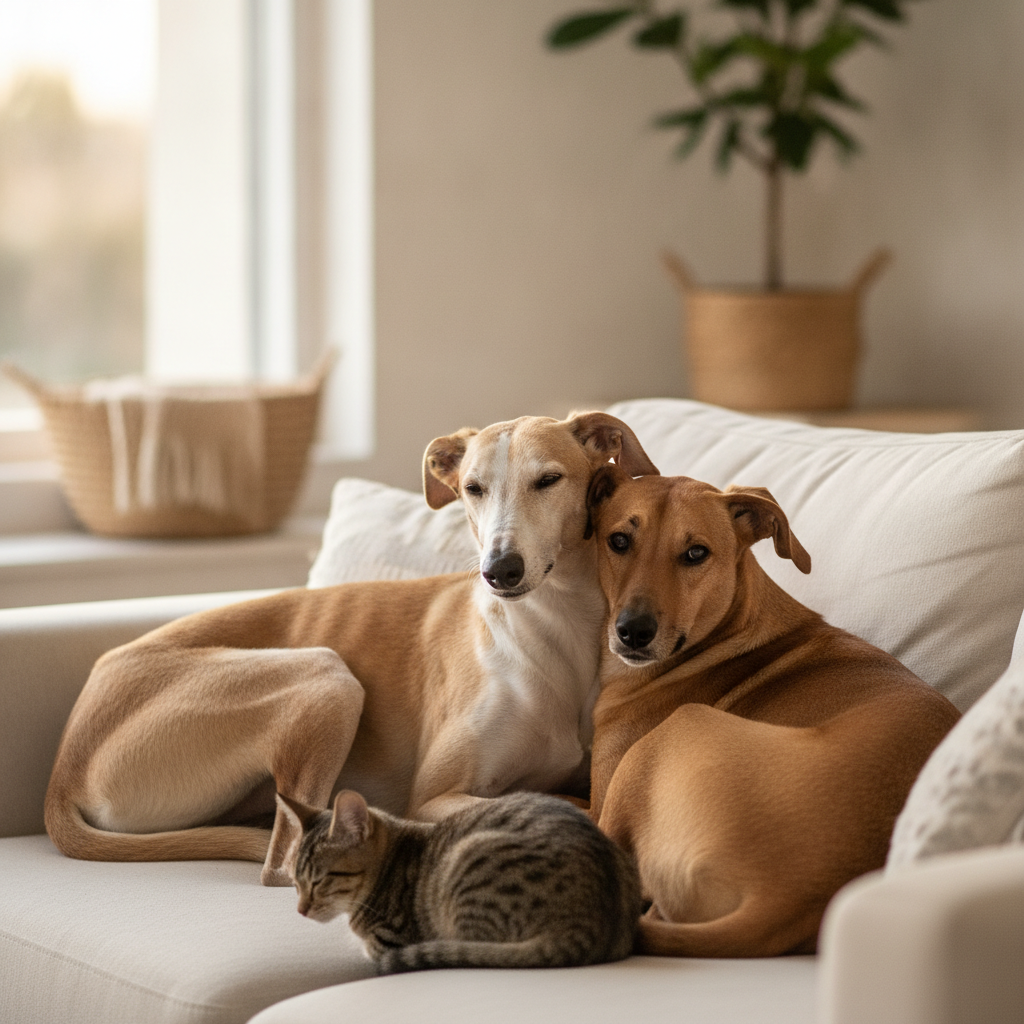
- Furniture Rules: While many Irish owners love cuddling their dogs on the sofa, behaviourists recommend restricting furniture access initially until the dog's sleep reflexes are assessed.
The 'Statue' Syndrome (Freezing)
Greyhounds often 'freeze' on walks, planting their feet and refusing to move. This is an involuntary fear response. In an Irish context, this can be triggered by the noise of heavy traffic in urban areas or the unfamiliar texture of cattle grids in rural settings.
Intervention:
- Avoid Force: Pulling on the lead increases tension and reinforces the fear.
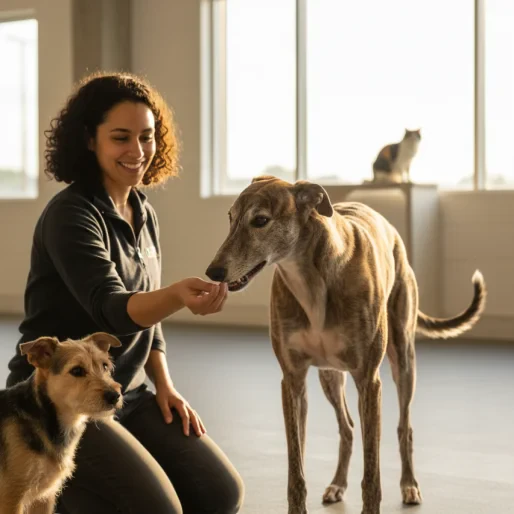
- Redirect: Use a high-value treat (like a piece of cheese or chicken) to turn the dog in a circle or change direction.
- Observation: Identify the trigger. Is it a wheelie bin? A bus? A shiny puddle?
Isolation Distress
Retired racers are rarely alone. They are born in litters and housed in kennels with other dogs. Sudden solitude in a quiet house can be terrifying. This often manifests as destruction of door frames, howling, or house soiling immediately after the owner leaves for work.
Behavioural modification involves gradual desensitisation. Leaving the dog for seconds, then minutes, slowly building tolerance. Many owners find that adopting a pair or having an existing confident dog helps, as the greyhound takes cues from the resident pet. For severe cases, consult a vet to discuss support options.
UCD Veterinary Hospital / Local Emergency Vet
Call your vet's emergency out-of-hours number or contact the UCD Veterinary Hospital in Dublin.
Irish vet practices provide out-of-hours emergency contact details on their answerphone message.
Environmental Hazards and Safety in Ireland
The Flight Risk and Wildlife
Greyhounds are sighthounds. Their genetic imperative is to chase movement. A plastic bag blowing across the M50 or a hare darting across a field in Roscommon can trigger a chase response that overrides all recall training. These dogs can reach speeds of 72km/h in seconds.
Livestock Safety: In rural Ireland, the risk of livestock worrying is severe. Under the Control of Dogs Act, farmers are legally permitted to shoot dogs that are worrying sheep or cattle. Even a playful chase can cause sheep to abort lambs or die from stress. It is imperative that greyhounds are kept on a strong lead at all times near farmland. A martingale collar or a three-point harness is essential, as their narrow heads can slip out of standard collars effortlessly.
Dealing with the Irish Climate
Greyhounds have very little body fat and thin skin. They are not built for the damp, penetrating cold of an Irish winter. If the temperature drops below 10°C, they require a coat.
- Winter Walks: A waterproof, fleece-lined coat is mandatory for walks in rain or cold. Without it, the dog will burn excessive calories trying to stay warm and may refuse to walk.
- Indoor Warmth: At night, when central heating goes off, many greyhounds need lighter pyjamas or fleece jumpers to sleep comfortably.
- Paw Care: Road grit and salt used during icy spells can irritate their paws. Rinse their feet with warm water after walks in freezing conditions.
Glass and Flooring
Many greyhounds do not understand that glass is a solid barrier. Collisions with patio doors are a common cause of injury in the first weeks. Applying decals or masking tape to glass doors at the dog's eye level is a necessary precaution. Similarly, laminate, tile, or polished timber floors can be terrifying for a dog used to concrete or sand. The lack of traction causes panic. Using runners and rugs to create 'safe paths' through the house is a standard modification strategy.
Predatory Drift and Small Animals
While many greyhounds are gentle giants, their predatory motor patterns are highly developed. Small dogs, cats, or even wildlife can trigger a 'prey' recognition. This is known as predatory drift. Introductions to small animals should always be done with the greyhound muzzled and on a lead. Muzzles are comfortable, familiar tools for ex-racers and should be viewed as safety devices. In public spaces, while greyhounds are not broadly classified as a 'restricted breed' requiring muzzles under the Control of Dogs Regulations (unlike strains of Pit Bulls), many owners choose to muzzle them during the transition period to prevent accidents with small dogs or wildlife.
Health Considerations for the Ex-Racer
Corns: Greyhounds are susceptible to corns on their paw pads, which can cause severe lameness. If your dog is limping on hard surfaces like pavements but walks fine on grass, check the pads for circular, hard growths.
Dental Disease: Many retired racers arrive with poor dental hygiene due to soft diets in kennels. A full dental check-up and scaling are often required shortly after adoption. Budgeting roughly €200 to €400 for initial dental work is a prudent step.
Bald Thighs: 'Bald Thigh Syndrome' is common and usually cosmetic, caused by the friction of bedding in kennels. In a home environment with soft bedding and good nutrition, the fur often regrows over 6 to 12 months.
When to Seek Professional Help
Most greyhounds transition beautifully with time, patience, and a warm coat. However, if a dog displays resource guarding that escalates, self-injurious behaviour due to anxiety, or aggression toward family members, immediate consultation with a certified behaviourist or veterinary professional is required.
Patience is the primary tool. These dogs are learning to be pets for the first time. With a consistent routine and empathetic management, the athlete can successfully retire into a beloved companion, perfectly suited to the Irish fireside.
Frequently Asked Questions
Do greyhounds need to be muzzled in public in Ireland? ↓
Are retired greyhounds good with cats? ↓
Do greyhounds need a lot of exercise? ↓
Why does my greyhound freeze on walks? ↓
What should I feed a retired greyhound? ↓

David Okafor
Certified Animal Behaviourist
Certified animal behaviourist — science-based strategies for fear, anxiety, reactivity, and behavioural challenges.
Content Disclosure
This article was created using state-of-the-art AI models with human editorial oversight. It is intended for informational and entertainment purposes only and does not constitute veterinary medical advice. Always consult a licensed veterinarian for your pet's specific health needs. Learn more about our process.