How hydrotherapy supports arthritic and overweight dogs through Ireland's damp, humid summers and cool wet winters. A practical guide to referrals, accredited centres, and an eight week plan suited to Irish conditions.
Key Takeaways
- Hydrotherapy reduces joint load by roughly 60 to 90 percent depending on water depth, making it well suited to Irish dogs whose mobility worsens during damp, humid spells and cold wet winters.
- Veterinary referral is non negotiable. Reputable Irish hydrotherapy centres will not accept a dog without written clearance from a vet registered with the Veterinary Council of Ireland (VCI).
- Accreditation matters. Many Irish hydrotherapists train through UK bodies such as the Canine Hydrotherapy Association (CHA) or the National Association of Registered Canine Hydrotherapists (NARCH), as Ireland does not yet operate a single national register.
- Underwater treadmills suit controlled gait work and weight loss, while pools suit non weight bearing endurance and severe joint disease.
- An eight week plan with weekly tracking of weight in kg, stiffness, and mobility helps owners measure real improvement.
Why Hydrotherapy Suits the Irish Climate
Ireland rarely sees the extreme heat that troubles dogs in southern Europe, but the Irish climate creates its own challenges for arthritic and overweight pets. Damp, humid days, even at modest temperatures of 16 to 22 degrees Celsius, often stiffen sore joints. Long stretches of rain reduce outdoor activity, pavements and stone paths become slippery, and many owners cut walks short between showers. The result is a familiar downward spiral: less movement, gradual weight gain, weaker supporting muscle, and increasing stiffness.
Hydrotherapy offers a controlled, indoor, year round alternative. Warm water buoyancy reduces the percentage of body weight pressing through painful joints, while water resistance builds muscle without the concussive forces of trotting on wet tarmac or uneven boreens. For senior or osteoarthritic dogs across counties from Donegal to Cork, this can be the difference between a sedentary winter and a meaningfully active one.
Preparation Before Booking
Veterinary Clearance Under Irish Practice
Before any session, a written referral from the dog's primary vet is essential. The Veterinary Council of Ireland regulates veterinary practice in the State, and reputable hydrotherapy centres expect a referral that lists current diagnoses, medications, recent imaging or surgical notes, and any movement restrictions. Conditions that may rule hydrotherapy out include uncontrolled cardiac disease, active skin infections, open wounds, recent surgery before sutures are removed, gastrointestinal illness, and ear infections. Otitis externa is particularly common in Irish breeds with floppy ears, such as Cocker Spaniels and Irish Water Spaniels, and should be fully resolved before water work begins.
Practical Items to Bring
- Two large, absorbent towels (microfibre dries faster in humid Irish weather)
- A non slip mat for the car boot, useful when rain turns kit damp
- The dog's regular flat collar and lead (most centres provide a buoyancy harness)
- Small, high value treats that do not crumble in water
- Prescribed joint supplements or pain relief, given at the usual time
- A copy of the veterinary referral, microchip details, and vaccination card
Microchipping has been mandatory for all dogs in Ireland since 2015 under the Microchipping of Dogs Regulations, and most centres will check chip details against the referral.
At Home Preparation
Feed a small meal at least two to three hours before the session to reduce the risk of regurgitation, allow a full toilet break before arrival, and keep the car cool. Brush the coat thoroughly. Double coated Irish breeds such as the Irish Setter, Bearded Collie, and Kerry Blue Terrier shed heavily in damp weather, and loose hair clogs centre filtration systems.
Underwater Treadmill or Pool
The two main formats serve different therapeutic goals, and many Irish centres offer both.
Underwater Treadmill
The dog walks on a belt inside a sealed chamber that fills with warmed water to a chosen depth, usually between hock and shoulder height. Water level controls the share of body weight carried by the joints, while speed and incline are adjusted gradually.
Best for: weight loss programmes, post operative gait retraining, mild to moderate osteoarthritis, hip and elbow dysplasia (common in larger Irish favourites such as Labradors, Golden Retrievers, and Irish Wolfhounds), and dogs who lack confidence swimming.
Pool Sessions
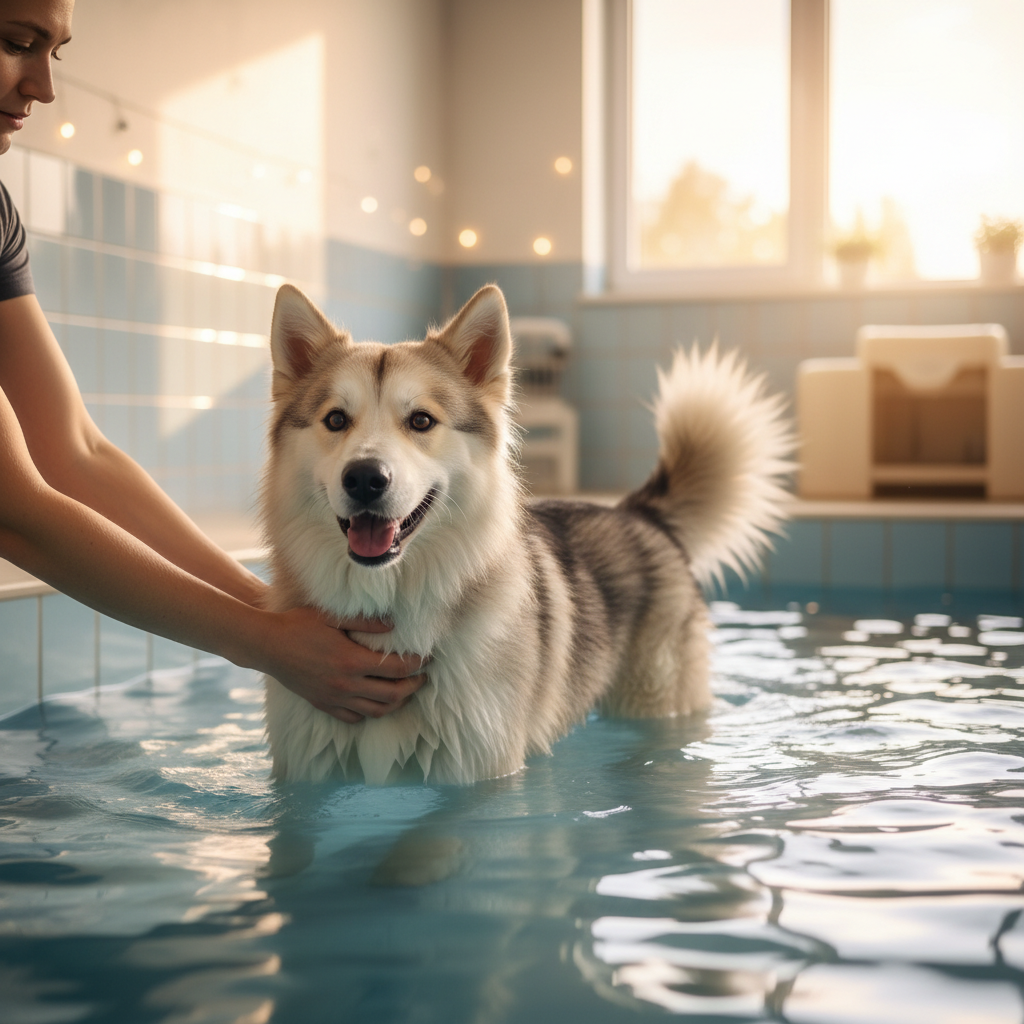
The dog swims in a temperature controlled pool, wearing a fitted buoyancy harness, with a hydrotherapist guiding them through laps, turns, and stretches.
Best for: severe osteoarthritis where any weight bearing is painful, cardiovascular conditioning, gun dogs and working collies needing endurance, and rehabilitation from spinal conditions where non weight bearing exercise is prescribed.
Which Format First?
For most overweight, arthritic family dogs in Ireland, an underwater treadmill is the more controlled starting point. It allows the hydrotherapist to measure stride length, observe gait, and progress workload in small, measurable steps. Pool work is often introduced later for variety or when greater joint offloading is needed. The referring vet will usually indicate a preference based on diagnosis.
Finding an Accredited Centre in Ireland
Ireland does not yet operate a single statutory register specifically for canine hydrotherapists. In practice, the most useful quality markers are professional body membership and a veterinary or chartered physiotherapy background. Owners should look for evidence of recognised training rather than relying on social media presence alone.
Bodies and Credentials to Look For
- Canine Hydrotherapy Association (CHA), UK based, used by many Irish hydrotherapists
- National Association of Registered Canine Hydrotherapists (NARCH), also UK based
- International Association of Veterinary Rehabilitation and Physical Therapy (IAVRPT) for veterinary credentialed practitioners
- Veterinary Council of Ireland (VCI) registration for any vet involved in the referral or on site supervision
The Irish Society for the Prevention of Cruelty to Animals (ISPCA) and the Dublin SPCA (DSPCA) also signpost owners toward welfare focused services and can be helpful starting points for rescue dogs with limited medical history.
Questions to Ask Before Booking
- Do you require a written veterinary referral for every dog?
- What qualifications does the hydrotherapist hold, and which professional body are they registered with?
- How often is the water tested, and what disinfection system is used?
- What is the water temperature range, and is it adjusted for senior or arthritic patients?
- Is a first aid trained staff member always present?
- How long is a session, what is the cost in euro, and does it include drying facilities?
Typical session prices in Ireland fall in a broad range, often around €40 to €70 for a follow up session, with longer initial consultations sometimes costing more. Confident, transparent answers are a positive sign. Vague replies or pressure to prepay for large session blocks before any assessment are red flags.
What to Expect at a First Session
The first appointment is rarely a full workout. Most accredited Irish centres run an initial consultation of 45 to 60 minutes, with only a short time in the water.
Health Check and History
The hydrotherapist reviews the referral, weighs the dog in kilograms, assesses body condition score, palpates joints and muscles, and discusses goals. Owners are asked about current mobility, stairs, slipping on tiled or laminate floors common in Irish homes, willingness to jump into the car, and how long the dog can walk before tiring.
Introduction to the Equipment
The dog is shown the treadmill or pool with the equipment off, allowed to sniff, and rewarded for calm behaviour. Nervous rescue dogs, of which Ireland has many, often need extra time at this stage.
Buoyancy Aid Fitting and Short Water Introduction
A fitted harness with handles is essential for pool work. First time water exposure is brief, typically two to five minutes, often in short intervals. The aim is positive association, not exercise. Many dogs need two or three sessions before meaningful work begins.
Drying and Debrief
The dog is rinsed with fresh water, towel dried, and sometimes blow dried on a low heat setting. Given Ireland's damp climate, thorough drying around the ears, armpits, and groin is important to prevent hot spots and yeast overgrowth.
Home Water Exercises Between Visits
Between professional sessions, gentle home based water exercise can help maintain progress. These are general suggestions only. Anything beyond paddling should be cleared with the veterinary team first.
Shallow Paddling Pool Work
A child's hard sided paddling pool filled to carpus (wrist) height gives a safe space for standing and gentle weight shifting. Five minutes is usually enough for a beginner.
Sea and Lake Swimming
Ireland has thousands of kilometres of coastline and many inland loughs, and supervised swimming at gently shelving beaches such as those along the east coast can complement a hydrotherapy plan during warmer months. However, Irish sea temperatures rarely exceed 16 degrees Celsius even in August, so arthritic dogs should be limited to short paddles rather than long swims. Rinse with fresh water afterwards to remove salt, and dry the ears carefully. Avoid swimming in rivers or lakes during or after heavy rainfall, when bacterial loads and currents can rise sharply, and stay clear of any water with visible blue green algal blooms, which appear in some Irish lakes during warm spells.
What to Avoid at Home
- Throwing balls or toys into deep water for an unsupervised, unfit dog
- Cold sea swimming without acclimatisation, particularly outside the May to September window
- Repeated jumping in and out of pools, which loads the same joints hydrotherapy is trying to protect
- Any water play if the dog has an ear infection, skin lesion, or recent wound
Tracking Progress Over Eight Weeks
Eight weeks is a realistic timeframe to see measurable change in mobility, weight, and stamina.
Weekly Metrics
- Body weight in kg, weighed on the same scales, same day of week
- Body condition score from 1 to 9
- Treadmill or pool duration achieved that week
- Walk duration on land between sessions, in minutes and km
- Morning stiffness on a 1 to 10 scale
- Willingness to climb stairs, jump on the sofa, or enter the car
Sample Framework
Weeks 1 to 2: Two sessions per week focused on water confidence and short treadmill walks of three to five minutes.
Weeks 3 to 4: Build treadmill time toward eight to twelve minutes per session at a comfortable walking pace. Add brief incline changes if approved. Land walks remain short and on soft surfaces such as grass verges rather than wet stone or concrete.
Weeks 5 to 6: Introduce pool work for variety, or extend treadmill sessions with structured interval patterns. Many owners notice the dog rising more easily from rest by this point.
Weeks 7 to 8: Review progress with the veterinary team. Decide whether to maintain twice weekly sessions, taper to weekly maintenance, or progress to a higher workload.
Regulations Irish Owners Should Keep in Mind
The Control of Dogs Act 1986 and subsequent regulations set out core duties for Irish dog owners, including the requirement that all dogs in public must wear a collar bearing the owner's name and address. Eleven breeds, including the Rottweiler, Doberman Pinscher, German Shepherd, English Bull Terrier, Bull Mastiff, Staffordshire Bull Terrier, Akita, Tosa, Bandog, Rhodesian Ridgeback, and any cross of these, plus the prohibited Pit Bull Terrier type, must be muzzled and led on a short strong lead by a person over sixteen in public places. These rules apply on the way to and from hydrotherapy appointments, even though the muzzle is removed once inside a private clinical setting under the hydrotherapist's supervision.
Owners should also keep the dog's microchip registration current with one of the approved Irish databases, as centres routinely verify identity before water work.
When to Contact a Vet
Contact the primary practice without delay if any of the following occur after a session:
- Persistent coughing, laboured breathing, or blue tinged gums, suggesting possible water aspiration
- Vomiting or diarrhoea lasting more than a few hours
- Sudden non weight bearing lameness
- Head shaking, ear pain, or discharge
- Collapse, severe lethargy, or refusal to eat for more than 24 hours
Outside normal opening hours, most Irish practices direct clients to a designated out of hours service. Keep that number saved before the first hydrotherapy appointment:
UCD Veterinary Hospital / Local Emergency Vet
Call your vet's emergency out-of-hours number or contact the UCD Veterinary Hospital in Dublin.
Irish vet practices provide out-of-hours emergency contact details on their answerphone message.
Final Thoughts
Hydrotherapy is one of the most effective year round tools for keeping overweight and arthritic dogs moving through Ireland's wet, humid weather. Success depends on three things: an accurate veterinary diagnosis from a VCI registered practice, a properly accredited centre, and consistent owner follow through between visits. Eight weeks of structured sessions, paired with sensible home care, can meaningfully improve quality of life for dogs who would otherwise spend the wettest months stiff and sedentary.
Frequently Asked Questions
Do I need a vet referral for canine hydrotherapy in Ireland? ↓
How much does a hydrotherapy session typically cost in Ireland? ↓
Is hydrotherapy useful in the Irish climate even though summers are cool? ↓
Are restricted breeds allowed at Irish hydrotherapy centres? ↓
Can my dog swim at Irish beaches as part of a hydrotherapy plan? ↓

Emma Lawson
Practical Pet Care Educator
Practical pet home care specialist — clear, step-by-step guidance grounded in veterinary nursing standards.
Content Disclosure
This article was created using state-of-the-art AI models with human editorial oversight. It is intended for informational and entertainment purposes only and does not constitute veterinary medical advice. Always consult a licensed veterinarian for your pet's specific health needs. Learn more about our process.