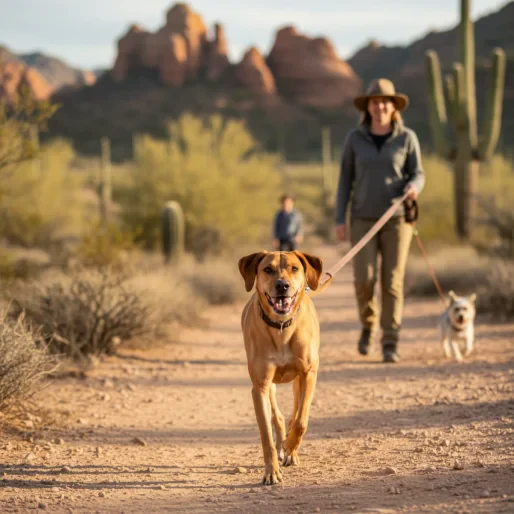
As the desert blooms and temperatures rise, safe hiking requires strategic preparation. Learn how to manage hydration, paw protection, and wildlife encounters to enjoy the season before the summer heat sets in.
Key Takeaways
- Timing is Everything: Utilize the cool mornings and evenings; avoid the midday sun even if the air feels mild.
- Hydration is Non-Negotiable: Carry more water than you think you need for both you and your dog.
- Check the Ground: Sand and rock hold heat longer than air; always test surface temperature with your hand.
- Wildlife Awareness: Spring means waking wildlife; keep dogs on a leash to prevent encounters with snakes and scorpions.
- Paw Protection: Booties or wax can prevent burns and injuries from sharp cactus spines.
The transition from winter to spring in desert environments offers some of the most spectacular hiking conditions of the year. The wildflowers are in bloom, the air is crisp, and the landscape comes alive. However, this period is also a critical shoulder season where the margin for error narrows significantly. As a pet care professional, I have seen too many enthusiastic owners caught off guard by how quickly a pleasant morning can turn into a dangerous situation once the sun climbs high.
Maximizing this beautiful season requires a shift in mindset. You are not just walking; you are managing an environment that is indifferent to your dog's physiology. By understanding the unique challenges of the desert terrain and temperature, you can turn these final weeks of mild weather into safe, memorable adventures.
The Thermodynamics of a Dog Walk
One of the most common misconceptions is relying solely on air temperature to judge safety. In a desert environment, the ground acts as a thermal battery. Sand, asphalt, and rocky trails absorb solar radiation and can reach temperatures 30 to 40 degrees hotter than the ambient air.
Dogs cool themselves primarily through panting and, to a lesser extent, sweating through their paw pads. When the ground is hot, their ability to release heat through their paws is compromised, and they are essentially walking on a heating pad. This accelerates the risk of heat exhaustion.
The 7-Second Rule
Before stepping onto the trail, and periodically during your walk, place the back of your hand firmly against the ground. If you cannot hold it there comfortably for seven full seconds, it is too hot for your dog's paws. This simple test is your first line of defense against burns and systemic overheating.
Hydration: The Lifeline of the Desert
Dehydration happens faster in the arid desert air than in humid climates because moisture evaporates from your dog's respiratory tract almost instantly. You might not see your dog drooling excessively, which can lead to a false sense of security.
A general rule of thumb for hiking is to carry at least 1 ounce of water per pound of body weight for a day hike, but in the desert, you should double this. Offer small amounts of water frequently rather than a large volume all at once, which can lead to bloating or vomiting. If your dog refuses to drink, try wetting their tongue or adding a splash of low-sodium chicken broth to the water to encourage them.
Navigating Flora and Fauna
The desert ecosystem is defended by spines, thorns, and venom. Spring brings out the beauty of the cactus blooms, but it also means the flora is primed to attach to passing fur.
The Cactus Threat
Cholla cacti, often called "jumping cacti," have segments that detach with the slightest touch. If your dog picks up a cactus spine, do not attempt to pull it out with your fingers. Use a fine-toothed comb to slide between the dog's skin and the cactus segment to flick it off, then use tweezers to remove remaining spines. This prevents the spines from embedding in your own hands.
Wildlife Encounters
As the weather warms, coldblooded animals become active. Snakes are shaking off their winter dormancy and are often sluggish and slower to move out of the way, increasing the risk of accidental conflict. It is vital to keep your dog on a short leash and stick to established trails. For those in areas with heavy snake populations, reviewing our guide on Late Summer Snakebite Survival: Immediate Emergency Response is crucial, as the principles of immediate emergency response apply equally to spring encounters.
Additionally, while less common in the desert, be aware of other seasonal risks. If your hiking takes you near pine pockets in higher elevations, be vigilant for pests like the Pine Processionary Caterpillar, which can cause severe necrosis if touched or ingested.
Paw Care and Terrain Management
Desert terrain is abrasive. Sharp volcanic rock, coarse sand, and hardened clay can wear down paw pads quickly, leading to raw spots or tears. While we often discuss winter protection, such as in our guide on Paw Care During The Big Thaw, the concept of barrier protection is just as relevant in the desert.
- Booties: These are the gold standard for desert hiking. They protect against hot sand, sharp rocks, and goatheads (puncture vine). Ensure they fit snugly to prevent rubbing.
- Paw Wax: If your dog refuses booties, a thick layer of paw wax can provide a temporary shield against abrasion and prevent sand from impacting between the toes.
- Regular Checks: Stop every 20 minutes to check your dog's paws for burrs, ticks, or signs of wear.
Recognizing the Limit
The most important skill for a desert hiker is knowing when to turn back. Do not wait until your dog looks tired. By the time a dog is lagging behind, seeking shade, or panting with a wide, "spatulate" tongue (where the tongue looks flattened at the end), they are already overheating.
Plan your route so that you are walking into the shade or finishing your hike as the temperature rises. Remember, if you are feeling warm, your dog, wearing a fur coat and closer to the radiant heat of the ground, is feeling hot.
Emergency Kit Essentials
For any desert excursion beyond a neighborhood walk, your pack should include:
- Tweezers and a comb: For cactus removal.
- Extra water and a collapsible bowl.
- Saline solution: To flush sand out of eyes or clean wounds.
- Vet wrap and gauze: To bandage a cut paw pad to get back to the car.
- Emergency contact info: The number for the nearest emergency vet and animal poison control.
Enjoying the desert in the spring is a privilege. By respecting the environment and preparing for its specific challenges, you ensure that every walk strengthens the bond between you and your companion without compromising their health.
Frequently Asked Questions
How can I tell if the desert sand is too hot for my dog? ↓
What should I do if my dog gets a cactus spine? ↓

TrustMyPets Editorial Team
Global Pet Care Experts
Multi-disciplinary editorial team — evidence-based pet care guidance across health, behaviour, and welfare.
Content Disclosure
This article was created using state-of-the-art AI models with human editorial oversight. It is intended for informational and entertainment purposes only and does not constitute veterinary medical advice. Always consult a licensed veterinarian for your pet's specific health needs. Learn more about our process.