
In this article
- Why the Home Environment Matters More for Irish Cats
- Ireland's Maritime Climate and What It Means for Home Cat Care
- Vaccination and Cattery Admission Requirements in Ireland
- The Legal Framework: Animal Health and Welfare Act 2013
- Finding a Qualified Cat Sitter in Ireland
- Rescue Cats in Ireland: A Specific Welfare Consideration
- Pre-Departure Preparation with an Irish Focus
- Making the Right Call: Home Sitting vs. Cattery for Your Irish Cat
Key Takeaways
- Ireland's temperate maritime climate means home heating continuity is a specific and practical consideration when arranging cat care for an extended absence.
- Most Irish catteries require up-to-date vaccination certificates covering feline flu, enteritis (FVRCP), and commonly feline leukaemia virus (FeLV), making a pre-holiday veterinary appointment essential.
- The Animal Health and Welfare Act 2013 establishes a legal duty of care for any person responsible for an animal in Ireland, including professional pet sitters and the owners who brief them.
- A significant proportion of cats in Ireland are rescue cats, often with incomplete background histories, and these animals may require specific anxiety management planning before a long owner absence.
- A qualified cat sitter in Ireland should hold current pet first aid certification, appropriate insurance, and ideally membership of an internationally recognised body such as Pet Sitters International (PSI) or NarpsUK.
Why the Home Environment Matters More for Irish Cats
Cats are strongly territory-driven animals. Behavioural guidelines published by the American Association of Feline Practitioners (AAFP) consistently identify a cat's familiar environment as a primary source of security, and this principle applies with particular force in the Irish context. A cattery, however clean and professionally managed, introduces a cat to unfamiliar smells, unfamiliar sounds, and proximity to other cats. These are recognised stressors for the species, and they are compounded by the specific characteristics of Irish housing and climate.
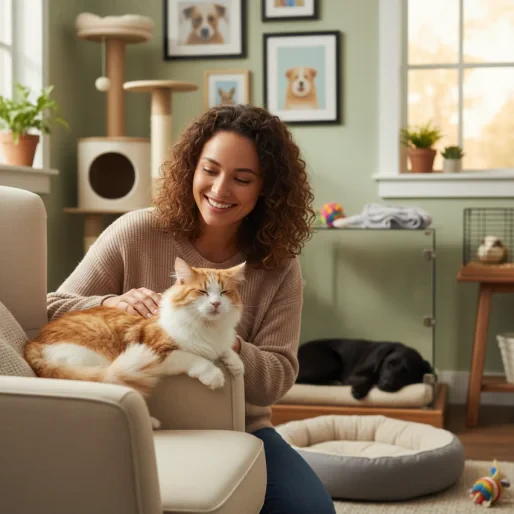
Irish homes are often characterised by older building stock with distinct ambient qualities: particular heating rhythms, familiar draughts, and the sounds of a specific neighbourhood through each season. A cat that has adapted over months or years to these cues is being asked to absorb a considerable environmental shift when placed in external boarding. For shy, anxious, elderly, or medically complex cats, that shift can trigger stress-related illness including feline idiopathic cystitis, appetite loss, and sustained hiding behaviour. Home pet sitting preserves all of these cues. The furniture, the window perches overlooking a familiar Irish garden, the litter box in its known location, and the ambient light patterns of the home remain constant. For many cats, this continuity is the most meaningful form of welfare support available during an owner's absence.
This does not mean catteries are unsuitable for all Irish cats. Purpose-built facilities with individual heated units, outdoor access, and experienced staff serve some cats well, particularly confident, sociable, healthy adults with no history of anxiety. The decision should always be grounded in the individual cat's temperament, age, and medical profile rather than on convenience or cost alone.
Ireland's Maritime Climate and What It Means for Home Cat Care
Ireland's temperate maritime climate introduces practical home care considerations that do not feature in general guidance. Average winter temperatures across most of the country typically fall between 4°C and 8°C, and homes left without active heating can become uncomfortably and potentially harmfully cold for cats, particularly senior animals and those managing conditions such as osteoarthritis or chronic kidney disease. Before departing, owners should set central heating to maintain a baseline indoor temperature of at least 16°C throughout the stay, and closer to 18°C for any cat with health vulnerabilities. Clear thermostat instructions must be included in the written care sheet provided to the sitter.
High ambient humidity, a consistent feature of the Irish climate year-round, also has practical implications for litter tray management. Clumping litters can behave differently in persistently damp conditions, and sitters should be briefed on what normal litter performance looks and smells like in that specific home. Owners of properties prone to condensation, which is common in older terraced or semi-detached housing across Irish towns and cities, should advise the sitter on which rooms to ventilate and which to keep closed to prevent dampness accumulating in the cat's preferred resting areas.
During the Irish summer, while extreme heat is rarely a concern, rooms with south-facing windows can reach uncomfortable temperatures during occasional warm spells. The care sheet should include guidance on ventilation, and confirm that fresh water is refreshed more frequently during any warmer weather. Keeping water bowls or fountain units away from direct sun exposure is advisable as a routine precaution.
Vaccination and Cattery Admission Requirements in Ireland
Whether a cat is placed in a cattery or remains at home with a sitter, confirming that vaccinations and parasite prevention are current before departure is a fundamental welfare obligation and a basic courtesy to whoever is providing care. Irish catteries typically require proof of up-to-date vaccination against feline viral rhinotracheitis, calicivirus, and panleukopenia (the FVRCP combination, covering cat flu and feline enteritis), and most also require current feline leukaemia virus (FeLV) vaccination. Owners should verify the specific requirements of their chosen cattery well in advance of the booking date, as a lapsed booster can result in a cat being turned away on arrival.
For cats remaining at home with a sitter, there is no regulatory admission requirement tied to vaccination status. However, maintaining current protection remains best practice before any change in care arrangement, and is particularly relevant for cats with outdoor access or those living in multi-cat households. The Veterinary Council of Ireland (VCI) registers and regulates all practising veterinary surgeons in the country. Owners seeking guidance on appropriate vaccination and parasite prevention schedules for their individual cat should consult a VCI-registered practitioner before departure.
Microchipping cats is not currently a legal requirement in Ireland, in contrast to England where mandatory cat microchipping came into effect in June 2024. That said, the ISPCA and veterinary professionals throughout Ireland consistently recommend microchipping as best practice. Confirming that a microchip is in place and registered on a national database is a sensible precaution before any extended owner absence, in the event of an accidental escape during the sitter's care.
The Legal Framework: Animal Health and Welfare Act 2013
Pet sitting in Ireland is not subject to specific licensing or formal state regulation. However, the Animal Health and Welfare Act 2013 establishes a legal duty of care for any person who has possession or control of an animal. The Act specifies that a person must not leave an animal unattended without making adequate provision for its welfare, taking into account the species, age, and health of the animal, and the duration of the absence. A professional pet sitter operating in Ireland is subject to this standard as a matter of law, not merely professional ethics.
This legal framework also carries direct implications for owners. Failing to adequately brief a sitter, leaving insufficient food or medication supplies, or neglecting to provide a written emergency veterinary authorisation could be interpreted as a failure to make adequate provision. The penalties under the Act for welfare offences are substantial. Thorough pre-departure preparation is not an optional extra: it is consistent with the welfare obligations that Irish law places on those responsible for companion animals.
Finding a Qualified Cat Sitter in Ireland
Ireland does not currently have a dedicated national body for professional pet sitters. However, internationally recognised membership organisations provide a meaningful quality benchmark in the Irish market. Pet Sitters International (PSI), which operates globally, requires members to adhere to a code of conduct, carry insurance, and engage in continuing education. NarpsUK, the National Association of Pet Sitters and Dog Walkers, is also recognised by many sitters and clients in Ireland as a credible professional standard. Fear Free Pets certification, developed with input from veterinary and behavioural professionals, is a further credential indicating formal training in low-stress animal handling, which is of particular value when caring for anxious or rescue cats.
When evaluating a potential cat sitter in Ireland, owners should confirm the following as a minimum:
- Proof of current pet-sitting insurance covering liability and care, custody, and control
- Membership of PSI, NarpsUK, or a comparable recognised professional body
- Current pet first aid certification from a named provider
- Verifiable reviews specifically referencing cat care experience, not solely dog-walking work
- Demonstrated familiarity with emergency veterinary services available locally, including out-of-hours cover
UCD Veterinary Hospital / Local Emergency Vet
Call your vet's emergency out-of-hours number or contact the UCD Veterinary Hospital in Dublin.
Irish vet practices provide out-of-hours emergency contact details on their answerphone message.
Home pet sitting rates in Ireland vary by location and service type. Drop-in visits in urban areas such as Dublin, Cork, and Galway typically range from around €15 to €25 per visit, while overnight stays generally fall in the range of €50 to €80 per night, though rates in rural areas may differ. A sitter quoting significantly below the local market rate without clear justification warrants careful scrutiny, as this can indicate uninsured or inexperienced provision.
Rescue Cats in Ireland: A Specific Welfare Consideration
A notable characteristic of cat ownership in Ireland is the prevalence of rescue cats. Organisations including the ISPCA, the Cat and Dog Protection Association of Ireland (CDPA), and a wide network of independent local rescue groups rehome large numbers of cats across the country each year. Many Irish households include one or more cats with incomplete or unknown background histories, and this is directly relevant to home sitting planning.
Rescue cats may carry unresolved anxiety responses to unfamiliar people, changes in household routine, or the absence of an attachment figure. These responses are not always apparent in everyday behaviour when the owner is present, and can emerge more strongly during a sitter's care, particularly in the first 24 to 48 hours of a new arrangement. Owners of rescue cats are advised to discuss their cat's known history and any observed stress indicators with the sitter in explicit detail during the meet-and-greet visit. For cats with a known or suspected anxiety history, consulting a VCI-registered veterinarian about a management plan before departure is strongly recommended. Options may include pheromone therapy using F3 facial pheromone diffusers, environmental enrichment adjustments, or in some cases short-term anxiolytic medication prescribed by the treating vet. Any pheromone diffuser should be plugged in and running for at least 48 hours before the owner departs to allow it to reach effective concentration in the home.
Pre-Departure Preparation with an Irish Focus
A written care sheet should be prepared and discussed with the sitter at least 48 hours before departure. Verbal-only briefings are not sufficient. In addition to standard elements such as feeding schedule with exact quantities in grams, water provision details, litter tray instructions, a medication log, and a behavioural baseline, Irish owners should address the following specifics:
- Heating instructions: specify the minimum indoor temperature to maintain throughout the stay (at least 16°C, and closer to 18°C for senior or health-compromised cats), and provide clear thermostat guidance appropriate to the specific heating system in the home
- Damp and condensation notes: identify any rooms prone to moisture build-up, which is common in older Irish properties, and advise on appropriate ventilation management during the absence
- Emergency veterinary contact: the name, address, and out-of-hours telephone number of the primary veterinary practice, and the nearest 24-hour emergency clinic
UCD Veterinary Hospital / Local Emergency Vet
Call your vet's emergency out-of-hours number or contact the UCD Veterinary Hospital in Dublin.
Irish vet practices provide out-of-hours emergency contact details on their answerphone message.
- Written consent for emergency treatment: a signed statement authorising the sitter to approve veterinary intervention up to a specified financial limit, consistent with professional pet-sitting standards and the owner's duty under the Animal Health and Welfare Act 2013
- Pet insurance details: policy number and insurer's claims line, noting that Irish pet insurance policies vary considerably in scope and exclusions
- Microchip number and database name: recorded clearly in the event of an accidental escape during the owner's absence
Making the Right Call: Home Sitting vs. Cattery for Your Irish Cat
Home pet sitting is the preferable arrangement for the majority of Irish cats, particularly those who are territorial, shy, anxious, elderly, medically complex, or rehomed from rescue. Ireland's housing environment, climate, and the proportion of the cat population with incomplete background histories all reinforce this general position. A well-run cattery with individual heated units and experienced staff may suit a confident, sociable, healthy adult cat whose owner cannot secure a qualified overnight sitter, but the decision should rest on the individual animal's needs rather than logistical convenience.
Quality of care matters more than setting alone. A properly insured, experienced, and well-briefed home sitter represents a meaningfully higher standard of care than an unvetted acquaintance, regardless of how familiar that person is to the cat. Equally, a well-regulated Irish cattery with clear vaccination requirements, individual accommodation, and documented emergency protocols is preferable to a poorly prepared home arrangement. The framework for deciding should always centre on temperament, medical profile, duration of absence, and the verifiable qualifications of whoever is providing care.
Taking the time to verify credentials, conduct a proper meet-and-greet in the home, prepare a detailed written care sheet, and establish a robust emergency protocol including out-of-hours veterinary contact
UCD Veterinary Hospital / Local Emergency Vet
Call your vet's emergency out-of-hours number or contact the UCD Veterinary Hospital in Dublin.
Irish vet practices provide out-of-hours emergency contact details on their answerphone message.
Frequently Asked Questions
Content Disclosure
This article was created using state-of-the-art AI models with human editorial oversight. It is intended for informational and entertainment purposes only and does not constitute veterinary medical advice. Always consult a licensed veterinarian for your pet's specific health needs. Learn more about our process.