
In this article
Key Takeaways
- Ireland's persistent rain and high humidity make rot, rust, and damp the primary structural threats to outdoor enclosures, requiring more frequent inspections than in drier climates.
- Foxes, stoats, and mink are the main predator risks for Irish rabbit owners; raccoons are not present in Ireland, but security measures must still be rigorous.
- Heat stress is less common in Ireland's mild summers, but rabbits can still overheat on occasional warm days above 25 °C, particularly in poorly ventilated hutches.
- Dozens of plants common in Irish gardens, including foxglove, ragwort, and rhododendron, are toxic to rabbits. A thorough plant audit is essential before outdoor placement.
- All rabbits should be microchipped and registered. Keep your rabbit savvy veterinarian's details and posted at the enclosure.
UCD Veterinary Hospital / Local Emergency Vet
Call your vet's emergency out-of-hours number or contact the UCD Veterinary Hospital in Dublin.
Irish vet practices provide out-of-hours emergency contact details on their answerphone message.
Why Outdoor Access Matters for Irish Rabbits
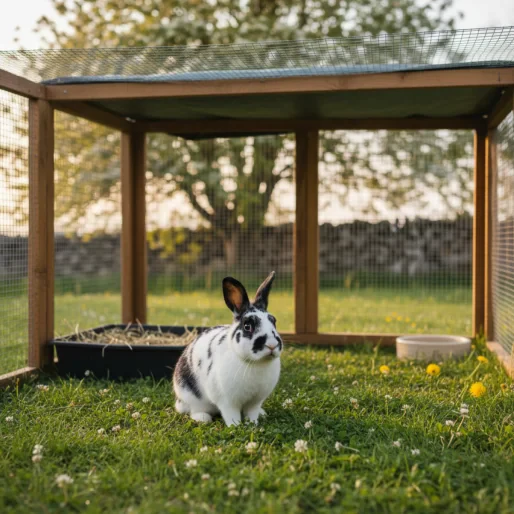
Rabbits thrive with outdoor access, and Ireland's mild spring and summer months offer an ideal window. Natural sunlight supports vitamin D synthesis, fresh grass encourages healthy gut motility, and the sensory enrichment of outdoor time reduces stress behaviours commonly seen in indoor only housing. However, Ireland's climate brings its own set of risks: persistent damp, unpredictable rain, strong winds, and local predators all require careful planning. A well designed enclosure, adapted to Irish weather patterns, allows rabbits to enjoy the outdoors safely from roughly April through to September.
This guide is structured as a section by section safety audit. Owners, pet sitters, and volunteers at Irish rabbit rescues can work through each area, tick off requirements, and feel confident nothing has been overlooked. For related seasonal guidance, our Spring Parasite Prevention guide covers flea, tick, and fly strike considerations in detail.
Predator Proofing for Irish Conditions
Know Your Local Predators
In Ireland, the primary predator threats to outdoor rabbits are foxes, stoats, and American mink (an invasive species now well established near waterways across the country). Feral and domestic cats also pose a risk to smaller breeds. Overhead, buzzards and sparrowhawks are capable of attacking young or small rabbits. Unlike some global advice, raccoons are not a concern in Ireland, but this does not reduce the need for robust security: Irish foxes are bold, persistent, and increasingly common in urban areas including Dublin, Cork, Galway, and Limerick.
Mesh Selection
Standard chicken wire is not adequate. It is designed to contain poultry, not to exclude predators. A fox or mink can tear through lightweight poultry netting. Use 16 gauge (or heavier) galvanised welded wire mesh with openings no larger than 1.3 cm by 2.5 cm. This size prevents mink and stoats, both slim enough to exploit larger gaps, from entering. Galvanised mesh is particularly important in Ireland's humid climate, as untreated wire corrodes rapidly. Budget around €30 to €60 for a standard sized roll from Irish hardware retailers such as Woodies, Lenehans, or local agricultural co ops.
Roof and Ground Defence
Every outdoor enclosure in Ireland must have a fully covered roof, both for predator protection and rain shelter. A combination of solid roofing (marine grade plywood or corrugated roofing sheets) over the shelter area and securely fixed mesh over the open run section works well. For ground defence, bury a wire apron at least 30 cm deep around the full perimeter, or lay an L shaped apron extending 30 to 60 cm outward beneath the soil surface. Given Ireland's soft, often waterlogged soil, predators can dig quickly, making this step especially important.
Latches and Night Time Security
Use a two step latch system (for example, a bolt paired with a carabiner or padlock) on every door and access panel. Check latches weekly, as Ireland's damp air accelerates corrosion on metal hardware. Stainless steel or marine grade fixings, though slightly more expensive, last significantly longer. Most predator attacks on domestic rabbits occur between dusk and dawn. Where possible, bring rabbits into a secure shed, utility room, or garage (ensuring no vehicle fumes) overnight. If rabbits remain outside, motion activated lighting around the enclosure perimeter can deter foxes.
Weather Protection: Rain, Wind, and the Occasional Warm Day
Ireland's Primary Challenge: Damp, Not Heat
While global rabbit care advice often emphasises heat stress, the dominant weather threat in Ireland is persistent moisture. Annual rainfall across the country ranges from roughly 800 mm in the east to over 1,400 mm in western counties. Prolonged damp causes timber rot, metal corrosion, and substrate deterioration. It also increases the risk of respiratory illness in rabbits housed in poorly ventilated, waterlogged enclosures.
Enclosure timber should be treated with a pet safe wood preservative at least once a year, ideally at the start of spring. Raise the hutch or shelter section off the ground by at least 10 to 15 cm using legs or a platform to prevent water pooling underneath. Ensure the roof slopes to direct rainwater away from the enclosure interior.
Ventilation and Humidity Control
Cross ventilation is essential in Irish conditions. At least two mesh panels on opposite sides of any enclosed shelter section allow airflow and reduce humidity buildup. Avoid positioning the enclosure in a sheltered corner where air stagnates. Bedding should be checked daily and replaced when damp: straw provides better insulation than hay for bedding purposes, though hay should always be available separately as forage.
Wind Exposure
Ireland's exposed western and coastal areas experience strong prevailing winds, particularly from the south west. Position the enclosure so that the solid walled shelter section faces the prevailing wind, shielding the open run area. Windbreak mesh or a natural hedge (using non toxic species) can reduce wind chill around the enclosure.
Heat Awareness
Irish summers rarely bring sustained high temperatures, but occasional days above 25 °C do occur, particularly in the south and east. On these days, ensure at least 60 to 70 percent of the enclosure is shaded. Frozen water bottles (wrapped in cloth), ceramic tiles kept in the fridge, and additional fresh water sources should be available. Monitor weather forecasts through Met Éireann and bring rabbits indoors if temperatures are expected to exceed 28 °C or if a Status Orange or Red weather warning is issued.
Toxic Plant Audit: Common Irish Garden Risks
Why This Step Is Critical
Rabbits are natural foragers and will sample virtually any greenery within reach. Many plants common in Irish gardens and hedgerows are toxic to rabbits. The Rabbit Welfare Association and Fund (RWAF) maintains a comprehensive toxic plant list widely used as a reference across these islands. Before placing an outdoor enclosure, walk the intended area and identify every plant species within a 2 metre radius, including overhead branches and emerging roots.
Toxic Plants Commonly Found in Irish Gardens
- Foxglove (Digitalis purpurea): native to Ireland and widespread in hedgerows and gardens. Contains cardiac glycosides; potentially fatal.
- Ragwort (Jacobaea vulgaris): extremely common in Irish pastures and roadsides. Causes cumulative liver damage.
- Rhododendron (Rhododendron ponticum): invasive across much of Ireland, particularly in Wicklow, Kerry, and Connemara. Contains grayanotoxins; potentially fatal.
- Yew (Taxus baccata): found in churchyards and mature gardens across Ireland. Extremely toxic; very small amounts can be fatal.
- Buttercups (Ranunculus species): widespread in Irish grassland. Cause oral irritation and digestive upset.
- Ivy (Hedera helix): very common on walls, trees, and fences throughout Ireland. Causes irritation and digestive symptoms.
- Nightshade (Solanum species): found in hedgerows. Contains solanine; affects nervous and digestive systems.
- Privet (Ligustrum species): frequently used as garden hedging. Causes gastrointestinal distress.
- Lily of the Valley (Convallaria majalis): a popular garden plant. Cardiac toxin; all parts dangerous.
- Rhubarb leaves: common in Irish kitchen gardens. Contain oxalic acid; toxic to rabbits.
Safe Plants for the Enclosure Area
Suitable plants that grow well in Irish conditions and are safe for rabbits include timothy grass, clover (in moderation), dandelion (from pesticide free areas), chamomile, marigold (Calendula species), and sunflower. Repeat the plant audit at the start of each spring, as self seeding species may appear year to year. Photograph any unidentified plants and consult a veterinary professional before allowing rabbit access.
Escape Prevention
Rabbits are surprisingly capable escape artists. Common escape routes include digging under walls (especially easy in Ireland's soft, wet soil), squeezing through gaps of roughly 7 to 8 cm or larger, pushing past poorly secured panels, and jumping: healthy adults can clear 60 to 90 cm vertically. Enclosure walls should be at least 90 to 120 cm high, or fully roofed.
Inspect the enclosure monthly, and after any storm or period of heavy rain. Check for rust or corrosion (accelerated in Irish humidity), loose fixings, warped or rotting timber, gaps at panel joints, and evidence of digging. All outdoor rabbits in Ireland should be microchipped. While Ireland's mandatory microchipping legislation primarily targets dogs under the Microchipping of Dogs Regulations 2015, microchipping rabbits is strongly recommended by the Veterinary Council of Ireland and Irish rabbit rescue organisations. Ensure registration details are kept current. For additional security, GPS tracking devices designed for small pets can be considered; our GPS Pet Trackers in 2026 Compared guide reviews suitable options.
Seasonal Maintenance for Irish Conditions
Spring Setup (March to May)
- Complete the toxic plant audit within a 2 metre radius of the enclosure.
- Inspect all mesh, joints, latches, and timber for winter damage (rot, rust, warping).
- Replace any corroded mesh or weakened fixings.
- Clean and disinfect the hutch using rabbit safe disinfectant.
- Treat timber with pet safe wood preservative.
- Refresh substrate and bedding.
- Begin parasite prevention: check for fleas, ticks, and early fly strike risk. See Spring Parasite Prevention for detailed guidance.
- Confirm veterinary contact details and are posted at the enclosure.
UCD Veterinary Hospital / Local Emergency Vet
Call your vet's emergency out-of-hours number or contact the UCD Veterinary Hospital in Dublin.
Irish vet practices provide out-of-hours emergency contact details on their answerphone message.
Summer (June to August)
- Monitor shade coverage and adjust as sun angles change.
- Check water supply at least twice daily.
- Inspect for fly activity daily: fly strike (myiasis) can develop within hours in warm, humid conditions and is a serious risk in Ireland's climate.
- Manage grass within the run to prevent overgrowth of toxic weeds.
- Recheck latches and structural integrity monthly.
- Monitor Met Éireann forecasts and bring rabbits indoors during weather warnings.
End of Season (September to October)
- Conduct a full structural review before autumn storms.
- Deep clean the enclosure and remove soiled substrate.
- Assess whether outdoor time should continue or rabbits should transition to indoor housing as daylight and temperatures drop.
Emergency Kit
Keep a dedicated kit stored near the enclosure throughout the outdoor season:
- Veterinary contact card: your rabbit savvy vet's phone number, after hours emergency details, and .
UCD Veterinary Hospital / Local Emergency Vet
Call your vet's emergency out-of-hours number or contact the UCD Veterinary Hospital in Dublin.
Irish vet practices provide out-of-hours emergency contact details on their answerphone message.
- Pet carrier: secure and ventilated for emergency transport.
- Basic first aid supplies: sterile gauze, saline solution, blunt tipped scissors, styptic powder, and tick removal tweezers.
- Thermal management items: frozen water bottles, a ceramic cooling tile, and a lightweight blanket for shock or sudden temperature drops.
- Spare water bottle and bowl.
- Torch: for evening inspections.
- Repair materials: cable ties, spare mesh offcuts, a multi tool, and spare latch hardware.
- Record sheet: log incidents, structural issues, and unusual behaviour for veterinary reference.
If you use a pet sitter during holidays, brief them thoroughly on the enclosure layout, emergency kit location, and veterinary contacts. Our guide on Pet Sitting Insurance in Ireland: What to Check outlines relevant care and liability considerations.
Printable Safety Checklist
Print and laminate this checklist. Post it at the enclosure.
- ☐ Mesh is 16 gauge galvanised welded wire, openings no larger than 1.3 cm x 2.5 cm.
- ☐ Roof fully covered (solid section plus mesh).
- ☐ Buried wire apron or floor mesh installed (minimum 30 cm depth).
- ☐ All doors and panels secured with two step latches.
- ☐ Hutch raised off ground by at least 10 to 15 cm.
- ☐ Timber treated with pet safe preservative.
- ☐ Cross ventilation in enclosed shelter sections.
- ☐ Shade covers 60 to 70 percent of enclosure during sunny spells.
- ☐ Emergency cooling supplies available.
- ☐ Water checked twice daily; multiple sources provided.
- ☐ Toxic plant audit completed within 2 metre radius.
- ☐ Enclosure walls at least 90 to 120 cm high or fully roofed.
- ☐ Monthly structural inspection completed and logged.
- ☐ Rabbits microchipped with current registration.
- ☐ Emergency kit stocked and checked monthly.
- ☐ Vet details and posted at enclosure.
UCD Veterinary Hospital / Local Emergency Vet
Call your vet's emergency out-of-hours number or contact the UCD Veterinary Hospital in Dublin.
Irish vet practices provide out-of-hours emergency contact details on their answerphone message.
- ☐ Night time protocol in place.
- ☐ Fly strike checks daily in warm or humid weather.
- ☐ Parasite prevention up to date.
Frequently Asked Questions
Content Disclosure
This article was created using state-of-the-art AI models with human editorial oversight. It is intended for informational and entertainment purposes only and does not constitute veterinary medical advice. Always consult a licensed veterinarian for your pet's specific health needs. Learn more about our process.