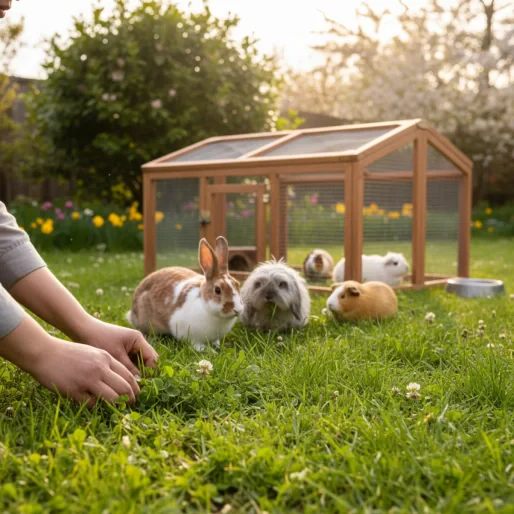
Ireland's mild, wet spring climate creates ideal conditions for outdoor grazing, but also unique challenges. This guide covers predator-proofing, toxic weed removal, and weather management for Irish pet owners.
Key Takeaways
- Ireland's maritime climate means spring grazing sessions will often be interrupted by rain and wind; a weatherproof run design is essential.
- Foxes are the primary predator threat across both rural and urban Ireland. Weld mesh (not chicken wire), bolt-snap locks, and a fully enclosed roof are non-negotiable.
- Ragwort is classified as a noxious weed under the Noxious Weeds Act 1936 and is common in Irish pastures and gardens. It must be removed entirely before allowing any grazing.
- Guinea pigs are especially vulnerable to Ireland's damp conditions and should not graze on wet grass or waterlogged ground.
- The Animal Health and Welfare Act 2013 places a legal duty of care on all pet owners, including those keeping rabbits and guinea pigs.
Why Spring Grazing Suits Irish Conditions
Ireland's temperate maritime climate produces mild springs, typically ranging from 8°C to 15°C between March and May. These temperatures sit comfortably within the ideal grazing range for rabbits and guinea pigs (roughly 10°C to 20°C). Unlike warmer European countries, heatstroke risk during Irish springs is relatively low, though sunny spells in late May can occasionally push temperatures above 20°C.
The real benefit of Irish spring grazing is the quality of grass. Regular rainfall and mild temperatures produce lush, nutrient-rich pasture. However, the same conditions drive rapid weed growth, high humidity, and persistent ground dampness, all of which require specific management.
Legal Duty of Care
Under the Animal Health and Welfare Act 2013, all animal keepers in Ireland have a statutory duty to safeguard the welfare of animals in their care. This applies equally to rabbits and guinea pigs. Failing to provide adequate shelter, nutrition, or protection from harm could constitute an offence. While no specific regulations govern outdoor run construction for small pets, the general duty of care means that a run must be safe, weatherproof, and appropriate for the species.
The ISPCA (Irish Society for the Prevention of Cruelty to Animals) and Veterinary Ireland both publish guidance reinforcing that small pets deserve the same standard of housing and veterinary care as dogs and cats.
Building a Run for Irish Weather
Materials and Construction
Standard run designs need adaptation for Ireland's frequent rain and gusty conditions. Key considerations include:
- Weld mesh panels: Use a gauge no wider than 13 mm x 25 mm for guinea pigs. Chicken wire is unsuitable as foxes can tear or bend it with ease.
- Waterproof roofing: Rather than shade cloth alone, use a solid corrugated plastic or marine-grade tarpaulin over at least half the roof area. In Ireland, rain protection matters more than sun protection for most of spring.
- Wind bracing: Attach the run frame to ground anchors or weigh it down with paving slabs. Atlantic weather systems can produce strong gusts, particularly in western and coastal counties.
- Raised or drained flooring options: In persistently damp gardens, consider placing a section of outdoor rubber matting or a wooden platform inside part of the run so animals can move off wet grass.
- Bolt-snap locks: Simple latches are not secure. Foxes are widespread in Irish towns and cities, and they are persistent and dexterous.
Recommended Minimum Sizes
For two rabbits, aim for at least 3 m x 2 m x 1 m high. For two guinea pigs, a minimum of 1.5 m x 1 m is acceptable, though larger is always preferable. Height is critical for rabbits, who need space to stand fully upright and perform binkies (jumping and twisting), a recognised indicator of positive welfare.
Predators in the Irish Garden
Ireland's predator profile differs from other regions. Raccoons are not present in Ireland. The primary threats are:
- Foxes: Found throughout Ireland, including Dublin suburbs and city centres. They are active at dawn, dusk, and overnight, but can appear during daylight hours in spring when feeding cubs.
- Domestic and feral cats: A serious risk to guinea pigs. Cats can injure or kill a guinea pig through mesh if it is flimsy.
- Birds of prey: Buzzards and sparrowhawks have recovered strongly in Ireland over the past two decades. A fully enclosed mesh roof is essential.
- Stoats: The Irish stoat is widespread in rural areas and small enough to squeeze through gaps in poorly constructed runs.
- Mink: Feral American mink are present near rivers, lakes, and coastal areas. They are aggressive predators of small animals and can fit through surprisingly small openings.
A run must have no gap larger than 25 mm in any direction to exclude stoats and mink.
Toxic Plants Common in Irish Gardens
Ireland's mild, wet climate supports vigorous plant growth from early spring onward. The following toxic species are commonly found in Irish gardens and pastures:
- Ragwort (Jacobaea vulgaris): Extremely common across Ireland and classified as a noxious weed under the Noxious Weeds Act 1936. It contains pyrrolizidine alkaloids that cause irreversible liver damage. Landowners have a legal obligation to control ragwort, and it must be removed entirely from any grazing area.
- Foxglove (Digitalis purpurea): Native and abundant in Irish hedgerows, woodland edges, and cottage gardens. Contains cardiac glycosides that can be fatal even in small quantities.
- Buttercup (Ranunculus spp.): Widespread in Irish lawns and meadows. Causes mouth irritation and digestive pain if ingested fresh.
- Hemlock (Conium maculatum): Found along roadsides, ditches, and field margins throughout Ireland. Identifiable by purple-blotched stems and white umbrella-shaped flower clusters. Extremely poisonous.
- Ivy (Hedera helix): Very common in Irish gardens. Leaves and berries are toxic to rabbits and guinea pigs.
- Yew (Taxus baccata): Found in churchyards and mature gardens across Ireland. All parts except the fleshy berry coating are highly toxic.
- Rhododendron (Rhododendron ponticum): Invasive in many parts of Ireland, particularly in the west and in Wicklow. All parts are toxic.
Before any grazing session, walk the area on hands and knees and remove every unidentified plant. The RWAF (Rabbit Welfare Association and Fund) plant guide is a reliable cross-reference resource.
Managing Ireland's Damp Conditions
Persistent dampness is the single biggest environmental challenge for Irish small pet owners. Wet grass and waterlogged ground create several risks:
- Hypothermia in guinea pigs: Guinea pigs are less cold-tolerant than rabbits. A damp coat combined with temperatures below 10°C can lead to hypothermia. Never place guinea pigs on visibly wet grass.
- Fungal skin infections: High humidity promotes ringworm and other dermatophyte infections. Dry animals thoroughly after outdoor sessions if they have been exposed to moisture.
- Flystrike: Humid conditions accelerate blowfly activity. Although flystrike risk peaks in summer, it can begin from late April in Ireland during mild, muggy spells. Check the rear end of rabbits carefully after every outdoor session.
- Slug and snail exposure: Ireland's damp climate supports large slug populations. Slug pellets (metaldehyde or ferric phosphate) are highly toxic to small animals, and slugs themselves can carry lungworm larvae. Clear slugs and snails from the grazing area before each use.
A practical rule: if the grass is too wet to sit on comfortably, it is too wet for guinea pigs. Rabbits tolerate light damp better but should still have a dry retreat area inside the run.
Vaccination and Parasite Considerations
Wild rabbits are present throughout Ireland, and any outdoor grazing area they can access may carry disease. Two key diseases to discuss with a veterinary surgeon before the grazing season begins:
- Myxomatosis: Spread by fleas and direct contact with wild rabbits. Present in Irish wild rabbit populations. Vaccination is available and strongly recommended by Veterinary Ireland before outdoor exposure begins.
- Rabbit Haemorrhagic Disease (RHD/RVHD): Both RHD1 and RHD2 strains pose a risk. Vaccination is the only reliable protection. Consult a veterinary surgeon about the appropriate vaccination schedule, as combination vaccines covering both myxomatosis and RHD are available.
For guinea pigs, no specific vaccinations are routinely required in Ireland, but a pre-season health check is advisable. External parasites such as mites and lice can flare in spring; a veterinary surgeon can recommend appropriate preventive treatments.
Gradual Grass Introduction
After a winter on hay and dried food, the digestive system needs time to adjust to fresh, moisture-rich Irish grass. Start with 15 to 20 minutes of grazing on day one and increase by 10 to 15 minutes daily over 7 to 10 days. Irish spring grass is particularly rich and fast-growing, which increases the risk of digestive upset, bloat, or gastrointestinal stasis if introduced too quickly.
Warning signs include soft or watery droppings, a hunched posture, teeth grinding (a sign of pain), or refusal to eat hay after returning indoors. If a rabbit produces no droppings for several hours, this is a veterinary emergency.
UCD Veterinary Hospital / Local Emergency Vet
Call your vet's emergency out-of-hours number or contact the UCD Veterinary Hospital in Dublin.
Irish vet practices provide out-of-hours emergency contact details on their answerphone message.
Supervision and Session Length
Even in a well-constructed run, check on animals every 15 to 20 minutes. Place the run within sight of a window where possible. Key monitoring points:
- Weather changes: Irish weather is notoriously changeable. A sunny spell can turn to heavy rain or gusty wind within minutes. Have a plan to bring animals indoors quickly.
- Temperature: Use an outdoor thermometer at ground level inside the run. On calm, sunny days, ground-level temperatures can be several degrees warmer than air temperature.
- Behaviour: Alert, active animals that are nibbling and exploring are content. A hunched, motionless animal needs immediate assessment.
- Droppings: Check for normal output. Watery droppings or absence of droppings signals a problem.
Suggested Session Lengths
- Cool, dry days (10°C to 14°C): Up to 2 to 3 hours for rabbits; 1 to 2 hours for guinea pigs.
- Mild days (15°C to 20°C): 1 to 2 hours with shade available.
- Warm days (above 20°C): Keep sessions under an hour and provide ample water and shade.
- Wet or windy days: Postpone outdoor grazing entirely for guinea pigs. Rabbits may tolerate light drizzle briefly if a dry shelter is available inside the run.
Never leave animals outdoors overnight in a temporary run. Irish spring nights regularly drop below 5°C, and fox activity peaks after dark.
Post-Grazing Checks
After every outdoor session, perform a brief body check:
- Run your hands through the coat feeling for ticks (present in Irish grassland, particularly from March onward), grass seeds, and any unusual lumps.
- Inspect the rear end for fly eggs: small white or yellow clusters on the fur, especially around the tail and between the hind legs.
- Check feet and nails for mud impaction or injury from sharp objects.
- Dry any damp fur with a clean towel, paying particular attention to guinea pigs.
Monitor appetite and droppings for several hours after returning indoors. Any rabbit or guinea pig that stops eating or becomes lethargic should be assessed by a veterinary surgeon promptly.
Quick Reference Checklist
- Run built with weld mesh, fully enclosed roof, and bolt-snap locks.
- Waterproof cover over at least half the roof for rain protection.
- Ground edges anchored against foxes, stoats, and mink.
- Toxic weeds (especially ragwort and foxglove) identified and removed.
- Dry retreat area inside the run for damp conditions.
- Fresh hay and clean water always available.
- Thermometer placed at ground level inside the run.
- Grazing introduced gradually over 7 to 10 days.
- Rabbits vaccinated against myxomatosis and RHD before outdoor access.
- Visual checks every 15 to 20 minutes, with a plan for rapid weather changes.
- Post-session body check completed (ticks, fly eggs, damp fur).
- Veterinary emergency number saved and accessible.
Frequently Asked Questions
Is it too wet in Ireland to let rabbits and guinea pigs graze outdoors in spring? ↓
Do I need to vaccinate my rabbit before allowing outdoor grazing in Ireland? ↓
What predators should I protect against in an Irish garden? ↓
Is ragwort a particular concern for outdoor grazing in Ireland? ↓
How long can rabbits and guinea pigs stay outside in an Irish spring? ↓

Emma Lawson
Practical Pet Care Educator
Practical pet home care specialist — clear, step-by-step guidance grounded in veterinary nursing standards.
Content Disclosure
This article was created using state-of-the-art AI models with human editorial oversight. It is intended for informational and entertainment purposes only and does not constitute veterinary medical advice. Always consult a licensed veterinarian for your pet's specific health needs. Learn more about our process.