A complete guide to summer bathing methods, humidity needs, and moulting support for pet parrots and finches. Covers misting, shower perches, bowl bathing, and a weekly grooming schedule.
Key Takeaways
- Parrots and finches need regular bathing in summer to support feather condition, thermoregulation, and healthy moulting cycles.
- Misting, shower perches, and bowl bathing each suit different species temperaments and sizes.
- Ambient humidity requirements vary by species, ranging from 40% to 80% relative humidity.
- Heat accelerates moulting, and inadequate hydration during this period can cause stress bars and pin feather discomfort.
- A consistent weekly summer grooming schedule reduces feather dust, supports skin health, and prevents overheating.
Why Summer Feather Care Matters for Bird Health
Feathers are not merely decorative. They serve as insulation, waterproofing, flight surfaces, and communication tools. During summer, elevated temperatures and lower indoor humidity (often caused by air conditioning) place stress on the integumentary system of captive parrots and finches. Without adequate bathing opportunities and humidity management, feathers become brittle, preening oil distribution suffers, and birds may resort to over-preening or feather-destructive behaviour.
The Association of Avian Veterinarians (AAV) emphasises that regular bathing supports the natural process of feather maintenance by softening keratin sheaths on emerging pin feathers, removing accumulated feather dust (particularly heavy in cockatoos, cockatiels, and African greys), and encouraging normal preening sequences. Summer intensifies these needs because heat accelerates insensible water loss through the skin and respiratory system.
For owners in hot climates, this guide is especially relevant. Those planning travel during peak summer months may also wish to review Summer Pet Travel From UAE: Embargoes and Planning for logistics involving avian companions.
Tools and Products Needed
Essential Equipment
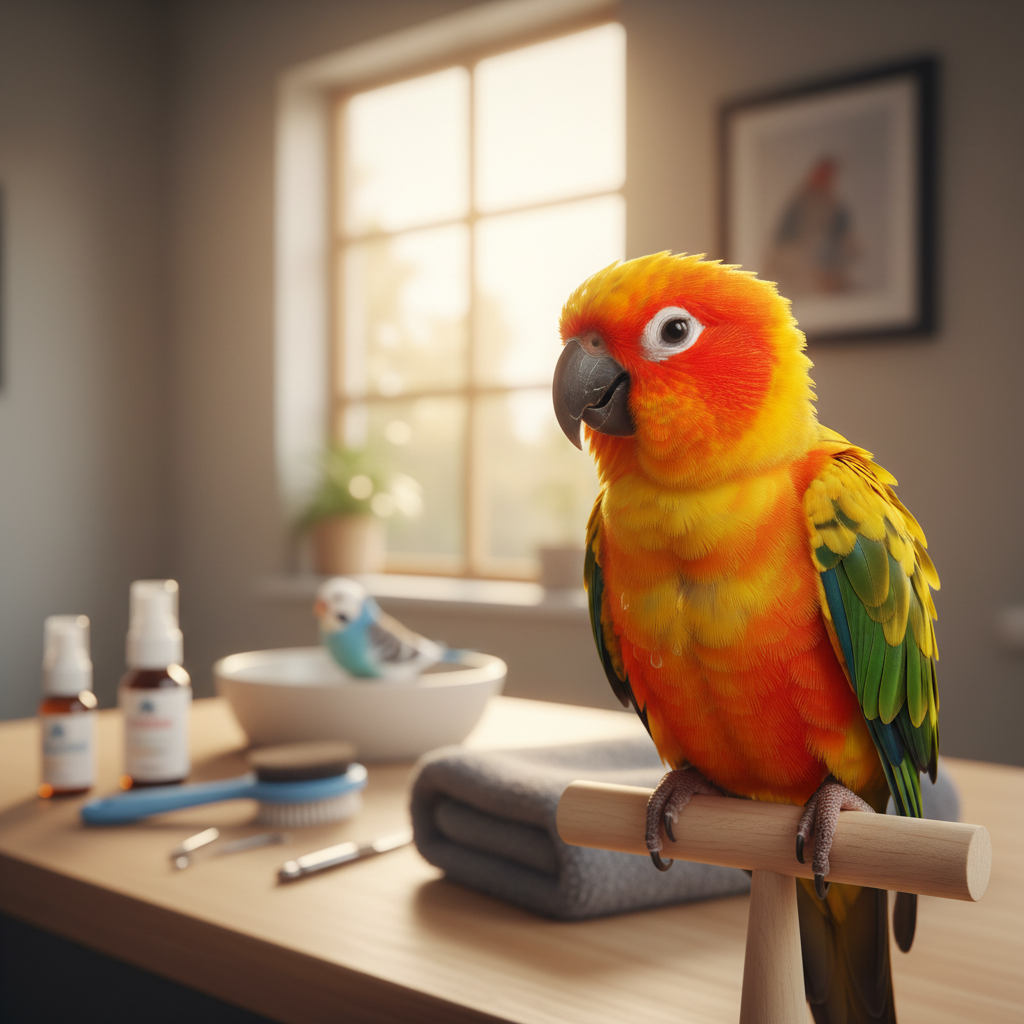
- Fine mist spray bottle: A clean, dedicated bottle producing a gentle fog rather than a stream. Pump sprayers designed for plants work well.
- Shower perch with suction cups: A sturdy, non-slip perch that attaches inside the shower stall, suitable for medium to large parrots.
- Shallow ceramic or stainless steel dish: For bowl bathing, particularly suited to finches, budgerigars, and canaries. Depth should not exceed 2 to 3 centimetres.
- Digital hygrometer: To monitor ambient humidity in the bird room.
- Lukewarm water thermometer: Water temperature should remain between 20 and 25 degrees Celsius (room temperature to slightly warm).
Optional but Helpful
- Humidifier (ultrasonic or evaporative) for rooms that drop below species-appropriate humidity.
- Organic aloe vera spray (pure, no additives or fragrances) as a feather conditioning mist, used sparingly.
- Drying perch placed near (not directly under) natural sunlight for post-bath preening.
Important: Never use soaps, shampoos, conditioners, or any chemical products on bird feathers unless specifically directed by an avian veterinarian for a diagnosed condition. Bird feathers rely on natural preen oil (uropygial gland secretion), and detergents strip this protective coating.
Step by Step: Bathing Methods Compared
Misting
Misting is the most universally accepted bathing method and suits nearly all species from zebra finches to macaws.
- Fill the spray bottle with lukewarm, dechlorinated water. Avoid cold water, which can cause thermal shock.
- Hold the bottle approximately 30 to 45 centimetres above and slightly to the side of the bird.
- Spray in a gentle arc, allowing droplets to fall like light rain. Do not spray directly into the face or nares.
- Watch body language: a bird that fans its tail, lifts its wings, and fluffs feathers is enjoying the mist. A bird that flattens, retreats, or vocalises in distress should not be forced.
- Continue for 2 to 5 minutes or until feathers appear evenly damp (not soaking).
- Allow the bird to air dry in a warm (not hot), draft-free area. Never use a hair dryer on a high heat setting, as overheating and teflon-coated appliance fumes pose serious risks.
Shower Perch Bathing
This method suits medium to large parrots (conures, Amazons, African greys, cockatoos, macaws) that enjoy heavier water exposure.
- Attach the shower perch securely at a height where the bird can choose to move toward or away from the water stream.
- Set the shower to a gentle, lukewarm flow. The bird should receive indirect spray or the outer edge of the stream rather than full water pressure.
- Allow the bird to acclimate. Many parrots require several introductory sessions before they choose to bathe.
- Sessions typically last 5 to 15 minutes, guided entirely by the bird's willingness to remain on the perch.
- After the shower, transfer the bird to a warm room for preening and drying.
Bowl Bathing
Ideal for small birds: finches, canaries, budgerigars, parrotlets, and lovebirds.
- Place a shallow dish of lukewarm water on a stable surface or on the cage floor.
- Some owners add wet leafy greens (such as romaine lettuce or spinach leaves) to the dish, which encourages finches to roll and splash through the wet foliage, mimicking dew-bathing in the wild.
- Allow the bird to bathe at its own pace. Small birds typically splash vigorously for 1 to 3 minutes.
- Remove the dish after 15 to 20 minutes to prevent bacterial growth in standing water.
Humidity Requirements by Species
Captive birds originating from tropical and subtropical regions often suffer in dry, air-conditioned homes. The following ranges represent general professional guidance:
- African Greys, Eclectus, Amazons: 50% to 70% relative humidity. These species are prone to feather dust accumulation (greys) or dry skin issues (eclectus) when humidity drops.
- Macaws and Conures: 50% to 65% relative humidity. Originating from neotropical forests, these birds benefit from daily misting even outside formal bath times.
- Cockatoos and Cockatiels: 40% to 55% relative humidity. As arid-adapted powder-down species, they tolerate lower humidity but still require regular bathing to manage feather dust.
- Budgerigars: 40% to 55% relative humidity. Australian origin means moderate tolerance, but summer dehydration remains a risk.
- Zebra Finches, Gouldian Finches, Society Finches: 50% to 70% relative humidity. Gouldian finches, in particular, originate from tropical savannas and struggle in dry conditions, which can trigger abnormal moults.
- Canaries: 45% to 60% relative humidity.
A digital hygrometer placed at cage level (not on the wall across the room) provides the most accurate reading. If levels consistently fall below the recommended range, an ultrasonic humidifier positioned nearby (but not blowing directly into the cage) can help. Owners managing environmental conditions for other sensitive pets may find parallels in Aquarium Fish Power Outage Prep: A Full Safety Guide, which addresses temperature and humidity contingency planning.
How Heat Affects Moulting Cycles
Moulting is hormonally driven, influenced primarily by photoperiod (day length) and ambient temperature. In wild birds, summer triggers a post-breeding moult as lengthening days and warmth signal that resources are available for feather replacement. Captive birds, exposed to artificial lighting and climate control, may experience irregular or prolonged moults.
Heat-Related Moulting Considerations
- Accelerated moult onset: Sustained temperatures above 28 to 30 degrees Celsius can push birds into moult earlier or cause overlapping moult cycles.
- Pin feather discomfort: Emerging pin feathers are blood-filled and sensitive. Heat increases blood flow to the skin, potentially causing irritation. Regular misting soothes pin feathers by softening their keratin sheaths.
- Stress bars: Nutritional or environmental stress during feather growth produces visible lines of structural weakness (stress bars) across developing feathers. Heat stress combined with dehydration is a documented contributor.
- Increased protein demand: Feathers are approximately 90% beta-keratin. Moulting birds require higher protein and amino acid intake (particularly methionine and cysteine). Summer appetite reduction due to heat can create a nutritional deficit during the very period when demand peaks.
Avian veterinary guidance recommends maintaining stable temperatures between 20 and 26 degrees Celsius during active moult and providing protein-rich foods such as cooked egg, sprouted legumes, and species-appropriate pellets.
Feather-Safe Cooling Methods
Birds lack sweat glands and rely on panting (gular fluttering) and behavioural thermoregulation to cool themselves. When ambient temperatures climb, owners should provide safe cooling options:
- Misting throughout the day: Light misting 2 to 3 times on very hot days (above 30 degrees Celsius) helps evaporative cooling without saturating feathers.
- Frozen water bottles wrapped in cloth: Placed near (not inside) the cage, these create a localised cool zone the bird can approach voluntarily.
- Ceramic or stone perches: These remain cooler than wooden dowels and provide foot-cooling opportunities.
- Shade and airflow: Position cages away from direct sun. A gentle fan creating indirect airflow (not blowing directly on the bird) helps without causing respiratory stress.
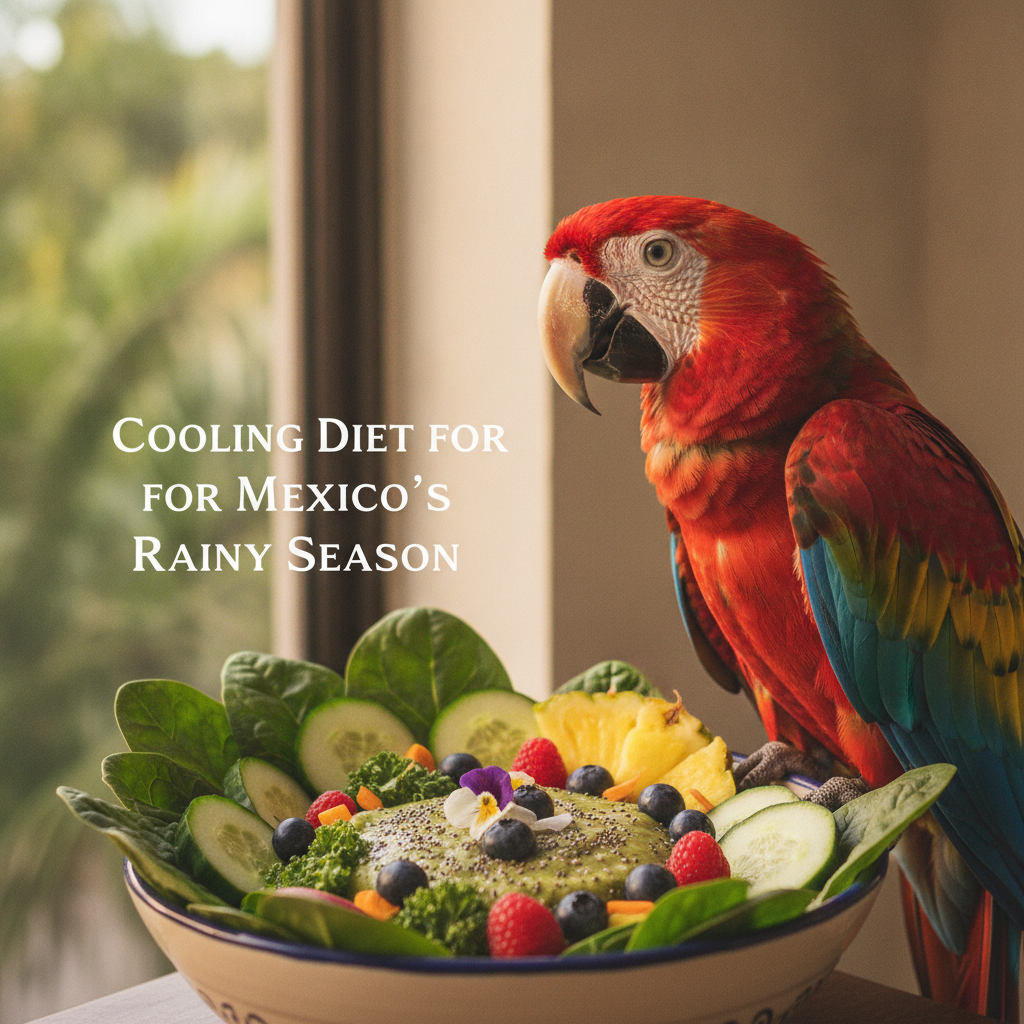
- Chilled fruits and vegetables: Offering refrigerated (not frozen) produce like cucumber, watermelon, or berries provides hydration and mild internal cooling.
Warning: Never place a bird cage directly in front of an air conditioning vent. Rapid temperature fluctuations and cold drafts can trigger respiratory infections. Similarly, never submerge a bird in cold water to cool it, as thermal shock is dangerous.
Owners of other small pets facing heat challenges may also benefit from reviewing Rabbit Heat Stroke: Emergency Cooling and Safety Guide for parallel strategies.
Weekly Summer Grooming Schedule
The following schedule provides a framework. Individual birds vary in preference and tolerance, so adjustments based on species and temperament are expected.
Monday: Full Misting or Shower Session
Offer a thorough bathing opportunity (misting, shower perch, or bowl). Allow 20 to 30 minutes for post-bath preening in a warm, well-lit area.
Tuesday: Feather and Skin Check
Observe the bird during natural preening. Look for broken feathers, dry flaky skin around the cere or feet, pin feathers that appear stuck in sheath, and any bald patches or areas of over-preening.
Wednesday: Light Misting and Nail Inspection
A brief 1 to 2 minute refresher mist, particularly if temperatures are high. Visually inspect nails and beak for overgrowth.
Thursday: Environmental Humidity Check
Read the hygrometer and adjust humidifier settings if needed. Clean and refill humidifier reservoirs to prevent bacterial or mould growth.
Friday: Second Full Bathing Session
Repeat the full bath offering from Monday. During active moult, a third weekly session on Wednesday can help manage pin feather discomfort.
Saturday: Cage and Perch Cleaning
Wipe down perches (feather dust accumulates heavily in summer on powder-down species). Replace cage liner. Clean food and water bowls thoroughly to prevent bacterial growth accelerated by heat.
Sunday: Rest and Observation Day
Allow the bird a calm day. Observe overall demeanour, appetite, droppings, and feather condition without active grooming interventions.
Frequency Guide by Species Type
- Heavy powder-down species (cockatoos, cockatiels, African greys): 3 to 4 bathing opportunities per week in summer. These species produce significant feather dust that benefits from frequent wetting.
- Tropical non-powder species (eclectus, macaws, Amazons, conures): 3 to 5 times per week. Many of these birds actively seek water daily in summer.
- Small finches and canaries: Daily bowl access is acceptable, as these birds self-regulate and typically splash briefly.
- Budgerigars and parrotlets: 2 to 4 times per week, depending on individual preference.
Warning Signs to Watch for During Grooming
- Excessive feather loss: While moulting is normal, bald patches (especially on the chest, under wings, or around the neck) suggest feather-destructive behaviour or medical issues requiring avian veterinary assessment.
- Blood feathers that bleed: A broken blood feather requires immediate attention. Apply gentle pressure with clean gauze. If bleeding does not stop within 5 minutes, seek emergency avian veterinary care.
- Skin discolouration or lesions: Red, flaky, crusty, or discoloured skin visible during bathing warrants veterinary referral for possible bacterial, fungal, or parasitic infection.
- Persistent panting or wing drooping: These are signs of heat stress or illness, not merely a reaction to bathing. Move the bird to a cooler area and consult a veterinarian if symptoms persist beyond 10 to 15 minutes.
- Foul odour from feathers: Healthy bird feathers have a mild, species-specific scent. Strong or unpleasant odours suggest infection or metabolic disease.
Professional Groomer vs Home Grooming: Decision Guide
Safe for Home Care
- Routine misting, shower, and bowl bathing
- Visual feather and skin inspections
- Humidity management and environmental adjustments
- Light nail filing on cooperative birds with clear nail quick visibility
Seek Professional or Veterinary Assistance
- Nail trimming on birds with dark nails (quick not visible) or birds that are highly stressed by restraint
- Beak trimming or reshaping (always a veterinary procedure)
- Wing clipping (if chosen by the owner, this should be performed by an avian vet or certified avian groomer to avoid cutting blood feathers)
- Any skin condition, feather loss pattern, or behavioural change suggesting illness
- Removal of stuck pin feather sheaths in sensitive areas (head, face) on birds that do not have a bonded companion to assist with mutual preening
Professional avian groomers certified through organisations such as the International Association of Avian Trainers and Educators (IAATE) can provide safe handling for procedures that exceed typical owner capability.
Final Considerations
Summer feather care for parrots and finches is not optional enrichment; it is a fundamental component of captive bird husbandry. Consistent bathing, appropriate humidity, thermal management, and attentive observation during moulting periods directly impact feather quality, skin health, respiratory function, and psychological wellbeing. By establishing a reliable weekly routine and knowing when to seek professional help, owners can ensure their avian companions thrive through the hottest months of the year.
Frequently Asked Questions
How often should parrots be bathed in summer? ↓
Is it safe to use a hair dryer on a wet bird? ↓
What humidity level do African Grey parrots need in summer? ↓
Can finches bathe every day? ↓
How does summer heat affect bird moulting? ↓

Sophie Bianchi
Certified Master Pet Groomer
Certified master pet groomer — breed-standard techniques, skin health awareness, and at-home grooming guidance.
Content Disclosure
This article was created using state-of-the-art AI models with human editorial oversight. It is intended for informational and entertainment purposes only and does not constitute veterinary medical advice. Always consult a licensed veterinarian for your pet's specific health needs. Learn more about our process.