
In this article
- Key Takeaways
- Why Summer Changes a Cat's Roaming Pattern
- How Smart GPS Trackers Actually Work
- What Movement Data Reveals About Nighttime Roaming
- Battery Life and Signal Reliability: Rural vs Urban
- How to Recognise When a Tracker Is Telling You Something Real
- A Setup Guide for July and August
- What the Research Says About Prevention and Welfare
- When to See Your Vet, and What to Ask
- The Bottom Line
Key Takeaways
- Free-roaming cats are most active at dawn, dusk, and night, so summer's short darkness in Germany compresses hunting and patrol behaviour into a few intense hours.
- Real-time GPS trackers use satellite positioning plus a mobile data connection to report location, while geofencing sends an alert when a cat leaves a defined safe zone.
- Movement data (heatmaps and activity logs) can reveal territory size, favourite routes, and sudden changes that may signal illness, injury, or a new stressor.
- Battery life and signal reliability differ sharply between rural and urban areas; expect more frequent charging and denser coverage in cities, and longer gaps in the countryside.
- Trackers are a monitoring aid, not a substitute for microchipping, neutering, or veterinary care. Any lasting change in roaming behaviour warrants a check-up.
Why Summer Changes a Cat's Roaming Pattern
Germany's long summer days, especially in July and August, dramatically alter when and how far outdoor cats travel. In the north, twilight can linger past 22:00, and true darkness may last only a few hours. Because cats are crepuscular (most active at dawn and dusk), a compressed night pushes much of their hunting, scent-marking, and territorial patrolling into a short, intense window. Understanding this rhythm is the foundation for interpreting anything a GPS tracker tells you.
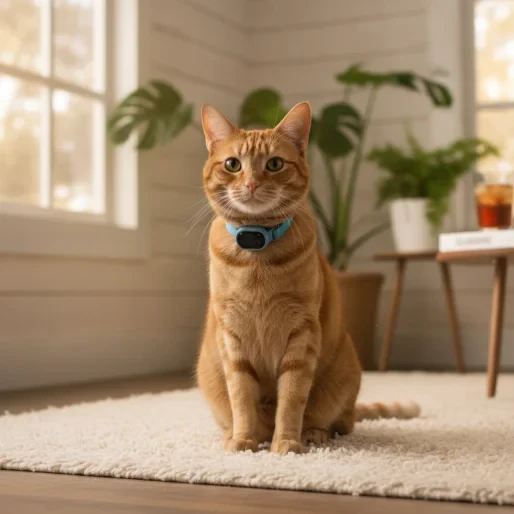
For owners of free-roaming cats, the appeal of a smart tracker is obvious: it promises to answer the age-old question of where the cat actually goes. But a tracker is most useful when paired with an understanding of feline biology rather than treated as a simple dot on a map.
What's Happening Inside Your Cat
A domestic cat's urge to roam is driven by deeply conserved instincts. Intact (unneutered) cats travel farther, and males in particular may patrol ranges many times larger than neutered cats. Neutering typically reduces roaming distance and territorial conflict, which is one reason veterinary bodies such as the American Veterinary Medical Association (AVMA) and welfare organisations broadly support desexing free-roaming pets.
Warm summer nights also increase prey availability. Small mammals and insects are more active, so a cat's internal reward system, tuned by dopamine-linked hunting drive, gets more frequent reinforcement. This is why movement data in July and August often shows longer nightly excursions than the same cat records in winter.
How Smart GPS Trackers Actually Work
It helps to separate the technologies bundled into most modern cat trackers, because each behaves differently in the field.
Real-Time GPS and Mobile Data
A true real-time tracker combines a GNSS receiver (which listens to GPS, and often Galileo, GLONASS, and BeiDou satellites) with a cellular modem. The receiver calculates the cat's position; the modem sends that position to your phone over a mobile network. Two consequences follow. First, positional accuracy depends on a clear view of the sky, so dense tree canopy, deep valleys, or being inside a building degrades it. Second, reporting depends on mobile coverage, which is generally excellent in German cities but can be patchy in rural and forested regions.
Bluetooth and Community Networks
Some devices add short-range Bluetooth that pings off other users' phones or fixed beacons. In dense urban neighbourhoods this crowd-sourced layer can help relocate a lost cat, but it is far less reliable in sparsely populated countryside where few compatible phones pass by.
Geofencing Alerts
Geofencing lets you draw a virtual boundary, such as your garden or street, on the app map. When the tracker reports a position outside that zone, the app sends a push notification. This is genuinely useful for spotting when a cat has crossed a road, entered a construction site, or strayed toward a known hazard. However, GPS drift of several metres means a geofence drawn too tightly will trigger constant false alarms, especially when the cat is simply dozing near the edge of the zone.
What Movement Data Reveals About Nighttime Roaming
The most scientifically interesting output of a tracker is not the live dot but the accumulated movement history: heatmaps, route replays, and activity graphs collected over days and weeks.
Territory Size and Core Areas
Plotted over a fortnight, most cats reveal a clear home range with a smaller core area where they spend the majority of their time (usually near the home and feeding station). Outer forays tend to follow predictable corridors: hedgerows, fence lines, and quiet alleys. Recognising these patterns helps owners understand which roads and gardens their cat actually crosses.
Nocturnal Activity Spikes
Activity data frequently shows two peaks that align with dawn and dusk, plus scattered nighttime movement. During Germany's short summer nights, these peaks sit close together. If your cat's tracker shows sustained high activity through the small hours, that is normal summer behaviour rather than a cause for alarm, provided the pattern is stable.
Changes That Matter Clinically
From a veterinary monitoring perspective, the value of longitudinal data is in spotting deviations from an individual baseline. Professional consensus in feline medicine holds that behavioural change is often an early, non-specific sign of illness or pain. Patterns worth noting include:
- A sudden drop in movement or range, which can accompany pain, fever, or systemic illness.
- A cat that stops coming home or lingers in one unfamiliar location, which may indicate it is trapped, injured, or being fed elsewhere.
- Restless, expanded roaming, which can follow a new stressor such as a rival cat, building work, or changes in the household.
None of these signs is diagnostic on its own, but tracker data can prompt a timely veterinary conversation. For a complementary approach to spotting discomfort, see our overview of AI acoustic monitors that decode cat pain in 2026.
Battery Life and Signal Reliability: Rural vs Urban
The two questions owners ask most are how long the battery lasts and whether the signal holds. Both answers depend heavily on environment and settings.
Battery Life
Battery drain is driven mostly by how often the tracker calculates and transmits a position. A device set to update every few seconds in live mode can be exhausted within a day, whereas a longer reporting interval of several minutes may stretch runtime to a week or more. Cold weakens batteries, but Germany's summer heat is the more relevant seasonal factor: high ambient temperatures and direct sun can shorten a single charge and, over time, degrade lithium cells. Practical expectations range widely by model and settings, so treat manufacturer claims as best-case figures and test your own device before relying on it.
Urban Signal Behaviour
In cities, mobile coverage is dense and Bluetooth relay networks are more populated, so updates arrive quickly and gaps are short. The trade-off is urban canyon effect: tall buildings reflect and block satellite signals, occasionally placing your cat a street away from its true position. Cross-checking a suspicious location against the route history usually resolves this.
Rural Signal Behaviour
In the countryside, the open sky improves GPS accuracy, but thinner mobile coverage means updates may be delayed or batched until the cat re-enters a covered area. Forest canopy is the classic rural challenge, weakening both satellite reception and the cellular link. Owners in rural Germany should choose a device and network known to perform in their specific region and accept that live tracking may lag when a cat is deep in woodland.
How to Recognise When a Tracker Is Telling You Something Real
Because trackers generate a flood of data, it is important to distinguish signal from noise. A single odd data point, such as a momentary jump across a field, is almost always GPS drift. What deserves attention is a consistent trend across multiple days: a shrinking range, a new resting spot far from home, or a collapse in overall activity. When these coincide with physical signs (reduced appetite, hiding, changes in grooming, or altered toileting), they strengthen the case for a veterinary visit.
A Setup Guide for July and August
Follow these steps to get reliable, welfare-first data during Germany's peak roaming season.
1. Fit the Harness or Collar Safely
Attach the tracker to a quick-release safety collar designed to break away under pressure, reducing strangulation risk if the cat snags it on a branch or fence. The tracker should be lightweight relative to the cat; very small or young cats may not be suitable candidates. Introduce it gradually indoors over several days so the cat habituates before going outside with it.
2. Choose Sensible Reporting Intervals
Set a longer update interval (for example, several minutes) as the everyday default to preserve battery, and switch to live mode only when actively searching. This balance is especially important in summer, when heat already stresses the battery.
3. Draw Realistic Geofences
Make your safe zone slightly larger than your actual garden to absorb GPS drift and avoid alert fatigue from constant false triggers. Add separate alerts around genuine hazards such as busy roads.
4. Charge Around the Cat's Rhythm
Because summer activity peaks at dawn, dusk, and night, charge the tracker during the hottest, quietest part of the day when many cats rest in the shade. Keep the device out of direct sun while charging.
5. Combine Tracking With Heat and Hydration Care
A wandering cat in July needs shade, water, and safe shelter along its routes. Ensure fresh water is always available at home; our guide to smart pet water fountains for summer heat explains how to encourage hydration. Keep a summer pet first aid kit ready in case your cat returns with a minor injury.
6. Mind the Summer Calendar
Warm evenings in Germany also bring festivals and occasional fireworks, which can send a startled cat far outside its normal range. If your region has such events, review our advice on managing firework fear, much of which applies to cats, and consider keeping your cat indoors on the noisiest nights.
What the Research Says About Prevention and Welfare
Evidence in feline welfare consistently supports a few interventions that reduce the risks a tracker is trying to help you manage. Neutering reduces roaming distance, fighting, and disease transmission. Microchipping remains the gold-standard permanent identification recommended by veterinary and welfare bodies; a GPS tracker complements but never replaces it, because trackers can be lost, run flat, or be removed. Keeping vaccinations and parasite prevention current is essential for cats that roam and encounter other animals. Some owners and organisations also weigh keeping cats indoors or in secured gardens (catios) to protect both the cat and local wildlife, a debate in which tracker data can inform an individual decision.
When to See Your Vet, and What to Ask
Consult a veterinarian promptly if tracker data or direct observation shows any of the following: a sustained drop in activity or range, a cat failing to return home, sudden lameness or reluctance to move, or roaming changes paired with reduced appetite, weight loss, or hiding. These can reflect pain, infection, injury, or metabolic disease, none of which a tracker can diagnose.
Helpful questions to bring to the appointment include: Could this behavioural change reflect pain or illness rather than normal summer roaming? Is my cat an appropriate candidate for a tracker collar given its size and coat? Would neutering or environmental changes reduce risky roaming? Should we review vaccination and parasite protection given how far the movement data shows my cat travels? Bringing screenshots of activity graphs and route maps gives your vet objective context that memory alone cannot.
The Bottom Line
Smart GPS trackers can transform a free-roaming cat's secret summer life into readable data, revealing territory, favourite corridors, and the intense nocturnal rhythm of Germany's short July and August nights. Used thoughtfully, with realistic geofences, sensible battery settings, and a safety collar, they add a valuable monitoring layer. Used carelessly, they generate false alarms and a false sense of security. The most reliable approach pairs the technology with the fundamentals of feline welfare: neutering, microchipping, preventive care, and a watchful eye for any lasting change that means it is time to call the vet.
Frequently Asked Questions
Content Disclosure
This article was created using state-of-the-art AI models with human editorial oversight. It is intended for informational and entertainment purposes only and does not constitute veterinary medical advice. Always consult a licensed veterinarian for your pet's specific health needs. Learn more about our process.