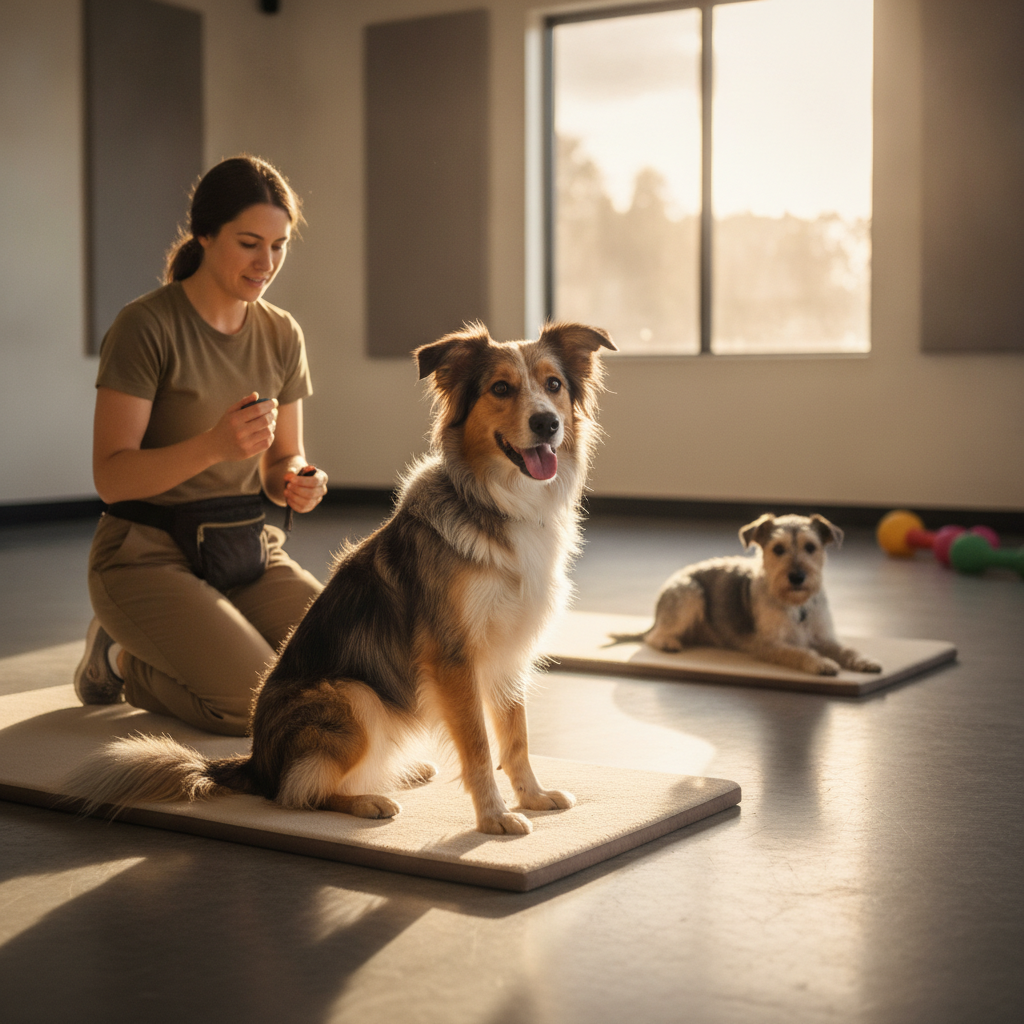
Spring in Ireland brings increased wildlife activity that can trigger prey drive in dogs. This guide covers positive reinforcement techniques, Irish legal obligations, and practical steps suited to Ireland's climate and landscape.
Why Irish Springs Are a Hotspot for Prey Drive
From March onwards, Ireland's temperate maritime climate brings a surge of wildlife activity. Rabbits appear in fields and hedgerows, the protected Irish hare becomes more visible during its breeding season, and ground-nesting birds such as curlew, snipe, lapwing, and redshank return to upland bogs, coastal grasslands, and rough pasture. For dogs, this seasonal explosion of movement and scent is a powerful trigger for prey drive.
Prey drive is a genetically influenced motor pattern that follows a predictable sequence: orient, eye, stalk, chase, grab, and bite. Selective breeding has amplified certain stages in different breeds. Greyhounds and lurchers, both extremely popular in Ireland due to the country's coursing heritage, tend to have a pronounced chase response. Terrier types, including the Irish Terrier and Glen of Imaal Terrier, often escalate rapidly to grab. Collie and sheepdog crosses, common throughout rural Ireland, typically display intense eye and stalk behaviours.
Critically, chasing is self-reinforcing. Every pursuit triggers a dopamine release, meaning even an unsuccessful chase strengthens the behaviour. Irish springs are particularly risky because juvenile rabbits and fledgling birds are slower than adults, increasing the chance of a successful chase event that deeply reinforces the pattern.
Legal Obligations for Dog Owners in Ireland
Dog owners in Ireland face specific legal requirements that intersect directly with prey drive management.
The Control of Dogs Act 1986 requires that all dogs be kept "under effectual control" at all times. A dog that chases livestock or wildlife and is found to be out of control can be seized by a local authority dog warden. Owners may face fines, and in serious cases, a District Court can order a dog to be destroyed. Since 1998, certain restricted breeds (and their crosses) must be muzzled and held on a short, strong lead by a person over 16 years of age when in a public place. Since February 2025, owning an XL Bully type dog without a Certificate of Exemption is also illegal.
The Wildlife Acts 1976 to 2023 provide robust protections for wild birds. Under Section 22, it is a criminal offence to wilfully disturb a wild bird on or near a nest containing eggs or unfledged young at any time of year. The nesting season in Ireland typically runs from 1 March to 31 August. A dog that flushes a ground-nesting curlew or lapwing from its nest could place the owner in breach of the Wildlife Acts, particularly in protected areas managed by the National Parks and Wildlife Service (NPWS). Given the precarious conservation status of species like the curlew in Ireland, this is not a trivial concern.
These legal realities make prey drive training not only a behavioural priority but a legal responsibility.
Equipment for Irish Conditions
- A well-fitted front-clip harness or flat collar: Professional bodies including the IAABC (International Association of Animal Behavior Consultants) discourage choke chains, prong collars, and shock collars. These aversive tools can create negative associations with wildlife that may escalate into fear-based reactivity.
- A 4.5 to 6 metre long line: Essential for work in open fields and bog edges. Avoid retractable leads, as the inconsistent tension teaches pulling. In wet Irish conditions, a biothane long line is preferable to rope or nylon as it resists water absorption and is easy to clean after muddy sessions.
- High-value treats in a waterproof pouch: Small pieces of cooked chicken, cheese, or freeze-dried liver. The reward must compete with the value of chasing a rabbit, which is a high bar. Budget around €8 to €15 per week for training-grade treats.
- A clicker or verbal marker: A consistent, precise marker bridges the gap between the desired behaviour and the reward delivery.
Foundation Skills: Start Indoors
Before introducing wildlife triggers, three core behaviours must be solid:
- Reliable eye contact on cue ("watch me"): Reward the dog for voluntarily looking at the handler. Start in a quiet room with zero distractions. Mark and reward the moment the dog's eyes meet the handler's.
- "Leave it" with escalating difficulty: Begin with a treat under a hand on the floor, then progress to uncovered treats, dropped treats, and moving objects. The dog is never physically corrected for failing; simply reset and try again.
- A strong recall: This is the emergency brake. Practise indoors, then in a fenced garden, then on the long line. The recall cue should predict the best possible outcome: a jackpot of treats, enthusiastic praise, or a favourite toy.
Irish weather means that "indoors" may extend to a garage or dry barn for rural owners. The key factor is the absence of wildlife distractions, not the specific location.
The "Look at That" Game: Core Protocol
Developed by trainer Leslie McDevitt as part of the Control Unleashed programme, the "Look at That" (LAT) game is one of the most effective tools for prey drive management. The protocol:
- Position the dog at a distance where wildlife is visible but the dog is not over threshold (not lunging, fixating, trembling, or whining).
- The moment the dog notices the animal and orients toward it, mark with a click or "yes."
- Deliver a high-value treat.
- Repeat. Over time, the dog begins to look at the wildlife and then immediately look back at the handler, anticipating the reward.
This works through classical counter-conditioning: the presence of wildlife becomes a cue that predicts treats rather than a trigger for chase. It also gives the dog an acceptable outlet for the "orient" stage of the predatory sequence without allowing escalation.
Progressing the Protocol
Once the dog reliably offers a "look and dismiss" pattern at a comfortable distance, gradually decrease the distance to the trigger over multiple sessions. A common guideline is to reduce distance by roughly 10 to 20 percent per session, but only if the dog remains under threshold. Simultaneously, begin asking for slightly longer periods of attention before marking.
Adding Movement
A stationary rabbit at the edge of a field is a very different stimulus from one bolting through a gap in a stone wall. Movement is the most potent trigger in the predatory sequence. Practise the LAT game where naturally occurring movement happens, but at a safe distance. In Ireland, river walks and canal towpaths often provide predictable wildlife sighting points at manageable distances.
Training in Irish Weather
Ireland's frequent rain, wind, and soft ground conditions require practical adaptations:
- Shorter sessions in poor weather: Five minutes of focused work in drizzle is more productive than 20 minutes where handler and dog are both miserable. Carry treats in a sealed container to prevent them going soggy.
- Wind direction matters: Dogs detect wildlife by scent before sight. On windy days, position yourself upwind of known wildlife areas so the dog has a visual trigger at a distance rather than a sudden scent-driven alert at close range.
- Footing on wet ground: Handlers need stable footing when holding a long line attached to a strong dog. Wear boots with grip, and avoid training on steep or waterlogged ground where a sudden lunge could cause a fall.
- Seasonal daylight: By April, Ireland has around 14 hours of daylight. Use early mornings or evenings when wildlife is most active for controlled exposure sessions.
Common Mistakes
- Starting too close to the trigger: If the dog is already over threshold, no learning can occur. The sympathetic nervous system has taken over. Always increase distance first.
- Using low-value treats: Standard kibble rarely competes with the dopamine rush of a chase. Use real food rewards.
- Punishing the alert: Jerking the lead when the dog looks at a rabbit teaches the dog that rabbits predict unpleasant experiences. This can increase arousal and anxiety rather than reducing it.
- Allowing rehearsal: Every off-lead chase that "ends fine" powerfully reinforces the behaviour. Until impulse control is reliable, dogs should remain on a long line in areas with active wildlife.
- Expecting breed drive to vanish: A lurcher's chase instinct will not be trained out. The goal is management and redirection, not elimination.
When to Seek Professional Help
Certain situations require professional guidance:
- The dog has injured or killed wildlife or livestock.
- The dog redirects frustration onto the handler, other dogs, or bystanders when prevented from chasing.
- Prey drive co-occurs with separation anxiety, generalised anxiety, or lead reactivity.
- The dog fixates on household cats, rabbits, or other small pets.
- The owner feels physically unsafe during walks.
When selecting a professional in Ireland, look for credentials such as CPDT-KA, IAABC certification, or membership of a recognised body that requires adherence to force-free, evidence-based methods. Organisations such as the DSPCA Dog Training Academy in Dublin and AniEd Ireland offer programmes grounded in positive reinforcement. The IAABC maintains a searchable directory that includes Irish-based consultants. For cases involving potential medical contributors to behaviour (pain, neurological issues, or hormonal imbalances), a referral to a veterinary behaviourist through Veterinary Ireland may be appropriate.
UCD Veterinary Hospital / Local Emergency Vet
Call your vet's emergency out-of-hours number or contact the UCD Veterinary Hospital in Dublin.
Irish vet practices provide out-of-hours emergency contact details on their answerphone message.
Protecting Irish Wildlife During Training
Responsible prey drive management also means minimising harm to wildlife during a critical season:
- Keep dogs on lead or long line in areas with known ground-nesting bird activity, particularly upland bog, rough pasture, and coastal machair.
- Avoid walking through tall grass and meadow edges from March through August.
- Observe signage and restrictions in NPWS-managed nature reserves and Special Protection Areas (SPAs).
- If a dog flushes a bird from a nest, leave the area immediately and avoid returning for several days.
- Report sightings of rare ground-nesting species like curlew to BirdWatch Ireland, which coordinates conservation efforts.
A Sample Two-Week Plan
- Days 1 to 3: Foundation work indoors. Practise "watch me," "leave it," and recall with zero distractions. Three to four short sessions per day.
- Days 4 to 5: Move exercises to a fenced garden or quiet outdoor area with no wildlife present.
- Days 6 to 7: Introduce the LAT game at maximum comfortable distance from a known wildlife area. Keep sessions to 5 minutes. End on a success.
- Days 8 to 10: Continue LAT at the same distance, building consistency. Add mild movement triggers if available.
- Days 11 to 14: If the dog is reliably offering "look and dismiss," reduce distance by a small increment. If not, maintain current distance and continue reinforcing.
Progress is rarely linear. Expect plateaus, minor regressions, and variable performance depending on the dog's arousal level, the species encountered, and environmental factors like wind carrying animal scent across wet ground.
Final Thoughts
Training a dog to stay calm around Irish spring wildlife is a process rooted in patience, consistency, and respect for both canine biology and local ecosystems. Ireland's unique combination of accessible wildlife habitats, specific legal obligations under the Control of Dogs Act and Wildlife Acts, and a strong tradition of working dog breeds makes this training particularly relevant. Through systematic desensitisation, counter-conditioning, and thoughtful management, most dogs can learn to share Ireland's green spaces peacefully with the wildlife that depends on them.
Frequently Asked Questions
Is it illegal for my dog to chase wildlife in Ireland? ↓
What breeds in Ireland are most prone to prey drive around wildlife? ↓
How do I find a qualified force-free dog trainer in Ireland? ↓
What ground-nesting birds should I be aware of during spring walks in Ireland? ↓

Mark Sullivan
Certified Professional Dog Trainer
Certified professional dog trainer — positive-reinforcement methods for every breed and behavioural challenge.
Content Disclosure
This article was created using state-of-the-art AI models with human editorial oversight. It is intended for informational and entertainment purposes only and does not constitute veterinary medical advice. Always consult a licensed veterinarian for your pet's specific health needs. Learn more about our process.