
In this article
- Key Takeaways
- What Is Face ID Technology for Pets?
- Side-by-Side Comparison: Face ID vs. RFID vs. Microchip-Based Recognition
- How Edge-AI Recognition Works in Pet Cameras
- Privacy Considerations for AI Pet Cameras
- Multi-Pet Feeding Separation: Why It Matters
- Buyer's Guide: Top AI Pet Camera and Feeder Categories in 2026
- Lifestyle Match Guide: Which Device Fits Your Situation?
- Decision Checklist: Choosing Your AI Pet Camera or Feeder
- Sourcing and Adoption Considerations
- Looking Ahead: What to Expect Next
Key Takeaways
- AI pet cameras in 2026 use facial recognition (often called Face ID) to identify individual pets with reported accuracy rates of up to 99.9%.
- Edge-AI processing keeps biometric data on the device itself, addressing major privacy concerns associated with cloud uploads.
- Multi-pet feeders with facial recognition can separate diets for pets with medical conditions, prescription food needs, or weight management plans.
- RFID collar tags remain a reliable alternative, but visual recognition removes the need for wearables entirely.
- Privacy-first design, local storage, and the absence of microphones are now key differentiators among top devices.
What Is Face ID Technology for Pets?
Face ID for pets works on the same foundational principle as human facial recognition: a camera captures unique facial geometry, maps distinguishing features (ear shape, muzzle proportion, coat markings, eye spacing), and stores that biometric profile on the device. When a pet approaches the camera or feeder, the system compares the live image against stored profiles and identifies the animal in fractions of a second. Leading devices in 2026 report recognition speeds under 0.1 seconds.
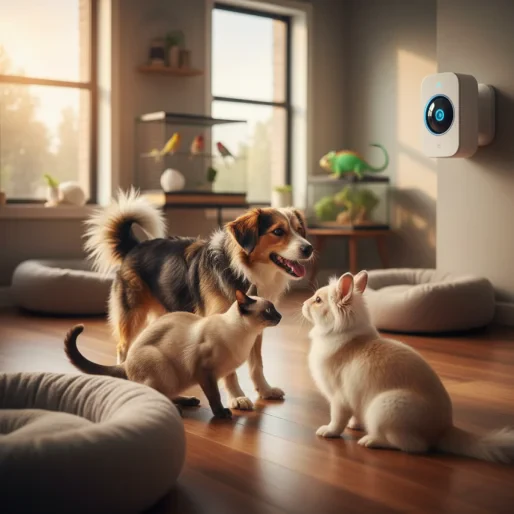
This technology is especially valuable in multi-pet households where owners need to monitor individual behaviour, separate feeding stations, or track health metrics on a per-pet basis. For households managing pets with specific dietary restrictions or medical conditions, automated recognition replaces the need for constant manual supervision.
Side-by-Side Comparison: Face ID vs. RFID vs. Microchip-Based Recognition
| Feature | Face ID (Visual AI) | RFID Collar Tag | Microchip Scanner |
|---|---|---|---|
| Wearable Required | No | Yes (collar tag) | No (implanted chip) |
| Reported Accuracy | Up to 99.9% | ~99% (if tag present) | ~99% (short range) |
| Multi-Pet Capacity | Typically 5 to 15 pets | Varies by feeder | Limited adoption in feeders |
| Privacy Risk | Camera present (edge-AI mitigates) | Minimal | Minimal |
| Works If Pet Loses Collar | Yes | No | Yes |
| Typical Price Range | $150 to $300+ | $80 to $200 | $100 to $250 |
How Edge-AI Recognition Works in Pet Cameras
On-Device Processing
The defining shift in 2026 pet tech is the move from cloud-based AI to edge-AI. Earlier generations of smart pet cameras uploaded video footage to remote servers, where recognition algorithms processed the data and returned results. This introduced latency, ongoing subscription costs, and significant privacy vulnerabilities.
Edge-AI devices contain a dedicated neural processing unit (NPU) or system-on-chip (SoC) that runs facial recognition algorithms directly on the hardware. The camera captures an image, the onboard processor analyses it against stored biometric profiles, and the device makes a decision (grant feeder access, tag a video clip, send a notification) without data ever leaving the household.
Enrolment and Learning
Setting up facial recognition typically involves a brief enrolment period. Owners photograph their pet from multiple angles, or the device captures images automatically over the first few days. The AI model builds a biometric template that accounts for variations in lighting, angle, and even gradual appearance changes such as seasonal coat transitions. For guidance on managing coat changes, owners may find our Autumn Coat Transition Guide for Dogs helpful.
Recognition Speed and Reliability
Leading edge-AI pet devices in 2026 report recognition times under 0.1 seconds. Accuracy figures often cited by manufacturers hover around 99.9%, though independent verification of these claims across all conditions (low light, similar-looking pets, post-grooming changes) is still limited. Owners with very similar-looking pets of the same breed should expect a brief adjustment period as the AI refines its models.
Privacy Considerations for AI Pet Cameras
The presence of a camera in the home, even one designed for pets, raises legitimate privacy questions. Research published in Frontiers in the Internet of Things has identified security vulnerabilities in pet tech applications, including unencrypted data transmission and tracker communication before user consent. Here are the key privacy factors to evaluate before purchasing.
Local vs. Cloud Storage
Devices that process and store data locally (on-device or on a local microSD card) significantly reduce exposure compared to those that upload footage to cloud servers. Edge-AI devices are designed specifically to keep biometric data within the home. Look for explicit manufacturer statements confirming no cloud upload of video or facial recognition data.
Microphone Presence
Some pet cameras include two-way audio for owner communication. While useful, a microphone represents an additional data capture point. Privacy-focused models in 2026, such as certain edge-AI feeders, omit microphones entirely. Others include physical mute switches.
Camera Indicators and Physical Covers
Responsible manufacturers include LED indicators that illuminate when the camera is active, along with physical privacy covers or motorised lens rotation that blocks the camera when not in use. These features provide a visual confirmation that recording has stopped.
Data Deletion and Ownership
Before purchasing, review the manufacturer's data policy. Key questions include: Can biometric profiles be fully deleted? Who owns the footage? Is data shared with third parties for advertising or analytics? Regulations around biometric data are expanding, and several jurisdictions now enforce specific protections. Owners relocating internationally should also consider how pet data transfers across borders, a topic explored in our Pet Microchip Data When Moving Countries: 2026 Guide.
Multi-Pet Feeding Separation: Why It Matters
Medical Diet Management
Veterinary professionals frequently prescribe specific diets for conditions such as kidney disease, food allergies, diabetes, or obesity. In multi-pet households, food stealing is one of the most commonly reported obstacles to dietary compliance. A facial recognition feeder that opens only for the assigned pet effectively eliminates cross-feeding without requiring owners to supervise every meal.
Weight Management and Portion Control
Obesity is one of the most prevalent health concerns in companion animals, with veterinary organisations estimating that a significant proportion of pets in developed countries are overweight. AI feeders that recognise individual pets can dispense calibrated portions and log consumption data per animal, giving owners and veterinary teams accurate intake records. For more on dietary considerations, see our guide on How to Calculate Your Pet's Diet Pawprint in 2026.
Multi-Species Households
Households with both cats and dogs face unique feeding challenges, as dogs commonly eat cat food (and vice versa), which can cause gastrointestinal upset or nutritional imbalances over time. Face ID feeders that distinguish between species offer a practical barrier.
Buyer's Guide: Top AI Pet Camera and Feeder Categories in 2026
Rather than ranking specific models (which evolve rapidly), this guide categorises the major device types available and highlights the features that matter most for multi-pet households.
Category 1: Standalone AI Pet Cameras
These are monitoring-focused devices with facial recognition for tagging and sorting video footage by pet. They typically offer 360-degree rotation, night vision, 1080p or higher resolution, and two-way audio. Multi-pet recognition capacity generally ranges from 5 to 15 individual profiles. Owners commonly use these to monitor pet behaviour while away. For professional pet sitters, pairing a camera system with emergency protocols is advisable, as discussed in our Pet Sitter Emergency Guide: When the Owner Is Away.
Category 2: AI Facial Recognition Feeders (Dry Food)
These combine a camera with an automated dry food dispenser. The feeder identifies the approaching pet, verifies authorisation, and either opens a feeding dome or dispenses a measured portion. Devices in this category typically support 5 to 6 individual pet profiles and include features such as infrared short-range cameras, controlled feeding enclosures, and per-pet feeding schedules. Pricing in 2026 typically falls between $200 and $300.
Category 3: AI Facial Recognition Feeders (Wet Food)
A newer subcategory emerging in 2026, these dispensers handle wet or fresh food and use facial recognition to control access and schedule portion-controlled meals. Integrated cameras (often 1080p with wide-angle lenses) enable remote monitoring alongside feeding management.
Category 4: AI-Enabled Water Fountains
Water fountains with AI facial recognition track individual hydration habits, an increasingly valuable metric for cats prone to urinary or kidney conditions. These devices log drinking frequency and volume per pet, alerting owners to changes that may warrant veterinary attention.
Category 5: Hybrid RFID and Face ID Systems
Some manufacturers now offer dual-mode identification that combines RFID collar tags with visual recognition. This provides a fallback if one system fails (for example, if lighting conditions impair the camera or a collar is removed). These hybrid systems represent a practical middle ground for owners who want maximum reliability.
Lifestyle Match Guide: Which Device Fits Your Situation?
| Household Scenario | Recommended Device Type | Key Reason |
|---|---|---|
| 2 to 3 cats, one on a prescription diet | AI facial recognition feeder (dry or wet) | Prevents food stealing, logs per-cat intake |
| Dog and cat sharing a home | Hybrid RFID + Face ID feeder | Dual-mode ensures reliable cross-species separation |
| Large multi-pet household (5+ animals) | High-capacity AI camera + multiple feeders | Cameras supporting 10 to 15 profiles cover the full roster |
| Owner travels frequently | Standalone AI pet camera with alerts | Per-pet activity summaries and real-time notifications |
| Senior cat with kidney concerns | AI-enabled water fountain | Tracks hydration per pet, flags changes early |
Decision Checklist: Choosing Your AI Pet Camera or Feeder
- How many pets? Verify the device supports enough individual profiles. Capacities range from 5 to 15 depending on the model.
- Do any pets require separate diets? If yes, a facial recognition feeder is strongly recommended over a camera-only device.
- Are your pets similar in appearance? Look for devices with extended enrolment periods and adaptive learning models that improve over time.
- Is privacy a top concern? Prioritise edge-AI devices with local storage, no microphone, and a physical camera indicator or cover.
- Do your pets tolerate collars? If not, visual-only recognition (no RFID tag) is the better choice.
- What is your budget? Standalone cameras range from $50 to $150. AI feeders with facial recognition typically cost $200 to $300. Subscription fees for cloud features add $3 to $10 per month if applicable.
- Do you need remote access? Confirm the app supports real-time viewing, push notifications, and per-pet activity logs.
- Is wet food dispensing needed? Only select models handle wet food; most facial recognition feeders are designed for dry kibble.
Sourcing and Adoption Considerations
For households adopting a new pet into an existing multi-pet home, AI cameras offer a practical advantage during the introduction period. Owners can monitor interactions remotely, identify stress behaviours, and ensure the new arrival is eating and drinking independently. This is especially relevant when socialising a puppy or integrating a rescue animal with an unknown behavioural history.
Shelter volunteers and foster carers managing multiple animals on rotation can also benefit from facial recognition cameras that quickly learn new profiles and maintain feeding separation without complex collar-swapping logistics. For dogs experiencing the stress of rehoming, pairing tech monitoring with enrichment activities such as nosework training or balance exercises at home supports both physical and mental wellbeing during the transition.
Looking Ahead: What to Expect Next
The integration of AI recognition across the full pet care ecosystem (feeders, fountains, litter boxes, cameras, and health monitors) is accelerating. Expect 2026 and 2027 to bring tighter integration between devices, with a single facial profile working across an entire product ecosystem. Veterinary telemedicine platforms may eventually pull per-pet data from home devices to inform remote consultations.
For owners navigating the expanding world of pet technology, the core advice remains straightforward: choose devices that solve a real problem in your household, prioritise privacy-first design, and verify that multi-pet capacity matches your actual needs before purchasing.
Frequently Asked Questions
Content Disclosure
This article was created using state-of-the-art AI models with human editorial oversight. It is intended for informational and entertainment purposes only and does not constitute veterinary medical advice. Always consult a licensed veterinarian for your pet's specific health needs. Learn more about our process.