The Philippine tropical climate pushes aquarium temperatures well beyond safe limits for most fish, shrimp, and corals. This guide ranks fans, chillers, and DIY fixes for Filipino fishkeepers dealing with year-round heat and high humidity.
Key Takeaways
- Philippine ambient temperatures routinely exceed 30 °C from March to June, pushing most indoor aquariums into the danger zone for tropical fish, shrimp, and corals without active cooling.
- High humidity (often 75 to 90 percent) severely limits evaporative fan cooling, making clip-on fans less effective here than in drier climates.
- Aquarium chillers are the most reliable option for Philippine hobbyists, especially for reef tanks, axolotls, and sensitive shrimp species, though they cost ₱8,500 to ₱45,000 or more.
- DIY methods like frozen bottles and partial water changes work only as emergency stopgaps, not as a primary strategy.
- Frequent brownouts and typhoon-season power interruptions mean every Filipino aquarist should have a backup plan for cooling failures.
Why Philippine Heat Is an Aquarium Emergency Year-Round
Unlike temperate countries where aquarium cooling is a seasonal concern, the Philippines presents a near year-round challenge. Daytime temperatures in Metro Manila, Cebu, and other urban centres regularly sit between 30 and 36 °C from March through May (the "tag-init" peak), and even the cooler months rarely dip below 25 °C indoors. Combined with relative humidity that frequently exceeds 80 percent, indoor aquariums in Philippine homes can easily reach 30 to 33 °C without intervention.
Most tropical freshwater fish show heat stress signs when water exceeds 28 to 30 °C, depending on species. Coldwater species, certain shrimp varieties (such as crystal red shrimp and Caridina species popular among local hobbyists), and axolotls are at risk even earlier. Elevated water temperature reduces dissolved oxygen, speeds up ammonia buildup, and promotes harmful bacterial and algal blooms.
The Bureau of Animal Industry (BAI) under the Department of Agriculture oversees animal welfare in the Philippines, and the Animal Welfare Act of 1998 (Republic Act No. 8485, as amended by RA 10631) covers all animals, including aquatic pets. Responsible temperature management is part of providing adequate care under this law.
Side-by-Side Comparison for Philippine Conditions
| Factor | Clip-On / Aquarium Fans | Aquarium Chillers | DIY and Household Methods |
|---|---|---|---|
| Best tank size | Nano to small (up to roughly 100 L) | Medium to large (75 L and above) | Any size as a temporary fix |
| Typical purchase cost (PHP) | ₱850 to ₱2,800 | ₱8,500 to ₱45,000+ depending on capacity | Near zero to minimal |
| Cooling capacity | Can lower water 1 to 3 °C below ambient (reduced by Philippine humidity) | Can hold a precise set point regardless of ambient temperature or humidity | Unpredictable, typically 1 to 2 °C temporarily |
| Effectiveness in PH humidity | Significantly reduced above 80% RH | Unaffected by humidity | Minimal |
| Energy use | Very low (typically 2 to 10 watts per fan) | Moderate to high (50 to 500+ watts depending on unit) | Negligible (unless running household aircon) |
| Reliability | Limited in Philippine conditions | Excellent; thermostat controlled | Poor for sustained use |
Option 1: Aquarium Cooling Fans
How they work
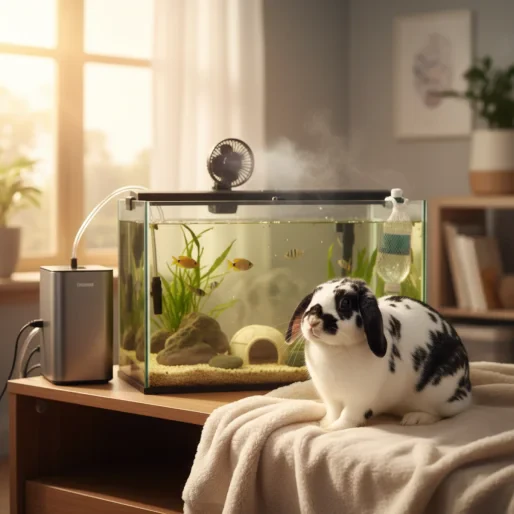
Clip-on aquarium fans blow air across the water surface to accelerate evaporation, which draws heat from the water. Many models available from local online sellers on Shopee and Lazada include a built-in thermostat.
Why they underperform in the Philippines
Evaporative cooling depends on dry air absorbing moisture from the water surface. In the Philippines, where humidity commonly sits between 75 and 90 percent during the wet season and 60 to 80 percent even during the dry months, the air is already nearly saturated. This dramatically reduces the cooling effect. In drier climates, fans can lower water temperature by 2 to 4 °C below ambient. In typical Philippine conditions, expect only 1 to 3 °C of reduction, and sometimes less during peak humidity.
If the room temperature is 34 °C during an April afternoon, a fan might only bring the tank water down to 31 or 32 °C, which is still stressful for many species.
When fans still make sense
Fans remain a practical option for budget-conscious Filipino hobbyists keeping hardy tropical species (such as guppies, mollies, platies, and common bettas) in nano to small tanks, provided the room has some aircon or ventilation. They also work well as a supplement alongside a chiller or room aircon to reduce the chiller's workload.
Option 2: Aquarium Chillers
How they work
Aquarium chillers use a refrigeration compressor to actively remove heat from water pumped through the unit. An internal thermostat maintains the set temperature precisely, cycling the compressor on and off. Inline chillers connect between the canister filter outlet and the return line.
Why chillers are the top recommendation for the Philippines
Because chillers use active refrigeration rather than evaporation, Philippine humidity does not affect their performance at all. A properly sized chiller will hold 25 °C in a reef tank even when the room is at 35 °C. For sensitive livestock, including SPS and LPS corals, Sulawesi shrimp, axolotls, and discus, there is no practical substitute.
Cost considerations in PHP
- Small units (1/10 HP, suitable for 100 to 200 L): typically ₱8,500 to ₱17,000
- Medium units (1/4 HP, suitable for 200 to 500 L): typically ₱17,000 to ₱28,000
- Large reef-grade units (1/3 HP and above): ₱28,000 to ₱45,000 or more
Monthly electricity costs for a 1/10 HP chiller running during Philippine summer typically add ₱300 to ₱1,200 to the electricity bill, depending on how frequently the compressor cycles. Given Meralco and other utility rates, this is a meaningful but manageable increase for most hobbyists.
Important placement notes
Chillers expel warm air from their condenser. In a small Philippine bedroom or condo unit with limited ventilation, this exhaust heat can raise room temperature and force the chiller to work harder. Place the chiller in a ventilated area, ideally where the exhaust heat can dissipate. Some hobbyists place the chiller in a utility area or balcony (protected from rain).
Option 3: DIY and Household Methods
Common approaches used by Filipino hobbyists
- Frozen water bottles: Sealed bottles of ice floated in the tank or sump. These provide temporary relief but melt within 2 to 4 hours and can cause rapid temperature swings that stress fish.
- Room aircon: Running a household air conditioner to cool the room indirectly cools the tank. Effective but expensive, with Philippine electricity rates making 24/7 aircon operation costly, especially during peak summer billing periods.
- Partial water changes with cooler water: Replacing 10 to 15 percent of tank water with slightly cooler dechlorinated water offers short-term relief. Avoid drastic temperature drops.
- Removing the tank lid: Allows some evaporative cooling and gas exchange, but increases the risk of fish jumping out, a common problem with active species like danios and killifish.
When DIY methods are acceptable
As a first response during an unexpected heatwave or brownout while waiting for proper equipment. They should not be the primary cooling strategy for any tank housing sensitive species.
The Brownout Factor: Backup Planning
The Philippines experiences frequent power interruptions, whether from scheduled maintenance, typhoon damage, or grid overload during peak summer demand. For aquarium keepers, a brownout during a heatwave is a worst-case scenario: the chiller stops, the aircon stops, and water temperature can climb 1 °C per hour or faster in small tanks.
Every Filipino aquarist should have a brownout contingency plan:
- Keep sealed water bottles in the freezer at all times during summer, ready for emergency use.
- Invest in a battery-operated air pump (available locally for ₱200 to ₱800) to maintain oxygen levels during outages.
- Consider an uninterruptible power supply (UPS) for the chiller if keeping high-value livestock such as reef corals. Small UPS units suitable for running a chiller briefly cost ₱3,000 to ₱8,000.
- Reduce feeding during extended outages to minimize waste and oxygen demand.
Emergency Veterinary Clinic
Contact your nearest emergency veterinary clinic or call your vet immediately.
Metro Manila has several 24-hour veterinary clinics. In provincial areas, contact the municipal veterinarian.
Choosing by Tank Size in Philippine Conditions
Nano and small tanks (under 60 L)
A clip-on fan paired with room aircon may suffice for hardy species. For nano reef tanks or shrimp tanks, a small chiller is strongly recommended because tiny water volumes heat up dangerously fast.
Medium tanks (60 to 200 L)
A 1/10 HP chiller is the standard recommendation for Philippine hobbyists keeping anything beyond the hardiest community fish. Fans alone rarely provide adequate cooling in local conditions.
Large tanks (200 L and above)
A properly sized chiller matched to the tank volume and local ambient temperature is essential. Some experienced hobbyists use fans as a supplementary measure to reduce chiller cycling and extend compressor life.
Responsible Ownership and Sourcing
Before purchasing any aquatic animal, prospective owners should factor cooling equipment into the total cost of care. The Philippine aquarium hobby community is active and growing, with dedicated groups on social media where experienced keepers share advice on setups suited to local conditions. Reputable local fish stores and breeders typically ask about a buyer's tank setup before selling sensitive species.
The Animal Welfare Act (RA 8485, as amended by RA 10631) requires that all animals, including aquatic pets, receive adequate care. Allowing fish or invertebrates to suffer from preventable heat stress may constitute neglect under this law. Budget for proper temperature management before acquiring livestock.
Practical Tips for Philippine Aquarists
- Monitor continuously: A digital thermometer with a high-temperature alarm is essential. Basic models cost ₱150 to ₱500 locally.
- Reduce heat inputs: Switch to LED lighting, which runs far cooler than older T5 or metal halide fixtures. Keep tanks away from windows receiving direct afternoon sun.
- Increase surface agitation: Higher oxygen exchange helps fish cope with warmer water. An airstone or adjusted filter outlet is a simple, inexpensive addition.
- Position tanks strategically: Avoid placing aquariums near west-facing walls or windows, near cooking areas, or in rooms without ventilation.
- Avoid overfeeding: Warmer water holds less oxygen and breaks down waste faster. Slightly reducing feeding during heat spikes helps maintain water quality.
Preparation is far more effective than reaction. Whether the solution is a modest clip-on fan supplementing room aircon or a dedicated chiller, the key is matching the method to the tank, the livestock, and the reality of Philippine heat and humidity before temperatures climb.
Frequently Asked Questions
Are aquarium cooling fans effective in the Philippines? ↓
How much does an aquarium chiller cost in the Philippines? ↓
What happens to my aquarium during a brownout? ↓
Do I need a chiller for a betta fish tank in the Philippines? ↓
Is it legal to keep axolotls in the Philippines, and do they need a chiller? ↓

Priya Nair
Dog Breed Advisor & Adoption Counsellor
Dog breed advisor and adoption counsellor — honest breed comparisons and lifestyle matching for prospective owners.
Content Disclosure
This article was created using state-of-the-art AI models with human editorial oversight. It is intended for informational and entertainment purposes only and does not constitute veterinary medical advice. Always consult a licensed veterinarian for your pet's specific health needs. Learn more about our process.