Navigate the chaos of Carnival season safely. From preventing noise anxiety to avoiding toxic street foods and costume hazards, here is your professional guide to protecting pets during the festivities.
Key Takeaways for a Safe Carnival
- Crowds are stressful: The safest place for your pet during a parade is usually at home, away from the sensory overload of drums and crowds.
- Watch the 'Street Buffet': Discarded bones, alcohol, chocolate, and plastic beads pose severe toxicity and obstruction risks.
- Costume Caution: Ensure costumes do not restrict movement, vision, or breathing, and never leave a costumed pet unsupervised.
- Identification is crucial: Startle responses to fireworks or loud bands can cause pets to bolt; ensure microchip details are up to date.
Carnival season, whether you celebrate Mardi Gras, Fasching, or Carnaval, is a vibrant explosion of color, sound, and community spirit. But as a pet care professional, I often view these celebrations through a different lens: one of potential hazards. The very elements that make Carnival exciting for humans, such as thundering drum lines, crowded streets, and elaborate costumes, can create a perfect storm of anxiety and physical danger for our pets.
In veterinary practice, the days following major street festivals often see an uptick in two specific types of emergencies: gastrointestinal distress from scavenging and trauma from crowd-related accidents. This guide is designed to help you navigate the festivities while keeping your four-legged family members safe, secure, and calm.
The Reality of the Parade Route
There is a strong temptation to bring dogs along to join the fun, especially given the outdoor nature of most Carnival events. However, the environment of a parade route is uniquely hostile to canine senses.
Sensory Overload
Dogs hear frequencies much higher than we do, and their acoustic sensitivity is significantly more acute. The percussion of marching bands, the sudden crack of fireworks, and the roar of a crowd can trigger a fight-or-flight response even in well-socialized dogs. I have seen otherwise calm dogs panic-slip their collars when startled by a sudden confetti cannon or brass band.
Physical Trauma Risks
In dense crowds, small dogs are at risk of being stepped on or kicked. Larger dogs may feel cornered, leading to fear-based aggression. Furthermore, the ground at Carnival events is often littered with broken glass, plastic shards, and sticky residue. If you must transit through a festival area, consider the advice in our guide on winter paw protection, which applies equally to protecting pads from urban debris.
The 'Street Buffet': Toxicity and Foreign Bodies
Scavenging is a primary concern during street parties. Dogs are opportunistic feeders, and the streets during Carnival are essentially an unregulated buffet of hazards.
The Danger of Beads and Trinkets
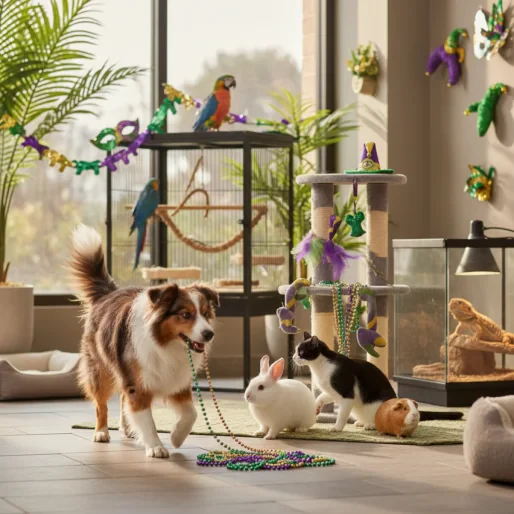
In New Orleans style Mardi Gras and many other Carnival traditions, throwing beads and plastic coins is central to the fun. To a dog, a plastic doublon or a string of beads can look like a toy. If ingested, these items do not break down. They can cause a mechanical bowel obstruction, a life-threatening condition that often requires surgical intervention. Signs of obstruction include vomiting, lethargy, and a painful abdomen.
Alcohol and Fatty Foods
Spilled beer and sweet cocktails are common on the pavement. Alcohol toxicity in pets can occur rapidly, leading to drops in blood sugar, blood pressure, and body temperature. Additionally, traditional festival foods, fried dough, sausages, and King Cakes, are high in fat and sugar.
Ingesting fatty scraps can trigger pancreatitis, an excruciatingly painful inflammation of the pancreas. Furthermore, many festive treats contain chocolate or xylitol (a sugar substitute). For a refresher on these specific dangers, review our critical care toxicity guide, as the biological mechanisms of toxicity remain the same regardless of the holiday.
Costume Safety 101
Dressing pets up is a beloved part of Carnival, but it must be done with a 'welfare-first' mindset. A costume should never come at the expense of your pet’s dignity or physical comfort.
The Fit Check
If you dress your pet, apply the 'two-finger rule': you should be able to slide two fingers comfortably between the costume and your pet's skin at any point. Ensure the outfit does not constrict:
- Breathing: Tight chests or necks are dangerous, especially for brachycephalic (flat-faced) breeds.
- Movement: The animal must be able to walk, sit, and lie down naturally.
- Vision and Hearing: Avoid hoods or masks that obscure their senses, which can increase anxiety.
Choking Hazards
Inspect costumes for loose buttons, sequins, or dangling bells. These are easily chewed off and swallowed. Never leave a pet unsupervised in a costume; they can become entangled in furniture or their own limbs.
Managing Noise Anxiety at Home
For many pets, the safest place is home. However, if the parade passes near your house, the noise can still be intrusive. Creating a 'bunker' or safe haven is an effective strategy.
- Sound Masking: Use white noise machines, heavy curtains, or classical music to dampen the sound of fireworks and drums.
- Distraction: Provide long-lasting chews or puzzle toys filled with frozen food. Licking and chewing are self-soothing behaviors that release endorphins.
- Pheromones: Consider using synthetic pheromone diffusers (like Feliway for cats or Adaptil for dogs) which mimic calming maternal signals.
Identification and Microchips
The combination of open doors during parties and the startle factor of fireworks makes Carnival a peak time for lost pets. Before the festivities begin:
- Check that your pet's collar is secure and tags are legible.
- Verify your contact information is current in the microchip database.
- If you have guests coming and going, secure your pet in a separate room to prevent them from darting out the door.
The Post-Celebration Decompression
After the chaos of the carnival season, your pet may need time to reset. High-arousal events can increase cortisol levels in the blood, which can take days to dissipate. You might notice your dog is more reactive or your cat is more withdrawn for a few days after the noise subsides.
Be patient and return to a predictable schedule. For detailed steps on helping your pet recover from overstimulation, I highly recommend reading our guide on the post-festival routine reset.
When to Seek Emergency Care
Monitor your pet closely during and after the celebrations. Seek immediate veterinary attention if you observe:
- Unproductive retching (trying to vomit but nothing coming up).
- Tremors, seizures, or inability to stand.
- Profuse vomiting or diarrhea, especially if blood is present.
- Evidence of ingested foreign objects (missing beads, chewed costume parts).
Carnival is a celebration of life and joy. By taking these proactive safety measures, you ensure that it remains a happy occasion for your entire family, including the furry members who are happiest watching the parade from the safety of a quiet living room.
Frequently Asked Questions
Is it safe to take my dog to a Mardi Gras parade? ↓
What should I do if my dog eats Mardi Gras beads? ↓
How can I calm my dog during fireworks or loud parades? ↓
Are King Cakes safe for dogs? ↓

TrustMyPets Editorial Team
Global Pet Care Experts
Multi-disciplinary editorial team — evidence-based pet care guidance across health, behaviour, and welfare.
Content Disclosure
This article was created using state-of-the-art AI models with human editorial oversight. It is intended for informational and entertainment purposes only and does not constitute veterinary medical advice. Always consult a licensed veterinarian for your pet's specific health needs. Learn more about our process.