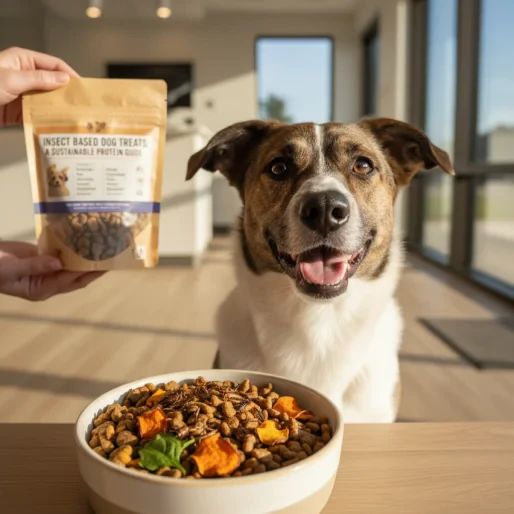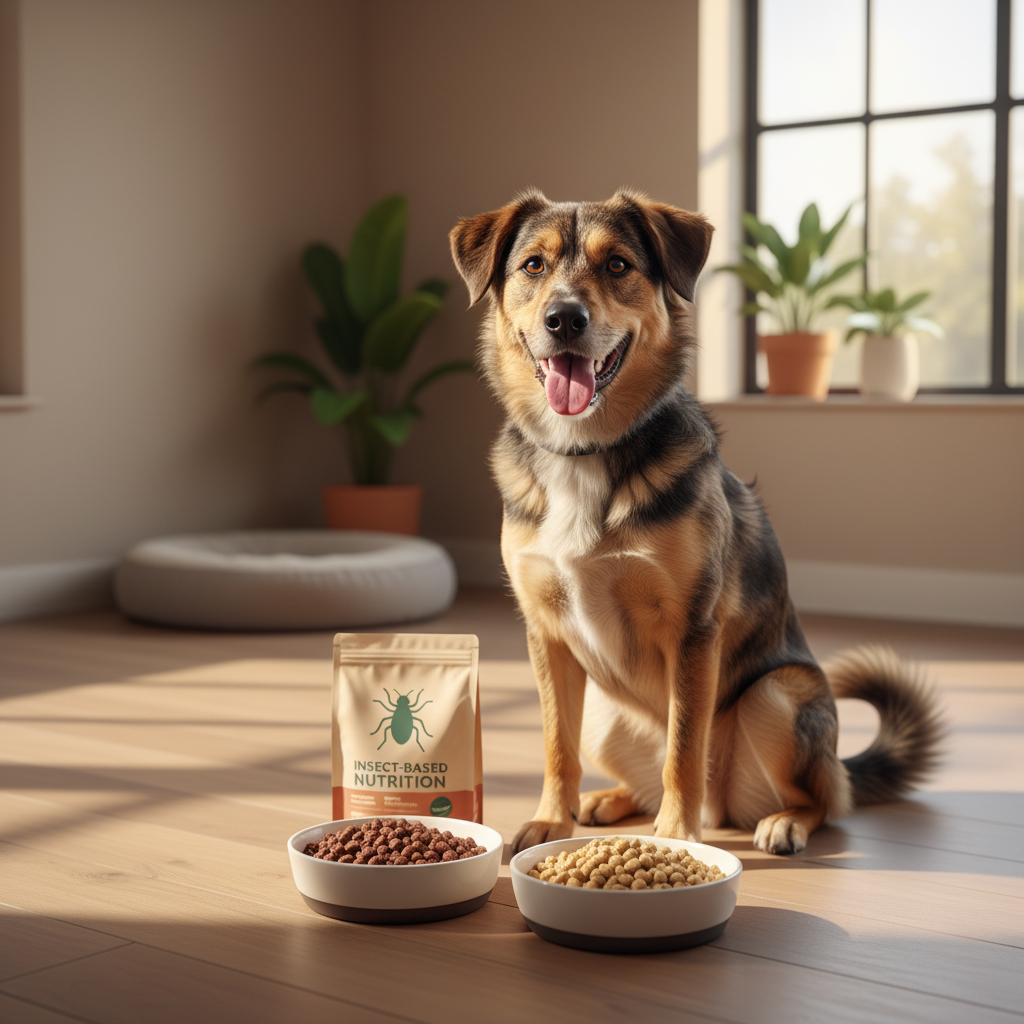
A side by side comparison of insect protein dog food and traditional meat kibble across digestibility, amino acids, environmental impact, palatability, and cost. Everything owners need to make a confident feeding decision.
Key Takeaways
- Black soldier fly larvae (BSFL) and cricket based kibble can deliver protein digestibility of roughly 82 to 92 percent, comparable to poultry meal.
- Insect protein contains all essential amino acids for dogs, though methionine and cysteine tend to be the first limiting amino acids.
- Insect farming uses significantly less land, water, and feed than conventional livestock production.
- Palatability trials show acceptance rates above 90 percent in dogs for BSFL based formulas.
- Insect kibble is priced as a premium product, typically 20 to 40 percent more per serving than mid range traditional kibble.
- Veterinary guidance is recommended before switching any dog with existing health conditions to a novel protein diet.
Why Insect Protein Dog Food Is Gaining Ground
The pet food industry is experiencing a notable shift toward alternative protein sources. Black soldier fly larvae (Hermetia illucens), house crickets (Acheta domesticus), and mealworm larvae (Tenebrio molitor) are the three insect species most commonly used in commercial dog food. As of 2025, more than 40 brands globally offer insect based kibble or wet food formulas, and the market continues to expand rapidly.
This guide compares insect protein kibble to traditional meat based kibble across five critical dimensions: digestibility, amino acid profile, environmental footprint, palatability testing results, and cost per serving. The goal is to help owners, shelter volunteers, and pet care professionals make an evidence based feeding decision.
Side by Side Comparison Table
| Factor | Insect Protein Kibble (BSFL or Cricket) | Traditional Meat Kibble (Chicken, Beef, Lamb) |
|---|---|---|
| Protein Digestibility | 82 to 92% (varies by species and processing) | 80 to 90% (poultry meal at the higher end) |
| Amino Acid Completeness | All essential amino acids present; methionine and cysteine may be limiting | Complete amino acid profile; well established for canine needs |
| CO2 Emissions (per kg protein) | Approximately 1 to 7 kg CO2eq (depends on production system) | Beef: 50 to 100+ kg CO2eq; Chicken: 10 to 20 kg CO2eq |
| Land Use | Minimal (vertical farming common) | High (grazing, feed crop cultivation) |
| Water Use | Significantly lower than livestock | High, especially for beef production |
| Dog Acceptance Rate | 90 to 94% in published trials | Generally high (familiar flavour profiles) |
| Allergen Risk | Novel protein: useful for elimination diets; potential cross reactivity with shellfish allergies | Common allergens include chicken and beef |
| Cost Per Day (Medium Dog) | Approximately $1.50 to $3.00 USD | Approximately $0.50 to $2.00 USD |
| AAFCO/FEDIAF Compliant Options | Growing number of compliant formulas available | Widely available and long established |
Digestibility: How Well Do Dogs Process Insect Protein?
Digestibility is a cornerstone of diet quality. Research published in peer reviewed journals indicates that BSFL based diets can achieve apparent protein digestibility of around 82 to 85 percent, which is on par with or slightly above poultry meal (approximately 80 to 82 percent). Some studies report even higher figures, in the range of 85 to 92 percent, depending on processing methods such as defatting and enzymatic hydrolysis.
Cricket protein shows similarly promising results, with crude protein content generally higher than BSFL on a dry matter basis. Fat digestibility for insect based formulas has been measured at approximately 94 to 95 percent, slightly exceeding poultry meal benchmarks.
One important consideration: the chitin content in insect exoskeletons can affect fibre readings and may reduce apparent digestibility if not properly processed. Leading manufacturers now use defatted and finely milled insect meal to address this, which improves both nutrient availability and stool quality.
What This Means for Sensitive Stomachs
Because insect protein qualifies as a novel protein for most dogs, it is increasingly used in limited ingredient or elimination diets. Dogs with known sensitivities to chicken, beef, or lamb may benefit from a trial of insect based food under veterinary supervision. For guidance on managing dietary changes in older dogs, see Senior Dog Summer Diet: Heat, Appetite and Nutrition.
Amino Acid Profile: Meeting Canine Nutritional Needs
Dogs require ten essential amino acids. Published analyses confirm that BSFL protein contains all ten, making it a complete protein source for canine nutrition. Cricket protein similarly meets this threshold, often with a slightly higher overall crude protein percentage.
However, methionine and cysteine (the sulphur containing amino acids) are consistently identified as the first limiting amino acids across most insect substrates. This means that while they are present, their concentrations are lower relative to canine requirements than other amino acids. Quality insect based kibble brands address this through supplementation or by blending insect protein with complementary ingredients.
Lysine, leucine, and valine levels in BSFL and cricket proteins are generally robust and comparable to traditional animal proteins. The amino acid score of well formulated insect kibble typically meets AAFCO and FEDIAF standards for adult maintenance and, in some formulas, for growth and reproduction.
Environmental Footprint: The Sustainability Argument
The environmental case for insect protein is one of its strongest selling points, though the picture is more nuanced than marketing materials sometimes suggest.
Carbon Emissions
Optimised insect production systems generate approximately 1 to 7 kg CO2 equivalent per kilogram of protein. For comparison, chicken production generates roughly 10 to 20 kg CO2eq per kg protein, and beef production can exceed 50 to 100 kg CO2eq. Life cycle assessments suggest that replacing soybean meal with insect meal in pet food can reduce the global warming potential of compound feed production by 75 to 93 percent in optimised systems.
Land and Water
Insect farms, often operated as vertical indoor facilities, use a fraction of the land required for livestock. BSFL can be raised on organic waste streams, including pre consumer food waste, which adds a circular economy benefit. Water requirements are also substantially lower than for cattle or poultry farming.
Important Caveats
Not all insect production is equally efficient. Unoptimised systems have reported carbon footprints as high as 21 kg CO2eq per kg of fresh larvae. The energy intensity of climate controlled indoor rearing can partially offset gains if powered by fossil fuels. Owners seeking maximum environmental benefit should look for brands that publish verified life cycle assessment data. For a parallel comparison of eco friendly pet products, see Eco Friendly Cat Litter in 2026: 5 Types Compared.
Palatability Testing Results: Will Dogs Actually Eat It?
Palatability is a practical deal breaker for any dog food, regardless of its nutritional or environmental merits. The available research is encouraging.
Acceptance Trials
In a large scale acceptance trial conducted by Protix, 94 percent of dogs readily consumed pet food containing insect protein as the sole animal protein source. A separate study evaluating two insect based wet food formulas with 170 small and medium sized dogs found that both fully insect based and hybrid (insect plus chicken) recipes were highly accepted and consumed readily over multiple days.
Preference Between Insect Types
When given a choice, dogs have shown a slight preference for BSFL based kibble over mealworm based options, with reported intake ratios of approximately 60:40 in favour of BSFL. This may relate to the higher fat content and different flavour profile of BSFL.
Practical Tips for Transitioning
Professional consensus recommends a gradual transition over 7 to 10 days when switching to insect protein kibble. Start by mixing roughly 25 percent insect kibble with the existing food and increase the proportion every two to three days. Monitoring stool consistency during the transition is advisable, as the different fibre profile (including chitin) may cause temporary digestive adjustment.
Cost Per Serving Across Leading Brands
Insect protein dog food is currently positioned in the premium segment. While prices vary by region, brand, and formula type, the general pricing landscape in 2026 looks like this:
Insect Protein Kibble
- Premium direct to consumer brands: approximately $5.50 to $8.00 USD per kilogram
- Private label or value positioned insect kibble: approximately $3.00 to $4.50 USD per kilogram
- Insect based wet food: approximately $8.00 to $12.00 USD per kilogram
Traditional Meat Kibble
- Mid range traditional kibble: approximately $2.50 to $5.00 USD per kilogram
- Premium traditional kibble: approximately $5.00 to $8.00 USD per kilogram
- Budget traditional kibble: approximately $1.00 to $2.50 USD per kilogram
For a medium sized dog (around 15 kg), daily feeding costs for insect kibble typically range from $1.50 to $3.00, compared to $0.50 to $2.00 for traditional options. The gap narrows considerably when comparing insect kibble to other premium or sustainably sourced traditional foods. As production scales and more manufacturers enter the market, prices are expected to decrease. For broader budgeting guidance, owners may find useful context in First Year Kitten Costs 2026: Full Budget Breakdown.
Lifestyle Match Guide: Which Option Fits Your Situation?
Insect Protein Kibble May Be a Good Fit If:
- The dog has confirmed or suspected allergies to common animal proteins (chicken, beef, lamb)
- The household prioritises reducing its environmental footprint
- The dog is on a veterinary supervised elimination diet and needs a novel protein
- The owner is comfortable with a premium price point
- The dog has shown good acceptance of novel foods in the past
Traditional Meat Kibble May Be a Better Fit If:
- The dog thrives on its current diet with no digestive or skin issues
- Budget is a primary concern, especially for large or giant breed dogs
- The owner prefers a food with decades of feeding trial data behind it
- The dog is a working or sporting dog with very high caloric demands (traditional formulas have more extensive performance data)
- Availability is a concern, as traditional kibble is stocked more widely
Consider a Hybrid Approach If:
- The owner wants to reduce environmental impact without a full switch
- The dog is moderately picky and may benefit from a gradual introduction
- Rotating proteins is part of the current feeding strategy
Adoption and Sourcing Considerations
For shelter volunteers and rescue organisations considering insect based diets for dogs in their care, several practical factors apply. Novel protein diets can be valuable for incoming dogs with unknown dietary histories, particularly those showing signs of food sensitivities. However, cost per serving is a real constraint for most shelters operating on tight budgets.
A practical middle ground is to reserve insect protein formulas for dogs undergoing dietary trials or those with confirmed intolerances, while feeding traditional kibble to the general population. Shelter staff assessing incoming dogs should document any adverse food reactions to inform adopters. For more on shelter assessment practices, see How to Assess a Shelter Dog's Temperament Before Adoption.
When sourcing insect protein kibble, owners should verify that the product meets AAFCO (in North America) or FEDIAF (in Europe) nutritional adequacy standards for the relevant life stage. The World Small Animal Veterinary Association (WSAVA) guidelines for selecting pet food remain a useful framework regardless of protein source: look for companies that employ veterinary nutritionists, conduct feeding trials, and provide full nutritional information on request.
Decision Checklist: Which Is Right for Your Dog?
Use this checklist to guide your decision:
- Does your dog have known protein allergies? If yes, insect protein offers a novel alternative worth discussing with your vet.
- Is environmental sustainability a household priority? Insect kibble offers measurable reductions in carbon, land, and water use.
- What is your monthly food budget? Insect kibble costs roughly 20 to 40 percent more than comparable mid range traditional options.
- Is the product AAFCO or FEDIAF compliant? Always verify nutritional adequacy statements on the packaging.
- Does the brand employ a veterinary nutritionist? This is a WSAVA recommended quality indicator.
- Has your dog been gradually transitioned? Allow 7 to 10 days for any diet change to reduce digestive upset.
- Are you monitoring stool quality and coat condition? These are the most practical home indicators of diet suitability.
- Have you consulted your veterinarian? Especially important for puppies, senior dogs, pregnant or nursing dogs, and dogs with chronic health conditions.
Looking Ahead: The Future of Insect Protein in Pet Food
Regulatory frameworks continue to evolve. In the European Union, insect proteins have been approved for use in pet food under specific conditions, and regulatory acceptance is expanding in North America, Asia, and the Middle East. As production capacity scales up and costs decrease, insect protein is expected to move from niche premium status toward mainstream availability.
Research into optimised processing methods, including enzymatic hydrolysis and fermentation, is improving both digestibility and palatability scores. Several major pet food manufacturers have either launched or announced insect protein product lines, signalling long term industry commitment.
For owners already exploring sustainable pet care choices, insect protein kibble represents one of the most promising developments in canine nutrition. Combined with attention to overall diet quality, veterinary guidance, and practical feeding management, it offers a credible alternative to conventional meat protein for many dogs.
For more on keeping dogs healthy and comfortable across the seasons, see Preventing Tick Diseases in Dogs: May to July Guide.
Frequently Asked Questions
Is insect protein safe for dogs to eat every day? ↓
Can insect protein dog food help with allergies? ↓
Does insect protein dog food taste good to dogs? ↓
How much more expensive is insect protein kibble compared to regular dog food? ↓
Is insect protein dog food really better for the environment? ↓

Priya Nair
Dog Breed Advisor & Adoption Counsellor
Dog breed advisor and adoption counsellor — honest breed comparisons and lifestyle matching for prospective owners.
Content Disclosure
This article was created using state-of-the-art AI models with human editorial oversight. It is intended for informational and entertainment purposes only and does not constitute veterinary medical advice. Always consult a licensed veterinarian for your pet's specific health needs. Learn more about our process.