A complete grooming and welfare guide for budgerigars moulting through the Australian May to June cool snap. Covers misting, nutrition, cage placement, and a weekly feather check.
Key Takeaways
- Autumn into winter (May and June) in most Australian states brings cooler nights that frequently coincide with a heavier budgerigar moult.
- Gentle misting with room temperature water, balanced calcium and amino acid intake, and stable ambient warmth support healthy pin feather development.
- Cage placement must avoid direct heater drafts, single glazed windows, and reverse cycle air vents, all of which dry the air and stress feather follicles.
- A weekly feather check should look for blood feathers, bald patches, stress bars, and behaviour shifts such as reduced vocalising.
- Persistent or asymmetrical feather loss outside the normal moult cycle is a veterinary issue, not a grooming issue.
Why the Australian Autumn to Winter Moult Matters
Budgerigars (Melopsittacus undulatus) are native to the arid interior of Australia, but pet budgies kept in temperate coastal cities such as Sydney, Melbourne, Adelaide, and Perth experience much sharper indoor and outdoor temperature swings between late April and early July. As nights cool and daylight shortens, hormonal and photoperiodic cues commonly trigger a heavier feather drop than the smaller moults seen in spring or summer. Professional avian guidelines published through organisations such as the Association of Avian Veterinarians (AAV) describe this as a normal physiological process, provided the bird remains active, vocal, and at a stable body weight.
From a grooming standpoint, moulting is energetically demanding. Replacing flight, contour, and down feathers requires high quality protein, sulphur containing amino acids, calcium, and trace minerals. Owners commonly report that birds become quieter, sleep more, and preen for longer periods during a heavy moult, which is broadly considered within normal limits. What is not normal is open skin, bleeding feather shafts, repeated night fright episodes, or feathers falling out in clumps from one specific area.
Why Cooler Australian Nights Trigger Heavy Feather Drops
Three overlapping factors drive the May and June moult intensity for Australian pet budgies:
- Photoperiod shift: Daylight shortens from around 11 hours in early May to under 10 hours by late June across most southern capitals. Shorter days reduce the production of certain reproductive hormones and create space for follicle activity, which is the biological signal for moult.
- Night temperature drop: Indoor overnight temperatures in homes without overnight heating can fall to 10 to 14 degrees Celsius, well below the 18 to 24 degree Celsius comfort band most avian references recommend for pet budgies.
- Humidity collapse from heaters: When daytime heating switches on, relative humidity in living rooms often falls below 30 percent. Dry air desiccates the keratin sheath of incoming pin feathers, slowing their development and increasing the urge to over preen.
The professional consensus is that a budgie in a stable, draft free environment will cycle through the heavy moult in roughly two to six weeks, with lighter feather turnover continuing across the cool months.
Tools and Products Needed
A practical grooming kit for the autumn to winter moult is simple, affordable, and does not require any clipping or restraint based equipment for the average pet owner. Recommended items include:
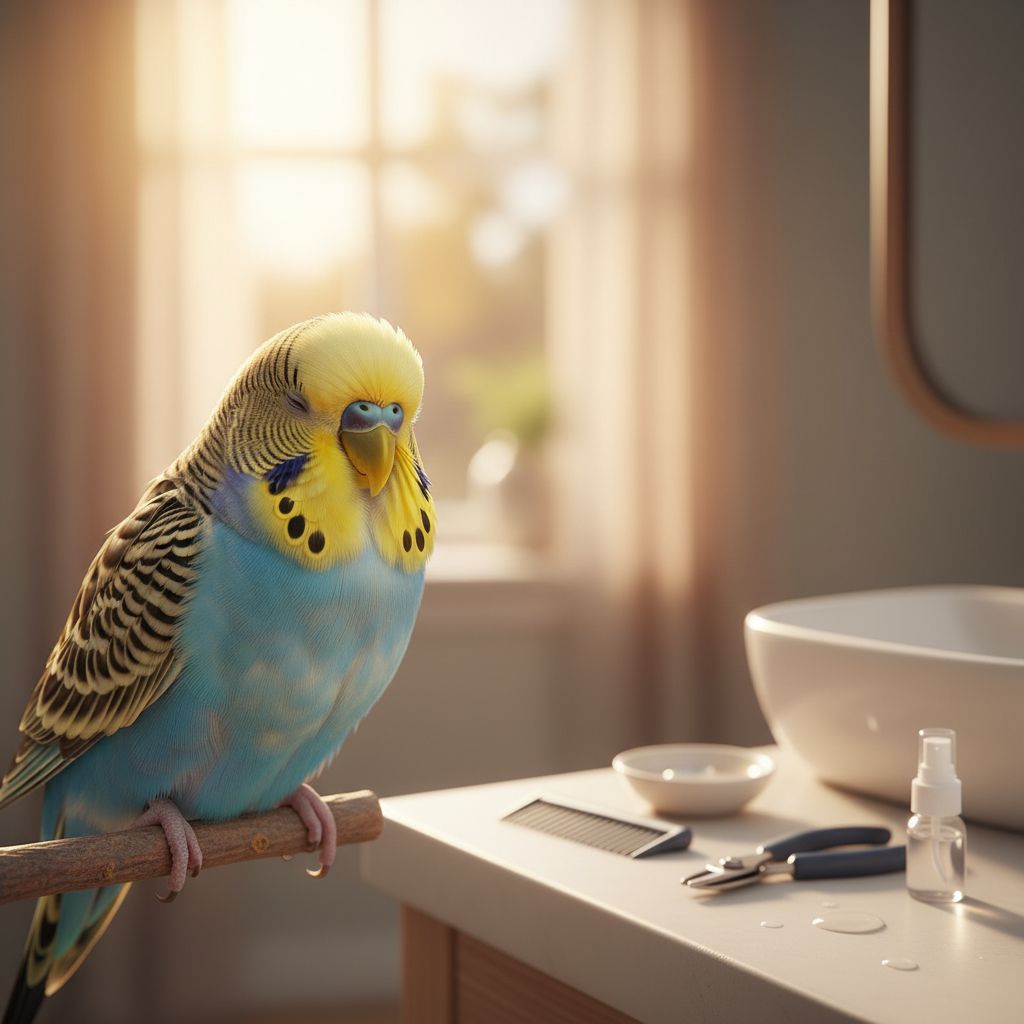
- Fine mist spray bottle filled with room temperature dechlorinated water (boiled and cooled, or left to stand for 24 hours).
- Shallow ceramic or stainless steel bathing dish, no deeper than the bird's chest height.
- Cuttlefish bone and a separate mineral block clipped to the cage bars for calcium and trace minerals.
- Soft natural fibre perches of varying diameters to reduce foot strain during long preening sessions.
- Digital thermometer and hygrometer mounted at cage height, not on a far wall.
- Full spectrum avian safe lamp rated for UVA and UVB output suitable for psittacines, on a timer.
- Soft bristled baby toothbrush for owners whose tame birds enjoy a gentle head and cheek groom (only with birds that are confidently hand tame).
Avoid scented sprays, essential oils, tea tree products, and any aerosol grooming product marketed for mammals. Budgies have extremely efficient respiratory systems and are highly sensitive to volatile organic compounds.
Step by Step Grooming Routine for the Moulting Budgie
1. Morning environmental check
Before opening the cage cover, check the room thermometer and hygrometer. Target a daytime range of 20 to 24 degrees Celsius and a relative humidity of 45 to 60 percent. If the room has dropped below 18 degrees overnight, allow it to warm gradually rather than blasting a heater directly toward the cage.
2. Visual feather scan
With the bird still calm on its perch, visually scan from head to tail. Note any pin feathers (short, waxy, blue grey quills) emerging on the head, around the cere, and along the wing edge. Pin feathers are tender, so avoid handling these zones.
3. Misting session
Hold the spray bottle at least 30 centimetres above the bird and mist upward so that a fine fall of droplets descends like light rain. Never spray directly into the face. Most budgies will spread their wings, lift the tail, and rotate to catch the spray. Two to four light passes are sufficient. Allow the bird to air dry in a draft free spot; do not towel dry, and do not use a hair dryer.
4. Bathing dish access
On milder afternoons, offer the shallow bathing dish with 1 to 2 centimetres of room temperature water for no more than 20 to 30 minutes. Remove and dry the dish to prevent humidity spikes and bacterial growth overnight.
5. Nutritional top up
Refresh cuttlefish bone, ensure the mineral block is intact, and offer a small portion of soft moult support foods (see the next section).
6. Cage hygiene
Sweep dropped feathers, down dust, and seed husks daily. Heavy feather dust during moult can irritate the bird's own respiratory tract and that of household members with asthma.
Nutritional Support: Calcium, Amino Acids, and Hydration
Feathers are roughly 90 percent keratin, a sulphur rich protein. Supporting feather regrowth therefore depends on consistent access to high quality protein and the building block amino acids methionine, cysteine, and lysine, alongside calcium for the connective structures around new follicles.
- Base diet: A formulated pelleted diet designed for small psittacines should make up the majority of intake, supplemented with a quality seed mix. Veterinary nutrition guidelines generally recommend pellets as the nutritional backbone rather than seed alone.
- Fresh vegetables: Finely chopped silverbeet, kale, broccoli florets, grated carrot, and capsicum offer carotenoids, vitamin A precursors, and small amounts of calcium.
- Sprouted seeds and legumes: Sprouting increases bioavailable amino acids and is a useful moult time addition for owners confident in safe sprouting hygiene.
- Egg food: A small offering of cooked, cooled, mashed egg (no salt, no oil) once or twice weekly during a heavy moult provides complete protein. Remove within two hours.
- Calcium sources: Cuttlefish bone, mineral block, and occasionally a vet recommended liquid calcium for birds that refuse hard sources.
- Hydration: Change drinking water at least once daily; twice daily if the bird bathes in it.
Avoid avocado, chocolate, onion, garlic, salty snacks, and any human food containing xylitol. These are toxic to budgies. For broader cool season nutrition principles across small companion species, the companion guide on food and hydration for hamsters, gerbils, and mice illustrates how seasonal feeding shifts apply across the small pet category.
Bathing and Misting Routines Through May and June
Misting matters more than full bathing during a cool snap, because evaporative cooling from a wet budgie in a 15 degree room can chill the bird quickly. Professional bird care references generally suggest:
- Frequency: Two to four short misting sessions per week during the heavy moult phase.
- Timing: Mid morning to early afternoon, when ambient temperature is at its daily peak.
- Water: Room temperature, never cold from the tap, never warm enough to feel hot on the inner wrist.
- Recovery: Allow at least two hours of fully dry plumage before the cage cover goes on for the night.
If the household uses smart home climate monitoring, the principles outlined in AI climate monitors for pets translate well to winter use: stable readings, alerts on rapid swings, and sensors positioned at the animal's level rather than near ceilings.
Cage Placement: Away From Heater Drafts
One of the most common preventable grooming problems through an Australian winter is feather damage caused by poor cage siting. Professional avian husbandry guidance suggests the following placement rules:
- Minimum two metres from any reverse cycle air conditioner vent, gas heater, or oil column heater.
- Away from single glazed windows at night, where radiative heat loss creates a cold microclimate against the glass.
- One side of the cage against a solid wall, giving the bird a psychological back wall for security and reducing draft on at least one face.
- Elevated so the bird's head is roughly at the standing human's chest height, which lowers prey species stress.
- Away from the kitchen, particularly any home using non stick cookware, which can release fumes lethal to birds when overheated.
If the household relies on a humidifier during winter, position it across the room rather than next to the cage, and use only clean water. Essential oil diffusers should not be used in the same room as a bird.
Frequency Guide by Life Stage
Juvenile budgies (under 12 months)
The first full moult typically occurs between three and four months of age. During an autumn to winter first moult, mist lightly once or twice a week and prioritise stable warmth and high quality protein.
Adult budgies (1 to 6 years)
Two to four mist sessions weekly through the peak moult, with a weekly feather check. Full bathing dish access on mild afternoons two to three times a week.
Senior budgies (6 years and older)
Older budgies often moult more slowly and may show thinner head feathering. Reduce mist frequency to once or twice weekly, increase ambient warmth slightly, and consult an avian vet if moult extends beyond eight weeks.
Weekly Feather Condition Checklist
Set a fixed day each week (for example, Sunday morning) to run through this short checklist:
- Symmetry: Are feather gaps symmetrical on both wings and both sides of the chest? Asymmetrical loss can indicate self plucking or a localised skin issue.
- Blood feathers: Any new pin feathers should look waxy and intact. A snapped blood feather with active bleeding is a veterinary emergency.
- Stress bars: Fine horizontal lines across a feather vane indicate a stress event (nutritional, thermal, or psychological) during that feather's growth.
- Cere and nares: The fleshy area above the beak should be clean and uncrusted.
- Vent area: Feathers around the vent should be clean and dry. Pasted vents suggest gastrointestinal trouble.
- Weight: Weigh the bird on a small kitchen scale at the same time each week. A loss of more than 5 to 8 percent of body weight warrants a vet call.
- Behaviour: Is the bird vocalising, eating, and interacting normally? Persistent fluffing, tail bobbing, or floor sitting is significant.
Warning Signs During Moulting Grooming
Routine moulting should not include any of the following. Each is a reason to stop home grooming and call an avian vet:
- Bleeding from a broken pin feather that does not stop within a few minutes.
- Open skin, scabbing, or bare patches with red, inflamed follicles.
- French moult pattern (loss of flight and tail feathers in young budgies), which can indicate viral disease.
- Continuous self plucking, particularly on the chest and inner thighs.
- Discoloured (yellowed, browned, or oily looking) feathers, which can signal liver disease.
- Audible respiratory effort, tail bobbing with each breath, or open mouth breathing.
- Sudden cere colour change in adult birds, beyond normal hormonal shifts.
For preparing a basic in home avian first aid station, the structural approach in the monsoon pet first aid kit guide offers a useful checklist style that owners can adapt for a small bird kit.
Professional Groomer vs Home Grooming: Decision Guide
The vast majority of budgerigar moult care is appropriate for confident owners at home. International Professional Groomers (IPG) and equivalent national grooming bodies generally focus their bird grooming credentials on larger psittacines such as cockatoos, macaws, and African greys, where wing and nail work is more complex. For budgies, the decision points are:
Safe to do at home
- Misting and shallow bath provision.
- Cuttlefish and mineral block replacement.
- Weekly feather and weight check.
- Cage hygiene and placement adjustments.
Refer to an avian vet or qualified avian groomer
- Wing feather trimming, which is increasingly considered controversial and should only be done by a trained professional when genuinely necessary.
- Beak overgrowth or asymmetry, which usually has an underlying medical cause.
- Nail trimming on a bird that has never been restrained, where injury risk is high for novice handlers.
- Any suspected skin disease, mite infestation, or persistent self trauma.
Owners of long coated mammals navigating similar seasonal coat changes may also find the principles in summer grooming for longhair guinea pigs and rabbits useful for understanding how environment, nutrition, and brushing schedules intersect.
Putting It All Together
A well managed Australian autumn to winter moult should leave a budgerigar with bright, tightly zippered new feathers by mid winter, a stable body weight, and unchanged vocal and social behaviour. The grooming task itself is light: consistent misting, clean water, a calm cage location, calcium and amino acid rich nutrition, and a weekly visual check. The deeper skill, and the part that separates competent home care from incidental care, lies in noticing the small shifts (a single stress barred feather, a quieter morning, a half eaten breakfast) and acting early. When in doubt, the professional consensus is unambiguous: a bird showing any respiratory, postural, or skin change should be assessed by an avian veterinarian rather than groomed through the symptom.
Frequently Asked Questions
How long does an Australian autumn to winter budgie moult usually last? ↓
Is it safe to mist my budgie when the house is cold? ↓
Do I need to give my moulting budgie a vitamin supplement? ↓
My budgie has a bald patch on its head. Is this normal during moult? ↓
Should I cover the cage at night during the moult? ↓
Can I use a household heater to keep my budgie warm overnight? ↓

Sophie Bianchi
Certified Master Pet Groomer
Certified master pet groomer — breed-standard techniques, skin health awareness, and at-home grooming guidance.
Content Disclosure
This article was created using state-of-the-art AI models with human editorial oversight. It is intended for informational and entertainment purposes only and does not constitute veterinary medical advice. Always consult a licensed veterinarian for your pet's specific health needs. Learn more about our process.