A complete guide to preparing your dog for off-leash spring hiking. Covers reliable recall training, wildlife etiquette, tick prevention, emergency gear, and regional trail access rules.
Key Takeaways
- Recall reliability should reach approximately 90% or higher in distracted environments before attempting off-leash hiking on trails.
- Wildlife encounters require immediate leash control; keep a leash accessible at all times, even on off-leash trails.
- Tick checks should follow a systematic protocol within 30 minutes of leaving the trail.
- Emergency gear is non-negotiable: carry a canine first-aid kit, fresh water, and identification on every hike.
- Trail access rules vary by region; always verify local regulations before unclipping the leash.
Why Dogs Pull Toward Off-Leash Freedom on the Trail
Spring triggers an explosion of scent, movement, and novelty along every trail. For dogs, the outdoors is a multisensory buffet: ground squirrels darting under brush, wildflowers releasing pollen, and other hikers rounding blind corners. The desire to explore is rooted in normal canine behaviour. Olfactory enrichment is one of a dog's primary means of processing the world, and restricting that exploration entirely can increase frustration and reactivity on leash.
Off-leash hiking, when done responsibly, offers unmatched physical and mental enrichment. However, the leap from backyard recall to trail recall is significant. Professional consensus within the Certification Council for Professional Dog Trainers (CCPDT) framework emphasises that off-leash reliability must be built through a structured progression, not assumed because a dog "listens at home." Understanding the gap between controlled environments and the high-distraction trail setting is the first step toward safe spring hiking.
Training Prerequisites: Equipment, Environment, and Timing
Equipment Checklist
- Long line (5 to 10 metres): A lightweight biothane or waterproof long line is essential for the transitional training phase between on-leash and true off-leash work.
- High-value treats: Soft, smelly rewards such as cooked chicken, cheese, or liver treats. For owners exploring sustainable options, insect-based dog treats can also serve as effective high-value reinforcers.
- Treat pouch: Worn at the hip for instant access.
- Whistle or consistent verbal cue: A whistle carries further than a voice in windy conditions or across open terrain.
- Well-fitted harness: A back-clip or dual-clip harness with ID tags. Harnesses reduce the risk of neck injury if the dog hits the end of a long line at speed.
Environment Progression
According to the LIMA (Least Intrusive, Minimally Aversive) hierarchy endorsed by the International Association of Animal Behavior Consultants (IAABC), training should always start in the environment where the dog can succeed. The recommended progression is:
- Indoor recall with minimal distractions.
- Fenced garden or yard.
- Quiet park on a long line.
- Busier park on a long line with controlled distractions.
- Trail environment on a long line.
- Off-leash trail (only after consistent success at stage five).
Timing Considerations
Short, frequent sessions (five to ten minutes) produce better learning retention than marathon training blocks. Research in animal learning science consistently supports the principle that distributed practice outperforms massed practice for skill acquisition. Early morning or late afternoon sessions, when trails are quieter and temperatures are moderate, tend to yield the best focus from dogs.
Positive Reinforcement Recall Training: Step by Step
Step 1: Charging the Recall Cue
Select a dedicated recall word or whistle pattern that is used exclusively for this behaviour. Common choices include "come," "here," or a double-blast on a whistle. Say the cue, then immediately deliver a high-value treat, regardless of what the dog is doing. Repeat 20 to 30 times over two to three days. This phase uses classical conditioning: the cue becomes a predictor of something wonderful.
Step 2: Recall With Low Distraction (Indoors)
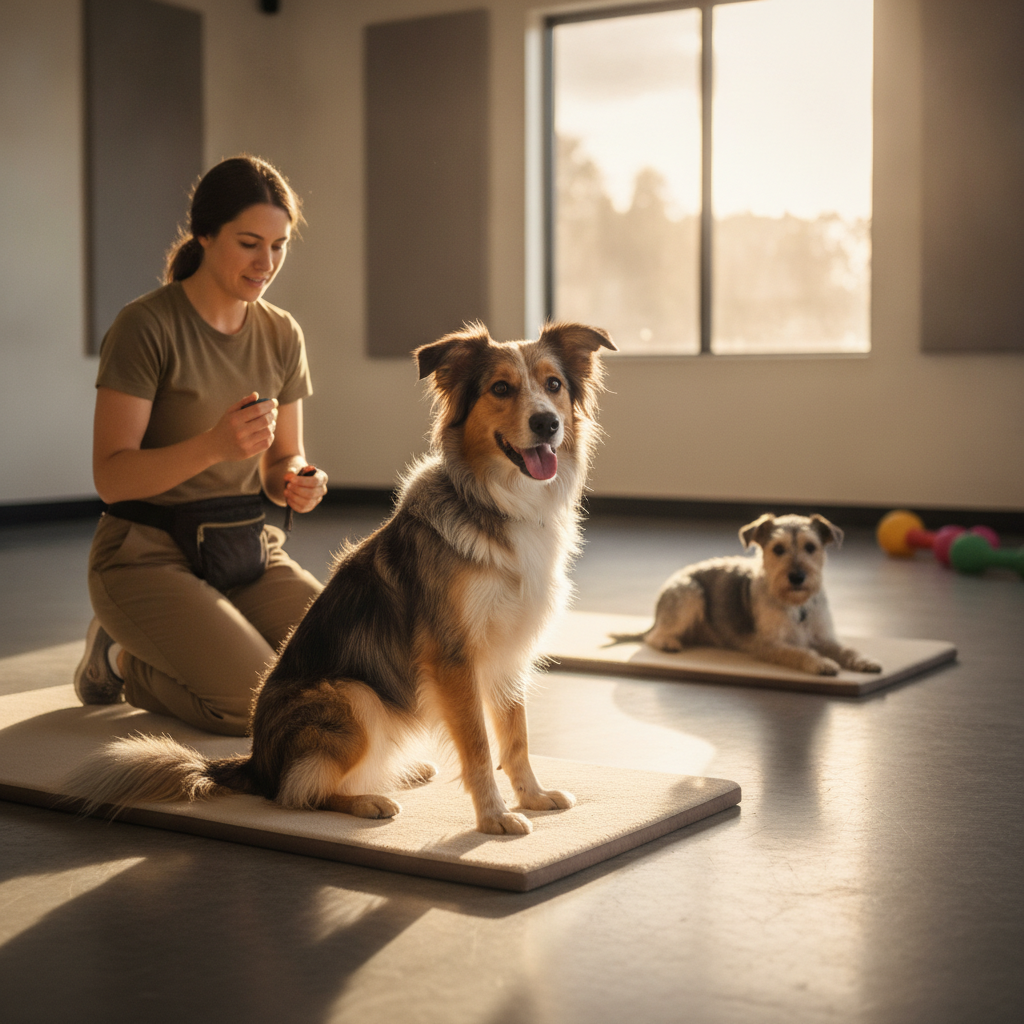
With the dog a few metres away indoors, say the recall cue. The moment the dog moves toward you, use a marker word ("yes") or clicker, then reward generously. Professional trainers often describe this as a "recall party": multiple treats delivered in sequence, verbal praise, and brief play. The goal is to make arriving at the handler the most rewarding event in the dog's day.
Step 3: Adding Distance on a Long Line
Move to a secure outdoor area with the dog on a long line. Allow the dog to sniff and wander, then call the recall cue. If the dog responds, mark and reward lavishly. If the dog does not respond, gently guide with the long line (without jerking) and reward upon arrival. The long line functions as a safety net, not a correction tool. This distinction is critical within positive reinforcement methodology.
Step 4: Introducing Controlled Distractions
Gradually increase the level of distraction. A training partner walking a calm dog at a distance, a toy placed on the ground, or mild environmental sounds all serve as useful proofing tools. The concept of shaping, reinforcing successive approximations of the desired behaviour, applies here. Initially, even a head turn toward you after the cue should be marked and reinforced.
Step 5: Trail Simulation on a Long Line
Take the training to a quiet trail section, keeping the long line attached. Practice recalls at varying distances, around bends, and when the dog is actively sniffing. This phase often reveals gaps in training. A dog that recalls perfectly in a park may struggle when a squirrel crosses the path. That information is valuable: it shows where additional desensitisation work is needed.
Step 6: Off-Leash Transition
When the dog responds reliably to roughly nine out of ten recall cues on the long line in trail-like environments, it may be appropriate to try a short off-leash session in a safe, enclosed area near the trail. Continue to carry the long line and re-attach it if the dog's responsiveness drops. Building duration and distance gradually is key.
Dogs with a strong prey drive, dogs new to the household, or dogs still working through socialisation gaps typically need extended time at stages four and five. There is no universal timeline; progression should be based on the individual dog's demonstrated reliability.
Trail Etiquette Around Wildlife and Other Dogs
Wildlife Encounters
Spring is nesting season for many ground-nesting bird species, and young wildlife such as fawns and leverets may be encountered along trails. Professional guidelines consistently recommend the following protocols:
- Leash immediately when wildlife is spotted, even on off-leash trails. A reliable recall prevents the need to chase a dog, but carrying a leash clipped to your pack ensures rapid response.
- Maintain a minimum distance of at least 30 metres from visible wildlife. Many jurisdictions legally require dogs to be under "effective control," which means the dog must respond to cues even in the presence of wildlife.
- Never allow a dog to chase. Chasing is self-reinforcing; each chase makes the next one more likely. If a dog shows strong chase responses toward wildlife, off-leash hiking should be postponed until impulse-control training is more advanced.
Awareness of toxic plants along spring trails is also important, as dogs may mouth unfamiliar vegetation while exploring.
Meeting Other Dogs on the Trail
Not every dog on the trail wants to socialise. Trail etiquette protocols recommended by professional trainers include:
- Recall and leash your dog before approaching another hiker with a dog.
- Ask before allowing any greeting. Many dogs on trails are reactive, in training, or recovering from illness or surgery.
- Keep greetings short: three to five seconds is sufficient for a polite sniff. Extended face-to-face interactions on narrow trails can escalate tension.
- Yield the trail to oncoming dogs by stepping off to the side and cueing your dog to sit or focus on you.
Tick Check Protocols After Every Hike
Ticks become active in many regions once temperatures consistently stay above approximately 4°C (around 40°F), making spring a peak concern. A systematic post-hike tick check should become routine.
The 10-Zone Tick Check Method
Within 30 minutes of leaving the trail, check the following areas thoroughly using your fingers to feel through the coat:
- Inside and behind the ears
- Around the eyes and eyelids
- Under the collar
- Between the toes and around paw pads
- The groin and inner thigh area
- Under the front legs (armpits)
- Along the tail base and under the tail
- Around the muzzle and chin
- Along the belly and chest
- Any area where the coat is thinner
If a tick is found, remove it using fine-tipped tweezers or a dedicated tick-removal tool. Grasp the tick as close to the skin as possible and pull upward with steady, even pressure. Avoid twisting, crushing, or applying substances like petroleum jelly, as these methods can increase the risk of pathogen transmission. Consult a veterinarian if the mouthparts remain embedded or if the dog shows signs of illness (lethargy, joint stiffness, fever, or loss of appetite) in the days following a tick bite.
Owners should also discuss preventive tick treatments with their veterinarian before hiking season begins. Oral or topical products designed for tick prevention are widely available and vary by region.
Emergency Gear to Carry on Every Hike
A well-prepared pack can make the difference between a minor incident and a serious emergency. The following items represent a recommended baseline, drawing on guidance from veterinary emergency resources and professional trail safety literature.
Canine First-Aid Essentials
- Self-adhesive bandage wrap (does not stick to fur)
- Sterile gauze pads and medical tape
- Blunt-tipped scissors
- Antiseptic wipes or dilute chlorhexidine solution
- Tick-removal tool or fine-tipped tweezers
- Styptic powder for minor nail injuries
- Emergency foil blanket (useful for temperature regulation)
Hydration and Nutrition
- Collapsible water bowl
- Fresh water (a general guideline suggests carrying roughly 30 ml of water per kilogram of body weight per hour of moderate hiking, adjusted for temperature)
- High-calorie treats for energy on longer hikes
Navigation and Communication
- Charged mobile phone with offline trail maps downloaded
- Whistle (for both recall and signalling for help)
- Contact details for the nearest emergency veterinary clinic along the route
Identification and Safety
- Current ID tags on the dog's collar or harness
- A recent photo of the dog stored on your phone
- Spare leash and a slip lead as backup
For owners who also use pet sitters, sharing the emergency gear list and trail plan before a hike ensures someone else knows the route and expected return time.
Regional Trail Access Rules
Off-leash access varies dramatically by region, and ignorance of local rules is not accepted as a defence if cited. General patterns include:
- National parks and protected areas: Most countries require dogs to be on-leash at all times in national parks. Some parks (particularly in the United States, Canada, and parts of Europe) prohibit dogs entirely on certain trails during wildlife nesting seasons.
- State, provincial, or regional parks: Rules vary widely. Some designate specific off-leash zones or trails; others enforce on-leash requirements year-round.
- Municipal and urban trails: Many cities offer off-leash hours (often early morning) or designated off-leash areas within larger park systems.
- Private land and easements: Permission from the landowner is required, and off-leash policies depend entirely on the property owner.
Before heading out, check the official website or contact the managing authority for the specific trail. Look for posted signage at trailheads, and carry a leash even when off-leash access is permitted: conditions such as wildlife sightings, trail crowding, or seasonal closures may require leashing at any time.
For owners travelling with dogs, regional pet regulations can differ significantly. Resources like the Abu Dhabi 2026 pet rules guide or the Bangkok 2026 pet law overview illustrate how access rules change by location.
Common Mistakes Owners Make
- Skipping the long-line phase: Going directly from on-leash to off-leash without the transitional long-line stage is one of the most common errors. It removes the safety net before the behaviour is reliable.
- Poisoning the recall cue: Using the recall word to call the dog for unpleasant activities (bath time, leaving the park, nail trims) teaches the dog that "come" predicts the end of fun. Use a different cue or physically go to the dog for these situations.
- Under-rewarding: A single kibble for a recall away from a deer is not competitive reinforcement. Trail recalls need the highest-value rewards available.
- Punishing a slow recall: If the dog returns slowly and the owner scolds the dog upon arrival, the dog learns that returning to the handler is unpleasant. Always reward the recall, regardless of speed.
- Assuming past reliability guarantees future reliability: Adolescent dogs (typically six to eighteen months) often show a temporary decline in recall reliability. This is normal developmental behaviour, not disobedience.
Troubleshooting Slow Progress
If recall training plateaus, the following adjustments often help:
- Lower the difficulty: Return to an earlier stage in the environment progression and rebuild consistency before moving forward again.
- Increase the reward value: Try novel, high-value rewards such as freshly cooked meat, a favourite squeaky toy, or a brief tug game.
- Reduce session length: If the dog disengages after a few repetitions, sessions may be too long. Three to five high-quality repetitions can be more effective than twenty mediocre ones.
- Assess underlying factors: Pain, fatigue, fear, or unmet exercise needs can all affect training responsiveness. Senior dogs with arthritis may find certain trail surfaces painful, reducing their willingness to move quickly on recall.
- Add a "check-in" game: Reward the dog every time it voluntarily looks at you on the trail, even without being called. This builds a pattern of orientation toward the handler that supports stronger recalls.
When to Bring in a Professional Trainer
Seek guidance from a certified professional dog trainer (look for credentials such as CPDT-KA, CPDT-KSA, or IAABC-certified consultants) if:
- The dog shows predatory chase sequences toward wildlife that do not respond to recall training after several weeks of consistent work.
- The dog is reactive, fearful, or aggressive toward other dogs or people on the trail.
- Recall reliability remains below approximately 70% in low-distraction environments despite consistent positive reinforcement training.
- The owner feels unsafe or unsure about any aspect of off-leash management.
A professional can observe the specific dog-handler dynamic, identify subtle timing or reinforcement issues, and design a customised training plan. This is particularly important for dogs with complex behavioural histories, such as rescue dogs with unknown backgrounds or dogs that have experienced aversive training methods in the past.
Activities that build overall body awareness and confidence, such as balance exercises at home, can complement trail training by improving the dog's physical coordination and trust in the handler.
Final Thoughts
Preparing a dog for off-leash spring hiking is a process measured in weeks and months, not days. The investment in reliable recall training, wildlife awareness, tick prevention, and emergency preparedness pays off in safer, more enjoyable trail experiences for both the dog and the handler. Every dog progresses at a different pace, and there is no shame in keeping a long line attached for an entire season while building skills. The trail will still be there when the dog is ready.
Frequently Asked Questions
How reliable should my dog's recall be before hiking off leash? ↓
What should I do if my dog chases wildlife on the trail? ↓
How soon after a hike should I check my dog for ticks? ↓
Can I let my puppy hike off leash if recall seems good at home? ↓
What emergency gear should I carry for my dog on a hike? ↓

Mark Sullivan
Certified Professional Dog Trainer
Certified professional dog trainer — positive-reinforcement methods for every breed and behavioural challenge.
Content Disclosure
This article was created using state-of-the-art AI models with human editorial oversight. It is intended for informational and entertainment purposes only and does not constitute veterinary medical advice. Always consult a licensed veterinarian for your pet's specific health needs. Learn more about our process.