In the tropical Philippines, humidity is a year-round challenge that turns coats into breeding grounds for bacteria. From 'Tag-init' to 'Tag-ulan', learn how to protect your furbaby's skin from the harsh local climate.
Key Takeaways for Filipino Pet Owners
- It's Not Just the Heat: The Philippines' relative humidity averages roughly 82%, creating a perpetual sauna that traps moisture against your dog's skin, encouraging yeast and bacterial bloom.
- Breed Awareness: Popular local favorites like Shih Tzus, Pugs, and Huskies are at high risk, but even the resilient Aspin needs protection during the rainy season.
- Flood Risks: Wet paws aren't just a skin issue; in our climate, puddle-jumping carries the deadly risk of Leptospirosis.
- Local Remedies vs. Vet Care: While Madre de Cacao is a popular home remedy, acute hot spots require immediate medical intervention to prevent spread.
Ask any veterinary clinic in Metro Manila or Cebu during the transition from Tag-init (dry season) to Tag-ulan (wet season), and they will tell you the same thing: the waiting rooms are full of itchy dogs. In our tropical climate, the air is heavy with moisture, creating the perfect storm for skin complaints. We see the 'wet dog' smell (amoy aso) that refuses to fade, obsessive paw licking, and the sudden, angry flare-up of hot spots.
Many Filipino owners attribute this scratching to diet or simple 'dust allergies,' but the environment is often the primary culprit. Our high humidity disrupts the natural evaporation process. When the air is saturated, moisture gets trapped in the undercoat, softening the skin and breaking down its protective barrier. This allows natural inhabitants like Staphylococcus bacteria and Malassezia yeast to multiply uncontrollably.
The Philippine Climate Challenge: A 3-Step Routine
Preventing skin issues in our archipelago requires active management. Whether you live in a high-rise condo or a house with a garden, moisture is the enemy.
1. Drying is a Discipline
If you own a double-coated breed, very popular here despite the heat, like Siberian Huskies, Golden Retrievers, or Chow Chows, or a curly-coated breed like a Poodle, a simple towel dry is insufficient. Even without rain, the humidity alone can leave a coat damp after a walk.
The Tropical Protocol:
- High-Velocity Dryers: Essential for Husky and Golden owners. Use a 'cool' setting to blast air through the dense coat down to the skin.
- The 'Reverse Ruffle': If using a towel, rub against the grain to reach the skin, then use a slicker brush to separate the hairs and allow airflow.
- Collar Breaks: In our heat, collars can create a sweaty band around the neck. Remove them when indoors to let the skin breathe, especially if your dog has thick neck ruffs.
2. Paw Hygiene: Yeasty Feet and Flood Safety
Paws are the only place dogs sweat, and in our humid weather, they rarely stay dry. This leads to that characteristic 'corn chip' smell (yeast). However, in the Philippines, we have a bigger threat: dirty floodwater.
- Trim the Tufts: Keep the fur between the pads trimmed short. Long hair here acts like a wick, pulling moisture and bacteria from the streets up against the skin.
- The Post-Walk Wash: After walking on city streets or damp grass, wash paws thoroughly. This isn't just for skin health; it is a critical defense against Leptospirosis, a bacterial disease spread by rat urine in floodwaters/puddles, which is fatal and prevalent in our rainy season.
- Tick Patrol: Ticks (garapata) and fleas (pulgas) are a year-round menace here, not seasonal. A single tick bite can become the focal point for a hot spot infection.
3. Ear Maintenance
Floppy-eared breeds like Beagles, Cocker Spaniels, and Bassets trap heat and moisture. In our climate, this creates a fermentation chamber.
Action Plan:
- The Smell Test: Lift the ear flap daily. A sweet, musty smell suggests yeast; a foul, rotting smell suggests bacteria.
- Cleaning: Use a vet-approved ear cleaner once a week. Be cautious with home remedies; putting vinegar or alcohol in an inflamed ear is painful.
- Grooming: Keep the underside of the ear flap clipped short to improve airflow.
Understanding 'Hot Spots' (Acute Moist Dermatitis)
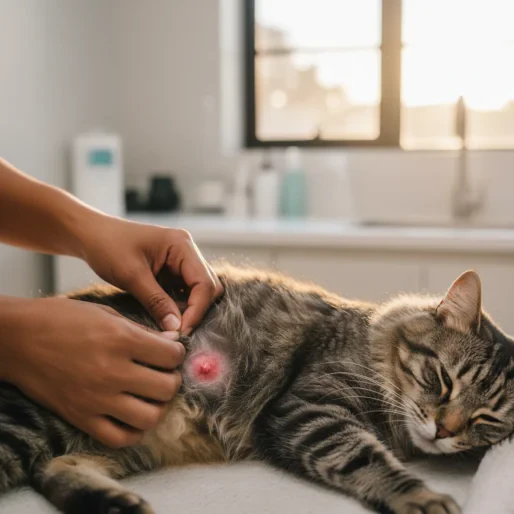
Hot spots are the nightmare of the humid season. Often called 'galis' generally, though that term can refer to mange, a hot spot is specifically a weeping, raw lesion that appears and spreads rapidly, sometimes within hours. They are intensely painful.
Why Our Weather Triggers Them
In a dry climate, a small scratch might scab over. In Philippine humidity, the wound weeps serum that doesn't dry. This serum mats the surrounding fur, creating a warm, wet seal over the wound where bacteria explode. The dog scratches the itch, introducing more bacteria, and the cycle accelerates.
Immediate Home Triage
If you discover a hot spot:
- Clip the Hair: You must remove the hair over and around the lesion to let air in. Use clippers, not scissors, to avoid cutting the swollen skin.
- Cleanse: Gently clean with a chlorhexidine-based wash or Povidone-Iodine (Betadine), diluted to the color of weak tea.
- Dry: Pat dry. Do not cover it with bandages; it needs to breathe.
- The Cone: You must use an Elizabethan collar (cone of shame). One lick can undo 24 hours of healing.
When to see a vet: If the lesion is larger than a 5-peso coin, if the dog is lethargic, or if the spot is near the eyes or ears.
Emergency Veterinary Clinic
Contact your nearest emergency veterinary clinic or call your vet immediately.
Metro Manila has several 24-hour veterinary clinics. In provincial areas, contact the municipal veterinarian.
Grooming and Local Care
Regular grooming is not just for aesthetics; it is a health requirement here. Matting traps heat and moisture, leading to heatstroke and skin rot. While 'summer cuts' are popular, never shave a double-coated dog (like a Husky) down to the skin unless medically necessary. Their coat protects them from the harsh tropical sun and regulates body temperature. Shaving them exposes them to sunburn and overheating.
A Note on Madre de Cacao
Many Filipino pet owners rely on Madre de Cacao (Gliricidia sepium) soaps and extracts for skin issues. While it has proven anti-mange and antifungal properties, it may not be strong enough for an acute, infected hot spot. Do not delay veterinary treatment in favor of herbal remedies if the skin is broken and weeping.
Legal and Community Responsibility
Responsible pet ownership in the Philippines is governed by the Anti-Rabies Act of 2007 (RA 9482) and the Animal Welfare Act.
- Vaccinations: Annual anti-rabies vaccination is mandatory. Skin health is important, but rabies is fatal. Ensure your pet's vaccination card is up to date.
- Registration: Most barangays require you to register your dog. This is often when you can access free or low-cost anti-rabies shots.
- Leashing: Keeping your dog leashed prevents them from wandering into tall grasses where ticks thrive or contacting stray dogs (askals) that may carry contagious skin mites (sarcoptic mange).
Summary
Managing a dog's skin in the Philippines requires vigilance against our greatest natural resource: humidity. By keeping the coat aerated, the paws dry and clean from street water, and the ears checked, you reduce the risk of the microbial overgrowth that keeps our vets busy. Whether you have a pampered Pomeranian or a beloved Aspin, the rules are the same: Keep them dry, keep them cool, and act fast at the first sign of 'amoy aso'.
Frequently Asked Questions
Can I use sulfur soap for my dog's hot spots? ↓
Is Madre de Cacao effective for hot spots? ↓
Why does my dog smell like 'wet dog' even when dry? ↓

Emma Lawson
Practical Pet Care Educator
Practical pet home care specialist — clear, step-by-step guidance grounded in veterinary nursing standards.
Content Disclosure
This article was created using state-of-the-art AI models with human editorial oversight. It is intended for informational and entertainment purposes only and does not constitute veterinary medical advice. Always consult a licensed veterinarian for your pet's specific health needs. Learn more about our process.