Training a puppy to walk on a loose lead in the Philippine tropical climate requires careful timing and heat safety planning. This guide covers pavement testing, positive reinforcement techniques, and session scheduling suited to Philippine weather patterns.
Key Takeaways
- In the Philippines, schedule training walks before 6 a.m. or after 5:30 p.m. to avoid dangerous pavement temperatures that persist year round.
- Always perform the seven second hand test on pavement, concrete, and even packed earth before walking a puppy.
- Keep initial training sessions to five minutes or less; heat and humidity shorten a puppy's focus and tolerance significantly.
- Use high value treats suited to the tropical climate (soft treats that resist melting and spoilage).
- Aspins and local mixed breeds handle heat better than brachycephalic breeds, but all puppies need heat precautions.
- Mandatory rabies vaccination under the Anti-Rabies Act of 2007 (RA 9482) should be completed before regular outdoor walks begin.
Why Puppies Pull on the Lead
Pulling is not stubbornness or a dominance issue. From a behavioural science perspective, lead pulling is a reinforced behaviour: the puppy moves forward, reaches interesting smells or social contacts, and the environment rewards the pulling. This is operant conditioning at work, where the consequence (access to the environment) strengthens the behaviour (pulling).
Puppies also have a natural opposition reflex. When pressure is applied to the collar or harness, many dogs instinctively push into it rather than yield. Understanding this reflex helps owners avoid the common trap of pulling back, which often intensifies the problem.
In the Philippine tropical climate, additional factors complicate lead walking. Puppies may rush toward shaded areas along buildings or trees, become overstimulated by the urgency of a shortened outing, or display erratic behaviour due to thermal discomfort caused by high humidity. Unlike dry heat, the humidity across the Philippines (often 70% to 85%) makes it much harder for dogs to cool themselves through panting. Professional consensus suggests that addressing environmental comfort first creates the foundation for effective training.
Before You Start: Vaccination and Registration
Before bringing a puppy outdoors for regular walking, ensure compliance with Philippine law. The Anti-Rabies Act of 2007 (RA 9482) mandates annual rabies vaccination for all dogs. Puppies typically receive their first rabies vaccine at three months of age. The Philippine Animal Welfare Act (RA 8485, amended by RA 10631) also protects animals from cruel treatment, which supports the use of positive reinforcement training methods rather than aversive tools.
Many local government units (LGUs) require barangay-level pet registration. Check with your barangay hall for specific requirements, as registration fees are typically modest (around ₱50 to ₱200 depending on the municipality). Registration also helps reunite lost pets with their owners.
Training Equipment
- Front clip harness: Reduces pulling mechanics without causing tracheal pressure. Harnesses are especially important for breeds prone to heat stress such as Pugs, Shih Tzus, and French Bulldogs, which are popular in the Philippines. Harnesses are available at most pet supply shops and typically range from ₱350 to ₱1,200 depending on size and brand.
- Fixed length lead (1.5 to 2 metres): Retractable leads undermine loose lead training because they teach the puppy that tension equals forward movement.
- Treat pouch: Allows quick access to rewards, essential for precise reinforcement timing.
- High value treats: Soft, small (pea sized), and aromatic. In the Philippine heat, choose treats that resist spoilage. Small pieces of boiled chicken breast or commercial soft treats stored in a cooler pouch work well.
- Portable water bottle and collapsible bowl: Hydration is critical in the tropics. Consider carrying at least 500 ml of water for short sessions.
- Cooling towel or damp bandana: Useful for wiping your puppy down during rest breaks, especially during the dry season (March to May) when temperatures frequently exceed 35 °C.
The Pavement Temperature Test
Hot pavement can burn a puppy's paw pads in seconds. The seven second rule is straightforward: place the back of your hand flat on the pavement surface. If you cannot hold it there comfortably for seven seconds, the surface is too hot for paw pads.
In the Philippines, asphalt and concrete in direct sunlight can reach dangerously high temperatures even when air temperature appears moderate. At an air temperature of around 32 °C (common from February through June), asphalt in direct sunlight can exceed 55 °C. This is a year round concern in the Philippines, not just a summer issue as in temperate countries.
Safer surfaces include grass (found in parks and open lots), dirt paths, and shaded sidewalks. If your neighbourhood lacks green spaces, consider driving to a nearby park or subdivision with tree-lined walking areas.
Timing Walks for Philippine Weather
Given the tropical climate, training walk windows in the Philippines are earlier and narrower than in temperate countries:
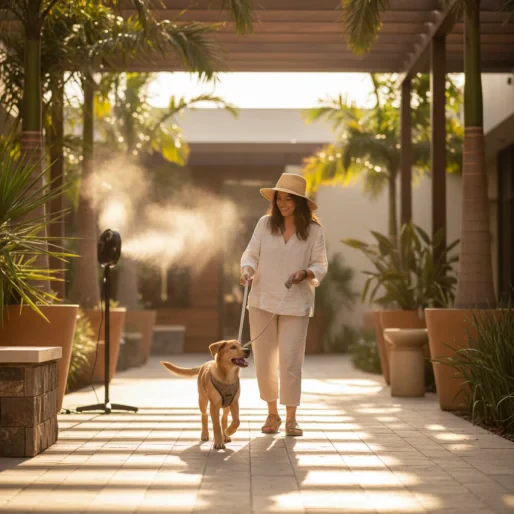
- Early morning: Before 6 a.m. is ideal, as pavements have cooled overnight and humidity is slightly lower.
- Late afternoon to evening: After 5:30 p.m., but test pavement first. Concrete and asphalt retain heat for one to two hours after direct sun exposure ends.
- During the wet season (June to November): Overcast and rainy days can offer cooler walking conditions, but avoid walking through floodwater. Standing water and muddy areas increase exposure to Leptospirosis, a bacterial disease spread through contaminated water that is common in the Philippines during typhoon season.
- Dry season (March to May): The hottest months require the strictest adherence to early morning or late evening walks. Midday sessions should be avoided entirely.
Puppies under six months are particularly vulnerable to heat stress due to their immature thermoregulation systems. Aspins (Philippine native dogs) generally tolerate heat better than imported breeds, but puppies of all breeds need protection.
Positive Reinforcement: Step by Step
Foundation: Indoor Work (Week One)
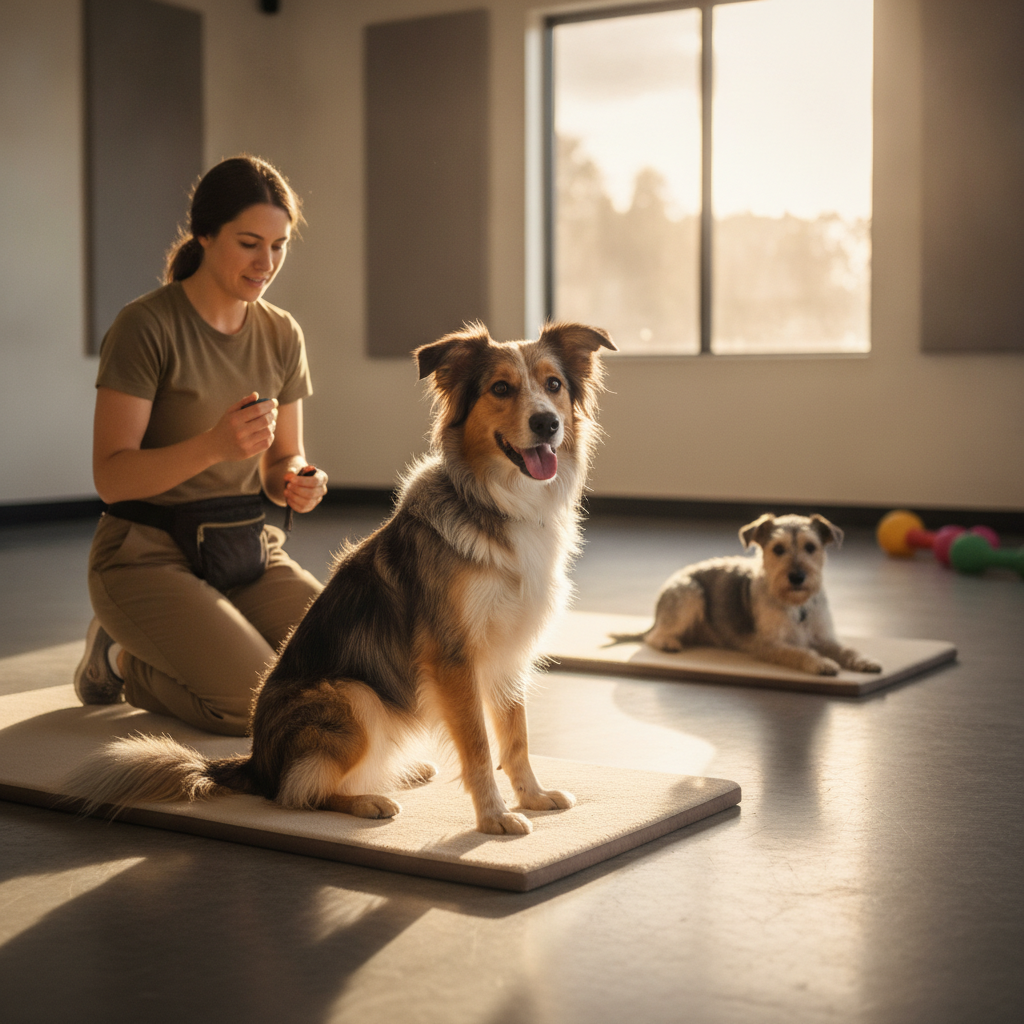
Begin all loose lead training indoors, eliminating environmental distractions entirely. This follows the LIMA (Least Intrusive, Minimally Aversive) principle endorsed by behaviour professionals worldwide.
- Charge the marker: Say "yes" (or click) then deliver a treat. Repeat 15 to 20 times until the puppy visibly anticipates the treat upon hearing the marker.
- Reward position: With the puppy on your preferred side, mark and reward any moment the puppy is near your leg with a loose lead. The lead should form a visible J shape.
- First steps: Take one step. If the puppy moves with you maintaining the loose lead, mark and reward. If the lead tightens, stop completely ("be a tree") and wait. The moment the puppy creates slack, mark and reward.
- Build to five steps: Gradually increase from one step to two, then three, then five before rewarding.
If your home is small (common in Philippine urban housing), a covered garage, carport, or even a quiet hallway can serve as your indoor training space.
Transitioning Outdoors (Weeks Two and Three)
Moving outdoors is a significant increase in difficulty. In the Philippines, apply these heat-specific adjustments:
- Choose a quiet, shaded area with grass or dirt underfoot. Parks, subdivision green spaces, or quiet barangay streets with tree cover work well.
- Reduce criteria: even one step of loose lead walking outdoors deserves reinforcement initially.
- Keep sessions to three to five minutes maximum, then offer water and shade rest.
- Train in two to three micro sessions per walk rather than one continuous block.
- Watch for signs of heat distress: excessive panting, wide tongue, drooling, or reluctance to move.
Adding Duration and Mild Distractions (Weeks Three and Four)
Gradually extend sessions to seven to ten minutes. Introduce mild distractions at a distance where the puppy notices them but can still respond to cues.
Common distractions in Philippine neighbourhoods include:
- Roaming cats or community dogs (a reality in many barangays)
- Tricycles, motorcycles, and jeepneys passing nearby
- Street food vendors and the associated smells
- Children playing in the street
When the puppy notices a distraction and chooses to look back at you (or maintains loose lead position), mark and reward generously. This builds an automatic "check in" habit.
The Engage/Disengage Game for Busy Streets
Philippine streets, especially in Metro Manila and other urban centres, present layered challenges: free roaming dogs, food stalls, heavy traffic noise, and unpredictable movement. Use the engage/disengage approach: when the puppy looks at a distraction, mark and reward the moment of noticing (before any reactive behaviour begins). Over repetitions, most puppies learn to see a distraction and immediately look to the handler for their reward.
Strategic positioning is important: walk on the side that places you between the puppy and the greatest distraction source. Use parked vehicles, walls, or planters as visual barriers when needed.
Six Week Programme (Adapted for Philippine Climate)
| Week | Location | Session Length | Key Focus |
|---|---|---|---|
| 1 | Indoors (home, garage, carport) | 3 to 5 minutes, 3 times daily | Marker conditioning and reward position |
| 2 | Quiet shaded outdoor area | 3 to 5 minutes, 2 to 3 times daily | Transferring skills outdoors, "be a tree" |
| 3 | Quiet barangay street or park path | 5 to 7 minutes, twice daily | Mild distractions at distance |
| 4 | Moderately busy area | 7 to 10 minutes, twice daily | Engage/disengage, check ins |
| 5 | Busier streets | 10 to 12 minutes, once or twice daily | Variable reinforcement, longer stretches |
| 6 | Full neighbourhood walk | 12 to 15 minutes continuous | Generalisation across environments |
Important: These are training session durations, not total walk times. All sessions should include water breaks and shade rest periods. During the dry season hot months (March to May), consider extending the programme to eight weeks with shorter sessions.
Common Mistakes to Avoid
- Training when the puppy is overheated or tired: A panting, distressed puppy cannot learn. If the tongue is excessively wide, breathing is laboured, or the puppy seeks to lie down, end the session immediately and move to shade.
- Inconsistency: Allowing pulling "just this once" because it is hot and you want to get home quickly. Every instance of pulling that results in forward movement reinforces the behaviour.
- Sessions too long: In the Philippine heat, err on the side of shorter sessions. Five productive minutes is worth far more than fifteen frustrating ones.
- Low value rewards: Outdoors, the environment is extremely rewarding. Treats must compete with street food smells, other animals, and fascinating distractions. Upgrade treat value when increasing difficulty.
- Using aversive tools: Choke chains, prong collars, and leash corrections are inconsistent with positive reinforcement principles and may violate the Philippine Animal Welfare Act. These tools risk creating negative associations with walks and with the handler.
- Walking through floodwater: During the wet season, avoid areas with standing water. Leptospirosis is a serious health risk for dogs (and humans) in the Philippines.
Troubleshooting
The Puppy Pulls Toward Shade or Water
This typically indicates discomfort rather than disobedience. Incorporate shade stops as built in rewards for good walking. Allow the puppy to rest in shaded areas after successful loose lead stretches. This turns a potential problem into a training tool.
The Puppy Refuses to Walk
In the Philippine heat, a puppy that sits or lies down may be signalling that it is too warm. Check pavement temperature immediately. If the environment is safe, the behaviour might indicate overwhelm or fatigue. Move to a cooler or quieter area, offer water, or end the session with a few easy repetitions the puppy can succeed at.
Reactivity Toward Free Roaming Dogs
This is a common challenge in Philippine neighbourhoods where community dogs are present. If the puppy lunges, barks, or shows signs of fear toward other dogs, this goes beyond standard loose lead training. A qualified behaviour professional should assess the puppy. The Philippine Animal Industry board and veterinary schools such as the UP College of Veterinary Medicine can provide referrals.
When to Seek Professional Help
Consider consulting a certified professional dog trainer if:
- The puppy shows no improvement after four weeks of consistent, correctly applied training.
- Pulling is accompanied by aggressive displays, extreme fear, or panic responses.
- The puppy appears to be in physical discomfort when walking (limping, reluctance, yelping), which requires veterinary assessment first.
- You feel frustrated or tempted to use aversive tools.
When selecting a trainer in the Philippines, look for those who use force-free, positive reinforcement methods. Certifications such as CPDT-KA (Certified Professional Dog Trainer, Knowledge Assessed) or membership in the IAABC (International Association of Animal Behavior Consultants) indicate adherence to ethical, science-based training standards.
Emergency Veterinary Clinic
Contact your nearest emergency veterinary clinic or call your vet immediately.
Metro Manila has several 24-hour veterinary clinics. In provincial areas, contact the municipal veterinarian.
Heat Safety Reminders
- Carry water for both handler and puppy on every outing, at least 500 ml per short session.
- Know the signs of heat stroke: excessive panting, drooling, bright red gums, unsteadiness, vomiting, or collapse.
- Brachycephalic breeds (Shih Tzus, Pugs, French Bulldogs) are at significantly higher risk in Philippine humidity and may need indoor-only training during the hottest months.
- Consider cooling vests or damp towels for puppies that overheat quickly.
- Always identify a shaded rest spot before beginning any training session.
- If you suspect heat stroke, wet the dog with cool (not ice cold) water and seek veterinary attention immediately.
For related warm weather safety guidance, see our article on Summer Exercise for Senior Dogs With Hip Dysplasia, which covers heat safety principles applicable to all ages. Owners managing a reactive puppy alongside lead training may also benefit from our guide on Daycare Socialisation by Breed Group.
Frequently Asked Questions
What time should I walk my puppy in the Philippines? ↓
Is it safe to walk my puppy during the Philippine rainy season? ↓
Do Aspins handle heat better than imported dog breeds? ↓
What equipment do I need for puppy lead training in the Philippines? ↓
Does my puppy need vaccinations before outdoor lead training? ↓

Mark Sullivan
Certified Professional Dog Trainer
Certified professional dog trainer — positive-reinforcement methods for every breed and behavioural challenge.
Content Disclosure
This article was created using state-of-the-art AI models with human editorial oversight. It is intended for informational and entertainment purposes only and does not constitute veterinary medical advice. Always consult a licensed veterinarian for your pet's specific health needs. Learn more about our process.