
In this article
- Key Takeaways
- Why U.S. Dog Owners Need a Careful Approach
- Step 1: Verify State Licensing and Local Permits
- Step 2: Research and Shortlist Facilities
- Step 3: The In-Person Tour
- Step 4: Questions That Reveal Operational Quality
- Step 5: Summer Safety by U.S. Region
- Step 6: The Trial Overnight Stay
- Step 7: Final Booking and Cost Expectations
- Emergency Contacts to Keep Accessible
- Printable Evaluation Checklist
Key Takeaways
- Boarding facility licensing is regulated at the state level in the U.S., meaning standards differ significantly depending on where you live.
- Summer heat poses serious risks: temperatures above 85°F can be dangerous for dogs, and facilities must have adequate air conditioning, especially in southern and southwestern states.
- Require proof of USDA compliance if the facility offers transport or operates across state lines, and confirm current state and county business licensing.
- Begin your search at least two to three months before your summer trip; popular facilities in metropolitan areas often book out by April or May.
- A trial overnight stay remains the most reliable way to evaluate whether your dog will settle comfortably.
Why U.S. Dog Owners Need a Careful Approach
The United States has the highest rate of pet ownership in the world, and the dog boarding industry generates billions of dollars annually. That scale means enormous variation in quality. A luxury resort-style facility in one city may sit just miles from an unlicensed backyard operation. Unlike some countries with centralized oversight, U.S. boarding regulation falls to individual states and, in many cases, counties or municipalities. This patchwork system puts the burden on owners to verify credentials and evaluate safety independently.
The American Veterinary Medical Association (AVMA) provides guidelines on animal housing, ventilation, and sanitation that serve as a national baseline. The International Boarding and Pet Services Association (IBPSA) offers voluntary accreditation for facilities that meet elevated care standards. Both are worth referencing, but neither replaces an in-person visit.
Step 1: Verify State Licensing and Local Permits
Boarding kennel regulations vary by state. Some states, such as Colorado, Pennsylvania, and Virginia, require specific kennel licenses with periodic inspections. Others have minimal or no statewide requirements, leaving enforcement to county animal control departments.
- Contact your state's department of agriculture or animal health board to confirm whether a facility holds the required license.
- In cities with breed-specific legislation (for example, certain municipalities in Ohio, Missouri, and Iowa have restrictions on breeds like pit bulls), confirm that your dog's breed is accepted at the facility and permitted in the jurisdiction.
- If the facility transports animals across state lines or operates as a dealer, it may require USDA licensing under the Animal Welfare Act. Ask to see documentation if applicable.
A facility that cannot produce its license or permit on request should be removed from your shortlist immediately.
Step 2: Research and Shortlist Facilities
Online Reviews and Reputation
Check Google Reviews, Yelp, and the Better Business Bureau for patterns. A single negative review may reflect an isolated incident, but recurring complaints about cleanliness, injuries, or poor communication suggest systemic problems. Pay attention to how the business responds to criticism; defensive or dismissive replies are a warning sign.
Veterinary Affiliation
Reputable U.S. boarding facilities maintain a formal relationship with a nearby veterinary clinic or emergency animal hospital. Ask for the name and address of the affiliated practice. In major metro areas, 24-hour emergency veterinary hospitals are typically within a 10 to 15 mile radius. In rural areas, confirm that emergency care is accessible within a reasonable driving distance.
Insurance and Liability
Ask whether the facility carries commercial liability insurance. In the event of injury, illness, or escape, a facility without insurance may be unable to cover veterinary bills. Some U.S. pet insurance policies also cover boarding-related incidents, so review your own policy details before travel. For more on coverage timing, see Pet Insurance Waiting Periods in the U.S. Explained.
Step 3: The In-Person Tour
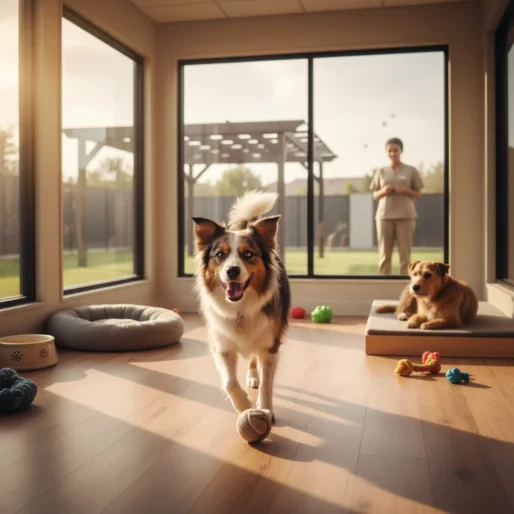
Never book a facility without visiting it first. Any operation that refuses tours or limits what you can see should be disqualified. Evaluate these areas systematically:
Indoor Spaces
- Are kennels clean, dry, and free of overwhelming odor? Some smell is normal, but a strong ammonia scent indicates inadequate sanitation.
- Are enclosures sized appropriately? Dogs should be able to stand, turn, and lie down fully stretched. For large breeds (80 lbs and above), confirm that kennel runs are large enough to allow movement.
- Is air conditioning functional and set to keep indoor temperatures below 78°F? This is critical. In states like Texas, Arizona, Florida, and Georgia, summer temperatures routinely exceed 100°F outdoors.
- Is ventilation adequate, with no stagnant air or visible mold?
Outdoor Exercise Areas
- Are yards securely fenced (at least 6 feet for large breeds) with no gaps, sharp edges, or exposed hardware?
- Is shade available throughout the day, not just in the morning?
- Are water stations clean, filled, and accessible in all play areas?
- Is the ground surface safe and free of standing water, toxic plants (such as sago palm, oleander, or foxtail grass, which are common in many U.S. regions), and debris?
Food Handling
- Is food stored in sealed, labeled containers?
- Can the facility accommodate prescription diets, raw feeding protocols, or allergies? For context on feeding options, see Raw vs Cooked vs Freeze-Dried Dog Food: US Guide.
- Are feeding schedules flexible enough to match your dog's home routine?
Step 4: Questions That Reveal Operational Quality
Staffing
- What is the staff to dog ratio? IBPSA guidelines suggest approximately one handler per 10 to 15 dogs during supervised group play. Ask about overnight staffing as well; some facilities leave dogs completely unattended after hours.
- What training do employees receive? Look for canine first aid and CPR certification (offered through organizations like the American Red Cross Pet First Aid program), Fear Free certification, and experience with reactive or anxious dogs.
- What is the staff turnover rate? High turnover can mean inconsistent care and stressed animals.
Vaccination and Health Requirements
Standard vaccination requirements at U.S. boarding facilities typically include:
- Rabies (legally mandated in all 50 states, though timing and booster schedules vary by state)
- DHPP (distemper, hepatitis, parainfluenza, parvovirus)
- Bordetella (kennel cough), often required within the previous 6 to 12 months
- Canine influenza (H3N2 and H3N8), increasingly required after outbreaks in major metro areas
Facilities should also require proof of current flea, tick, and heartworm prevention. Heartworm is endemic across much of the U.S., particularly in the Southeast, Gulf Coast, and Mississippi River Valley.
Emergency Protocols
- Who is authorized to make emergency veterinary decisions?
- Which clinic is contacted, and how far away is it?
- How quickly are owners notified?
- Is there a spending cap on emergency treatment without additional owner approval?
Staff should be able to describe these protocols clearly and point to a written emergency plan. For context on time-sensitive emergencies, see Bloat in Dogs: The Emergency Timeline You Must Know.
Step 5: Summer Safety by U.S. Region
Summer boarding risks differ dramatically across the country. Evaluate facilities based on your specific region.
South and Southeast (Texas, Florida, Georgia, Louisiana, the Carolinas)
Temperatures regularly exceed 95°F to 105°F. Air conditioning is not optional; it is a safety requirement. Outdoor play should be limited to early morning (before 9 a.m.) and evening (after 6 p.m.). Brachycephalic breeds (English Bulldogs, French Bulldogs, Pugs, Boston Terriers) and dogs over 50 lbs face elevated heatstroke risk. Mosquito-borne heartworm transmission peaks in summer months across this region.
Southwest (Arizona, Nevada, New Mexico)
Extreme dry heat can push temperatures above 110°F. Concrete and asphalt surfaces can burn paw pads in minutes. Confirm that outdoor areas use grass, decomposed granite, or shaded artificial turf, and that outdoor time is severely restricted during peak heat.
Midwest and Northeast
Humid summers with temperatures in the 80°F to 95°F range still pose heatstroke risk, particularly during heat waves. Severe thunderstorms and tornado warnings are common in the Midwest from June through August. Ask how the facility handles severe weather alerts and whether dogs are moved to interior, secure areas during storms.
West Coast and Pacific Northwest
Wildfire smoke is an increasing summer hazard in California, Oregon, and Washington. When air quality drops (AQI above 100), outdoor activity should be suspended entirely. Ask whether the facility monitors local AQI readings and adjusts outdoor schedules accordingly.
For dogs returning from a period of reduced activity, gradual conditioning is important before boarding. For related guidance, see Spring Fitness Restart Plan for Overweight Dogs.
Step 6: The Trial Overnight Stay
A trial stay of one to two nights is the best way to evaluate how your dog will handle the boarding environment.
Preparing for the Trial
- Submit all paperwork: vaccination records, emergency contacts, feeding instructions, medication details, and a signed emergency treatment authorization.
- Pack your dog's regular food (enough for the stay plus two extra days), medications in original labeled packaging, a comfort item with a familiar scent, and a collar with current ID tags.
- Make sure your dog's microchip registration is up to date with current contact information. U.S. microchip databases include the AAHA Universal Pet Microchip Lookup tool, which checks all major registries.
- Inform staff about behavioral triggers, anxiety patterns, and any history of resource guarding or reactivity. For dogs that struggle with handling, Teaching a Rescue Dog to Accept Handling and Grooming provides useful background.
Evaluating the Trial
- Ask for a written or verbal behavior summary: eating habits, sleep quality, interactions with staff and other dogs, and any signs of stress (excessive panting, drooling, refusal to eat, pacing).
- Review any photo or video updates for body language cues: relaxed posture, loose tail wag, willingness to engage.
- After pickup, monitor your dog for 24 to 48 hours. Some adjustment stress is expected, but prolonged refusal to eat, significant behavioral changes, or physical injuries warrant immediate veterinary attention.
Step 7: Final Booking and Cost Expectations
Average nightly boarding rates in the U.S. typically range from $30 to $50 per night for standard kennels, and $50 to $100 or more per night for premium or resort-style facilities. Rates vary significantly by region; urban areas such as New York City, San Francisco, and Los Angeles tend to be at the higher end. Additional fees may apply for administering medication, extra play sessions, grooming, or one-on-one enrichment.
Documentation to Provide at Drop-Off
- Current vaccination records
- Veterinarian's name, address, and emergency number
- Written feeding instructions with brand, portion size (in cups or ounces), and schedule
- Medication details with dosage, timing, and administration method
- Emergency contact information for at least two people
- Signed authorization for emergency veterinary treatment, including a spending threshold
Emergency Contacts to Keep Accessible
- ASPCA Animal Poison Control Center: (888) 426-4435 (fee applies, typically around $75)
- Pet Poison Helpline: (855) 764-7661 (fee applies, typically around $85)
- Your dog's regular veterinarian
- The boarding facility's affiliated emergency veterinary clinic
ASPCA Animal Poison Control Center
Call the ASPCA Poison Control hotline or contact your nearest emergency veterinary clinic immediately.
A consultation fee may apply. For non-poison emergencies, search "emergency vet near me" or call your local animal ER.
Printable Evaluation Checklist
- ☐ Facility holds a valid state or county license and will show proof
- ☐ Tour is offered freely with unrestricted access to all areas
- ☐ Indoor spaces are clean, well ventilated, and air conditioned
- ☐ Enclosures are sized appropriately for the breeds housed
- ☐ Outdoor areas are securely fenced with shade, water, and safe surfaces
- ☐ Staff to dog ratio is approximately 1:10 to 1:15 during group play
- ☐ Staff hold canine first aid or CPR certification
- ☐ Rabies, DHPP, bordetella, and canine influenza vaccines are required
- ☐ Flea, tick, and heartworm prevention are verified at intake
- ☐ A separate quarantine area exists for sick dogs
- ☐ Emergency veterinary protocol is documented, with a named clinic
- ☐ Special diets and medications can be accommodated
- ☐ Daily enrichment, structured exercise, and grouping by size or temperament are standard. For enrichment ideas, see DIY Dog Enrichment Rotation From Recycled Materials
- ☐ A trial overnight stay is offered before extended bookings
- ☐ A written contract with clear terms, cancellation policy, and liability details is provided
- ☐ Photo or video updates are available during stays
Frequently Asked Questions
Content Disclosure
This article was created using state-of-the-art AI models with human editorial oversight. It is intended for informational and entertainment purposes only and does not constitute veterinary medical advice. Always consult a licensed veterinarian for your pet's specific health needs. Learn more about our process.