Outdoor rabbit enclosures in the United States face unique challenges from regional predators, extreme heat zones, and state-level regulations. This spring checklist covers predator proofing, heat safety, toxic plants, and escape prevention tailored to American climates and conditions.
Key Takeaways
- Predator proofing in the U.S. must account for raccoons, coyotes, hawks, and regional threats like rattlesnakes in the Southwest. Use 16-gauge hardware cloth, not chicken wire.
- Heat stress can begin at around 80 °F. Southern and Southwestern states face extended periods above this threshold from April through October.
- Common U.S. yard plants such as foxglove, azalea, oleander, and wild nightshade are toxic to rabbits. A plant audit is essential before placing any enclosure.
- Microchipping is strongly recommended, and several states or municipalities require rabies vaccination for domestic rabbits.
- Keep the ASPCA Animal Poison Control number (888-426-4435) and your rabbit-savvy veterinarian's details posted at the enclosure.
ASPCA Animal Poison Control Center
Call the ASPCA Poison Control hotline or contact your nearest emergency veterinary clinic immediately.
A consultation fee may apply. For non-poison emergencies, search "emergency vet near me" or call your local animal ER.
Why Outdoor Time Matters for U.S. Rabbit Owners
Rabbits thrive with access to natural sunlight, fresh forage, and sensory enrichment. Across the United States, spring offers ideal conditions for reintroducing outdoor enclosure time after winter. However, the U.S. presents a uniquely varied set of risks: raccoons and coyotes are found coast to coast, birds of prey are protected under federal law (meaning lethal deterrents are illegal), and summer heat in many states can turn deadly for rabbits in a matter of hours. A properly designed and maintained enclosure addresses all of these factors.
This guide is structured as a walkthrough checklist. It is designed for rabbit owners, pet sitters, and shelter volunteers to work through section by section, confirming each safety requirement. Where relevant, links to related seasonal guides on parasite prevention and heat safety are included.
Predator Proofing for U.S. Conditions
Mesh Selection
Standard chicken wire is one of the most common mistakes in U.S. rabbit setups. Raccoons, which are present in all 48 contiguous states, can tear lightweight poultry netting with their dexterous paws. The recommended barrier is 16-gauge (or heavier) galvanized welded wire mesh, commonly sold as hardware cloth at retailers like hardware and farm supply stores. Openings should be no larger than 0.5 by 1 inch. This prevents raccoon paws, snake entry (relevant in the South, Southwest, and rural Midwest), and weasel access.
Roof and Overhead Coverage
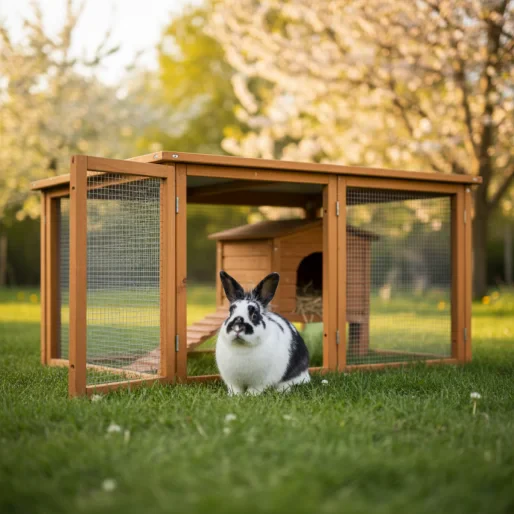
An open-top enclosure is never safe. Red-tailed hawks, Cooper's hawks, great horned owls, and in some western states, golden eagles, all prey on rabbits. These raptors are federally protected under the Migratory Bird Treaty Act, so physical exclusion via a solid or mesh-covered roof is the only legal option. A combination approach works well: a solid roofed shelter section for shade and rain cover, with securely attached hardware cloth over the open run area.
Ground Defense
Coyotes and foxes dig aggressively. An outward-facing wire apron should be buried at least 12 inches deep around the full perimeter, or an L-shaped apron extending 12 to 24 inches outward can be laid horizontally just below the soil surface. Many U.S. builders also install hardware cloth across the entire enclosure floor beneath the substrate, which prevents both rabbit escape and predator entry from below.
Latches and Raccoon Resistance
Raccoons are notorious for opening simple bolt latches, hook-and-eye closures, and spring-loaded catches. A two-step latch system is essential: a sliding bolt paired with a carabiner or small padlock on every door and access panel. This is one of the most frequently overlooked steps in U.S. enclosure builds.
Night Protocol
Most predator attacks on domestic rabbits in the U.S. occur between dusk and dawn. Coyote activity peaks during twilight hours, and raccoons are primarily nocturnal. Many experienced owners bring rabbits into a secure garage (ensuring no vehicle fumes or chemical storage risks), mudroom, or indoor space overnight. If rabbits remain outside, motion-activated lights or ultrasonic deterrent devices around the perimeter provide an additional layer of protection.
Heat Safety Across U.S. Climate Zones
Understanding Regional Risk
Rabbits are far more vulnerable to heat than most owners realize. Veterinary consensus places the danger zone at approximately 80 °F and above. In the Southern states (Texas, Florida, Georgia, the Carolinas), temperatures exceed 80 °F routinely from May through September. In the Desert Southwest (Arizona, Nevada, Southern California), summer highs regularly surpass 110 °F, making outdoor enclosure time extremely limited or impractical during peak months. Even in the upper Midwest and Northeast, summer heat waves can push temperatures into the 90s for extended stretches.
The American Veterinary Medical Association (AVMA) emphasizes that rabbits cannot pant efficiently and rely on ear vasodilation for thermoregulation, making shade and airflow non-negotiable rather than optional.
Shade Requirements
At least 60 to 70 percent of the enclosure should be shaded during peak sun hours, typically 10:00 AM to 4:00 PM in summer. Options include:
- Solid roofing panels over a large section of the run.
- Natural tree canopy, provided the tree species is verified as non-toxic (see the plant section below).
- Shade cloth rated at 70 to 90 percent UV block, available at garden supply and farm stores.
- Ceramic or stone tiles placed inside the enclosure. These stay cooler than wood or plastic and give rabbits a surface to sprawl on.
Emergency Cooling Supplies
During warm months, keep these items readily available:
- Frozen water bottles wrapped in a thin towel for rabbits to lie beside.
- A ceramic tile kept in the refrigerator, rotated into the enclosure during hot spells.
- Fresh water in heavy, tip-proof bowls, checked at least twice daily. Rabbits drink significantly more in heat.
- A plan to bring rabbits indoors if temperatures are forecast above 85 °F, or immediately if above 90 °F.
Toxic Plant Identification for U.S. Gardens
Why This Step Cannot Be Skipped
Rabbits are natural foragers and will sample virtually any greenery within reach. The ASPCA Animal Poison Control Center maintains an extensive database of plants toxic to rabbits, and the House Rabbit Society (a U.S.-based rescue and education organization) provides widely referenced guidance specific to domestic rabbits.
Common Toxic Plants in U.S. Yards
The following plants are frequently found in American residential landscaping and are toxic to rabbits. This is not exhaustive:
- Foxglove (Digitalis purpurea): contains cardiac glycosides; potentially fatal.
- Azalea and Rhododendron (Rhododendron species): common in Southeast and Pacific Northwest landscaping; contain grayanotoxins.
- Oleander (Nerium oleander): widely planted in Southern California, Florida, and Gulf Coast states; extremely toxic.
- Yew (Taxus species): common ornamental hedge plant across the Northeast and Midwest; very small amounts can be fatal.
- Lily of the Valley (Convallaria majalis): cardiac toxin; all parts dangerous.
- Wild nightshade (Solanum species): found in gardens and disturbed soil nationwide.
- Buttercups (Ranunculus species): cause oral irritation and digestive upset.
- Rhubarb leaves: contain oxalic acid; toxic to rabbits.
- English Ivy (Hedera helix): causes irritation and digestive symptoms.
- Sago Palm (Cycas revoluta): popular in Southern landscaping; all parts highly toxic.
Safe Plants for the Enclosure Area
Suitable plants that can grow near or within the enclosure include:
- Timothy grass and orchard grass (also excellent forage)
- Clover (in moderation)
- Dandelion (leaves and flowers, away from pesticide-treated areas)
- Chamomile
- Sunflower
- Marigold (Calendula species)
The Plant Audit
Before placing an outdoor enclosure, walk the intended area and identify every plant species within about 6 feet of the enclosure boundary, including overhead branches. Remove or securely fence off any toxic species. Repeat this audit each spring, as self-seeding plants appear year to year. Use a plant identification app or consult a veterinary professional for any unidentified species. Be especially cautious with volunteer growth in areas where herbicide or pesticide has been applied, as chemical residue on otherwise safe plants can also be harmful.
Escape Prevention
Common Escape Routes
Rabbits are surprisingly capable escape artists. Key risks include:
- Digging: rabbits can excavate an escape tunnel within minutes in soft soil, particularly common in sandy Southern and Coastal soils.
- Gaps: a rabbit can fit through any opening its skull can pass through, roughly 3 inches or larger for medium breeds (around 5 to 7 lbs).
- Jumping: healthy adults can jump 2 to 3 feet vertically. Enclosure walls should be at least 3 to 4 feet high, or fully roofed.
- Loose panels: wind and weather loosen joints over time. Secure all panels with screws and brackets, not just clips.
Identification
All outdoor rabbits should be microchipped. In the U.S., microchip registration services such as those managed through the AAHA (American Animal Hospital Association) Universal Pet Microchip Lookup tool allow any shelter or veterinary clinic to trace a found rabbit back to its owner. GPS tracking devices designed for small pets can also provide real-time location data during outdoor time.
U.S. Regulatory Considerations
Rabbit ownership regulations vary by state and municipality. Key considerations include:
- Rabies vaccination: while not universally mandated for rabbits, some states and counties require or recommend rabies vaccination for domestic rabbits, particularly if housed outdoors. Check with your local animal control office.
- Zoning and livestock classification: in some municipalities, rabbits are classified as livestock rather than companion animals, which may affect outdoor housing requirements, enclosure size minimums, and setback distances from property lines. This is especially relevant in suburban and urban areas with HOA rules.
- Wildlife harassment laws: because raptors and many predators are protected under federal and state law, lethal deterrent methods are generally illegal. Physical exclusion (roofing, mesh, secure latches) is the only compliant approach.
Seasonal Maintenance for U.S. Climates
Spring (March to May)
- Complete the toxic plant audit around the enclosure area.
- Inspect all mesh, joints, latches, and wood for winter damage (ice, snow load, and freeze-thaw cycles cause significant wear in Northern states).
- Replace any rusted or weakened mesh panels.
- Clean and disinfect the hutch using rabbit-safe disinfectant.
- Begin parasite prevention: check for fleas, ticks (particularly in the Northeast and upper Midwest where Lyme-carrying deer ticks are prevalent), and fly strike risk. See Spring Parasite Prevention for guidance.
- Confirm veterinary contact details and emergency numbers are posted at the enclosure.
ASPCA Animal Poison Control Center
Call the ASPCA Poison Control hotline or contact your nearest emergency veterinary clinic immediately.
A consultation fee may apply. For non-poison emergencies, search "emergency vet near me" or call your local animal ER.
Summer (June to August)
- Monitor shade coverage as sun angles change.
- Check water supply at least twice daily; provide multiple sources.
- Inspect for fly activity (fly strike can develop within hours in humid Southern climates).
- Mow or manage grass to prevent toxic weed overgrowth.
- Bring rabbits indoors during heat advisories or when temperatures exceed 85 °F.
- In wildfire-prone Western states, monitor air quality; bring rabbits indoors when AQI exceeds 100.
End of Season (September to October)
- Conduct a full structural review before fall weather.
- In Northern states, transition rabbits to indoor housing before first frost.
- Deep clean the enclosure and treat wood with pet-safe preservative.
Emergency Kit
Store a dedicated emergency kit near (not inside) the outdoor enclosure. Contents should include:
- Veterinary contact card: your rabbit-savvy vet's number, after-hours emergency clinic details, and the ASPCA Animal Poison Control number (888-426-4435).
- Pet carrier: a secure, ventilated carrier for emergency transport.
- Basic first aid supplies: sterile gauze, saline solution, blunt-tipped scissors, styptic powder, and tweezers for tick removal.
- Cooling items: frozen water bottles, a ceramic tile, and a lightweight blanket for shock.
- Spare water bottle and bowl.
- Flashlight for evening inspections.
- Repair materials: cable ties, spare mesh, a multi-tool, and extra latch hardware.
- Record sheet: log incidents, structural issues, or unusual behavior for veterinary reference.
If you use a pet sitter, ensure they are briefed on the enclosure layout, emergency kit location, and veterinary contacts. Our guide on What Pet Sitting Insurance Should Cover in the U.S. outlines liability considerations relevant to this scenario.
Printable Checklist
Print and laminate this list. Post it at the enclosure or the nearest indoor area.
- ☐ Mesh is 16-gauge welded wire, openings no larger than 0.5 x 1 inch.
- ☐ Roof is fully covered (solid or mesh).
- ☐ Buried wire apron or floor mesh installed (minimum 12 inches deep or outward).
- ☐ All doors secured with two-step latches (raccoon-resistant).
- ☐ Shade covers at least 60 to 70 percent of enclosure during peak sun.
- ☐ Cross ventilation in any enclosed shelter section.
- ☐ Emergency cooling supplies on hand.
- ☐ Water checked twice daily; multiple sources provided.
- ☐ Toxic plant audit completed within 6 feet of enclosure.
- ☐ Enclosure walls at least 3 to 4 feet high or fully roofed.
- ☐ Monthly structural inspection completed and logged.
- ☐ Rabbits microchipped with current registration.
- ☐ Emergency kit stocked and checked monthly.
- ☐ Veterinary emergency numbers posted at enclosure.
- ☐ Night protocol in place.
- ☐ Fly strike checks daily in warm weather.
- ☐ Parasite prevention current per veterinary recommendation.
- ☐ Local zoning and vaccination requirements verified.
Frequently Asked Questions
What temperature is too hot for rabbits outdoors in the U.S.? ↓
Is chicken wire safe for an outdoor rabbit enclosure? ↓
Do I need to vaccinate my rabbit against rabies in the United States? ↓
What common U.S. yard plants are toxic to rabbits? ↓
How do I predator-proof a rabbit enclosure against raccoons? ↓

Tom Ashford
Pet Safety & Home Consultant
Pet safety and home-proofing specialist — systematic hazard prevention and emergency preparedness for pet owners.
Content Disclosure
This article was created using state-of-the-art AI models with human editorial oversight. It is intended for informational and entertainment purposes only and does not constitute veterinary medical advice. Always consult a licensed veterinarian for your pet's specific health needs. Learn more about our process.