
In this article
- Overview: Why Hydration Technology Matters Most in a UAE Summer
- Key Takeaways
- How Circulating Fountains Encourage Reluctant Drinkers
- What Intake-Tracking Sensors Reveal About Early Dehydration
- Recognising Dehydration: Signs Every UAE Owner Should Know
- Comparing Filter Types in Dusty, Air-Conditioned Homes
- App Reliability: The Feature Owners Underestimate
- Prevention Strategies for the Hottest Weeks
- A Setup Guide for the Hottest Weeks
- Treatment and Veterinary Care
- When to Seek Emergency Help
- Final Thoughts
Overview: Why Hydration Technology Matters Most in a UAE Summer
When outdoor temperatures in the Emirates climb past 45C and indoor air conditioning runs day and night, both cats and dogs quietly lose more water than their owners realise. Air-conditioned homes are drying environments, and many pets simply do not drink enough to keep pace. This is where a new generation of smart water fountains and hydration monitors becomes genuinely useful, not as gadgets, but as practical tools that encourage drinking and give early warning when intake drops.
Circulating fountains use gentle water movement to appeal to a pet's instincts, while intake-tracking sensors log how much water is consumed each day. Together, they help owners spot dehydration before it becomes a veterinary emergency. During the hottest weeks of the year, that early insight can be the difference between a minor adjustment at home and an urgent clinic visit.
Key Takeaways
- Movement encourages drinking: Many cats and some dogs prefer flowing water, and a circulating fountain can meaningfully increase daily intake in reluctant drinkers.
- Sensors reveal trends, not diagnoses: Intake-tracking data helps you notice a sudden drop early, but it does not replace a veterinary examination.
- Dust is the real enemy in the UAE: Fine desert dust and air-conditioning particles clog filters and pumps faster than in cooler climates, so filter type and cleaning routine matter enormously.
- App reliability varies: Choose systems with offline logging and stable connectivity, since a fountain that only tracks when the app is connected offers little peace of mind.
- Technology supports, never substitutes: Always provide multiple backup water sources and consult a veterinarian if you notice signs of dehydration.
How Circulating Fountains Encourage Reluctant Drinkers
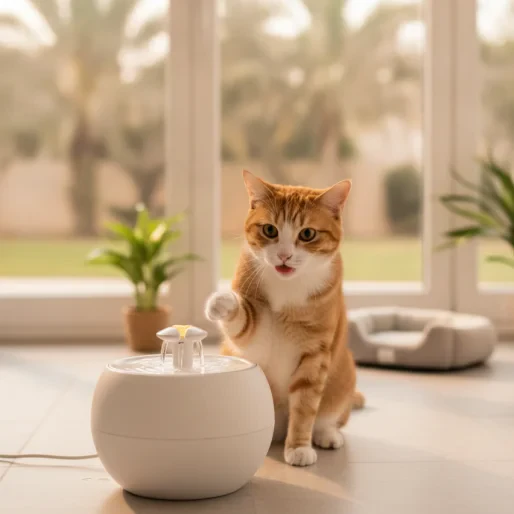
Cats in particular evolved from desert-dwelling ancestors and often have a naturally low thirst drive. Professional consensus in feline medicine has long noted that many cats prefer running water to a still bowl, possibly because moving water reads as fresher and safer to drink. A fountain that continuously circulates and aerates water can tap into this preference and gently raise daily consumption.
Dogs benefit too, especially fussy small breeds and seniors who may find a large communal bowl unappealing. Owners commonly report that a softly bubbling fountain draws curious pets back repeatedly through the day, turning drinking into an activity rather than a chore.
What to Look For in a Fountain
- Adjustable flow: A quiet, gentle stream suits nervous cats, while a livelier flow can attract playful dogs. Adjustability lets you match the pet.
- Low noise: A noisy pump discourages sensitive animals and disturbs households. Look for models praised for quiet operation.
- Wide, low basins: Cats especially dislike whisker contact with narrow bowls, a discomfort sometimes called whisker fatigue. Broad, shallow drinking areas help.
- Ceramic or stainless steel surfaces: These materials resist bacterial biofilm better than porous plastic and are easier to keep hygienic in a hot climate.
What Intake-Tracking Sensors Reveal About Early Dehydration
The most valuable feature of a smart hydration system is not the fountain itself but the data it records. Intake-tracking sensors measure how much water leaves the reservoir, or how often a pet approaches to drink, and build a daily and weekly picture of normal behaviour. Once you know your pet's baseline, a meaningful deviation stands out immediately.
A sudden and sustained drop in water intake during a UAE July can be one of the earliest signals that something is wrong, whether that is heat stress, a developing illness, dental pain that makes drinking uncomfortable, or simply a dirty bowl the pet is avoiding. Because dehydration develops silently, catching a downward trend early gives owners time to act.
Reading the Data Sensibly
It is important to treat these numbers as trends rather than diagnoses. Daily intake naturally varies with diet (pets eating wet food drink less), activity, and ambient temperature. A single low day is rarely cause for alarm. A pattern of falling intake across several days, or a sharp change alongside other symptoms, is what should prompt attention. The technology's job is to make that pattern visible, not to tell you what it means. That interpretation belongs to you and your veterinarian.
This philosophy of using sensors to flag early changes mirrors developments elsewhere in pet technology, such as the acoustic tools discussed in AI Acoustic Monitors That Decode Cat Pain in 2026, where data augments but never replaces professional judgement.
Recognising Dehydration: Signs Every UAE Owner Should Know
No monitor should replace hands-on observation. Owners should learn the physical signs of dehydration so they can respond even if the technology fails or the pet drinks from another source.
Common Signs in Cats and Dogs
- Reduced skin elasticity: Gently lift the skin over the shoulders. In a hydrated pet it springs back quickly; in a dehydrated one it returns slowly.
- Tacky or dry gums: Healthy gums feel moist. Sticky, dry gums suggest fluid loss.
- Lethargy and weakness: A normally active pet becoming dull or reluctant to move may be dehydrated or overheating.
- Sunken eyes and loss of appetite: These can accompany more advanced dehydration.
- Excessive panting in dogs: Heavy, prolonged panting during hot weather can precede both dehydration and heatstroke.
Because heat and dehydration go hand in hand during the Gulf summer, these signs often overlap with early heat stress. Any pet showing them during extreme heat deserves prompt cooling and, if signs persist, veterinary advice.
Comparing Filter Types in Dusty, Air-Conditioned Homes
The UAE presents a specific challenge that fountain reviews from cooler countries rarely address: fine airborne dust. Desert particulates and the constant recirculation of air-conditioned air settle into open water and coat mechanical parts. Filter choice and maintenance therefore matter far more here than in temperate climates.
Foam or Sponge Pre-Filters
These trap hair, dust, and larger debris before water reaches the pump. In dusty homes they clog quickly and need rinsing every few days. They are inexpensive and essential for protecting the pump, but they are not a complete solution on their own.
Activated Carbon Filters
Carbon filters help reduce odours and improve taste, which can encourage fussy drinkers. However, they saturate faster in dusty conditions and typically need replacing more often than the manufacturer's temperate-climate schedule suggests. In a UAE summer, plan to replace them sooner rather than later.
Combination and Ion-Exchange Filters
Multi-stage filters that combine foam, carbon, and a fine mesh offer the most thorough filtration but also the highest running cost. For homes with heavy dust or multiple pets, the extra filtration can be worthwhile, provided you commit to the more frequent replacement schedule that dusty air demands.
Whatever filter you choose, the pump is the part most vulnerable to dust. Fine grit shortens pump life and can cause the motor to run louder or stop entirely, which in turn stops the flow that attracts your pet. A weekly deep clean of the pump housing, more often in peak dust, is the single most important maintenance habit in this climate.
App Reliability: The Feature Owners Underestimate
A hydration monitor is only as good as the data you can actually see. Several practical considerations separate reliable systems from frustrating ones.
- Offline logging: The best sensors record intake locally and sync later, so a brief Wi-Fi dropout does not erase a day's data. Systems that only log while connected leave dangerous gaps.
- Battery versus mains power: Sensors on the fountain need reliable power. In homes prone to brief outages, models with battery backup keep tracking through interruptions.
- Multi-pet identification: In households with several animals, only some systems can distinguish which pet is drinking. Without this, the data is a household average and far less useful for spotting an individual's decline.
- Clear alerts: A good app flags a meaningful drop in plain language rather than burying it in charts. You want to be told when something changes, not to hunt for it.
- Data export: The ability to share a simple intake history with your veterinarian turns a consumer gadget into a genuine clinical aid.
Be honest with yourself about connectivity. If your home has weak Wi-Fi in the corner where the fountain lives, prioritise a system with strong offline capability over one with the most attractive interface.
Prevention Strategies for the Hottest Weeks
Technology works best as part of a broader hydration plan. During July and August, layer several strategies together.
- Offer multiple water stations: Place fountains and backup bowls in several rooms so a pet is never far from a drink. Redundancy protects against a single failed device.
- Add moisture through food: Incorporating wet food, or adding water to meals, raises total fluid intake independently of drinking behaviour. This is especially valuable for cats.
- Keep water cool but not icy: In extreme heat, room-temperature water in an air-conditioned home is usually fine. Avoid leaving bowls in direct sun on balconies or near windows.
- Clean daily: Biofilm builds fast in warm conditions. A pet that avoids a slimy bowl may appear to be drinking less when the real problem is hygiene.
- Limit outdoor exertion: Walk dogs in the early morning or late evening, and always carry water. This complements home hydration and reduces the fluid deficit pets must recover indoors.
These principles pair naturally with broader hot-weather readiness. Owners planning summer travel or outings may also find the preparation ideas in the Summer Pet First Aid Kit for Portugal Trips useful, as many heat and hydration precautions translate directly to the Gulf.
A Setup Guide for the Hottest Weeks
Step 1: Establish a Baseline Early
Introduce the fountain and sensor a week or two before peak heat if possible. Pets can be wary of new objects, and cats especially may need days to accept a fountain. Let the system record normal intake so you have a reliable baseline to compare against once temperatures spike.
Step 2: Position Thoughtfully
Place fountains away from food bowls and litter trays, as many cats instinctively avoid drinking near where they eat or toilet. Choose a shaded, cool spot away from direct sunlight and out of the main dust path near doorways. Keep the unit on a wipeable surface, since splashing is common.
Step 3: Build a Cleaning Rhythm
Set a recurring reminder to rinse pre-filters every few days, deep-clean the pump weekly, and replace carbon filters on the accelerated schedule that dusty air requires. Consistent maintenance keeps both the flow and the data trustworthy.
Step 4: Monitor and Respond
Check the app's trend view every day or two rather than obsessing over hourly numbers. Learn what a normal week looks like, then treat any sustained downward shift as a prompt to observe your pet more closely and check for the physical signs described above.
Step 5: Keep Analogue Backups
Never rely on a single powered device in a climate this demanding. Maintain at least one traditional bowl of fresh water alongside the fountain, refreshed daily, so your pet always has access even during a power cut, pump failure, or cleaning cycle.
Treatment and Veterinary Care
If a monitor and your own observations suggest your pet is becoming dehydrated, mild cases can often be addressed at home by encouraging drinking, offering wet food, and moving the pet to a cool, calm space. However, home measures have clear limits. Dehydration that is moderate or severe, or that accompanies vomiting, diarrhoea, refusal to drink, or collapse, requires professional treatment. Veterinarians can assess hydration accurately and administer fluids under the skin or intravenously when needed, which is far more effective than anything achievable at home.
Bring your intake data with you. A clear record showing when drinking declined gives your veterinary team valuable context and can speed up diagnosis. This is one of the most underappreciated benefits of hydration technology: it turns a vague concern into concrete information.
When to Seek Emergency Help
During the UAE's most extreme heat, certain signs demand immediate veterinary attention rather than watchful waiting. Seek urgent care if you notice any of the following:
- Collapse, staggering, or inability to stand
- Persistent vomiting or diarrhoea alongside refusal to drink
- Very dry, tacky, or pale gums with marked lethargy
- Rapid, distressed panting, drooling, or a body that feels alarmingly hot to the touch, which may indicate heatstroke
- Seizures, disorientation, or unresponsiveness
Heatstroke and severe dehydration are genuine emergencies in the Gulf summer and can become life-threatening within a short time. Begin gentle cooling with room-temperature (not ice-cold) water and move the pet to shade or air conditioning while you contact a clinic, but do not delay professional care. Senior animals, very young pets, flat-faced breeds, and those with existing health conditions are especially vulnerable and warrant extra vigilance, as explored in the context of ageing pets in Senior Dogs and Hong Kong's Plum Rain Season.
Final Thoughts
Smart water fountains and hydration monitors are among the most genuinely practical pet technologies for life in the Emirates. They work with a pet's natural preferences to encourage drinking, and they give owners an early, data-backed window into a problem that otherwise stays hidden until it is serious. Yet their value depends entirely on realistic expectations, diligent cleaning in a dusty climate, and a willingness to act on what the data shows. Used as one layer within a thoughtful hydration plan, and always alongside professional veterinary care, these tools can help your cat or dog stay comfortably, safely hydrated through the hardest weeks of the UAE summer.
Frequently Asked Questions
Content Disclosure
This article was created using state-of-the-art AI models with human editorial oversight. It is intended for informational and entertainment purposes only and does not constitute veterinary medical advice. Always consult a licensed veterinarian for your pet's specific health needs. Learn more about our process.