
In this article
- Key Takeaways
- Why Spring Grooming Matters for Guinea Pigs
- Understanding Guinea Pig Coat Types
- Tools and Products Needed
- Step by Step Spring Grooming Routine
- Bathing: When, How, and How Often
- Frequency Guide by Coat Type
- Warning Signs to Watch for During Grooming
- Professional Groomer vs Home Grooming: A Decision Guide
- Performing Skin Checks Between Vet Visits
- Spring Specific Considerations
- Final Thoughts
Key Takeaways
- Guinea pig coat types (short, long, rosette, hairless) each require a different grooming approach and frequency.
- Most guinea pigs rarely need full baths; spot cleaning is preferred to reduce stress and preserve natural skin oils.
- Nail trimming every three to four weeks prevents painful overgrowth, splaying, and mobility issues.
- Regular skin checks can catch fungal infections, mite infestations, and barbering before they become serious.
- Any unexplained hair loss, open sores, or persistent scratching warrants prompt veterinary attention.
Why Spring Grooming Matters for Guinea Pigs
As temperatures rise and daylight hours increase, guinea pigs often experience a subtle shift in coat density. While cavies do not undergo the dramatic seasonal shed seen in rabbits, many owners notice increased loose hair during spring, particularly in long-haired breeds. This transitional period makes spring an ideal time to reassess grooming routines, check for skin conditions that may have developed during cooler months, and ensure nails are at a healthy length after potentially reduced activity over winter.
Beyond aesthetics, grooming serves a genuine health function. Professional grooming guidelines emphasise that regular brushing removes debris, distributes natural oils, and allows early detection of lumps, parasites, or fungal infections. For guinea pigs, which are prey animals prone to hiding signs of illness, a structured grooming session is one of the best opportunities to assess overall wellbeing. This aligns with the broader principle of preventive observation discussed in our Spring Parasite Prevention guide.
Understanding Guinea Pig Coat Types
Grooming needs vary significantly based on coat type. Recognising the correct coat category for your guinea pig is the first step toward an effective routine.
Short, Smooth Coats (American, Self, Crested)
These breeds have a dense, flat coat typically around 2 to 4 cm long. The hair grows uniformly in one direction. Grooming is relatively simple, but regular brushing still removes loose hair and helps detect skin problems early.
Long, Flowing Coats (Peruvian, Silkie, Coronet)
Long-haired breeds can grow hair exceeding 15 cm. Without consistent care, mats form quickly, especially behind the ears, around the rump, and under the belly. Mats near the hindquarters are particularly problematic because they trap urine and faecal matter, creating a breeding ground for bacterial infection and flystrike in warmer months.
Rosette and Rough Coats (Abyssinian, Rex, Teddy)
Abyssinians have multiple rosettes (hair whorls) that create natural ridges. Rex and Teddy breeds have short, dense, crimped or wiry coats. These textures can trap bedding material and require a slightly different brushing technique to work with, rather than against, the growth pattern.
Hairless and Near-Hairless (Skinny Pig, Baldwin)
These breeds have little to no coat but still need grooming attention. Their exposed skin is susceptible to dryness, sunburn, and minor abrasions. Spring skin care for hairless breeds focuses on moisturising and environmental protection rather than brushing.
Tools and Products Needed
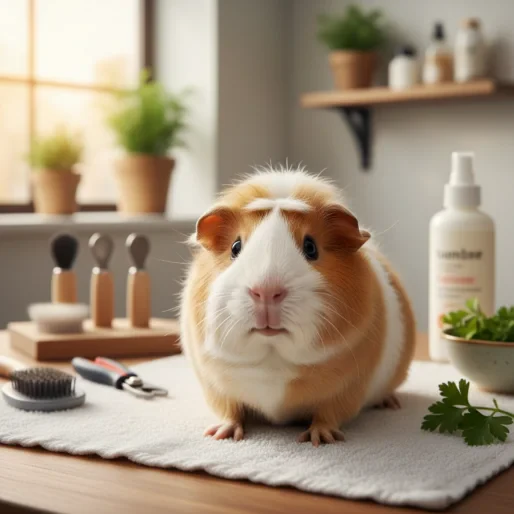
Having the correct tools on hand makes grooming safer, faster, and less stressful for both the guinea pig and the owner.
- Soft bristle brush: Suitable for short-coated breeds. Gentle enough for sensitive guinea pig skin.
- Fine-toothed metal comb: Essential for long-haired breeds to detect and gently work through small tangles before they become mats.
- Wide-toothed comb: Useful for initial passes through long or rosette coats to remove loose bedding and debris.
- Small, sharp grooming scissors (rounded tips): For trimming mats that cannot be combed out safely, and for sanitary trims around the hindquarters of long-haired breeds.
- Small animal nail clippers: Guillotine-style or scissor-style clippers designed for small animals. Human nail clippers can work in a pinch but offer less precision.
- Styptic powder or cornstarch: To stop bleeding if a nail is accidentally trimmed too short.
- Small towels and a shallow basin: For the rare occasions when a bath is necessary.
- Pen torch or bright lamp: Helps illuminate the quick inside lighter-coloured nails and aids in skin inspections.
Professional grooming standards, including those referenced by the International Professional Groomers (IPG) and the National Dog Groomers Association of America (NDGAA), stress tool hygiene. Combs, brushes, and clippers should be cleaned and disinfected between sessions, especially in multi-pig households where fungal spores can transfer between animals.
Step by Step Spring Grooming Routine
Step 1: Prepare the Environment
Choose a quiet, well-lit area away from other pets. Place a non-slip towel on a flat surface at a comfortable working height. Have all tools within arm's reach. Guinea pigs startle easily, so minimise sudden noises. A small amount of fresh hay or a favourite vegetable nearby can help keep the pig calm during the session.
Step 2: Initial Visual Inspection
Before picking up any tools, gently part the fur in several areas and visually scan the skin. Look for redness, flaking, scabs, bald patches, or any signs of external parasites such as lice (visible as tiny elongated insects on the hair shaft) or mites (often indicated by intense scratching, scurfing skin, or V-shaped hair loss along the back).
Step 3: Brushing
Short-coated breeds: Use a soft bristle brush, working from head to tail in the direction of hair growth. One to two gentle passes over each area is typically sufficient. Pay extra attention to the rump and sides, where loose hair tends to accumulate.
Long-coated breeds: Start with a wide-toothed comb to remove debris and locate tangles. Switch to a fine-toothed comb and work through small sections at a time, holding the base of the hair near the skin to avoid pulling. If a mat is too tight to comb through without causing distress, carefully cut it out with rounded-tip scissors, keeping the blade parallel to the skin rather than pointing into it.
Rosette and rough-coated breeds: Brush gently in multiple directions, following the natural swirl pattern of each rosette. A soft bristle brush works well here. Avoid forcing the coat flat.
Hairless breeds: Skip brushing. Instead, gently wipe the skin with a damp, warm cloth to remove accumulated oils and debris. If the skin appears dry or flaky, a small amount of veterinary-approved, fragrance-free moisturiser can be applied sparingly.
Step 4: Sanitary Trim (Long-Haired Breeds)
For Peruvians, Silkies, and other long-haired breeds, trim hair around the hindquarters to approximately 2 to 3 cm. This sanitary trim helps prevent soiling and reduces the risk of urine scald and bacterial skin infections, which tend to increase in warmer weather.
Step 5: Nail Trimming
Guinea pig nails grow continuously and, without regular trimming, can curl, splay, or grow into the footpad, causing pain and difficulty walking.
- Hold the guinea pig securely but gently, either on your lap with a towel underneath or cradled against your body. Some owners find it helpful to have a second person hold the pig while the other trims.
- Examine each nail under good light. In light-coloured nails, the quick (the pink blood supply) is visible. Trim approximately 1 to 2 mm beyond the quick. For dark nails, trim small amounts at a time and look at the cross-section of the cut nail: when the centre begins to appear slightly translucent or pinkish, stop.
- If bleeding occurs, apply gentle pressure with styptic powder or cornstarch. The bleeding typically stops within a minute.
- Trim all four feet, including any dewclaws. Guinea pigs have four toes on the front feet and three on the back.
The approach of working cautiously in small increments mirrors the principles discussed in our guide on adaptive grooming tools and low-stress techniques, which, while written for dogs, shares the same emphasis on patient, gentle handling.
Step 6: Ear and Eye Check
Examine each ear for wax buildup, crustiness, or foul odour. A small amount of light-coloured wax is normal. Dark, foul-smelling discharge or significant crust may indicate an ear infection requiring veterinary attention. Check the eyes for discharge, cloudiness, or swelling around the lids.
Step 7: Grease Gland Cleaning
Guinea pigs have a grease gland (sebaceous gland) located at the base of the spine where a tail would be. This gland can become clogged with oily, waxy secretions, particularly in males. During spring grooming, clean this area by applying a small amount of coconut oil or a gentle, fragrance-free soap, letting it soften the buildup for a few minutes, then gently wiping away with a damp cloth. Persistent buildup or surrounding redness should be assessed by a veterinarian.
Bathing: When, How, and How Often
A common misconception is that guinea pigs require regular baths. In reality, most guinea pigs rarely need a full bath. Overbathing strips the skin of natural oils, leading to dryness, irritation, and increased vulnerability to fungal infections.
When a Bath Is Warranted
- The coat is visibly soiled with urine, faeces, or a substance that cannot be spot-cleaned.
- A veterinarian has prescribed a medicated shampoo for a diagnosed skin condition.
- The grease gland area needs more thorough cleaning than a wipe-down can achieve.
How to Bathe Safely
- Fill a shallow basin with approximately 2 to 3 cm of lukewarm water (around 37 to 38 degrees Celsius, roughly body temperature).
- Support the guinea pig with one hand at all times. Never leave a guinea pig unattended in water.
- Wet the body gently, avoiding the face and ears entirely. Use a small amount of fragrance-free, small-animal-safe shampoo.
- Rinse thoroughly. Shampoo residue causes irritation and itching.
- Wrap immediately in a warm, dry towel and pat (do not rub) dry. In cooler environments, a low-heat hairdryer held at a distance can be used, but many guinea pigs find the noise distressing, so towel drying is generally preferred.
- Ensure the guinea pig is completely dry before returning it to its enclosure. Damp guinea pigs are at risk of fungal infections and chilling.
Recommended Frequency
For most guinea pigs, a full bath once every few months is more than sufficient. Many healthy, short-coated guinea pigs may only need one to three baths per year. Long-haired breeds and those with grease gland issues may require slightly more frequent bathing. Spot cleaning between baths is the preferred approach.
Frequency Guide by Coat Type
| Coat Type | Brushing | Bathing | Nail Trimming |
|---|---|---|---|
| Short, smooth | Once weekly | Only as needed (a few times per year) | Every 3 to 4 weeks |
| Long, flowing | Daily or every other day | Every 4 to 8 weeks if soiling occurs | Every 3 to 4 weeks |
| Rosette, rough | Two to three times weekly | Only as needed | Every 3 to 4 weeks |
| Hairless | N/A (skin wipe instead, two to three times weekly) | Every 2 to 4 weeks (gentle rinse) | Every 3 to 4 weeks |
Warning Signs to Watch for During Grooming
Grooming sessions double as mini health assessments. The following findings should prompt further attention or a veterinary visit:
- Excessive scratching or flinching: May indicate mites (Trixacarus caviae), lice, or fungal infection (ringworm). Mite infestations in particular can cause seizures in severe cases and require urgent veterinary treatment.
- Patchy hair loss: Circular patches may suggest ringworm; irregular patterns may point to barbering (overgrooming by cage mates) or hormonal imbalances such as ovarian cysts in females.
- Scaly, flaky, or crusty skin: Often associated with fungal infection or static lice. Do not attempt to treat with over-the-counter products without a veterinary diagnosis, as some treatments safe for other animals are toxic to guinea pigs.
- Lumps or bumps: Sebaceous cysts are relatively common and typically benign, but any new lump should be evaluated by a veterinarian to rule out abscess or tumour.
- Swollen, red, or bleeding footpads: May indicate bumblefoot (pododermatitis), which requires veterinary intervention and is often linked to rough or damp bedding.
- Overgrown or curling nails: If left untrimmed, nails can curl into the pad, causing infection and chronic pain.
- Discharge from eyes, nose, or ears: Any unusual discharge, especially if accompanied by lethargy or reduced appetite, warrants prompt veterinary assessment.
For context on recognising when symptoms move from watchful observation to veterinary urgency, the principles outlined in our article on recognising when symptoms require immediate vet attention apply broadly to small animals as well.
Professional Groomer vs Home Grooming: A Decision Guide
Most guinea pig grooming can be performed safely at home with the right tools and knowledge. However, certain situations benefit from professional assistance:
When Home Grooming Is Appropriate
- Routine brushing and combing of healthy coats.
- Regular nail trims once the owner is comfortable with the technique and can identify the quick.
- Spot cleaning and occasional full baths.
- Grease gland maintenance.
- Sanitary trims on long-haired breeds, provided the owner has steady hands and appropriate scissors.
When to Seek Professional Help
- Severely matted coats, especially close to the skin, where home removal risks cutting the skin.
- A guinea pig that becomes extremely distressed, bites, or thrashes during nail trimming. A professional experienced with small exotics can complete the task more quickly and safely.
- Any suspected skin condition: always obtain a veterinary diagnosis before applying treatments. Some products marketed for small animals contain ingredients (such as certain flea treatments formulated for cats or dogs) that are dangerous for guinea pigs.
- Post-surgical grooming or grooming around wounds, where sterile technique matters.
When selecting a professional groomer for a guinea pig, confirm that they have specific small-animal or exotic-pet experience. The skill set for grooming dogs and cats does not automatically transfer to cavies, which are smaller, more fragile, and prone to stress-related health events. Some exotic veterinary clinics offer grooming services or can recommend experienced groomers.
Owners who use pet sitters should communicate grooming needs clearly. Guidance on communicating breed-specific care requirements to sitters is covered in our article on what to tell your pet sitter about breed traits, and the same principle of detailed written instructions applies to guinea pig care.
Performing Skin Checks Between Vet Visits
Veterinary organisations including the AVMA (American Veterinary Medical Association) and the BSAVA (British Small Animal Veterinary Association) recommend regular at-home health monitoring for small animals. A structured skin check during each grooming session helps catch problems early.
A Simple Skin Check Protocol
- Part the fur systematically: Work from the head down to the rump, parting the coat every 1 to 2 cm to expose the skin beneath.
- Check the face and chin: Look for crusting, sores, or swelling that could indicate dental disease (a common issue in guinea pigs that sometimes manifests externally).
- Examine the belly and inner thighs: These areas are often missed but are prone to fungal infections and urine scald.
- Inspect the feet: Check the pads for sores, swelling, or calluses. Examine between the toes for debris.
- Assess the grease gland area: Note any unusual swelling, redness, or foul odour beyond normal oiliness.
- Feel for lumps: Run your fingers gently over the entire body, feeling for any new or growing masses beneath the skin.
Keeping a brief written or photo log of any findings helps track changes over time and provides valuable information for the veterinarian at the next check-up.
Spring Specific Considerations
Spring brings a few additional grooming considerations for guinea pig owners:
- Increased parasite activity: As temperatures rise, external parasites become more active. Regular grooming helps detect infestations early. Our spring parasite prevention guide offers broader context on seasonal parasite risks.
- Outdoor time precautions: Guinea pigs that spend time in outdoor runs during spring are exposed to grass seeds, pollen, and ground-dwelling parasites. Brush the coat after outdoor sessions and check the ears and eyes for irritants.
- Humidity and bedding: Higher spring humidity can lead to damp bedding, which increases the risk of fungal skin infections and bumblefoot. Grooming sessions are a good time to evaluate whether bedding is being changed frequently enough.
- Vitamin C and coat health: Guinea pigs, like humans, cannot synthesise vitamin C and require dietary supplementation. Deficiency can lead to a rough, dull coat and poor skin healing. While this is a nutritional rather than grooming issue, observing coat quality during brushing can be an early indicator of inadequate vitamin C intake.
Final Thoughts
A consistent spring grooming routine is one of the most practical steps guinea pig owners can take to support their pet's health and comfort. By matching grooming frequency to coat type, performing gentle nail trims every few weeks, and using each session as an opportunity for a thorough skin check, owners build a foundation of preventive care that complements regular veterinary visits. When in doubt about any skin abnormality, lump, or behavioural change observed during grooming, professional veterinary advice should always be the next step.
Frequently Asked Questions
Content Disclosure
This article was created using state-of-the-art AI models with human editorial oversight. It is intended for informational and entertainment purposes only and does not constitute veterinary medical advice. Always consult a licensed veterinarian for your pet's specific health needs. Learn more about our process.