
In this article
- Protecting Your Dog's Mobility from the Inside Out
- The Orthopedic Impact of Tick-Borne Disease
- Layer 1: The Veterinary Shield
- Layer 2: The Physical Inspection Protocol
- Layer 3: Coat Condition and Visibility
- Layer 4: Environmental Management & Strategy
- Recognizing the "Quiet" Signs of Disease
- A Note on "Active Dog" Strategies
- Conclusion
Protecting Your Dog's Mobility from the Inside Out
As a canine fitness practitioner, my primary focus is usually on conditioning, muscle engagement, and safe exercise mechanics. However, every spring, I see the same avoidable tragedy in my practice: a high-drive, athletic dog suddenly sidelined not by a torn ligament or a bad landing, but by a microscopic parasite. Tick-borne diseases are not just 'flu-like illnesses' for our pets; they are significant orthopedic threats that can cause debilitating joint pain, shifting lameness, and long-term erosion of your dog's quality of life.
Spring brings the perfect storm: rising temperatures, hatching larvae, and our own desire to get out and explore the trails after a long winter. Prevention is not merely about buying a collar and forgetting about it. It requires a proactive, multi-layered wellness protocol that integrates into your daily routine, much like your warm-up and cool-down exercises.
Key Takeaways
- Disease equals Deconditioning: Tick-borne illnesses like Lyme and Ehrlichiosis attack joints, causing inflammation that ruins fitness progress and causes pain.
- The "Tailgate Check" is Mandatory: 90% of prevention happens physically removing ticks before they embed; make this part of your post-walk ritual.
- Grooming is Defense: A compacted, shedding coat hides parasites. Managing the spring shed is a critical safety step.
- Environment Matters: Ticks quest on tall grasses; keeping your dog on-trail is a primary prevention strategy.
The Orthopedic Impact of Tick-Borne Disease
Why does a fitness coach care so much about bugs? Because the primary symptom of the most common tick diseases, Lyme disease, Anaplasmosis, and Ehrlichiosis, is polyarthritis. This manifests as inflammation in multiple joints. For an active family dog or a canine athlete, this is devastating.
I have worked with dogs who were conditioned for miles of hiking, only to be bedridden with swollen, painful joints weeks later. The recovery process involves weeks of antibiotics and complete rest, leading to muscle atrophy (loss of muscle mass) and cardiovascular deconditioning. When we finally restart their fitness program, we are starting from zero. Prevention is the only way to protect the investment you have put into your dog's physical health.
Layer 1: The Veterinary Shield
Before we discuss physical checks and environmental management, we must address the foundation: pharmaceutical protection. As a practitioner, I cannot prescribe medication, but I can tell you that compliance is king.
Whether you choose a chewable tablet, a topical spot-on, or a collar, it must be administered according to the weight of your dog and the timing on the package. I often see owners delay the first spring dose because 'it's not that warm yet.' Ticks become active as soon as temperatures rise above freezing (4°C/40°F). By the time you see the first mosquito, the tick population has been active for weeks.
Consult your veterinarian to choose the right preventative for your lifestyle. If your dog swims frequently as part of their hydrotherapy or fitness plan, a topical solution might wash off, making an oral preventative a better choice.
Layer 2: The Physical Inspection Protocol
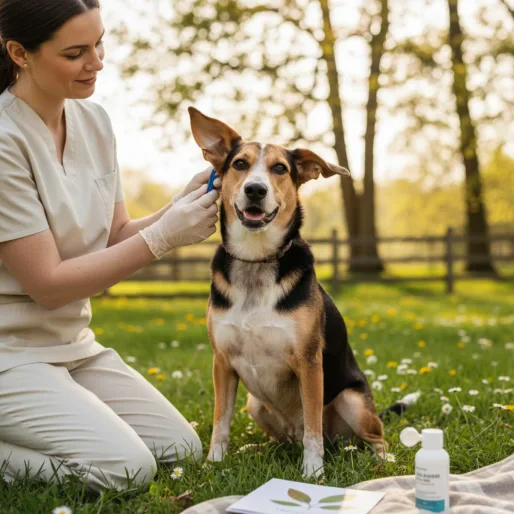
Pharmaceuticals kill ticks after they bite. To prevent disease transmission completely, our goal is to find them before they latch on. I teach my clients to incorporate the "Tailgate Check" into their routine. Before your dog gets back into the car or enters the house, perform a systematic sweep.
The 3-Zone Touch Check
Use your hands, not just your eyes. You are feeling for small bumps that shouldn't be there.
- The Head and Neck Zone: Pay close attention to the ears (inside and out), under the collar, and the eyelids. Ticks gravitate toward the vascularity of the head.
- The Thermal Zones: Check the 'armpits' (axillary region) and the groin (inguinal region). These areas are warm and protected, making them prime real estate for feeding ticks.
- The Extremities: Check between the toes and under the tail. I have seen many cases of 'mystery limping' that turned out to be a tick embedded between the paw pads.
If you are dealing with muddy paws, this check becomes difficult. I recommend following a strict hygiene protocol similar to what we use for preventing Alabama Rot. Washing the legs and paws immediately after a walk not only removes dangerous bacteria but can also wash away crawling ticks before they attach.
Layer 3: Coat Condition and Visibility
You cannot find a tick in a matted forest of fur. Spring is synonymous with the "coat blow" for double-coated breeds. All that dead, impacted undercoat provides a dense thatch that ticks can crawl under, effectively hiding them from your view and your fingers.
Proactive grooming is a safety measure. By removing the dead undercoat, you increase the efficacy of your physical checks. Additionally, a well-conditioned coat allows for better airflow and skin health. For a detailed breakdown on how to manage this, refer to our guide on managing the seasonal coat blow. The less fur you have to fight through, the safer your dog is.
Layer 4: Environmental Management & Strategy
Where you walk determines your risk level. Ticks do not jump or fly; they "quest." They hold onto tall grass or shrubs with their back legs and reach out with their front legs, waiting to snag a passing host. This means they are concentrated on the edges of trails where the vegetation brushes against your dog.
The "Center Path" Rule
When we discuss conditioning dogs for hiking season, we often talk about trail etiquette. Keeping your dog in the center of the trail, rather than letting them plow through the underbrush, significantly reduces tick exposure. If your fitness routine involves fetch or recall games, play them in open fields with short grass rather than near the wood line.
Backyard Defense
For many dogs, the backyard is the primary exercise zone. To reduce tick density at home:
- Create a Barrier: Use a 3-foot wide barrier of wood chips or gravel between lawns and wooded areas. Ticks are reluctant to cross dry, hot surfaces.
- Mow High, But Frequent: Keep grass manageable.
- Remove Leaf Litter: Damp, decomposing leaves are tick nurseries. Clear them out early in the spring.
Be aware that your garden can harbor other dangers too. While you are clearing brush, ensure your dog stays away from toxic early bloomers. See our guide on spring bulb toxicity to identify which plants pose a risk during your yard work.
Recognizing the "Quiet" Signs of Disease
Even with the best prevention, exposure can happen. As an owner, you are the first line of defense in detecting illness. In my fitness practice, I teach owners to look for "shifting leg lameness."
This is a hallmark of Lyme disease. One day your dog seems sore on the front left; two days later, that leg is fine, but now they are limping on the back right. This is not a muscle strain; this is systemic inflammation. Other subtle signs include:
- Reluctance to jump: A dog that usually leaps into the car suddenly waits to be lifted.
- Low-grade fever: Ears and paws feel hotter than usual.
- Lethargy: The "spark" is gone. They tire halfway through their normal walk.
If you notice these signs, especially 4-6 weeks after a known tick bite or the start of spring, consult your veterinarian immediately. Early treatment with antibiotics is highly effective and can prevent chronic joint issues.
A Note on "Active Dog" Strategies
For those of you with high-drive working dogs or serious hiking companions, your risk profile is higher simply due to the time spent outdoors. I have compiled a more specific set of protocols for high-activity dogs in my article on early spring tick strategies, which covers gear and conditioning in more depth.
Conclusion
Tick prevention is not a seasonal chore; it is a critical component of your dog's orthopedic health and longevity. By combining veterinary-approved preventatives, rigorous physical checks, and smart environmental choices, you ensure that your dog remains strong, pain-free, and ready for every adventure this spring has to offer. Treat every walk as a training session for safety: eyes open, hands on, and stay on the path.
Frequently Asked Questions
Content Disclosure
This article was created using state-of-the-art AI models with human editorial oversight. It is intended for informational and entertainment purposes only and does not constitute veterinary medical advice. Always consult a licensed veterinarian for your pet's specific health needs. Learn more about our process.