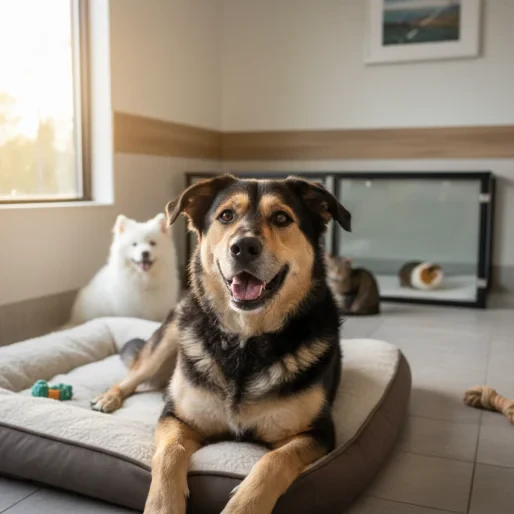
Large dogs in American shelters wait two to three times longer for adoption than small breeds. Housing rules, cost fears, and size bias keep great dogs stuck in kennels across the country.
Key Takeaways
- Large dogs (over 50 lbs) typically wait two to three times longer in U.S. shelters than small breeds, driven by rental restrictions, cost concerns, and breed bias.
- Breed-specific legislation (BSL) in cities across the United States further limits the adopter pool for pit bull types, Rottweilers, and other large mixed breeds.
- The ASPCA estimates annual costs for a large dog at roughly $1,400 to $2,500 or more, depending on health and location, but budgeting and pet insurance can make ownership realistic.
- Many large breeds are calmer indoors than popular small breeds, making them well suited to apartment life if daily exercise needs are met.
- The American Veterinary Medical Association (AVMA) and shelter behaviorists agree: size does not predict aggression or behavioral problems.
The Scale of the Problem in American Shelters
Approximately 6.3 million companion animals enter U.S. shelters each year according to ASPCA estimates, and dogs over 50 lbs make up a disproportionate share of the longest stays. Shelter data consistently shows that medium to large mixed breeds in the 55 to 90 lb range have the highest average length of stay. In many municipal shelters across the South and Midwest, large dogs, especially those labeled as pit bull types, can wait months while smaller dogs are adopted within days.
Understanding why this happens, and why it should not discourage prospective adopters, is the first step toward giving these dogs a fair chance.
Why Large Dogs Get Overlooked
Rental and housing restrictions: A significant percentage of American renters face pet weight limits, commonly set at 25 to 50 lbs, in their lease agreements. Homeowner association (HOA) rules frequently restrict specific breeds or impose weight caps. For the roughly 36% of U.S. households that rent, these policies can eliminate large dog ownership entirely.
Breed-specific legislation: Cities including Denver (which only recently revised its longstanding pit bull ban), Miami-Dade County, and parts of Missouri and Ohio enforce breed-specific legislation targeting breeds commonly found in shelters. While the AVMA has formally opposed BSL as ineffective, these laws remain on the books and limit adoption options. Prospective adopters should check local municipal codes before visiting a shelter.
Cost perception: Veterinary care in the United States is among the most expensive globally. Larger dogs require higher doses of medications, more anesthesia for procedures, and larger quantities of preventatives. Heartworm prevention alone, which is essential across most of the country, runs roughly $100 to $200 per year for a large dog compared to $50 to $100 for a small breed. These real but manageable differences get exaggerated in the public imagination.
Behavioral stereotypes: A 70 lb dog that jumps on visitors reads as dangerous. A 10 lb dog doing the same thing reads as enthusiastic. This perception gap means large dogs are more frequently labeled as "behavioral problems" even when the underlying behavior is identical.
What Large Shelter Dogs Actually Cost Per Year
Budgeting realistically prevents sticker shock and, critically, prevents re-surrender. Here is a general annual cost breakdown for a healthy large dog (55 to 90 lbs) in the United States:
- Food: $500 to $1,000 depending on brand and dietary needs
- Routine veterinary care: $300 to $600 (annual exam, vaccinations, heartworm test)
- Heartworm, flea, and tick prevention: $200 to $400
- Pet insurance: $400 to $800 per year for a mid-tier accident and illness plan
- Equipment, toys, and miscellaneous: $150 to $400
- Emergency fund contribution: $500 or more recommended annually
Total estimated range: roughly $1,400 to $2,500 per year for a healthy dog. Orthopedic surgeries (cruciate ligament repair, for example) can run $3,000 to $6,000 per knee in many U.S. markets. Pet insurance through providers regulated under state insurance commissions can significantly offset these costs if enrolled early. The North American Pet Health Insurance Association (NAPHIA) publishes annual data on coverage trends and can help adopters compare plan structures.
Health Considerations Specific to the U.S.
Heartworm disease: Heartworm is endemic across much of the United States, with the highest prevalence in the Southeast, Gulf Coast states, and Mississippi River valley. The American Heartworm Society recommends year-round prevention for all dogs regardless of region. Large dogs are not more susceptible than small dogs, but treatment for heartworm infection is significantly more expensive and physically harder on larger animals. Shelter dogs should be tested at adoption and again six months later.
Joint disease: Hip dysplasia, elbow dysplasia, and cruciate ligament injuries are common in large and giant breeds. The Orthopedic Foundation for Animals (OFA), based in Columbia, Missouri, maintains breed-specific prevalence data. Adopters should request any available orthopedic history from the shelter and plan for a veterinary evaluation within the first week.
Bloat (GDV): Gastric dilatation-volvulus is a life-threatening emergency most common in deep-chested large breeds such as Great Danes, German Shepherds, and Standard Poodles. Every household adult should learn to recognize the signs: unproductive retching, distended abdomen, restlessness, and rapid decline. This is a minutes-matter emergency.
ASPCA Animal Poison Control Center
Call the ASPCA Poison Control hotline or contact your nearest emergency veterinary clinic immediately.
A consultation fee may apply. For non-poison emergencies, search "emergency vet near me" or call your local animal ER.
Climate-related risks: The United States spans extreme climate zones. In Southern states where summer temperatures regularly exceed 95°F, heatstroke is a serious risk for large, heavy-coated breeds. In Northern states with harsh winters, large short-coated breeds (pit bull types, Boxers, Great Danes) may need protective gear. Western states face wildfire smoke seasons that can aggravate respiratory issues. Adopters should factor regional climate into breed selection and daily routine planning.
Apartment Living With a Large Dog
The idea that large dogs require a big yard is one of the most persistent myths in American pet culture. Greyhounds, Mastiffs, Great Danes, and many large mixed breeds are famously low-energy indoors. What matters is consistent daily exercise: typically 30 to 60 minutes of active walking or off-leash play, plus mental enrichment through food puzzles and training games.
Urban adopters in cities like New York, Chicago, or San Francisco successfully keep large dogs in apartments. The keys are: a predictable walk schedule (including a plan for extreme weather days), access to a nearby dog park or trail, and enrichment feeding to reduce boredom-related behavior. For more on enrichment strategies, see Using Food Puzzles and Scatter Feeding to Slow Down Fast Eaters: The Nutritional and Behavioural Case for Enrichment Feeding in Dogs.
The Adjustment Period: What to Expect
Rescue organizations across the U.S. commonly reference the "3-3-3 rule": three days to decompress, three weeks to learn your household routine, three months to feel fully settled. For large dogs that have spent weeks or months in a loud kennel environment, this timeline may be longer.
Weeks one and two often present a "honeymoon phase" where the dog is unusually quiet. Weeks three through six are when the real personality, and real challenges, emerge. Professional consensus from the IAABC (International Association of Animal Behavior Consultants) and APDT (Association of Professional Dog Trainers) strongly supports engaging a certified force-free trainer early rather than waiting for problems to escalate. Many trainers offer virtual consultations for that critical first week.
Using an How Indoor Pet Cameras Help You Monitor Behaviour While Away: What Normal Activity Looks Like and What Footage to Share With Your Vet or Sitter can help new adopters monitor settling behavior when away from home, which is especially valuable in the first month.
State Licensing, Rabies Laws, and Registration
Every U.S. state requires rabies vaccination for dogs, though the schedule (one-year vs. three-year boosters) and the age of first vaccination vary by state. Most counties and municipalities require dog licensing, which typically involves proof of rabies vaccination and, in some jurisdictions, proof of spay or neuter. Fines for unlicensed dogs range from $25 to $250 depending on the municipality. Adopters should check their county animal control website for specific requirements within the first week of bringing a dog home.
Myth vs. Reality for U.S. Adopters
| Myth | Reality |
| Large dogs need a big backyard. | Structured daily exercise matters far more than yard size. Many large breeds rest 14 to 16 hours per day indoors. |
| Pit bull type dogs are inherently dangerous. | The AVMA states that breed alone is a poor predictor of individual behavior. Pit bull type dogs are among the most common, and most adoptable, large dogs in U.S. shelters. |
| Shelter dogs are damaged or unpredictable. | The most common surrender reasons are housing changes, financial hardship, and family transitions, not behavioral crises. |
| You cannot adopt a large dog if you rent. | Many landlords will negotiate pet deposits or addendums. Some states and cities are adopting pet-friendly rental legislation. |
| Senior large dogs are not worth the investment. | Senior large dogs are often the calmest, most predictable companions. Even two to four quality years together transforms both lives. |
Large Dog Adoption Checklist (U.S. Edition)
- Housing confirmed: Written landlord permission or HOA approval secured, with breed and weight checked against any restrictions or local BSL.
- Budget reviewed: Annual costs estimated for a dog over 50 lbs, including food, vet care, insurance, and a $1,000 or more emergency fund.
- Rabies and licensing: County requirements reviewed; first vet visit and rabies vaccination or booster scheduled within the first week.
- Heartworm prevention: Year-round heartworm, flea, and tick prevention plan confirmed with a veterinarian, regardless of region.
- Climate plan: Hot weather cooling strategies (summer), cold weather gear (winter), or smoke-day protocols (wildfire regions) addressed.
- Training commitment: A certified trainer (search APDT or IAABC directories) contacted for a consultation within the first two weeks.
- Household agreement: Every person in the home has discussed expectations, responsibilities, and ground rules for the new dog.
- Emergency knowledge: Signs of The First Emergency With a New Puppy: Recognising When Symptoms Require Immediate Vet Attention vs. Calm Observation at Home reviewed by all adults. Nearest emergency veterinary hospital identified.
ASPCA Animal Poison Control Center
Call the ASPCA Poison Control hotline or contact your nearest emergency veterinary clinic immediately.
A consultation fee may apply. For non-poison emergencies, search "emergency vet near me" or call your local animal ER.
- Return policy understood: The shelter's return or post-adoption support policy reviewed and saved.
A Final Note for First-Time Adopters
The question shelter staff and rescue hotline volunteers hear most often is: "Did I make the right decision?" The willingness to ask that question is itself a strong indicator of a thoughtful, committed owner. Large dogs ask more in practical terms: more food, more physical management, more advance planning. But they do not ask for more love than any other dog. They simply need someone who walked in prepared.
For guidance on managing a new dog in unfamiliar environments, explore How Dogs Behave in Hotel Rooms and Holiday Rentals: Managing Territorial Marking, Noise Sensitivity, and Unfamiliar Scent Anxiety Away From Home. And if your large dog will need professional care while you travel, How to Evaluate Dog Daycare Play Groups in the U.S. can help you choose a safe facility.
Frequently Asked Questions
Why do large dogs stay longer in U.S. shelters? ↓
How much does it cost to own a large dog per year in the United States? ↓
Can a large dog live comfortably in an apartment? ↓
What health risks should U.S. adopters know about for large dogs? ↓
Do I need a license for my adopted dog? ↓
Are pit bull type dogs safe to adopt? ↓
What if the adoption does not work out? ↓

Hannah Cole
Pet Owner Community Advisor
Pet owner community advisor — calm, clear answers to the questions every pet parent asks.
Content Disclosure
This article was created using state-of-the-art AI models with human editorial oversight. It is intended for informational and entertainment purposes only and does not constitute veterinary medical advice. Always consult a licensed veterinarian for your pet's specific health needs. Learn more about our process.