Shaving a double-coated dog in summer disrupts natural temperature regulation and risks sunburn, follicle damage, and patchy regrowth. This guide explains the correct de-shedding, bathing, and seasonal maintenance routine instead.
Key Takeaways
- Do not shave double coats in summer. The undercoat insulates against heat as well as cold, and clipping it removes the dog's natural climate control system.
- De-shedding, not shaving, is the answer. Regular raking, carding, and high-velocity drying remove the dead undercoat that traps heat.
- Improper clipping can cause coat funk (post-clipping alopecia), permanent texture change, sunburn, and a higher risk of skin cancer in pale-skinned dogs.
- A seasonal routine matters more than a one-off summer haircut. Brushing two to four times per week, monthly deep baths, and professional blowouts every six to eight weeks usually suffice.
- Always flag hot spots, broken skin, severe matting, or sudden coat loss to a veterinarian rather than attempting to clip them out at home.
Why This Grooming Task Matters for Your Dog's Health
Every summer, grooming salons receive a wave of requests to shave Huskies, Golden Retrievers, German Shepherds, Pomeranians, Australian Shepherds, Border Collies, Bernese Mountain Dogs, and Newfoundlands down to the skin. The intention is kind: owners assume that less fur equals a cooler dog. The biology, however, works in the opposite direction. Double-coated breeds carry two distinct hair types, and removing them strips away the very system that keeps the dog comfortable in heat.
The International Professional Groomers (IPG), the National Dog Groomers Association of America (NDGAA), and the British Dog Groomers Association consistently advise against shaving healthy double coats. Veterinary dermatology consensus aligns with this position. The grooming priority in warm weather is not length reduction; it is the removal of dead, trapped undercoat through correct de-shedding and bathing technique.
How a Double Coat Actually Regulates Temperature
A double coat has two layers. The outer layer consists of guard hairs: long, coarse, weather-resistant strands that repel water, block UV radiation, and shield the skin. Underneath sits the undercoat: soft, dense, woolly fibres that trap a thin layer of air against the skin. That trapped air is the insulating buffer.
In winter, the air pocket retains body heat. In summer, the same air pocket slows the transfer of hot ambient air toward the skin, much like how loft insulation in a roof keeps a house cooler in heat and warmer in cold. When the undercoat sheds out naturally in spring (a process called blowing coat), it becomes lighter and airier, allowing better airflow. Brushing supports this process; shaving short-circuits it.
Dogs do not sweat through their skin the way humans do. They cool themselves primarily by panting, with limited sweating through the paw pads. The coat is not blocking sweat evaporation, so removing it does not improve cooling. It simply exposes the skin.
What Goes Wrong When a Double Coat Is Shaved
- Sunburn and UV damage. Pale-skinned or pink-bellied breeds (think Huskies, white Shepherds, merle Aussies) lose their UV shield. Sunburn, photodermatitis, and a long-term elevated risk of solar-induced skin tumours become concerns.
- Coat funk, also called post-clipping alopecia. The undercoat often regrows first and fastest, while the guard hairs lag for months or years. The dog ends up with a fluffy, dull, woolly coat that no longer repels water or sheds dirt.
- Permanent texture change. Repeated shaving can damage hair follicles, leaving patches that grow back coarse, sparse, or a different colour.
- Hot spots and insect bites. Exposed skin attracts mosquitoes, biting flies, and ticks more easily, and trapped moisture against newly shaved skin can encourage pyoderma.
- Heat absorption. Dark skin under a shaved coat absorbs more solar radiation, paradoxically making some dogs hotter outdoors.
Owners living in hot climates should focus on environment and routine rather than clippers. Resources such as the Heat-Tolerant Dog Breeds: Gulf and SE Asia Guide and AI Climate Monitors: Protecting Pets From Heatstroke provide context on managing heat risk without resorting to shaving.
Tools and Products Needed
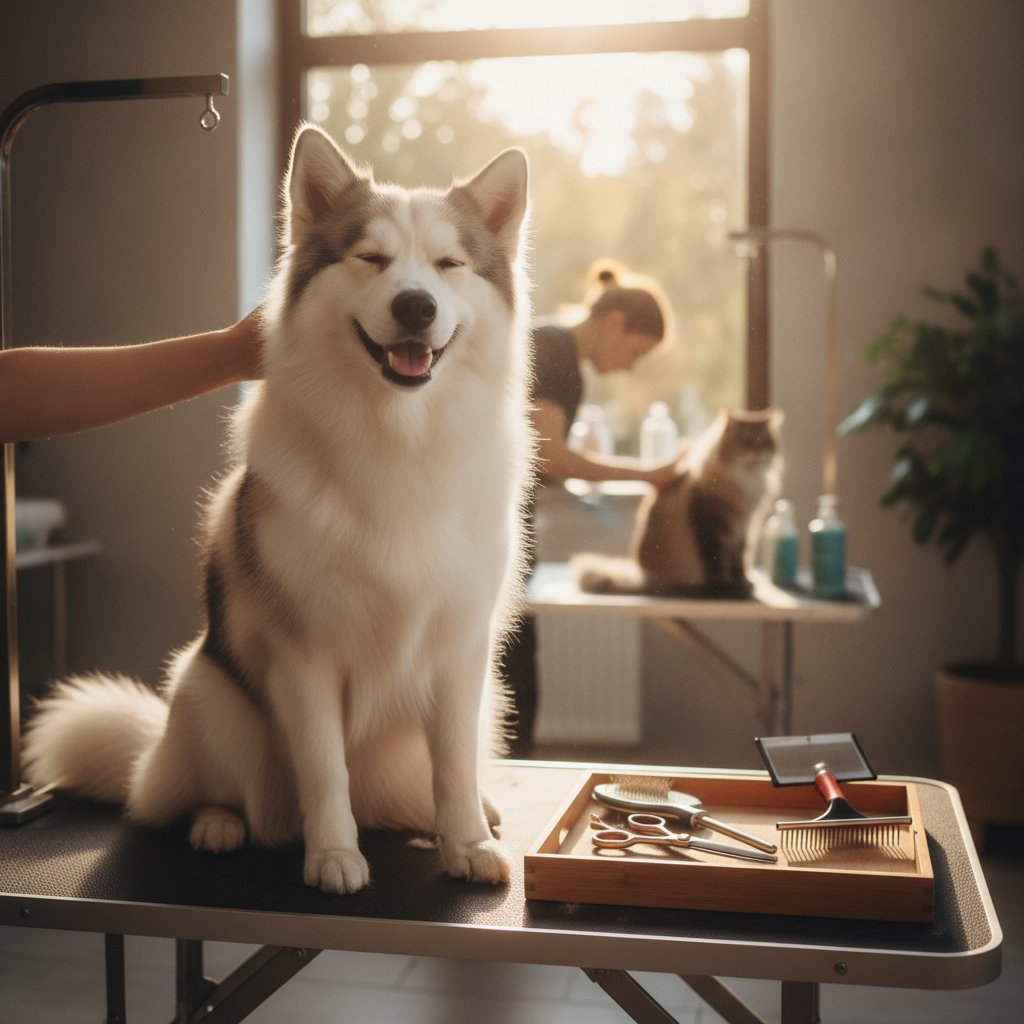
The right kit makes home maintenance safer and far more effective. Professional groomers typically recommend assembling the following before starting any de-shedding session:
- Undercoat rake with rotating, rounded teeth. Used to lift dead undercoat from the deeper layers without scratching the skin.
- Slicker brush with flexible pins. Removes surface mats and dust, finishes the coat.
- Wide-tooth metal comb. Confirms the coat is mat-free from skin to tip.
- De-shedding tool (such as the wide and narrow-blade rakes used in salons). Use with a light touch; aggressive use can damage guard hairs.
- Carding knife or stripping stone. For removing fine, fluffy undercoat in breeds where carding is appropriate.
- High-velocity dryer. The single most effective tool for blowing out loose undercoat. Models with adjustable speed and a cool setting are ideal.
- Gentle dog shampoo formulated for the coat type, plus a lightweight conditioner. Avoid human products; canine skin pH differs significantly.
- Microfibre towels and a non-slip bathing surface.
- Blunt-tipped grooming scissors for trimming sanitary areas and feathering only.
Clippers are useful for hygiene trims (around the genitals, paw pads, sanitary areas) but should not be used to take overall length off a healthy double coat.
Step-by-Step Seasonal Grooming Routine
Step 1: Pre-Brush While Dry
Brushing a wet, matted coat will tighten the mats and irritate the skin. Start with a thorough dry brush. Work in sections, lifting the hair upward with one hand and rake-brushing in the direction of growth from skin to tip. Common trouble zones include behind the ears, the ruff around the neck, the chest plate, the tail base, the rear trousers, and the armpits where the leg meets the body. Mats near the ears and behind the elbows form fastest because skin folds trap moisture.
Step 2: Line Brushing and Raking
Line brushing means parting the coat in horizontal sections and working from the skin outward, one row at a time. The undercoat rake should glide, not drag. If it stops, you have hit a mat or a tangle: gently tease it apart with fingers or a dematting comb rather than ripping through.
Carding, a technique borrowed from terrier grooming, can be used on some double coats to pull soft undercoat through the guard hairs without cutting them. Hold the carding knife flat and stroke in the direction of hair growth.
Step 3: Bathe With the Coat Fully Brushed Out
Only bathe a fully de-matted coat. Wet mats become felted and almost impossible to remove. Use lukewarm water (never hot), wet the dog thoroughly to the skin, and apply a coat-appropriate shampoo. Massage with fingertips rather than scrubbing in circles, which can twist hair around itself.
Rinse until the water runs completely clear. Shampoo residue is one of the most common causes of post-bath itching and dull coat. Apply a light conditioner if recommended for the breed, then rinse again.
Step 4: High-Velocity Blow Drying
This is where the bulk of loose undercoat actually leaves the dog. Towel the coat to remove dripping water, then use a high-velocity dryer on a moderate setting, holding the nozzle a hand's width from the skin. Move with the lay of the coat to push water and loose fluff out. Expect a small cloud of undercoat to release; this is the goal.
Never aim a high-pressure dryer at the face, ears, or genitals. Use a cool or low-heat setting for sensitive dogs. Drying fully to the skin prevents the damp, warm environment that encourages hot spots.
Step 5: Finish and Inspect
Once dry, comb through with a wide-tooth metal comb. If the comb passes cleanly from skin to tip across the entire body, the coat is properly maintained. Trim only sanitary areas, paw pad fur, and any feathering that drags on the ground. Leave length and shape alone.
Frequency Guide by Coat and Breed Type
Heavy Double Coats (Husky, Malamute, Samoyed, Akita, Chow Chow)
- Daily quick brush during seasonal coat blow (spring and autumn).
- Two to three thorough brushing sessions per week year-round.
- Bath every four to eight weeks, or after swimming.
- Professional blowout every six to eight weeks in shedding season.
Working Double Coats (German Shepherd, Belgian Malinois, Border Collie, Australian Shepherd)
- Brushing two to three times per week.
- Bath every six to ten weeks unless soiled.
- Pay close attention to the ruff, trousers, and feathering.
Spitz and Toy Double Coats (Pomeranian, Keeshond, American Eskimo)
- Brushing three to four times per week; the fine undercoat mats quickly behind ears and on the chest.
- Bath monthly.
Heavy-Boned Double Coats (Newfoundland, Bernese Mountain Dog, Saint Bernard, Great Pyrenees)
- Brushing three times per week, with extra attention to tail, britches, and chest.
- Bath every six to eight weeks, with thorough drying to the skin to prevent skin fold issues.
Retriever Double Coats (Golden Retriever, Labrador Retriever)
- Brushing two to three times per week.
- Carding the soft undercoat keeps the dog cooler without disturbing the guard layer.
- Bath every six to eight weeks.
For owners juggling holiday travel or long working hours, planning ahead is essential. Guides on hiring a trustworthy in-home pet sitter and choosing a dog groomer can help arrange continuity of grooming care.
Warning Signs to Watch For During Grooming
Grooming sessions are also informal skin and health checks. Stop and consult a veterinarian if any of the following appear:
- Hot spots: moist, red, often weeping patches that the dog has been licking or chewing.
- Bald patches or thinning that are symmetrical (possible endocrine causes) or patchy with broken hairs (possible parasites or fungal infection).
- Black, waxy debris or a yeasty smell in the ears or skin folds.
- Lumps under the skin that were not there at the previous groom.
- Severe matting close to the skin where you cannot pass a comb. Forcing through can tear skin; a professional groomer with proper clippers should de-matt safely.
- Sudden change in coat texture or shedding pattern, which can signal hormonal or nutritional issues.
- Flea dirt (small black specks that turn red on a damp tissue), ticks, or visible parasites.
Dogs that develop heat stress despite proper coat care may benefit from cooling activities such as those discussed in canine hydrotherapy, rather than aggressive haircuts.
Professional Groomer vs Home Grooming: A Decision Guide
Safe to Manage at Home
- Routine weekly brushing and combing.
- Bathing a healthy, mat-free coat.
- Trimming paw pad fur, sanitary areas, and feet feathering with blunt-tipped scissors.
- Nail tipping if you are confident and the dog cooperates.
Better Left to a Professional
- Full de-shedding blowouts during heavy coat blow.
- De-matting that requires clippers close to the skin.
- Hand-stripping or carding on breeds where it is the breed-standard finish.
- Anxious, reactive, or senior dogs that need experienced handling.
- Any breed-standard scissor or pattern work (e.g., a Pomeranian's foxy outline).
Vet, Not Groomer
- Open wounds, suspected ringworm, or any infectious skin condition.
- Severe pelting where the coat has felted into a solid mat against the skin (this is a welfare issue and may require sedated clipping).
- Suspected ear infections, allergies, or parasites.
Common Myths Worth Dispelling
Myth: A shaved dog is a cooler dog. Veterinary and professional grooming guidance consistently rejects this. The coat insulates against heat and protects against UV.
Myth: Shaving stops shedding. Shedding originates at the follicle. A shaved dog still sheds; the hairs are just shorter and harder to spot.
Myth: It will grow back the same. In double-coated breeds, regrowth is often patchy, woolly, or permanently altered after repeated shaving.
Myth: All long-haired dogs are double-coated. Single-coated breeds such as Poodles, Maltese, Bichons, and Yorkies can be safely clipped. Knowing which category a breed falls into is the foundation of correct summer care.
Putting It All Together
The most effective summer strategy for a double-coated dog is rarely a haircut. It is a consistent maintenance routine: scheduled brushing with the right rake and slicker, monthly baths with a thorough high-velocity dry, carding where appropriate, and environmental management such as shade, ventilation, hydration, and avoiding midday walks. The coat is not the enemy of summer comfort. Trapped, dead undercoat is. Remove that, and the dog's natural insulation will do the rest.
When in doubt, book a consultation with a certified groomer who works to IPG, NDGAA, or British Dog Groomers Association standards. A skilled professional will assess coat condition, recommend a maintenance schedule tailored to the individual dog, and never reach for the clippers on a healthy double coat.
Frequently Asked Questions
Is it ever acceptable to shave a double-coated dog? ↓
My double-coated dog was already shaved. Will the coat recover? ↓
How often should I use a high-velocity dryer at home? ↓
What is the difference between de-shedding and shaving? ↓
Can I use a human hair dryer instead of a high-velocity dog dryer? ↓

Sophie Bianchi
Certified Master Pet Groomer
Certified master pet groomer — breed-standard techniques, skin health awareness, and at-home grooming guidance.
Content Disclosure
This article was created using state-of-the-art AI models with human editorial oversight. It is intended for informational and entertainment purposes only and does not constitute veterinary medical advice. Always consult a licensed veterinarian for your pet's specific health needs. Learn more about our process.